Our Location
304 North Cardinal St.
Dorchester Center, MA 02124

304 North Cardinal St.
Dorchester Center, MA 02124

Choosing between tungsten steel drill bits and alloy drill bits is an important decision for manufacturers, metalworking professionals, construction workers, maintenance technicians, and DIY enthusiasts. The type of drill bit used directly affects drilling accuracy, machining efficiency, tool life, surface finish, and overall operating costs. Although tungsten steel drill bits are often associated with high hardness and excellent wear resistance, alloy drill bits can offer a practical combination of toughness, versatility, and affordability, depending on their material composition and intended application.
However, the answer to which type is better is not as simple as choosing the harder material. The terms tungsten steel and alloy steel cover different material categories, and their actual performance depends on factors such as chemical composition, heat treatment, manufacturing quality, cutting-edge geometry, coating, and operating conditions. In many industrial contexts, tungsten steel drill bits refer to tungsten carbide cutting tools, while alloy drill bits may refer to high-speed steel (HSS), cobalt-alloyed high-speed steel, or other alloy-steel tools. These materials have different mechanical properties and are designed to meet different machining requirements.
In general, tungsten carbide drill bits are an excellent choice for high-speed machining, precision manufacturing, and demanding industrial applications where hardness, wear resistance, and productivity are priorities. Alloy-steel drill bits, particularly high-speed steel drill bits, are often more suitable for general-purpose drilling, portable tools, intermittent operations, and applications where toughness and cost control are important. Understanding these differences will help you select the most suitable drill bit for your specific project.
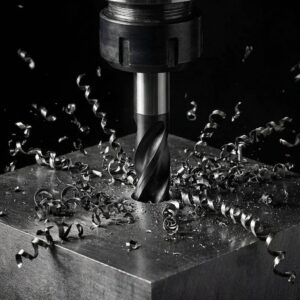
Tungsten steel drill bits are cutting tools made from tungsten-containing hard materials. In many machining and industrial tool markets, the term commonly refers to tungsten carbide drill bits, which are manufactured from tungsten carbide particles bonded together with a metallic binder, usually cobalt. These materials are valued for their exceptional hardness, high compressive strength, and ability to maintain a sharp cutting edge under demanding machining conditions.
Tungsten carbide is substantially harder than conventional high-speed tool steel. This hardness enables carbide drill bits to resist abrasive wear and maintain their cutting geometry during high-speed drilling. When the tool, machine, workpiece, and cutting conditions are properly matched, carbide drill bits can operate at significantly higher cutting speeds than conventional HSS drills. This makes them particularly attractive for automated production lines, CNC machining centers, precision component manufacturing, and other applications where production efficiency is essential.
Another important advantage of tungsten carbide drill bits is their ability to maintain dimensional accuracy during extended machining operations. When drilling large numbers of identical holes, tool wear can gradually affect hole diameter, roundness, surface quality, and positional accuracy. Carbide tools can help reduce these problems by maintaining their cutting edges for longer periods under suitable conditions. This is especially valuable in industries that require consistent manufacturing tolerances and repeatable results.
Nevertheless, tungsten carbide is relatively brittle compared with many steel-based cutting materials. A carbide drill bit may chip or fracture if it experiences excessive vibration, sudden impact, severe misalignment, or unexpected changes in cutting forces. Therefore, carbide tools generally perform best in rigid machine setups with stable workpiece clamping and carefully controlled cutting parameters. They are not automatically the best choice for every handheld drilling task or every working environment.
High hardness and wear resistance: Tungsten carbide drill bits can withstand substantial abrasive wear and retain their cutting edges during demanding machining operations. This property is particularly valuable when drilling hard or abrasive materials that would cause conventional steel tools to wear rapidly.
Excellent performance at high cutting speeds: Under appropriate machining conditions, carbide drill bits can support high spindle speeds and high production rates. This can shorten cycle times and improve manufacturing efficiency, particularly in CNC machining and repetitive industrial drilling.
Good dimensional stability: Carbide cutting edges can maintain their geometry during extended operations, helping manufacturers produce consistent holes and reduce the frequency of tool changes when the application is properly controlled.
Relatively low tolerance for impact: Despite their hardness, carbide drill bits can be vulnerable to chipping and fracture. Poor alignment, excessive feed pressure, vibration, or sudden impacts can significantly shorten tool life.
Higher initial purchase cost: Tungsten carbide drill bits usually cost more than comparable general-purpose HSS drill bits. However, the total cost per hole may be lower in high-volume production if the tools deliver longer service life and faster machining cycles.
Alloy drill bits are manufactured from steel materials containing selected alloying elements that improve properties such as hardness, toughness, strength, heat resistance, and wear resistance. Depending on the product, these elements may include chromium, molybdenum, vanadium, tungsten, and cobalt. The final properties depend on the exact steel grade, manufacturing process, heat treatment, and tool design.
High-speed steel is one of the most common materials used for alloy-based drill bits. HSS tools are designed to maintain useful hardness at elevated temperatures generated during cutting. They are widely used for drilling mild steel, carbon steel, aluminum, plastics, wood, and various other materials, subject to the drill’s specific design and grade. Their versatility makes them popular in workshops, maintenance departments, fabrication facilities, and general industrial applications.
Cobalt high-speed steel drill bits are a specialized category that deserves particular attention. These tools contain cobalt as an alloying element and generally offer improved hot hardness and heat resistance compared with many conventional HSS grades. Common examples include M35 and M42, although their precise properties depend on the grade specification. Cobalt HSS drills are frequently selected for stainless steel and other difficult-to-machine metals when the tool geometry and cutting parameters are appropriate.
The major advantage of alloy-steel drill bits is their balance of toughness, versatility, and price. Compared with many solid carbide drills, HSS tools are generally more forgiving of vibration, less susceptible to catastrophic fracture, and more practical for handheld drilling. They are also widely available in different diameters, lengths, shank styles, and specialized geometries.
However, not all alloy drill bits perform equally well. A low-quality alloy-steel drill bit may lose its cutting edge quickly, overheat under excessive pressure, or produce poor-quality holes. A premium cobalt HSS drill can perform much better than a basic general-purpose steel drill when machining difficult metals. Consequently, it is important to compare the actual material grades rather than assuming that every alloy drill bit has the same performance characteristics.
Good toughness: Many HSS and alloy-steel drill bits can tolerate moderate vibration and intermittent cutting better than conventional solid carbide drills. This makes them suitable for handheld drills and less rigid working environments.
Broad application range: Depending on the grade and design, alloy drill bits can be used for metals, plastics, wood, and other materials. Their flexibility makes them useful for workshops that handle a variety of drilling tasks.
Lower initial cost: General-purpose HSS drill bits are often more affordable than carbide alternatives, making them attractive for occasional drilling, small workshops, and projects with limited budgets.
Practical resharpening: Many conventional HSS drill bits can be resharpened using suitable equipment. Carbide tools can also be reground by specialized services, but this may require diamond grinding equipment and more precise handling.
Lower high-speed wear resistance in many comparisons: Compared with suitable carbide tools, conventional HSS drill bits generally have lower hot hardness and wear resistance. They may require slower cutting speeds and more frequent replacement when used in demanding high-volume production.
The most useful way to compare these drill bits is to evaluate their performance across several practical factors. The following table assumes that tungsten steel refers to a conventional tungsten carbide drill bit and that alloy drill bits refer primarily to HSS or cobalt HSS drills. Actual performance varies by grade, design, and operating conditions.
| Comparison factor | Tungsten carbide drill bits | Alloy-steel or HSS drill bits |
|---|---|---|
| Hardness | Generally very high | Varies by steel grade and heat treatment |
| Wear resistance | Excellent in suitable applications | Good to moderate, depending on grade |
| Cutting speed | Often supports higher speeds | Usually requires lower speeds |
| Toughness | Relatively brittle | Generally tougher and more forgiving |
| Impact resistance | More vulnerable to chipping | Usually better for intermittent drilling |
| Heat resistance | Excellent hot hardness | Good, especially for cobalt HSS |
| Precision machining | Excellent in rigid setups | Good for many general-purpose operations |
| Handheld drilling | Requires greater care | Often more practical |
| Initial purchase price | Generally higher | Generally lower |
| High-volume production | Often highly competitive | Depends on production requirements |
| Resharpening | Possible, often requiring specialized equipment | Usually straightforward with suitable equipment |
| Best application | Stable, demanding, high-speed machining | General-purpose and versatile drilling |
Hardness is one of the most important differences between carbide and conventional HSS drill bits. Tungsten carbide is extremely hard and can resist abrasive wear very effectively. When drilling materials that rapidly wear ordinary cutting tools, a carbide drill bit may retain its cutting edge longer and maintain more consistent cutting performance.
Alloy-steel drill bits, particularly conventional HSS products, have lower hardness than carbide tools but offer a useful balance between hardness and toughness. Premium alloy grades can perform exceptionally well in their intended applications. For example, cobalt HSS drill bits can be highly effective when drilling stainless steel, especially when the operator uses a suitable cutting speed, steady feed pressure, and appropriate lubrication.
It is important to understand that hardness alone does not determine the best tool. A very hard drill bit may fail prematurely if it is exposed to repeated impacts or severe vibration. Likewise, a tougher drill bit may deliver better overall results if the working environment is unstable. The best choice is the material that maintains sufficient cutting performance without exceeding the mechanical limitations of the tool.
Drilling generates heat through friction and the deformation of material at the cutting edge. As temperature rises, a cutting tool must retain enough hardness and strength to continue removing material efficiently. Carbide drill bits generally retain their hardness at higher temperatures than conventional HSS tools, which allows them to operate at higher cutting speeds in appropriately designed machining systems.
This advantage is particularly significant in CNC manufacturing, where machine rigidity, spindle performance, coolant delivery, and toolpath control can be optimized. Higher cutting speeds can reduce production cycle times and increase output when feed rates, chip evacuation, and tool life are properly managed.
Alloy-steel drill bits usually operate at lower cutting speeds, but they remain practical for a wide range of machining tasks. Their performance can be improved through suitable coatings, specialized geometries, and appropriate coolant or cutting fluid. Cobalt HSS tools, in particular, are useful for applications that generate substantial heat.
For users operating portable drills or older workshop machinery, the higher speed capability of carbide may offer little benefit if the equipment cannot maintain stable operating conditions. In these circumstances, a well-selected HSS drill may deliver more reliable and economical results.
Toughness is a critical consideration when selecting drill bits for real-world working conditions. Although tungsten carbide is hard and wear-resistant, it is generally more brittle than HSS. A carbide drill can chip when its cutting edge strikes an unexpected hard inclusion, when the workpiece moves during drilling, or when excessive lateral force is applied.
HSS and other alloy-steel drill bits generally offer better tolerance for vibration, misalignment, and intermittent cutting. This makes them suitable for maintenance tasks, handheld drilling, construction-related work, and operations where ideal machine rigidity cannot be guaranteed.
However, toughness does not make an alloy drill bit indestructible. Excessive heat, incorrect feed pressure, poor chip evacuation, and inappropriate drill geometry can still cause premature wear or breakage. Both material types require suitable operating conditions, but carbide typically demands more careful control of the machining system.
Both carbide and alloy drill bits can produce accurate holes when they are manufactured well and used correctly. The difference is that carbide tools often maintain their cutting-edge geometry longer during high-speed production, helping manufacturers maintain consistent hole dimensions over repeated operations.
For precision components, mold manufacturing, automotive parts, aerospace components, and other applications with demanding tolerances, carbide drill bits can provide important advantages when used with a stable CNC machine and the correct tool specification. Specialized carbide drills are also available with internal coolant channels, which help deliver coolant directly to the cutting zone and improve chip evacuation in suitable deep-hole drilling operations.
HSS drill bits remain suitable for many general-purpose holes, assembly operations, repair work, and fabrication projects. For applications that do not require extremely tight tolerances or high production rates, the additional expense of carbide may not provide a meaningful economic benefit.
Hole quality also depends on factors beyond the material. Point angle, web thickness, flute geometry, tool runout, workpiece hardness, cutting parameters, and chip removal can all affect the final result. Selecting the correct drill design is therefore just as important as selecting the material.
Price is another major consideration. General-purpose alloy-steel drill bits are typically less expensive to purchase, making them suitable for small workshops, maintenance departments, occasional repairs, and projects involving relatively few holes. If the tool is used infrequently, a low initial investment may be more important than maximizing cutting speed.
Tungsten carbide drill bits usually require a higher initial investment. Nevertheless, the purchase price alone does not tell the whole story. In a high-volume manufacturing environment, a carbide drill may reduce machining time, tool-change frequency, production interruptions, and labor costs. These benefits can make it more economical over the entire production cycle.
A useful comparison is the total cost per acceptable hole rather than the price per drill bit. The calculation should consider the tool price, usable tool life, cycle time, tool-change time, scrap rate, rework, and machine downtime. If a carbide drill produces substantially more acceptable holes at a lower overall production cost, its higher purchase price may be justified. If the application involves only a few holes, a conventional HSS drill may be the better financial choice.
The material being drilled is one of the most important factors in determining whether carbide or alloy steel is the better option. A drill bit that works well on mild steel may not be appropriate for hardened steel, abrasive composites, or brittle non-metallic materials. The following guidance assumes the use of purpose-designed drills rather than ordinary general-purpose bits for every material.
Stainless steel can be challenging to drill because many grades generate substantial heat and may work-harden if the cutting tool rubs against the surface without removing material effectively. The appropriate drill bit depends on the stainless-steel grade, workpiece thickness, production volume, and available equipment.
Cobalt HSS drill bits are often an excellent choice for general stainless-steel drilling. They combine useful toughness with improved hot hardness and are widely available in suitable geometries. They are practical for workshops, maintenance tasks, and many conventional drilling operations.
Carbide drill bits can be better for high-speed production and precision machining when the machine is rigid and the cutting conditions are correctly established. However, carbide is not automatically superior in handheld stainless-steel drilling because vibration and inconsistent feed pressure may increase the risk of edge damage.
For stainless steel, choose a suitable cutting speed, maintain a steady feed, and use an appropriate cutting fluid when recommended. Avoid allowing the drill to rub against the surface for extended periods, because frictional heating can encourage work hardening and accelerate tool wear.
For mild steel and many common carbon-steel applications, alloy-steel drill bits are often sufficient and economical. Standard HSS drills can handle many routine holes in sheet metal, structural components, brackets, and fabricated parts.
When production volumes increase, carbide drills may offer higher productivity and more consistent performance, particularly in CNC machining. Their advantages become more significant when the machine can maintain the correct spindle speed, feed rate, alignment, and chip evacuation.
The appropriate tool depends on the hardness and condition of the steel. Hardened steel requires a more specialized approach than mild steel, and not every carbide drill is designed for it. Always verify that the drill’s grade and geometry are intended for the workpiece material.
Hardened steel places greater demands on the cutting edge than ordinary mild steel. A general-purpose HSS drill may wear rapidly or fail to penetrate effectively when the material hardness exceeds the tool’s intended operating range.
Purpose-designed carbide drills can be suitable for certain hardened-steel applications, especially when used with a rigid machine and correct machining parameters. However, the term tungsten steel drill bit does not automatically mean that a particular product can drill every hardened steel grade. Carbide grade, edge preparation, tool geometry, hardness level, and machine stability must all be considered.
For particularly hard workpieces, manufacturers may recommend specialized carbide tools, dedicated drilling systems, or alternative machining methods. Confirm the workpiece hardness and the drill manufacturer’s stated application range before proceeding.
Aluminum and other non-ferrous metals can often be drilled successfully with HSS or carbide tools. The most important factors include cutting-edge sharpness, flute design, chip evacuation, and the tendency of the material to adhere to the cutting edge.
HSS drill bits are commonly used for aluminum because they are affordable and versatile. However, a standard drill geometry may not provide the best results for every aluminum alloy. Specialized aluminum drills can improve chip formation and reduce built-up material on the cutting edge.
Carbide drills can offer excellent performance in high-volume aluminum machining, especially on CNC equipment. Proper flute geometry and effective chip evacuation are essential, because aluminum chips can accumulate in the flutes and damage the workpiece or tool if they are not removed effectively.
For wood and plastics, a general-purpose alloy-steel drill may be sufficient, although dedicated wood drills, brad-point drills, and plastic-specific designs often provide better results. These materials require appropriate cutting geometries to minimize splintering, melting, cracking, or other forms of damage.
Carbide-tipped or solid-carbide tools may be beneficial for abrasive composite materials and repetitive production work. Some composites contain reinforcing fibers that cause substantial abrasive wear, making tool wear resistance particularly important.
Nevertheless, tool selection must be based on the specific material. A carbide drill designed for metal is not necessarily the ideal choice for wood, fiberglass, carbon-fiber composites, or plastics. Use a tool intended for the application and follow the manufacturer’s guidance on cutting speed and dust or chip control.
Ordinary HSS and general-purpose carbide twist drills are usually not the appropriate first choice for drilling glass or brittle ceramics. These materials often require dedicated diamond-coated, diamond-grit, or other purpose-designed drilling tools, depending on the material and hole geometry.
Using an ordinary metal drill can cause cracking, chipping, or complete breakage. Specialized tools, controlled pressure, suitable cooling, and proper workpiece support are important when working with brittle materials.
The lesson is simple: even a very hard drill bit may perform poorly if its cutting mechanism is unsuitable for the material being drilled.
The machine and working environment can influence tool performance just as much as the workpiece material. A drill bit that delivers excellent results on a CNC machining center may be less suitable for a handheld drill used on a construction site.
Tungsten carbide drill bits are often the preferred option for demanding CNC production because these machines can provide high spindle speeds, accurate positioning, stable feed control, and effective coolant delivery. These capabilities allow the operator to take advantage of carbide’s high hardness and wear resistance.
In mass production, carbide tools can reduce cycle times and improve consistency when their specifications match the material and machining strategy. Internal coolant channels and specialized flute designs can further improve performance in suitable deep-hole drilling operations.
HSS drill bits still have a place in CNC machining, particularly for lower-volume work, less demanding materials, and applications where flexibility or lower tooling costs are important. The final decision should be based on production economics rather than material hardness alone.
For handheld drilling, alloy-steel drill bits are often more practical. Manual operations introduce variations in pressure, alignment, and stability that can increase the risk of carbide chipping. HSS tools are generally more forgiving and are often less expensive to replace if damaged.
Carbide drill bits can be used in some handheld applications, but they should be selected only when the tool design and workpiece are appropriate. The user must maintain stable alignment, avoid excessive lateral force, and follow the manufacturer’s operating instructions.
For routine home repairs, general maintenance, furniture assembly, and many light fabrication tasks, quality HSS drill bits are frequently the more sensible choice.
In industrial production, the better drill bit is the one that delivers the required quality and output at the lowest total operating cost. Carbide is attractive when high speeds, long tool life, and predictable machining cycles can be achieved. HSS or cobalt HSS may be preferable when the process involves variable conditions, frequent setup changes, or moderate production volumes.
Production managers should evaluate tool life, cycle time, tool replacement frequency, machine utilization, scrap rates, and maintenance requirements. A tool that is inexpensive but needs frequent replacement may become costly in a factory operating multiple shifts. Conversely, an expensive carbide drill may not justify its cost if it offers little improvement in a low-volume process.
Construction and maintenance work often involves changing workpieces, limited space, portable equipment, and imperfect positioning. These conditions tend to favor robust and versatile tools rather than cutting speed alone.
For general metal drilling, HSS and cobalt HSS drill bits are often practical choices. However, concrete, masonry, and reinforced construction materials typically require purpose-designed masonry bits or other specialized drilling systems. A tungsten carbide tip on a masonry bit is not equivalent to a solid tungsten carbide metalworking drill.
Always distinguish between the material of the drill bit and the drilling system it is designed for. Choosing the correct tool category is essential for safe and effective operation.
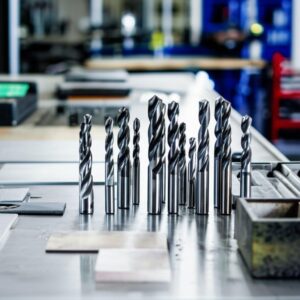
1. Excellent wear resistance
Tungsten carbide drill bits can resist abrasive wear effectively and maintain cutting-edge geometry over extended production runs. This is particularly valuable when tool wear has a direct effect on hole quality and manufacturing consistency.
2. High productivity potential
When used with suitable machinery, carbide drills can operate at high cutting speeds, reducing cycle times and increasing output. This can provide a substantial advantage in repetitive manufacturing operations.
3. Good performance in precision machining
Carbide tools can maintain dimensional consistency during demanding machining processes when the machine setup, workpiece clamping, and cutting conditions are properly controlled.
4. Strong long-term value in suitable applications
Although the initial purchase price is often higher, carbide drills may reduce tool changes and production interruptions. In high-volume applications, this can lower the cost per finished hole.
1. Higher purchase price
Carbide drill bits generally cost more than comparable general-purpose HSS tools. The price difference can be significant when many diameters or specialized geometries are required.
2. Greater sensitivity to impact
Carbide is relatively brittle and can chip or fracture under unfavorable mechanical conditions. Vibration, misalignment, excessive side loading, and unstable workpieces can shorten tool life.
3. Greater demands on machine stability
To obtain reliable performance, carbide drills often require suitable spindle accuracy, rigid clamping, controlled feed, and effective chip evacuation. Poor machining conditions can eliminate their expected advantages.
4. More demanding handling and maintenance
Carbide tools should be handled carefully to prevent edge damage. Resharpening and repair may require specialized equipment and experienced technicians, depending on the tool design.
1. Affordable initial cost
General-purpose alloy-steel drill bits are widely available at different price points. They are economical for occasional use, small workshops, and projects that do not require maximum machining productivity.
2. Good toughness
Many HSS drill bits tolerate vibration and minor variations in working conditions better than solid carbide drills. This can be an important advantage for handheld operations and maintenance work.
3. Versatility across common applications
Depending on their grade and design, alloy-steel drill bits can be used for drilling many metals and non-metallic materials. A carefully selected collection of HSS tools can cover a wide range of workshop requirements.
4. Convenient maintenance
Conventional HSS drill bits can generally be resharpened using suitable grinding equipment. This allows workshops to extend tool life without always purchasing replacements.
5. Wide product availability
HSS and cobalt HSS drills are available in numerous sizes, lengths, point geometries, and shank configurations, making them convenient for general-purpose work.
1. Lower cutting speeds in many applications
Compared with suitable carbide tools, conventional HSS drill bits typically require lower cutting speeds. This may reduce productivity in high-volume machining.
2. Potentially shorter tool life in demanding conditions
When machining abrasive materials or operating under high thermal loads, ordinary HSS tools may wear more quickly than suitable carbide alternatives.
3. Heat-related performance limitations
If cutting temperatures exceed the tool’s practical limits, the cutting edge can soften or deteriorate. Correct speed selection, feed pressure, and cooling are important for preventing premature failure.
4. Performance varies substantially by grade
A basic alloy-steel drill and a premium cobalt HSS drill may behave very differently. Buyers should check the actual material specification instead of relying on a generic product description.
Choosing between tungsten steel and alloy drill bits should begin with a clear assessment of the task. Rather than purchasing the hardest or most expensive tool available, identify the material, production requirements, equipment limitations, and acceptable operating cost.
Determine whether you will be drilling mild steel, stainless steel, hardened steel, aluminum, plastic, wood, a composite, or another material. Different materials have different hardness levels, cutting characteristics, thermal behavior, and chip-formation requirements.
For general metalworking, HSS may be sufficient. For high-volume production, carbide may offer better productivity. For difficult metals, specialized cobalt HSS or carbide grades may be necessary. For glass, masonry, and ceramics, use a purpose-designed drilling tool rather than assuming that any tungsten-containing drill will work.
If you need to drill only a few holes, an affordable HSS drill may be the most economical choice. Its lower initial cost can outweigh the advantages of faster cutting or longer tool life.
If you need to drill hundreds or thousands of holes, compare the complete production cost. Carbide may become more attractive when it reduces machining time, minimizes tool changes, and maintains hole quality over a longer production run.
Check whether your drill or machine can provide the spindle speed, stability, alignment, and feed control required by the selected tool. Carbide’s advantages are easier to realize in a rigid CNC machining setup than in an unstable handheld operation.
Also consider coolant delivery and chip evacuation. Deep holes, particularly in metal, can require specialized flute geometry, peck-drilling strategies, or internal coolant. Even an excellent drill bit may fail if chips become trapped inside the hole.
A low-priced drill is not necessarily the cheapest option in the long term. Frequent replacements, machine downtime, damaged workpieces, and slow production can increase operating costs.
Compare the purchase price with expected tool life, cycle time, the cost of tool changes, and the number of acceptable holes produced. For commercial manufacturing, this approach provides a more useful basis for selecting between carbide and alloy-steel drill bits.
Review the drill bit’s material grade, diameter range, recommended cutting speed, feed rate, point geometry, coating, and intended workpiece materials. If the application involves difficult machining conditions, consult the manufacturer’s technical guidance before selecting the tool.
Do not assume that all tungsten steel drill bits are solid carbide or that all alloy drill bits are standard HSS. Clear specifications are essential for an accurate comparison.
Regardless of whether you choose carbide or alloy-steel drill bits, proper operation can significantly influence tool life, hole quality, and production efficiency.
Excessive speed can generate heat and accelerate wear, while insufficient speed may reduce productivity or contribute to rubbing under certain conditions. Follow the recommended cutting parameters for the specific drill grade and workpiece material. Adjust the speed when changing the drill diameter, machine type, or coolant arrangement.
Maintain a controlled, consistent feed that allows the cutting edges to remove material effectively. Excessive pressure can damage the tool, while too little feed may cause rubbing and unnecessary heat. The appropriate feed depends on tool diameter, geometry, material hardness, and machining conditions.
Chips that accumulate in the flutes can increase friction, scratch the hole surface, and cause tool breakage. This is especially important in deep-hole drilling and when machining materials that produce long or sticky chips.
Use an appropriate drill geometry, suitable coolant or cutting fluid where recommended, and a chip-removal strategy compatible with the tool. For deep holes, follow the manufacturer’s guidance on peck drilling or internal coolant delivery.
Workpiece movement can cause poor hole accuracy, excessive vibration, and tool damage. Clamp the material securely and ensure that the drill is aligned correctly before beginning the operation. Stable positioning is particularly important when using carbide drills.
Excessive heat can shorten tool life and damage the workpiece. Choose suitable cutting parameters and cooling methods for the material being drilled. Do not apply coolant in a way that conflicts with the manufacturer’s instructions for the specific carbide tool or machining process.
Check the cutting edges regularly for wear, chipping, discoloration, and other signs of damage. Replace or professionally resharpen a drill when its condition compromises cutting performance. Continuing to use a severely worn tool may increase machining time and produce unacceptable holes.
Hardness is important, but it is not the only factor. A carbide drill may offer excellent wear resistance while being less tolerant of vibration and impact. For unstable handheld work, a tougher HSS drill may provide more reliable performance.
A low-cost drill may be suitable for occasional work, but frequent replacement can increase long-term expenses. Conversely, an expensive carbide drill may be unnecessary for a small project. The correct decision depends on the expected workload and the cost of producing each acceptable hole.
Not all alloy-steel drills are equivalent. Standard HSS, cobalt HSS, and other specialized tool steels have different characteristics. Compare the actual grade and intended application instead of treating all alloy drill bits as one uniform category.
A metalworking drill should not automatically be used for glass, concrete, or every type of ceramic. These materials may require diamond tools, masonry bits, or other specialized designs. Material compatibility must be established before drilling begins.
A premium tool cannot compensate for excessive runout, unstable clamping, poor alignment, or inappropriate cutting parameters. Tool selection should be part of a complete drilling strategy that considers the machine, workpiece, coolant, and operator.
Tungsten carbide drill bits are generally better for high-speed machining, demanding production environments, and applications requiring excellent wear resistance. Alloy-steel drill bits are often better for general-purpose work, handheld drilling, and cost-sensitive applications where toughness and versatility matter. The best option depends on the material, machine, and production requirements.
Yes, suitable carbide drills can machine stainless steel effectively, especially in stable CNC operations with appropriate cutting parameters. However, cobalt HSS drills are also an excellent choice for many stainless-steel drilling tasks, particularly in conventional workshops and handheld applications. Neither tool type should be selected without considering the stainless-steel grade and operating conditions.
Not usually in demanding, abrasive, high-speed machining applications when the carbide drill is correctly selected and operated. However, a carbide drill can fail quickly under vibration or impact, while a tougher HSS drill may survive longer in unstable conditions. Actual tool life depends on material compatibility, machining parameters, tool quality, and operator technique.
Generally, yes. Tungsten carbide drill bits often have a higher purchase price than standard HSS drills. Nevertheless, their longer usable life and higher productivity can offset the initial cost in some manufacturing applications. A cost-per-hole comparison is more useful than purchase price alone.
Some specialized alloy-steel drills can machine certain hardened materials, but standard HSS drills are generally not suitable for every hardened-steel application. The workpiece hardness and the manufacturer’s specifications should be checked carefully. Depending on the material, a dedicated carbide drill or another specialized machining method may be more appropriate.
For most general home repairs and occasional metal drilling, a quality HSS drill set is often the more practical choice because it is affordable, versatile, and relatively forgiving. Specialized tools may be necessary for stainless steel, masonry, glass, or other demanding materials. Select the drill according to the material rather than buying carbide solely because it is harder.
Yes. Many carbide drill bits can be reground by qualified technicians using appropriate grinding equipment, often with diamond abrasives. However, resharpening requirements depend on the drill design, coating, edge geometry, and damage level. For some inexpensive or heavily damaged tools, replacement may be more economical.
The terms are often used interchangeably in commercial tool descriptions, but they are not always technically precise. Tungsten carbide is a specific hard material made primarily from tungsten carbide particles and a metallic binder. The expression tungsten steel may refer to carbide tools in some markets, but buyers should confirm the actual material specification before comparing products.
There is no single drill bit material that is best for every application. Tungsten carbide drill bits are generally the stronger choice for high-speed industrial machining, precision manufacturing, repetitive production, and applications where wear resistance and productivity are major priorities. Their ability to maintain cutting-edge performance can help reduce cycle times and improve manufacturing consistency, provided the machine and machining conditions are suitable.
Alloy-steel drill bits, particularly HSS and cobalt HSS drills, are often the better choice for general-purpose drilling, handheld tools, maintenance work, small workshops, and projects where purchase price and toughness are important. They provide a practical balance of versatility, performance, and affordability, and many can be resharpened when necessary.
Before making a final decision, evaluate the workpiece material, required hole quality, production volume, equipment stability, and expected tool life. For occasional drilling, a good HSS drill may be the most economical solution. For demanding, high-volume production, a correctly specified carbide drill may deliver better overall value. The most effective choice is not necessarily the hardest or most expensive drill bit, but the one that provides reliable performance, acceptable hole quality, and the lowest total cost for the job.
For manufacturers and professional users, comparing actual material grades, tool geometries, and application specifications is the best way to identify the right drilling solution. By matching the drill bit to the material and working environment, you can improve machining efficiency, extend tool life, reduce downtime, and achieve more consistent drilling results.

