Our Location
304 North Cardinal St.
Dorchester Center, MA 02124

304 North Cardinal St.
Dorchester Center, MA 02124

Can tungsten steel drill bits drill through glass? The answer depends on the composition of the drill bit, the type of glass, and the drilling technique being used. Although tungsten steel is known for its hardness, wear resistance, and ability to withstand demanding machining conditions, ordinary tungsten steel drill bits are generally not the best choice for drilling through glass. Glass is a hard but brittle material, and it behaves very differently from metals such as stainless steel, aluminum, and carbon steel. Instead of deforming gradually under cutting pressure, glass can develop microscopic cracks that spread rapidly, potentially causing the material to chip, fracture, or shatter.
Tungsten steel drill bits, particularly tungsten carbide drill bits, are widely used in metalworking, woodworking, and other industrial applications because they can maintain their cutting edges under demanding conditions. However, hardness alone does not determine whether a drill bit is suitable for a particular material. Glass drilling requires a tool that can gradually grind away the material while minimizing concentrated stress around the drilling point. Specialized glass and tile drill bits, diamond-coated drill bits, and diamond core bits are generally better suited to this task because their cutting structures are designed to manage brittle materials more effectively.
Before attempting to drill glass, it is important to understand the differences between tungsten steel drill bits, tungsten carbide drill bits, and diamond-tipped tools. Choosing the correct tool can help reduce the risk of breakage, improve hole quality, and make the drilling process safer and more predictable.
Tungsten steel is a general commercial term commonly used for certain hard tool steels and tungsten-containing cutting materials. In the drill-bit industry, the term may refer to tungsten alloy tool steel or, more loosely, tungsten carbide. These materials are not identical, and the distinction matters when selecting a drill bit for a specific application.
Tungsten-containing tool steels are valued for their hardness, strength, and resistance to wear. Depending on their composition and heat treatment, they can retain useful cutting properties under relatively high temperatures and demanding working conditions. Tungsten carbide, by comparison, is a hard compound of tungsten and carbon, usually combined with a metallic binder such as cobalt to produce a cemented carbide material. It is widely used in high-performance cutting tools because of its exceptional hardness and abrasion resistance.
These characteristics make tungsten-based materials valuable for drilling metals, machining hard alloys, and processing abrasive materials. Carbide drill bits can cut materials that would quickly wear down ordinary high-speed steel tools, provided the bit geometry, machine rigidity, speed, and feed rate are appropriate for the application.
However, drilling glass presents a different technical challenge. The objective is not simply to penetrate a hard surface. The drill must remove material without generating excessive tensile stress that causes cracks to spread through the glass. A conventional metal-cutting drill bit is usually designed with cutting lips and a point geometry intended to shear or cut material. Glass generally responds better to controlled abrasive grinding than to the aggressive cutting action used for metals.
Therefore, even if a tungsten carbide drill bit is harder than the glass being drilled, that does not automatically make it the right tool. The shape of the cutting edge, the contact pressure, the cooling method, and the brittle nature of the workpiece all influence the final result.
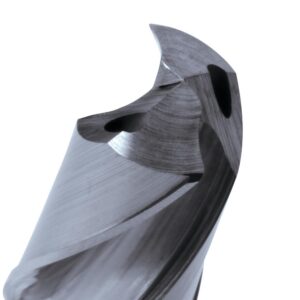
In some circumstances, a tungsten steel or tungsten carbide drill bit may penetrate certain types of glass, but this does not mean that an ordinary metal drill bit is suitable for the job. A conventional twist drill bit may scratch the surface, create a small indentation, or begin penetrating the material. However, the concentrated pressure produced by its cutting edges can generate cracks around the hole, making the glass vulnerable to sudden breakage.
A carbide-tipped masonry or tile drill bit may be more suitable for certain glass-like materials, ceramic tiles, and other brittle surfaces than a standard metal drill bit. Nevertheless, masonry bits are designed primarily for masonry and related materials, and their performance on glass varies significantly. A tool intended for ceramic tiles should not automatically be considered safe for ordinary glass.
Specialized glass drill bits typically use a spear-shaped carbide tip or another abrasive-oriented design. Diamond-coated drill bits use industrial diamond particles to grind the glass gradually, while diamond core bits are often used to create larger, cleaner circular holes. For many common glass-drilling applications, these specialized tools are more appropriate than conventional tungsten steel twist drills.
The distinction is especially important when working with expensive glass panels, decorative glass, mirrors, aquarium glass, or architectural glazing. Even if an unsuitable bit appears to be working initially, a small crack can propagate during drilling or later handling. A hole that looks acceptable from the front may also have chipped edges or subsurface damage that reduces the strength of the finished component.
For reliable results, select a drill bit specifically rated by its manufacturer for the exact type of glass being processed. Tungsten carbide may be part of a suitable tool’s construction, but the complete tool design and its intended application matter more than the material name alone.
Glass is difficult to drill because it combines high hardness with brittleness. Many metals can undergo some degree of plastic deformation when a cutting tool applies force. This deformation allows a drill bit to remove material as chips while the surrounding workpiece remains relatively intact. Glass does not behave in the same way. When local stresses exceed its fracture resistance, microscopic cracks can form and propagate beyond the immediate contact area.
One of the most important factors in glass drilling is the difference between compressive and tensile stress. Glass can withstand substantial compressive loading, but tensile stress is more likely to initiate fracture. An improperly shaped drill bit can concentrate force at a small point, generating tensile stresses near the hole. If the pressure is excessive, the glass may develop radial cracks, edge chipping, or a complete fracture.
Another challenge is heat. Friction between the drill bit and the glass can produce localized temperature changes. Uneven heating and cooling may create thermal stress, particularly in thicker panels or glass that is already under internal stress. Cooling helps control temperature and flush away abrasive debris, although it cannot eliminate the mechanical risks associated with an unsuitable drill bit.
Surface condition also matters. Scratches, chips, existing cracks, and damaged edges can act as stress concentrators. Drilling close to an edge increases the risk of breakage because the remaining glass has less material to distribute the applied forces. The required edge clearance depends on glass thickness, hole diameter, glass type, and the manufacturer’s recommendations.
These characteristics explain why drilling glass requires a controlled, gradual process. A hard drill bit with a sharp conventional cutting point may be excellent for metal machining but still produce poor results on glass. The most suitable tools are designed to remove material progressively while limiting damaging mechanical loads.
Selecting the correct drill bit is the first step toward producing a clean hole. Different tools are designed for different materials, hole diameters, production volumes, and levels of precision.
Diamond-coated drill bits are among the most versatile options for drilling many types of ordinary glass, provided the specific bit is rated for that material. Industrial diamond particles provide an abrasive cutting surface that gradually grinds away the glass instead of relying on conventional cutting lips to shear it.
These bits are useful for small- and medium-diameter holes in suitable glass products. Their abrasive action can help reduce the concentrated cutting forces associated with ordinary twist drill bits. With appropriate cooling, controlled pressure, and a stable workpiece, diamond-coated tools can produce relatively clean holes in applications such as glass craft projects, decorative panels, and selected glass components.
However, not all diamond-coated bits have the same quality or intended use. Coating thickness, diamond particle distribution, bonding method, tool geometry, and manufacturing consistency affect service life and drilling performance. A low-cost bit may lose its abrasive coating quickly, while a properly manufactured industrial tool may deliver more consistent results.
Diamond-coated drill bits are particularly worth considering when surface finish and dimensional consistency are important. For repeated production work, the user should evaluate the tool’s expected life, cooling requirements, hole tolerance, and compatibility with the drilling machine.
Spear-point drill bits typically feature a pointed carbide tip designed for drilling suitable glass, ceramic, and tile materials. Their shape differs from the conventional conical point and cutting lips of a standard metal drill bit. Depending on the product design, the tip helps initiate the hole and remove material under controlled conditions.
Some spear-point bits use tungsten carbide as their cutting material. This makes them relevant when considering tungsten-based tools for glass drilling. However, their suitability comes from the complete geometry and application-specific design rather than simply from the hardness of the carbide.
These bits can be economical for occasional drilling in compatible materials and relatively small holes. They are also available in various diameters, allowing users to select a tool for different installation and fabrication requirements.
Nevertheless, spear-point carbide bits should only be used on glass when the manufacturer explicitly permits the application. A bit marketed for ceramic tiles or masonry may not perform safely on all glass types. It is also important to avoid aggressive feeding, impact action, and excessive pressure.
Diamond core drill bits are generally a strong choice for larger circular holes in suitable glass products. Unlike a conventional twist drill, a core bit removes material around the circumference of the hole, leaving a cylindrical core or opening the center as drilling progresses.
The abrasive diamond segments or coating gradually grind the material away. This design can be advantageous for applications involving larger diameters, glass fabrication, and certain industrial processes where a conventional small drill bit would be unsuitable.
Diamond core bits are available in a wide range of sizes and designs. Some are intended for wet drilling, while others are designed for specific dry-drilling applications. Users must follow the manufacturer’s instructions concerning spindle speed, cooling, machine compatibility, and permissible materials.
For large holes, a core bit may offer better control over the hole’s shape than an ordinary twist drill. However, the workpiece still needs adequate support, and the drilling process must avoid excessive force and abrupt breakthrough. The appropriate choice depends on glass thickness, hole diameter, required tolerances, and production conditions.
Conventional high-speed steel drill bits are designed primarily for metal, plastic, wood, and other materials compatible with their cutting geometry. They are generally not recommended for ordinary glass because their cutting lips can generate concentrated stresses and cause cracking.
Even if a high-speed steel bit is sharp and the glass is relatively thin, the likelihood of chipping or breakage remains a concern. The problem is not merely that the drill bit may wear out. It is that the interaction between the tool and the brittle workpiece can damage the glass before a clean hole is formed.
For this reason, conventional high-speed steel twist drills should not be treated as a substitute for purpose-designed glass drill bits. A suitable diamond or manufacturer-approved carbide glass bit is usually a better choice.
Tungsten carbide and industrial diamond are both important materials in cutting-tool manufacturing, but they perform differently depending on the application. The choice between them should be based on the intended glass type, drilling method, hole dimensions, and production requirements.
Diamond is exceptionally hard and is widely used as an abrasive material for glass, ceramics, stone, and other hard, brittle materials. Diamond-coated tools can gradually grind away the glass, making them suitable for many specialized glass-drilling operations.
Tungsten carbide also offers excellent hardness and wear resistance, but a conventional carbide drill point does not automatically provide the abrasive contact pattern needed for controlled glass drilling. A purpose-designed carbide spear-point bit can work well in approved applications, whereas a standard carbide twist drill may still create damaging stresses.
This means that the comparison should not be reduced to a simple question of which material is harder. Tool geometry, abrasive structure, operating conditions, and the mechanical properties of the glass are equally important.
Hole quality is a major consideration in glass processing. Chipped edges, radial cracks, and uneven hole walls may make a component unsuitable for installation or further processing. In applications where appearance matters, such as decorative glass and furniture panels, the finish around the hole is particularly important.
Diamond-coated tools are often preferred when controlled grinding and a relatively clean finish are required. Specialized carbide spear-point tools can also produce satisfactory results in suitable applications, particularly for smaller holes and occasional work. However, the actual finish depends on the glass, tool quality, cooling, machine stability, and drilling technique.
For applications with tight dimensional tolerances or high cosmetic requirements, it is advisable to conduct a controlled test on a suitable sample or consult a professional glass-processing supplier before machining the final component.
Tool cost should be evaluated in relation to the number of holes, the value of the glass, and the required level of precision. A basic carbide glass drill bit may be economical for occasional work. Diamond-coated bits may offer advantages in abrasive performance and hole quality, while professional diamond core systems may be more appropriate for repeated drilling or larger openings.
The least expensive tool is not necessarily the most economical option. If an unsuitable drill bit breaks a glass panel, the cost of replacing the material can easily exceed the price difference between tools. In commercial manufacturing, tool life, cycle time, repeatability, and rejection rates should all be considered when evaluating the total cost of drilling.
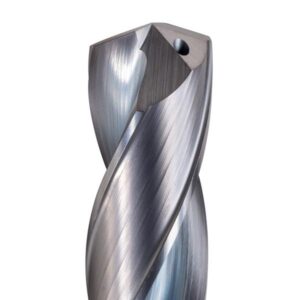
Successful glass drilling depends on more than choosing a suitable bit. The workpiece must be supported correctly, the drilling process must be controlled, and the operator must account for the specific properties of the glass.
Before selecting a drill bit, identify the material and confirm whether drilling is permitted. Ordinary annealed glass can sometimes be drilled using suitable glass-drilling tools, but tempered glass is fundamentally different.
Tempered glass must not be drilled after tempering. Drilling, cutting, or grinding tempered glass can cause the entire panel to shatter because of the internal stresses created during the tempering process. Any required holes or cutouts must generally be completed before the glass is tempered.
Laminated glass also requires special consideration because it consists of glass layers bonded by an interlayer. Drilling it may require specialized equipment and procedures to handle both the glass and the interlayer. For valuable, structural, laminated, or architectural glass, professional processing is often the safest choice.
Use a drill bit explicitly designed and rated for the particular glass application. For small holes, a compatible spear-point carbide glass bit or diamond-coated bit may be appropriate. For larger circular holes, a suitable diamond core bit may be preferable.
Confirm the permitted material, diameter, drilling depth, spindle-speed range, and cooling requirements before starting. Do not assume that a carbide masonry bit or a tungsten steel metal drill can be used simply because its cutting material is hard.
The selected tool should also be compatible with the drill or machine being used. Excessive spindle runout, a loose chuck, or an unstable setup can cause uneven contact and increase the likelihood of cracking.
Place the glass on a stable, flat, adequately supported surface. The support should prevent the panel from vibrating or flexing under the pressure of drilling. Uneven support can cause the glass to bend locally, increasing the risk of fracture.
Keep the drilling area free of debris that could create pressure points underneath the panel. Use appropriate fixtures or clamping methods that stabilize the workpiece without applying excessive force. Avoid gripping glass so tightly that the clamping pressure itself becomes a source of stress.
The hole should also be positioned at a suitable distance from the panel’s edges and existing holes. Follow the glass manufacturer’s recommendations because safe edge distances vary with thickness, hole diameter, material type, and intended loading.
Mark the hole location carefully and ensure that the drill can engage the surface without slipping. Use a method suitable for glass, such as a removable marker or appropriate positioning template.
A stable guide or drilling jig can be useful because it helps maintain the correct alignment and reduces lateral movement during initial contact. Avoid striking the glass with a center punch, hammer, or other tool intended to create a starting indentation in metal. Such impacts can damage the glass and initiate cracks before drilling begins.
For precision work, confirm the hole location and diameter before starting. Moving the drill after the abrasive tool has engaged the glass can damage the hole edge or cause unnecessary side loading.
Operate the drill within the speed range recommended by the drill-bit manufacturer. There is no single ideal speed for every glass-drilling task because the appropriate setting depends on bit diameter, tool design, glass thickness, machine type, and cooling method.
Apply steady, light pressure rather than forcing the bit into the material. Allow the cutting or abrasive surface to remove material gradually. Excessive force can increase friction, concentrate stress, damage the cutting edge, and cause the glass to crack.
Impact or hammer mode should not be used. The repeated impacts associated with masonry drilling can be particularly dangerous for glass. A stable, non-impact drilling setup is essential when using a tool approved for glass.
Follow the tool manufacturer’s cooling instructions. Many glass-drilling operations use a suitable water-based coolant or water supply to reduce heat and flush away abrasive particles. Some specialized tools are designed for particular dry-drilling procedures, so water should not be introduced where the tool or machine instructions prohibit it.
For wet drilling, ensure that the setup is appropriate for the coolant and that electrical equipment is protected against water exposure. Never allow water to reach electrical components that are not designed for wet operation.
Debris should be removed carefully because glass particles can scratch the workpiece or interfere with the drill’s contact. Cooling and debris removal can improve process stability, but neither makes an unsuitable drill bit safe for glass.
The moment the drill approaches the opposite surface is particularly important. As the remaining glass becomes thinner, excessive pressure can cause the exit side to chip or fracture. Maintain light pressure and follow the tool manufacturer’s recommended breakthrough procedure.
For some drilling setups, working from both sides may help reduce exit-side chipping, but this technique requires accurate alignment and is not appropriate for every glass product or machine. A properly designed fixture and a suitable glass-drilling system may provide more consistent results.
After drilling, inspect the hole edges for chips and visible cracks. Do not assume that a hole is structurally acceptable simply because the glass has not broken immediately. Components used in safety-critical or load-bearing applications should be evaluated by a qualified professional.
No. Tempered glass should not be drilled after the tempering process, regardless of whether the drill bit is made from tungsten steel, tungsten carbide, diamond, or another cutting material.
Tempered glass is manufactured through a controlled heating and cooling process that creates a specific pattern of residual stresses. These stresses give it useful strength characteristics, but they also mean that cutting, drilling, grinding, or damaging the surface can release the stored stress and cause the panel to shatter into numerous small pieces.
Using a harder drill bit does not solve this problem. Diamond tools can grind very hard materials, but their cutting ability does not eliminate the internal stresses in tempered glass. Attempting to drill a tempered panel can therefore result in sudden and extensive breakage, potentially causing injury and property damage.
If a tempered glass panel requires holes for fittings, handles, fasteners, or mounting hardware, the hole locations and dimensions should be specified before tempering. The glass must then be processed by an appropriately equipped glass manufacturer or professional fabricator. If the panel has already been tempered and the hole was omitted, replacing it with a correctly manufactured panel is generally the appropriate solution.
This distinction is critical in furniture production, shower enclosures, doors, architectural glazing, and other applications where tempered glass is commonly used.
Mirrors generally consist of a glass substrate with reflective and protective coatings on the back. Drilling a mirror therefore involves more than making a hole through the glass itself. The process may also damage the reflective coating, cause chipping around the opening, or create cracks that extend beyond the drilling area.
For a suitable, non-tempered mirror, a purpose-designed glass drill bit or diamond-coated drill bit may be appropriate. The drilling method must account for the mirror’s thickness, coating, support, and required hole quality. Excessive pressure and poor alignment can cause damage even when the cutting tool is suitable.
Before drilling, confirm whether the mirror is tempered or otherwise treated. Some mirrors are manufactured using safety glass, and the presence of a reflective coating does not reveal whether the underlying glass can be drilled. If the glass type cannot be confirmed, consult the supplier.
For decorative mirrors or expensive custom panels, professional drilling is often a better option than experimenting with a conventional tungsten steel drill bit. The replacement cost of a damaged mirror may be much greater than the cost of having the hole produced correctly.
Ceramic tiles and porcelain are often discussed alongside glass because all are hard materials that can be damaged by unsuitable drilling techniques. However, they are not identical materials, and a tool suitable for one should not automatically be assumed suitable for another.
Tungsten carbide spear-point bits are commonly used for certain ceramic tiles, while diamond-coated bits and diamond core bits are frequently used for harder tiles and porcelain. The appropriate choice depends on the material’s hardness, surface finish, thickness, and the tool manufacturer’s specifications.
For example, a carbide-tipped tile bit may be suitable for a particular glazed ceramic tile but may wear quickly or perform poorly on dense porcelain. A diamond tool may offer better performance in the latter application. Natural stone and engineered materials introduce additional variables, including abrasive mineral content and internal structure.
Glass requires its own material-specific considerations, particularly because of its brittleness and the possibility of sudden fracture. A drill bit marketed for tiles should only be used on glass if its manufacturer explicitly confirms compatibility.
Understanding these differences helps avoid a common mistake: assuming that a drill bit suitable for one hard, brittle material will automatically work safely on every other hard, brittle material.
Several mistakes can increase the risk of glass breakage, damage the tool, or produce an unsatisfactory hole.
A conventional twist drill bit is designed to cut material using its cutting lips. This geometry can concentrate force on glass and initiate cracks. Choose a tool specifically intended for the glass type rather than relying on the hardness of a metal-cutting drill bit.
Forcing the bit into the glass does not necessarily make drilling faster. Excessive pressure can increase stress and friction while reducing the operator’s ability to maintain stable contact. A controlled, gradual approach is preferable.
Hammer action introduces repeated mechanical shocks that are unsuitable for ordinary glass drilling. Always use an appropriate non-impact setup and follow the tool manufacturer’s instructions.
Excessive friction can create heat and accelerate tool wear. Where wet drilling is specified, maintain the required coolant supply and ensure that the equipment is safe for wet operation. Where dry drilling is specified, follow the manufacturer’s procedure rather than improvising a different cooling method.
This is one of the most serious mistakes. Tempered glass should not be drilled, cut, or ground after tempering. Arrange any required holes before tempering or replace the panel with a correctly manufactured one.
Glass particles and broken fragments can injure the eyes and hands. Wear suitable eye protection and other protective equipment appropriate to the task. Handle broken glass carefully, keep bystanders away from the work area, and do not continue using a panel with visible cracks.
A product described as tungsten steel, tungsten carbide, or diamond-coated is not automatically suitable for every drilling application. Check the manufacturer’s material compatibility, recommended operating conditions, and intended use before beginning work.
In industrial production, the choice of drill bit for glass depends on the required hole diameter, production volume, dimensional accuracy, surface quality, and workpiece characteristics. A tool that is acceptable for a one-time decorative project may not be suitable for continuous production where consistent results and low rejection rates are essential.
Diamond-based drilling systems are widely used in glass processing because their abrasive cutting action can be adapted to different diameters and applications. Manufacturers may use specialized machinery, controlled coolant delivery, fixtures, and process monitoring to achieve consistent hole geometry and reduce damage. For complex or high-value glass components, a complete machining solution is usually more important than selecting a drill bit in isolation.
Tungsten carbide remains valuable in the broader cutting-tool industry, including applications involving metals, composites, ceramics, and selected brittle materials. Carbide-tipped glass drill bits can be appropriate when their design is specifically intended for glass. However, standard carbide twist drills should not be considered a universal solution for glass processing.
When sourcing drill bits for commercial use, buyers should examine the tool’s specifications, compatible materials, diameter range, shank design, recommended speed, cooling requirements, expected service life, and quality-control standards. Suppliers should also be able to clarify whether the tool is designed for ordinary glass, ceramic tiles, porcelain, or another material.
For manufacturers and distributors, providing accurate application guidance helps customers select tools more efficiently, avoid misuse, and reduce the likelihood of workpiece damage. It also helps distinguish a general-purpose hard-material drill bit from a purpose-built glass-processing tool.
It may be possible with a specifically designed tungsten carbide glass drill bit, but an ordinary tungsten steel metal drill bit is not recommended. Select a tool rated for the glass type, use a stable setup, and follow the specified speed and cooling requirements.
Tungsten carbide is an extremely hard tool material, but the comparison alone does not determine drilling suitability. Glass is brittle and can fracture under concentrated stress. A purpose-designed abrasive or glass-drilling geometry is more important than hardness alone.
Diamond-coated drill bits and diamond core bits are often preferred for glass because they remove material through abrasive grinding. However, specially designed carbide spear-point bits can also be suitable for certain glass-drilling applications. The correct choice depends on the workpiece and the manufacturer’s specifications.
Do not assume that a masonry bit is suitable for a glass bottle. Use only a bit explicitly approved for the type of glass involved, and consider having the work performed by a professional. Curved surfaces, thin walls, and existing manufacturing stresses can make bottles particularly difficult to drill safely.
No. A diamond bit does not eliminate the internal stresses in tempered glass. Drilling a tempered panel after tempering can cause it to shatter. Required holes must generally be made before tempering.
Many glass-drilling tools require water or another specified cooling method to control heat and remove debris. Other specialized tools may have different requirements. Follow the manufacturer’s instructions and ensure that any electrical equipment is suitable for the operating conditions.
A suitable diamond core drill bit is often the preferred option for larger circular holes in compatible glass products. The appropriate size, machine, cooling system, and support arrangement depend on the glass thickness and the required hole dimensions.
A cordless drill may be suitable if the glass drill bit and machine are compatible, the drill offers stable speed control, and the setup supports the workpiece securely. Do not use hammer mode. For large, thick, expensive, or safety-critical glass components, professional equipment and expertise are recommended.
Tungsten steel drill bits can be extremely effective in many industrial applications, but ordinary metal-cutting drill bits are generally not the right choice for drilling glass. Although tungsten carbide is very hard and wear-resistant, glass requires a controlled drilling or abrasive grinding process that minimizes concentrated stress and reduces the risk of cracking.
For many ordinary glass-drilling tasks, diamond-coated drill bits, suitable diamond core bits, and manufacturer-approved carbide spear-point glass drill bits are more appropriate options. The final selection should depend on the type of glass, hole diameter, material thickness, required finish, and operating conditions.
Most importantly, never attempt to drill tempered glass after tempering. Confirm the glass type before starting, secure the workpiece properly, use a compatible drill bit, control speed and pressure, follow the specified cooling procedure, and wear appropriate protective equipment.
The most reliable approach is to select a tool based on its intended application rather than its hardness alone. By understanding the differences between tungsten steel, tungsten carbide, and diamond-based drilling tools, users can make better purchasing decisions, improve hole quality, and reduce the risk of costly glass damage.

