Our Location
304 North Cardinal St.
Dorchester Center, MA 02124

304 North Cardinal St.
Dorchester Center, MA 02124

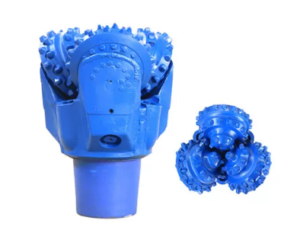
Maintaining consistent weight on bit is one of the most critical aspects of drilling smooth, straight, and efficient holes when utilizing a water well drill rig or any core drilling equipment. In the drilling industry, this specific mechanical force is technically referred to as Weight on Bit or WOB. When you are operating a water drill, the interaction between the cutting teeth of the drill bit and the geological formation requires a delicate equilibrium. If you apply too little downward pressure, the drill bit will simply spin uselessly against the rock or soil, creating excessive friction, glazing the cutting edges, and causing severe thermal degradation without actually advancing the hole. Conversely, if you apply excessive, uncontrolled downward force, you risk stalling the drill motor, bending or breaking the drill string, inducing severe borehole deviation, and prematurely destroying the expensive drill bit bearings or diamond matrices.
Achieving a perfectly smooth borehole requires an advanced understanding of how hydraulic feed systems, mechanical pulldown mechanisms, and the natural weight of the drill pipe string interact dynamically as the depth of the hole increases. As your borehole gets deeper, the cumulative weight of the drill rods increases significantly. This means that the mechanical force you manually or hydraulically apply at the surface must be constantly adjusted and reduced to compensate for the growing gravitational weight of the underground steel. This process is known as holding back or utilizing float control on your rig feed system. Understanding the subtle sensory feedback from your machinery, such as vibration patterns, changes in torque, engine pitch, and the evacuation rate of drilling mud and cuttings, allows an operator to make real-time micro-adjustments that ensure the bit cuts smoothly without wandering off course.
To understand why consistent pressure is essential, one must look at how a drill bit fractures and removes material. Different geological strata require entirely different pressure profiles to maintain a smooth cutting action. For instance, when drilling through soft, unconsolidated formations like clay, loose sand, or silt, very little downward pressure is required. In these environments, the primary objective is to let the fluid hydraulics wash away the material while the bit maintains alignment. If you apply too much pressure in soft clay, the bit will ball up, meaning the excavated clay will pack tightly around the cutters and stop them from penetrating, leading to a clogged borehole and a jagged, poorly formed hole diameter.
When transitioning into hard rock formations such as granite, limestone, or basalt, the cutting mechanism shifts from shearing to compressive crushing or scraping. Here, the weight on bit must be precisely calibrated to exceed the compressive strength of the rock just enough to induce micro-fractures. If the pressure fluctuates wildly, the bit will bounce off the hard rock surface. This bouncing action creates severe shockwaves that travel back up the drill string, causing the bit to chip its carbide buttons or diamond segments. A bouncing bit never cuts a perfectly round hole; instead, it creates spiraling, out-of-round boreholes that make it incredibly difficult to case later on.
You cannot separate mechanical drilling pressure from hydraulic fluid pressure. In water drilling, the drilling fluid, whether it is clean water or a complex bentonite mud mixture, serves multiple purposes that directly impact how pressure is maintained on the bit. The fluid cools the cutting face, lubricates the drill string to reduce rotational torque, and carries the heavy cuttings up the annulus to the surface. The pressure of the fluid pump must be perfectly synchronized with the downward mechanical pressure.
If you increase your downward mechanical pressure and advance the bit faster than the fluid can evacuate the generated cuttings, you will suffer from a phenomenon known as bottom-hole packing. The cuttings accumulate beneath the bit, causing the bit to ride on a cushion of loose debris rather than making solid contact with the virgin rock. This causes an artificial spike in your surface pressure gauges, tricking the operator into thinking they are applying solid force to the formation when, in reality, they are just grinding up old cuttings. This destroys the smoothness of the hole walls, causing cave-ins and ragged edges.
The primary interface for managing consistent pressure on modern water drilling rigs is the hydraulic feed control panel. Operators must become experts at reading and interpreting the pulldown pressure gauge and the holdback pressure gauge simultaneously. To achieve a perfectly smooth hole, you should never rely purely on visual estimation or the speed at which the drill pipe sinks into the ground. Instead, you must monitor the differential pressure.
When starting a new hole, the weight of the drill string is negligible, so you must actively apply hydraulic pulldown pressure to force the bit into the ground. However, as you add more lengths of drill pipe, you must gradually back off the pulldown hydraulic pressure. Eventually, you will reach a crossover depth where the physical weight of the steel drill pipe exceeds the optimal weight required by the drill bit. At this precise juncture, you must switch from applying pulldown pressure to applying holdback pressure. By utilizing the hydraulic cylinders to partially lift or float the drill string, you subtract weight from the bit, ensuring that it continues to experience a constant, uniform downward force despite the expanding mass of the underground drill rods.
A master drill operator uses all of their senses to maintain consistent pressure. The acoustic feedback from the drill rig engine and the top drive motor provides immediate insights into what is happening hundreds of feet below the surface. When the pressure on the bit is perfectly balanced, the rotation motor will emit a steady, rhythmic hum, and the drill string will spin smoothly with minimal lateral whipping.
If you apply too much pressure, the rotational torque will spike rapidly. You will hear the hydraulic system strain, and the engine RPMs will drop significantly as the bit bogs down in the formation. This is a clear warning sign that the bit is catching and gouging the rock rather than cutting it smoothly, which leads to jagged ledge formations inside the borehole. On the other hand, if the pressure is insufficient, the drill string may vibrate at a high frequency, creating a chattering sound. This indicates that the bit is skating across the hard rock face without penetrating, which rounds off the sharp edges of your cutters and creates an uneven, unstable hole geometry.
To achieve the precise control necessary for smooth boreholes, selecting the right machinery equipped with advanced feed management systems is crucial. Below is a detailed analysis of the leading brands and specific models preferred by professional drillers worldwide for their exceptional ability to regulate weight on bit.
Epiroc is a globally recognized leader in the drilling industry, celebrated for engineering heavy-duty rigs that incorporate sophisticated electronic and hydraulic control interfaces.
The Epiroc Diamondback is a highly versatile, truck-mounted water well drilling rig designed specifically to offer operators unmatched precision over their feed systems. It features an advanced hydraulic system that allows for minute adjustments to both pulldown and holdback pressures. The rig utilizes a durable feed cable or cylinder system that delivers exceptionally smooth downward movement, eliminating the jerky, stuttering motions that often plague lesser rigs when shifting through different geological layers. The operator console is designed with high-visibility, fluid-filled gauges that do not bounce under heavy vibration, allowing the driller to maintain a perfectly consistent weight on the bit even when navigating difficult, fractured formations that tend to cause erratic pressure spikes.
The Epiroc TH10 LM is a light-to-medium-duty water well rig that excels in residential and light commercial water drilling applications. What makes this model stand out for smooth borehole creation is its hydrostatic top-head drive and integrated mud pump control package. It features a sensitive electronic feed control system that allows the operator to dial in a precise feed rate that coordinates directly with the rotation speed. This synchronization ensures that as the bit moves through varying densities of soil or rock, the rig automatically self-corrects its downward force to maintain a uniform penetration rate, preventing the over-pressurization that leads to crooked or rough boreholes.
Schramm is an iconic American manufacturer renowned for building incredibly rugged, top-head drive drilling rigs that are engineered to handle the harshest environments while providing maximum operational control.
The Schramm T450GT is a dedicated water well and geothermal drilling rig that is highly respected for its robust mast design and precise pull-up and pull-down capabilities. It features a rugged, heavy-duty hydraulic cylinder feed system that provides up to 30,000 pounds of pulldown and 20,000 pounds of holdback capacity. This wide operational envelope allows the operator to maintain exacting control over the weight on bit from the very first foot of the hole down to significant depths. The T450GT is equipped with Schramm’s proprietary load-sensing hydraulic technology, which automatically adjusts hydraulic flow to match the drilling load, ensuring that fluctuations in formation hardness do not translate into erratic pressure variations at the cutting face.
For deep, large-diameter water well projects where maintaining consistent pressure is a monumental challenge due to the immense weight of the drill string, the Schramm T685WS is an industry benchmark. This heavy-capacity rig offers an incredible 93,000 pounds of pull-up capacity, which is critical for executing precise holdback operations at deep depths. The T685WS features a highly refined micro-feed control valve system that enables the driller to adjust the downward movement of the top drive in increments of fractions of an inch per minute. This extreme level of control ensures that even when managing tons of steel drill pipe, the actual pressure exerted on the drill bit remains perfectly uniform, yielding exceptionally straight and ultra-smooth borehole walls.
Versa-Drill rigs are known for their modern engineering, speed, and highly intuitive operator layouts that simplify the process of maintaining optimal drilling parameters.
The Versa-Drill V-140NG is a cutting-edge, next-generation water well drilling rig that places a strong emphasis on automation and digital control. It features an advanced electronic control system that allows the operator to set a target weight on bit through a digital touch-screen interface. The rig’s onboard computers then monitor real-time feedback from sensors located throughout the hydraulic system, automatically adjusting the pulldown and holdback pressures faster than a human operator could react. This rapid auto-correction prevents the bit from dropping suddenly when entering a void or soft pocket in the rock, which completely eliminates the ledging and wall damage that typically occurs in highly fractured zones.
The Versa-Drill V-100 is a more compact, highly mobile version designed for quick setup and efficient operation in tight spaces. Despite its smaller footprint, it does not compromise on feed control accuracy. It features a direct-drive feed cylinder system that provides a very linear and consistent application of force throughout the entire length of the mast stroke. The hydraulic valving is meticulously tuned to allow for smooth, continuous feed pressure adjustments, making it an excellent choice for drillers who need to maintain pristine hole quality when installing domestic water wells through highly variable overburden materials.
Fraste is an esteemed European manufacturer based in Italy, celebrated worldwide for their innovative, crawler-mounted and truck-mounted water well rigs that offer exceptional ergonomics and technological sophistication.
The Fraste Multidrill XL is a compact yet powerful multi-purpose drilling rig that is widely utilized for water well drilling and environmental soil sampling. It features Fraste’s renowned proportional hydraulic control system, which allows for incredibly smooth manipulation of the rotary head feed circuit. The mechanical structure of the mast is built with extreme rigidity, minimizing structural deflection or flexing when heavy downward pressure is applied. This structural stability ensures that the force applied by the hydraulics is directed perfectly along the axis of the borehole, preventing lateral vibrations that can scuff and degrade the smoothness of the hole walls.
For large-scale water exploration and deep agricultural wells, the Fraste FS 300 represents the pinnacle of European drilling engineering. It features a massive pull-up capacity and is equipped with an advanced automatic feed regulation system. This system allows the operator to program precise limits for both torque and weight on bit. If the rig encounters a sudden change in formation resistance, the system immediately scales back the feed pressure to keep the drilling metrics within the optimal zone for the specific bit being used. The result is a highly continuous, undisturbed drilling process that produces exceptionally clean, smooth, and highly stable boreholes.
One of the greatest challenges to maintaining a uniform weight on bit is encountering unexpected changes in the subsurface geology. For example, when a drill bit transitions rapidly from hard quartz veins into soft limestone or a completely empty cavernous void, the resistance against the bit disappears instantly. If the operator is running high pulldown pressure and fails to react immediately, the drill string will plunge downward violently.
This sudden drop causes the bit to slam into the bottom of the void or the next hard layer, which can catastrophically fracture the cutting elements and severely gouge the walls of the hole, creating massive ledges that can trap the drill string during extraction. To mitigate this risk, when drilling in known fractured zones, operators must increase their holdback pressure proactively and slow down the physical feed rate, allowing the bit to cautiously feel its way through unstable strata rather than forcing its way forward blindly.
As a borehole deepens, the drill string acts like a giant, flexible steel spring. At certain rotational speeds and weights on bit, the natural harmonic frequencies of the steel pipe can match the rotational frequency of the drill bit, resulting in severe axial and torsional vibrations known as bit bounce or stick-slip. When stick-slip occurs, the bit momentarily stops rotating due to friction, winds up like a spring, and then violently releases, spinning at extreme speeds and lifting off the bottom of the hole before slamming back down.
This erratic behavior destroys any chance of maintaining a smooth borehole and quickly degrades the bit. To resolve this issue, the operator must immediately disrupt the harmonic rhythm. This is achieved by either slightly decreasing the rotation speed or momentarily adjusting the weight on bit. By altering these two variables, you change the operational frequency, dampening the destructive vibrations and restoring a smooth, continuous cutting action that preserves the integrity of the borehole walls.

