Our Location
304 North Cardinal St.
Dorchester Center, MA 02124

304 North Cardinal St.
Dorchester Center, MA 02124

The Rate of Penetration (ROP) is the speed at which a drill bit breaks through geological formations to deepen a borehole. Measured in feet per hour or meters per hour, a higher ROP directly translates into shorter drilling timelines, lower fuel consumption, reduced labor costs, and less overall wear and tear on the drilling rig. When commissioning a new water drill bit, whether it is a Polycrystalline Diamond Compact (PDC) bit, a Tricone roller cone bit, or a specialized drag bit, maximizing this metric requires a comprehensive understanding of the mechanical, hydraulic, and geological variables at play.
Drilling for water introduces unique challenges compared to oil and gas exploration. Water well formations frequently alternate rapidly between soft, unconsolidated topsoils, highly plastic and sticky clays, abrasive sandstones, and ultra-hard crystalline basement rocks like granite or basalt. A brand-new drill bit possesses pristine cutting structures with maximum sharpness and uncompromised geometric integrity. However, failing to operate this new asset within its ideal parameters can lead to immediate mechanical dysfunction, premature cutter damage, or a sub-optimal ROP. Optimizing the penetration rate is not simply a matter of pushing the bit harder; it is an engineering balance of matching mechanical energy with hydraulic efficiency while mitigating harmful downhole vibrations.
To unlock the full performance potential of a newly deployed water well bit, operators must systematically manage several operational factors. These include mechanical parameters such as Weight on Bit (WOB) and Rotary Speed (RPM), hydraulic cleaning variables like flow rates and nozzle configurations, and fluid rheology. Furthermore, understanding the specific design features of modern drill bit models from leading international manufacturers allows drillers to tailor their operational techniques to the hardware. This comprehensive guide outlines the exact methodologies, parameter calibrations, fluid dynamics, and specific brand technologies required to maximize ROP while ensuring the longevity of the new cutting structure.
Weight on Bit represents the axial force applied downhole to force the cutting elements of the drill bit into the rock matrix. For a new water drill bit, establishing the correct initial WOB is essential to ensure deep enough cutter engagement without overloading the cutting structure. When a bit is brand new, the contact area between the sharp cutters and the rock face is at its absolute minimum, meaning the localized point pressure is incredibly high. Applying excessive weight immediately can cause the sharp edges of PDC cutters or the carbide inserts of tricone bits to micro-fracture or chip due to point-loading.
The relationship between WOB and ROP generally follows a multi-stage curve. At very low weights, the cutters merely slide across the rock surface, causing frictional heating and a minimal penetration rate, a condition known as scraping or polishing. As WOB increases past the rock’s compressive threshold, the bit enters its highly efficient linear drilling phase, where ROP increases proportionally with every pound of force applied. However, if WOB continues to increase past an optimal threshold, the bit reaches its “foundering point.” At this juncture, the body or blades of the bit make physical contact with the bottom of the hole because the cutters have sunk completely into the formation. This drastically decreases ROP, causes severe torque spikes, and can catastrophically damage a new bit. Drillers must use step-rate tests to find this sweet spot, adjusting weight gradually until ROP peaks without causing erratic torque.
Rotary Speed, measured in revolutions per minute, dictates the frequency with which the cutting elements engage the rock face. Increasing the RPM generally accelerates the rock removal process, provided that the cuttings can be cleared away fast enough. For fixed-cutter bits like PDCs, higher RPM ranges are highly effective in soft to medium formations because the cutters shave the rock continuously. For roller cone bits, RPM provides the impact frequency needed for the teeth to crack and crush brittle rock formations.
However, RPM cannot be increased indefinitely without severe consequences for a new drill bit. High rotational speeds generate extreme frictional temperatures at the cutter tips. For PDC bits, exceeding thermal thresholds causes thermal degradation of the diamond table, leading to rapid delamination and dulling. Furthermore, high RPM accelerates the centrifugal forces acting on the drill string, which can induce dangerous lateral vibrations. When a new bit begins to vibrate laterally or undergo “bit whirl,” the cutters slam sideways into the borehole wall. This impact loading chips the cutters instantly, destroying a premium bit before it completes its first run. The ideal strategy is to maintain a moderate RPM while optimizing WOB, ensuring the cutters are making clean, deep slices rather than light, high-speed scrapes.
Hydraulics are arguably the most critical factor in achieving a high ROP. No matter how sharp or advanced a new drill bit is, it cannot drill faster than its ability to clear away generated rock chips. If the fluid circulation downhole is insufficient, the crushed rock particles accumulate beneath the bit face. The cutting elements end up grinding down existing loose debris over and over again instead of cutting fresh rock, a highly inefficient phenomenon known as re-drilling.
To prevent re-drilling, the rig’s mud pumps must deliver an optimized volumetric flow rate, measured in gallons per minute (GPM). This flow rate must be combined with strategically selected jet nozzles installed directly on the bit body to convert pressure into high-velocity fluid streams. These high-velocity jets sweep across the cutter faces, instantly lifting the rock chips off the bottom of the hole and pushing them up into the annulus. The fluid velocity exiting the nozzles should ideally range between 150 to 450 feet per second. This kinetic energy creates a localized vacuum effect ahead of the cutters, reducing the “chip hold-down pressure” caused by the hydrostatic column of the drilling fluid, thereby allowing the rock to fracture much more easily and boosting ROP.
Bit balling is one of the most common causes of a sudden, drastic drop in ROP when drilling water wells through clay, shale, or gummy mudstone formations. It occurs when sticky clay particles hydrate upon contact with water, compact under the mechanical force of the bit, and adhere to the bit body and cutting blades. Within minutes, this packed clay can completely envelope the cutters, creating a smooth cushion that prevents the bit from physically contacting the bottom of the hole. When this happens, ROP drops to near zero, and the drill string exhibits stable, low torque because the bit is simply sliding on a bed of mud.
Preventing bit balling requires a proactive combination of hydraulic energy and mechanical design. The jet nozzles must be aligned so that the fluid stream directly washes the faces of the cutters, continuously scouring away any adhering clay particles. Furthermore, using a drill bit with an “open face” design—meaning deep, wide junk slots between the blades—allows large volumes of sticky cuttings to pass freely upward without getting wedged. If balling begins to occur, the operator must immediately reduce WOB, increase the pump output to maximum, and pump specialized anti-balling chemical detergents or clay inhibitors downhole to break the adhesive bond between the clay and the bit’s steel or matrix body.
The properties of the drilling fluid, whether using clean water, polymer muds, or bentonite slurries, have a profound impact on how fast a new bit can penetrate the earth. The most influential fluid property regarding ROP is fluid density, commonly referred to as mud weight. An increase in mud weight elevates the hydrostatic pressure exerted by the fluid column against the bottom of the borehole. If this hydrostatic pressure significantly exceeds the natural pore pressure of the formation being drilled, an “overbalanced” condition is created.
This overbalance creates a powerful physical phenomenon known as the chip hold-down effect. When the new drill bit fractures the rock, the high hydrostatic pressure forces the drilling fluid downward against the newly formed chips, effectively pinning them to the bottom of the hole and preventing them from being swept away by the hydraulics. Furthermore, this differential pressure increases the apparent compressive strength of the rock, making it harder and more plastic, requiring substantially more mechanical energy to break. To achieve the absolute maximum ROP with a new bit, drillers should maintain the minimum safe mud weight required to prevent the borehole walls from caving in, keeping the system as close to a balanced or slightly underbalanced state as safely possible.
Fluid viscosity and solid particle content must be tightly controlled to optimize drilling speeds. While a certain level of viscosity is mandatory to lift the cuttings up the deep annulus to the surface, excessively high viscosity creates heavy parasitic friction losses within the drill pipe and across the jet nozzles. This drastically reduces the hydraulic horsepower actually delivered to the bit face for cleaning. High-viscosity muds also slow down the rate at which fluid can penetrate into the microscopic micro-cracks generated by the bit’s cutters, delaying the equalization of pressure that allows rock chips to pop free easily.
Simultaneously, the accumulation of fine drill solids (recycled mud sand and silt) in the drilling fluid must be minimized using shale shakers, desanders, or settling pits. High solids content rapidly erodes the nozzles and cutter bodies of a new bit while simultaneously thickening the mud cake on the borehole wall, leading to differential sticking. For water well operations in reactive clay zones, the addition of specific polymers, such as Partially Hydrolyzed Polyacrylamide (PHPA) or Potassium Chloride (KCl), is highly recommended. These chemical additives encapsulate the clay minerals, preventing them from absorbing water, swelling, and sticking to the new cutting structures, thereby maintaining high ROP through long clay intervals.
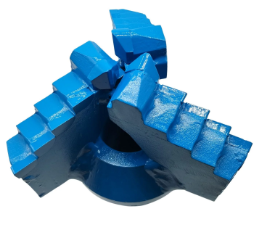
To achieve exceptional penetration rates, selecting and understanding the specific engineering designs of top-tier industrial drill bit brands is essential. Below is a detailed breakdown of the leading manufacturers and their high-performance models utilized in advanced water well and geothermal drilling operations.
SLB stands as an absolute pioneer in high-performance cutter technology, engineering bits that handle extreme mechanical loads while maintaining rapid penetration rates. Their cutting-edge designs focus on specialized cutter geometries that alter how rock is mechanically failed.
AxeBlade Ridged Diamond Element Bits: The AxeBlade series features unique, proprietary 4D-shaped cutters that incorporate a distinct ridge across the diamond table. Traditional flat PDC cutters remove rock via a shearing action, which requires significant WOB. The ridged shape of the AxeBlade combine a crushing action with shearing, breaking rock formations with up to 30% less WOB. This reduction in required force minimizes drill string buckling and maximizes ROP in hard, interbedded sandstones and limestones typical of deep water aquifers.
StingBlade Conical Diamond Element Bits: Designed specifically for ultra-hard, unpredictable geological environments, the StingBlade utilizes three-dimensional, pointed conical diamond elements placed strategically across the bit face. These conical elements exhibit structural resistance to impact damage that is vastly superior to standard flat cutters. When drilling through gravel beds, cobbles, or fractured granite, the StingBlade concentrates axial force into concentrated points, fracturing tough rock easily and allowing water well drillers to maintain a high ROP through formations that would typically destroy a standard bit.
Baker Hughes is renowned for its highly optimized mechanical and hydraulic balancing systems, offering specialized hybrid and roller cone bit lines that excel in maintaining drilling speed across changing geological strata.
Talon High-Performance PDC Bits: The Talon bit family is engineered for maximizing ROP through optimized cutter layouts developed using advanced predictive computer modeling. These bits utilize specialized application-specific cutters that offer excellent thermal stability and abrasion resistance. The blade profiles are exceptionally polished and sculpted with deep, wide junk slots to optimize fluid flow paths. This hydraulic configuration ensures that high-velocity fluid sweeps directly across the cutting edge, eliminating thermal buildup and completely preventing bit balling in soft, high-clay water formations.
Edge Premium Roller Cone Bits: For operations utilizing rotary or downhole motor setups in hard rock, the Edge series represents the pinnacle of tungsten carbide insert (TCI) technology. These roller cone bits feature advanced bearing designs that can withstand prolonged high-RPM operations without overheating. The precision placement and unique shapes of the chisel and conical inserts ensure maximum rock crushing efficiency per revolution, leading to a highly consistent and elevated ROP in dense limestone and dolostone layers.
Halliburton focuses heavily on structural customization and real-time behavioral diagnostics, engineering bits that minimize structural energy loss to maximize downhole speed.
GeoTech High Energy Fixed Cutter Bits: The GeoTech series is customized dynamically for specific regional geologies using Halliburton’s proprietary design platform. These bits incorporate optimized blade counts, cutter sizes, and specific back-rake angles designed to maximize the volume of rock removed per single rotation. By minimizing parasitic structural vibrations like lateral bit whirl, the GeoTech bit keeps all mechanical energy directed forward into rock penetration, delivering excellent ROP stability.
Crush & Shear Hybrid Drill Bits: Combining the technology of both roller cones and fixed PDC cutters on a single bit body, the Crush & Shear series is a powerhouse for highly variable water well profiles. The roller cones lead the way, cracking and fracturing hard, brittle rock layers to alleviate impact forces, while the trailing PDC blades seamlessly shear away the pre-fractured rock. This combined action eliminates the need to trip out of the hole to change bits when moving from hard rock to soft shale, dramatically increasing the overall operational ROP.
Epiroc focuses extensively on industrial-grade durability and penetration mechanics for deep water exploration and geotechnical infrastructure projects.
Omega Premium Rotary Bits: The Omega series is meticulously engineered to withstand extreme rotational speeds and immense axial weights. Featuring highly advanced seal and bearing systems, these bits allow operators to push the upper limits of rig mechanical parameters safely. The carbide inserts are manufactured using unique tungsten formulas that resist thermal cracking, ensuring that the bit retains its sharp, aggressive cutting profile for hundreds of hours, preventing the typical ROP decay seen as standard bits wear down.
Sandvik is a global leader in materials science, translating their mastery of metallurgy and advanced carbides into some of the fastest-drilling rock bits available on the market today.
RR440 Premium Rotary Drill Bits: The RR440 series features a revolutionary localized bearing lubrication and sealing system that extends bit life under high-speed drilling conditions. Sandvik utilizes proprietary structured dual-property carbide grades for the cutting teeth. These inserts feature an ultra-hard outer shell to maintain sharpness and a highly resilient, tough inner core to absorb heavy impact shocks. This allows water well drillers to apply aggressive WOB and RPM combinations in hard, abrasive sandstones, achieving record-breaking ROP values without suffering premature insert breakages.
For regional water well drillers requiring highly specialized, cost-effective, and aggressive drilling tools tailored specifically to agricultural and residential water projects, Palmer Bit Company provides iconic field-proven solutions.
Diamond Devil PDC Bits: The Diamond Devil is highly regarded in the water well drilling industry for its aggressive cutting profiles. These bits are custom-built with specific blade orientations and highly durable, heavy-duty PDC cutters that excel in soft to medium-hard formations. The open-face engineering design allows for massive fluid throughput, making them highly effective when running on low-pressure high-flow water well rigs, enabling fast penetration through thick clay and sand sequences.
Red Devil Drag Bits: A premium choice for soft clay, sand, and loose gravel top-layers, the Red Devil series features heavy-duty steel blades faced with premium industrial carbide cutting edges. The geometry is optimized to slice through soft soils like a knife, offering an incredibly high ROP at low WOB. It serves as an ideal tool for quickly setting the surface casing of water wells before transitioning into deeper, consolidated rock strata.
To maintain a high ROP with a premium new drill bit, an operator must actively prevent the occurrence of severe downhole vibrations. Vibrations are not merely a structural nuisance; they are a major source of energy waste. When a drill string vibrates violently, the mechanical energy supplied by the rig’s top drive or rotary table is dissipated sideways into the borehole walls or absorbed elastically along the length of the drill pipe. This means only a fraction of the structural energy actually reaches the new bit to fracture rock, causing the ROP to drop dramatically.
Drilling vibrations are categorized into three primary modes: axial, torsional, and lateral.
Axial vibration occurs primarily when roller cone bits are operated in hard, stratified formations. The bit repeatedly lifts off the bottom of the hole and slams back down. This bouncing action severely disrupts continuous cutter contact, leading to intermittent rock destruction and a low ROP, while quickly shattering the new bit’s bearings or inserts. To eliminate bit bounce, the driller should adjust the WOB upward to firmly plant the bit into the formation or slightly reduce the RPM to alter the harmonic frequency of the drill string.
Torsional vibration, or stick-slip, is highly destructive to new PDC bits drilling through hard or transitional rock layers. It occurs when the bit cutters momentarily catch or freeze against the rock face while the top drive continues to rotate. The drill string twists elastically like a rubber band, building up immense torsional energy until the bit suddenly snaps free, spinning downhole at up to ten times the surface RPM speed. This violent acceleration and subsequent deceleration cause severe impact damage to the cutting edges of the PDC diamond tables. Stick-slip can be identified at the surface by wild, oscillating torque readings. The immediate remedy is to increase surface RPM while temporarily decreasing WOB to lighten the rotational torque load until the drilling stabilizes.
Lateral vibration, or bit whirl, is the most unpredictable and destructive dynamic dysfunction. It occurs when the bit loses its concentric rotation and begins to roll eccentrically around the inside of the borehole wall. This motion creates extreme impact forces on the sides of the cutters, chipping them rapidly and generating an oversized, out-of-round borehole. An out-of-round hole further reduces hydraulic cleaning efficiency because the fluid velocities drop in the widened annular space, resulting in poor cuttings transport and reduced ROP. Combating lateral vibration requires the installation of heavy drill collars and specialized mechanical stabilizers placed directly above the new drill bit to physically center the assembly within the hole, ensuring smooth, concentric rotation and maximum directional energy transfer.
Geological formations are never perfectly uniform. A water well borehole may begin in loose sand, transition into thick, sticky clay, pass through abrasive sandstone, and terminate in hard, crystalline granite. To maintain the highest possible ROP throughout the entire drilling project, operators must continuously analyze downhole performance and adjust parameters in real time as the new bit transitions between these diverse rock types.
When a new bit enters loose sand or gravel beds, the rock compressive strength is extremely low, meaning the formation requires minimal mechanical energy to break. The primary constraint on ROP here is not cutting ability, but borehole stability and volumetric hole cleaning. In these zones, WOB should be kept relatively low to prevent the bit from digging in too deeply and overloading the rig’s torque capacity or stalling downhole motors.
RPM should be maintained at a moderate to high level to consistently feed the loose materials into the fluid stream. The drilling fluid must have excellent filtration control and an adjusted gel strength to form a tough mud cake along the porous walls. This cake stabilizes the hole and prevents the fluid from leaking completely into the sand formation. Hydraulics must be maintained at a high flow rate to clear the large volume of loose solids rapidly out of the hole.
In thick clay layers, the primary enemy of ROP is bit balling and fluid hydration. As the new bit cuts the clay, the mechanical friction heats the material, making it highly adhesive. If the driller attempts to force the bit through clay using high WOB, the clay will compress into a dense solid cake across the bit faces, dropping the ROP instantly.
The correct strategy in clay is to optimize hydraulic energy to its maximum limit. Nozzle configurations should be adjusted to maximize fluid velocity across the blades. WOB should be kept light, and RPM should be increased to physically fling the clay off the rotating bit structure via centrifugal force. Chemically, the mud system must be continuously treated with specialized encapsulation polymers to prevent the clay from swelling and sticking to the drilling tools.
When transitioning into hard, consolidated rock strata, the rock destruction mechanism changes completely from shearing or slicing to mechanical crushing and chipping. In these dense formations, high RPM is highly detrimental to a new drill bit because it generates extreme localized friction heat that thermally degrades diamond cutters and accelerates abrasive wear on steel bodies.
To maximize ROP in hard rock, the operator must significantly increase the WOB to surpass the ultimate compressive strength of the rock matrix. This ensures the cutters can physically crack and indent the surface. Simultaneously, the RPM must be lowered to a slow, deliberate speed to minimize heat buildup and protect the cutting structures from impact damage. Hydraulics remain critical to instantly clear away the fine, highly abrasive rock powder, ensuring the sharp cutters are always engaging fresh rock rather than grinding down abrasive dust.
Modern high-efficiency water well drilling operations rely heavily on data-driven metrics to optimize the ROP of a new drill bit continuously. Drillers should utilize the concept of Mechanical Specific Energy (MSE) as a primary real-time diagnostic tool. MSE represents the theoretical amount of energy required to destroy a unit volume of rock, calculated by combining parameters like WOB, RPM, torque, and ROP into a standardized mathematical framework.
When a new drill bit is operating at peak efficiency in a given formation, the MSE value will remain low and relatively stable, closely mirroring the actual compressive strength of the rock. If the ROP suddenly drops while the MSE values spike upward, it indicates a severe downhole drilling dysfunction. For instance, if MSE increases dramatically while torque becomes erratic, it is a clear diagnostic signal of stick-slip vibration or a transition into an ultra-hard rock layer. If MSE spikes while torque drops and remains completely flat, it points directly to bit balling or a foundered bit. By constantly monitoring MSE trends on digital rig displays, operators can make precise, proactive adjustments to WOB, RPM, and pump outputs, ensuring the new drill bit remains locked in its highest possible ROP performance window from the surface to the target depth.

