Our Location
304 North Cardinal St.
Dorchester Center, MA 02124

304 North Cardinal St.
Dorchester Center, MA 02124

Water drill bits are precision-engineered cutting tools used extensively in construction, plumbing, HVAC installation, and concrete core drilling operations. These bits are typically made from high-grade steel, tungsten carbide, or diamond-impregnated segments, making them both extremely valuable and highly susceptible to damage during shipping. A single diamond core bit can cost anywhere from fifty dollars to over five hundred dollars depending on its diameter, length, and segment configuration. When these bits are shipped without proper protection, the financial losses from chipping, bending, corrosion, or contamination can be substantial. This comprehensive guide explores every major packaging option available in the market today, including specific brand names, model numbers, and detailed recommendations for each type of water drill bit. Understanding the full spectrum of packaging solutions will help distributors, contractors, and e-commerce sellers minimize product damage and maximize customer satisfaction.
Water drill bits differ significantly from standard wood or metal drill bits in both their construction and their fragility. A typical water drill bit, also known as a core bit or wet drill bit, features a hollow cylindrical body with diamond segments or carbide teeth welded along the cutting edge. The hollow center allows water to flow through the bit during operation, which cools the cutting surface and flushes away debris. This hollow design, while essential for performance, creates a structural weakness that makes the bit more prone to cracking or denting under impact. Additionally, the diamond segments are brazed or laser-welded onto the steel body, and any shock or vibration during transit can cause these segments to crack, spall, or detach entirely. The exposed carbide or diamond surface is also highly sensitive to contamination from dust, moisture, and abrasive particles that can dull the cutting edge before the bit is ever used. Because water drill bits are often shipped internationally or across long domestic supply chains, they may be subjected to multiple handling events, temperature fluctuations, and rough loading conditions. All of these factors combine to make professional-grade packaging not just a nice-to-have but an absolute necessity for anyone who ships water drill bits regularly.
The most common and most destructive form of transit damage to water drill bits is impact. When packages are dropped, thrown, or stacked improperly in a warehouse or on a truck, the bits inside can collide with each other or with the walls of the container. A diamond core bit that receives a sharp impact on its cutting edge can develop micro-cracks in the diamond segments that are invisible to the naked eye but will cause the bit to fail prematurely during its first use. Even a small dent in the steel body can throw off the bit’s concentricity, causing it to wander off-center during drilling and produce oversized or oval holes. Impact damage is particularly common in less-than-truckload (LTL) shipping where packages may be handled by multiple carriers and transferred between vehicles several times.
Continuous vibration during truck or rail transport can cause gradual but cumulative damage to water drill bits. The diamond segments can slowly work loose from their brazed joints, and the steel body can develop fatigue cracks at stress concentration points. Vibration damage is especially problematic for long-diameter bits, such as four-inch or six-inch core bits, because their length creates a lever arm that amplifies the vibrational forces acting on the brazed joints. Over a journey of several hundred or several thousand miles, even moderate vibration can cause enough relative movement between the segment and the body to weaken the bond.
Water drill bits are, ironically, highly vulnerable to water damage during shipping. If a package is exposed to rain, high humidity, or condensation inside a shipping container, the exposed steel surfaces of the bit can begin to rust within hours. Rust not only degrades the appearance of the bit but can also compromise the brazed joints between the segments and the body. Many professional packaging solutions include desiccant packets or vapor barrier liners to combat this risk, but not all packaging providers include these features as standard.
Dust, sand, metal shavings, and other abrasive particles can enter an improperly sealed package and settle on the diamond cutting surface. Once these particles are embedded in the diamond matrix, they act as stress concentrators that can cause the segments to chip or break during operation. Contamination is a silent killer of drill bit performance because the bit may appear perfectly fine when it arrives but will fail catastrophically within the first few holes. This is why sealed, dust-proof packaging is essential for any water drill bit that will be stored for any length of time before use.
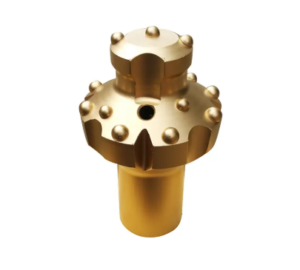
Custom foam inserts are widely regarded as the gold standard for protecting water drill bits during transit. These inserts are typically made from high-density polyethylene (HDPE) foam or cross-linked polyethylene (XLPE) foam, which provides excellent shock absorption and vibration dampening. The foam is cut using CNC machinery to create a precise cavity that holds the drill bit snugly in place, eliminating all movement inside the package. Companies like Pregis Corporation offer a product line called Instapak Foam Packaging Systems, which includes the Instapak 3300 and Instapak 3600 series specifically designed for heavy industrial tools. The Instapak 3300 is a two-component foam system that expands to fill the void space around the product, creating a custom cradle for each individual bit. Another notable brand is Sealed Air Corporation, which produces the Cryovac CleanPak line of foam-in-place packaging. Their model CleanPak 8800 is specifically formulated for precision tools and provides both cushioning and moisture protection. For water drill bits, the ideal foam density is between 1.8 and 2.2 pounds per cubic foot, which provides enough firmness to hold the bit securely while still absorbing impact energy. Custom foam packaging is the most expensive option, typically costing between two and five dollars per unit, but it offers the highest level of protection and is the preferred choice for high-value diamond core bits.
Molded pulp trays are an eco-friendly and cost-effective alternative to foam inserts. These trays are made from recycled paper pulp that is molded into a specific shape to hold the drill bit in place. Companies like Huhtamaki offer the Molded Fiber Packaging line, which includes their TrayForm series designed for industrial tools. The TrayForm 400 model is a popular choice for drill bit packaging because it provides good cushioning while being fully recyclable and biodegradable. Another brand, EcoEnclose, offers the EcoTray series which is specifically engineered for heavy tools. Their model EcoTray 800 has a reinforced bottom and side walls that prevent the bit from shifting during transit. Molded pulp trays typically cost between fifty cents and one dollar fifty cents per unit, making them an attractive option for mid-range drill bits. However, they do not provide the same level of moisture protection as foam or plastic options, so they should be used in combination with a sealed outer box or a plastic bag liner.
Plastic blister packs and clamshell containers are commonly used for retail packaging of water drill bits, but they also serve well for transit protection when the right material is chosen. The most effective blister packs for drill bits are made from high-impact polystyrene (HIPS) or thermoformed polyethylene terephthalate (PET) sheet. Companies like Pro-Pac Packaging offer the ClearView Clamshell series, which includes model CV-450, a heavy-duty clamshell designed for tools weighing up to two pounds. The CV-450 features a hinged lid with a snap-lock closure that keeps the bit secure during handling. Another option is the Packaging Dynamics ClamShell line, model PDC-700, which is made from clear PET and provides full visibility of the product while offering good impact resistance. For water drill bits specifically, the blister pack should include a foam or flocked insert on the inside to cushion the bit. The main advantage of blister packs is their visual appeal, which makes them ideal for e-commerce sellers who want the customer to see the product before purchase. The cost ranges from one dollar to three dollars per unit depending on size and material.
Vacuum-sealed packaging is one of the most effective methods for protecting water drill bits from moisture, contamination, and corrosion. The process involves placing the drill bit inside a heavy-gauge plastic bag along with one or more silica gel desiccant packets, then using a vacuum sealer to remove all the air from the bag. This creates a tight seal that prevents moisture, dust, and oxygen from reaching the bit. Companies like FoodSaver (a brand of Newell Brands) offer the FoodSaver V4840 model, which is a popular consumer-grade vacuum sealer that works well for small to medium drill bits. For commercial operations, the chamber-style vacuum sealers from Henkelman are the industry standard. The Henkelman Boxer 42 model is a tabletop chamber sealer that can handle up to four hundred packages per hour and is widely used in industrial packaging facilities. The desiccant packets should be rated for at least five grams of moisture absorption and should be placed both inside and outside the bag for maximum protection. The cost of vacuum-sealed bags is very low, typically between ten and thirty cents per bag, making this one of the most cost-effective options available. The main limitation is that vacuum-sealed bags do not provide impact protection, so they should always be used inside a rigid outer container such as a cardboard box or plastic case.
For the highest-value water drill bits, such as large-diameter diamond core bits used in concrete cutting, a hard case is the ultimate protection. These cases are typically made from injection-molded ABS plastic or from aluminum with a foam-lined interior. The DeWalt ToughCase system, model DWST1-71195, is a heavy-duty plastic case with a waterproof seal and a foam interior that can hold multiple drill bits and accessories. It is rated IP67 for water and dust resistance, making it ideal for harsh shipping conditions. Another excellent option is the Pelican 1510 Protector Case, model 1510-000-110, which is a hard-shell case made from copolymer polypropylene. The Pelican 1510 is crush-proof, watertight, and dustproof, and it can be customized with foam inserts to hold specific drill bit models. For aluminum cases, the SKB 3I-1814-6B is a popular choice. This case features a gasket-sealed lid, automatic pressure equalization valve, and a foam interior. It is airline-approved and can withstand extreme temperatures, making it perfect for international shipping. Hard cases are the most expensive option, ranging from fifteen to fifty dollars per unit, but they offer unmatched protection and can be reused by the customer, adding value to the purchase.
The outer shipping box is just as important as the inner packaging when it comes to protecting water drill bits. A standard single-wall corrugated box is not sufficient for heavy drill bits. Instead, you should use a double-wall or triple-wall corrugated box with internal dividers to keep the bits separated from each other. Companies like International Paper offer the DuraGarde series of corrugated boxes, which includes model DG-4424, a double-wall box rated for up to sixty-five pounds. The box should be sized so that there is no more than one inch of void space around the bit, and any remaining void space should be filled with kraft paper, bubble wrap, or air pillows. The box should also be sealed with branded packing tape and labeled with “Fragile” and “This Side Up” stickers. The cost of a quality corrugated box with dividers ranges from two to six dollars depending on size and wall thickness.
For extremely large or expensive water drill bits, such as twelve-inch or larger core bits used in bridge construction or tunnel boring, a wooden crate is the only acceptable packaging option. Wooden crates provide superior impact protection and can be built to custom dimensions. Companies like Custom Crates & Containers offer pre-fabricated wooden crates in various sizes, or they can build a custom crate to your exact specifications. The wood should be at least three-quarter inch thick hardwood, such as oak or maple, and all joints should be reinforced with steel brackets. The interior should be lined with at least one inch of closed-cell foam or bubble wrap. The cost of a custom wooden crate ranges from twenty to one hundred dollars depending on size and complexity, but for bits that cost five hundred dollars or more, this investment is well worth it.
For small water drill bits with diameters under one inch, such as those used for plumbing or electrical work, a padded shipping envelope can be sufficient. These envelopes are made from kraft paper with a bubble-lined interior. The ULINE brand offers the S-12595 model, which is a twelve-by-nineteen-inch bubble mailer with a peel-and-seal closure. For drill bits, you should use the heavy-duty version, model S-19477, which has three-sixteenth-inch bubble lining and can withstand rough handling. The envelope should be sealed with a strong adhesive and reinforced with a strip of packing tape across the seam. The cost is typically between one and two dollars per envelope.
Husqvarna, one of the world’s leading manufacturers of diamond drilling equipment, uses a proprietary packaging system for their water drill bits. Their standard packaging for core bits includes a molded pulp tray inside a double-wall corrugated box with a Husqvarna-branded sleeve. For their premium bits, such as the Husqvarna DMS 240V diamond core bit, they use a custom foam insert inside a hard plastic case. The DMS 240V is packaged in a Husqvarna-branded carrying case, model number 587 96 12-01, which is a blow-molded plastic case with a foam interior. This case is specifically designed to hold the DMS 240V and its accessories, and it provides excellent protection during both storage and transit.
Diamond Products Corporation, a major manufacturer of concrete cutting and drilling tools, uses a combination of vacuum-sealed bags and corrugated boxes for their water drill bits. Their standard core bit, the Dia-Shield segmented core bit series, is packaged in a clear plastic blister pack with a foam insert, which is then placed inside a corrugated box with “Fragile” labeling. For their larger bits, such as the Dia-Shield 72-inch core bit, they use a wooden crate with foam lining. The part number for the packaging of the Dia-Shield 48-inch bit is DP-PKG-48, which includes a custom foam tray, a desiccant packet, and a sealed outer box.
MK Diamond is another major player in the diamond tool industry, and their packaging reflects their commitment to quality. Their MK-101 and MK-201 series core bits are packaged in a custom molded foam tray inside a MK Diamond-branded box. For their premium bits, such as the MK Diamond 162062 4-inch turbo core bit, they use a vacuum-sealed bag with a silica gel packet inside a corrugated box. The vacuum seal ensures that the diamond segments remain clean and free from contamination, while the corrugated box provides impact protection. MK Diamond also offers a reusable plastic case, model MK-CASE-PRO, which is a hard-shell case with a snap-lock closure and a foam interior. This case is sold separately and is designed for contractors who want to protect their investment in high-end bits.
Bosch, the well-known power tool brand, packages their water drill bits in a variety of ways depending on the product line. Their Bosch Professional 4-inch diamond core bit, model number 2 608 625 044, is packaged in a plastic blister pack with a cardboard backing. The blister pack is then placed inside a small corrugated box with Bosch branding. For their larger bits, such as the Bosch 8-inch core bit, model 2 608 625 050, they use a cardboard tube with foam end caps. The tube is then placed inside a corrugated box for shipping. Bosch also offers a Bosch Professional System Case, model number 1 600 A00 1SF, which is a modular plastic case system that can be configured to hold various bits and accessories. This case provides excellent protection and is a popular choice among professional contractors.
EZ Drill is a specialized manufacturer of water-fed drill bits for glass and tile cutting. Their bits are relatively small and delicate, so they require packaging that provides both impact protection and contamination prevention. EZ Drill packages their bits in a custom foam insert inside a sealed plastic bag with a desiccant packet. The outer packaging is a small corrugated box with EZ Drill branding. For their EZ Drill 6mm and 10mm glass core bits, they use a molded pulp tray inside a clear plastic clamshell. The clamshell is then sealed with a tamper-evident sticker and placed inside a padded envelope for shipping. EZ Drill also offers a reusable aluminum case, model EZ-CASE-ALU, which is a small hard case with a foam interior designed specifically for their bit lineup. This case is sold as an accessory and is highly recommended for customers who ship their bits frequently.
Diamond core bits are the most expensive and most fragile type of water drill bit, and they require the highest level of packaging protection. For core bits with diameters under two inches, a custom foam insert inside a corrugated box is sufficient. For core bits between two and six inches in diameter, a vacuum-sealed bag with desiccant inside a foam-lined hard case is recommended. For core bits over six inches, a wooden crate with foam lining is the only acceptable option. The key is to ensure that the diamond segments are completely immobilized and protected from any impact, vibration, or contamination.
SDS and rotary hammer bits used for wet drilling in concrete are more robust than diamond core bits, but they still benefit from proper packaging. A molded pulp tray inside a corrugated box is usually sufficient for these bits. If the bits are being shipped internationally or over long distances, adding a vacuum-sealed bag inside the box provides extra moisture protection. The Bosch SDS-plus and SDS-max bits are good examples of this category, and they are typically packaged in plastic blister packs or cardboard tubes.
Step bits and hole saws are less fragile than core bits but can still be damaged by impact or contamination. A plastic clamshell or blister pack is usually sufficient for these bits. For bulk shipments, a corrugated box with dividers works well. The Milwaukee Step Bit series and the Lenox Speed Slot hole saw series are both commonly packaged in blister packs with cardboard backings.
Investing in professional packaging for water drill bits pays for itself many times over. Consider the following cost comparison. A standard corrugated box with no internal protection costs about one dollar. Adding a molded pulp tray brings the cost to one dollar fifty cents. Adding a custom foam insert brings it to three dollars. Adding a vacuum-sealed bag brings it to three dollars twenty cents. Adding a hard plastic case brings it to eight dollars. Now consider the cost of a damaged bit. A diamond core bit that arrives with chipped segments is typically a total loss, because the customer will not trust the bit and will demand a replacement. The cost of that replacement, including shipping, is often higher than the cost of proper packaging. For a bit that costs two hundred dollars, spending an extra five dollars on packaging represents a return on investment of forty to one. Even for a fifty-dollar bit, the ROI is ten to one. The data clearly shows that professional packaging is not an expense but an investment that protects your margins and your reputation.
International shipping introduces additional challenges, including longer transit times, more handling events, and exposure to extreme temperatures and humidity. For international shipments, the recommended packaging stack is as follows. First, vacuum-seal the bit with a desiccant packet. Second, place the vacuum-sealed bit inside a custom foam insert. Third, place the foam insert inside a hard plastic case or a wooden crate. Fourth, place the case or crate inside a double-wall corrugated box with at least two inches of void fill on all sides. Fifth, seal the box with branded tape and apply “Fragile” and “This Side Up” labels. Sixth, if shipping by sea, consider adding a moisture barrier bag around the entire assembly. Following these steps will ensure that your water drill bits arrive at their destination in perfect condition, regardless of how far they have traveled.
As the packaging industry moves toward greater sustainability, many manufacturers are offering eco-friendly alternatives that still provide excellent protection. Molded pulp trays made from recycled paper are fully biodegradable and compostable. Foam inserts made from recycled HDPE are also available from companies like Pregis and Sealed Air. Corrugated boxes are inherently recyclable, and using soy-based inks for printing further reduces the environmental impact. The Henkelman vacuum sealers use less plastic than traditional methods because the bags are thinner and more efficient. By choosing sustainable packaging options, you can reduce your carbon footprint while still protecting your products. Many customers, especially in Europe, actively prefer eco-friendly packaging, so investing in green packaging solutions can also be a competitive advantage.

