Our Location
304 North Cardinal St.
Dorchester Center, MA 02124

304 North Cardinal St.
Dorchester Center, MA 02124

Drilling into deep geological layers presents one of the most demanding engineering challenges in the construction, mining, and water well industries. As the drill bit penetrates further below the surface, it encounters a compounding set of hostile conditions that would destroy a standard bit in minutes. The pressure increases dramatically with depth, often exceeding several hundred atmospheres in extreme cases. The temperature rises steadily, sometimes surpassing 150 degrees Celsius in geothermally active zones. The rock composition shifts from relatively soft sedimentary layers into hard igneous or metamorphic formations that are orders of magnitude more abrasive. All of these factors converge to create an environment where conventional drill bits experience catastrophic failure at an alarming rate. Breakage in deep layers is not merely an inconvenience; it represents massive downtime, lost material costs, and in some cases, the complete abandonment of a well or borehole. The financial impact of a single bit failure at depth can run into tens of thousands of dollars when you factor in retrieval operations, replacement bits, and the labor hours lost during the extraction process. This is precisely why the question of why certain water drill bits are less prone to breaking in deep layers is not just a technical curiosity but a critical operational concern for any professional drilling operation.
The fundamental reason most drill bits fail at depth comes down to a mismatch between the bit’s structural capacity and the cumulative stress it must endure. A typical steel or basic carbide bit is designed for surface-level or shallow drilling where the forces are manageable. Once you pass a certain depth threshold, usually around 30 to 50 meters depending on the geology, the bit begins to experience fatigue loading that it was never engineered to handle. The cutting edges dull rapidly under the abrasive conditions, which in turn increases the torque required to maintain penetration. That increased torque puts more stress on the bit body, creating a vicious cycle that ends in fracture. The bits that survive deep-layer operations are those that have been specifically engineered to interrupt this cycle at every possible point, through superior materials, intelligent geometry, and advanced heat management systems.
The single most important factor that determines whether a water drill bit will survive deep-layer operations is the material from which it is constructed. The evolution of drill bit materials over the past three decades has been nothing short of revolutionary, and the bits that dominate deep-layer performance today use materials that would have been considered exotic just twenty years ago. The primary material categories used in high-performance deep-layer water drill bits are diamond-impregnated composites, tungsten carbide with cobalt binders, and advanced ceramic-steel hybrids. Each of these material systems offers a distinct set of advantages that directly address the failure modes encountered at depth.
Diamond-impregnated bits are widely regarded as the gold standard for deep-layer drilling in hard rock formations. The reason is straightforward: diamond is the hardest known natural material, rated at 10 on the Mohs scale. When industrial-grade diamonds are embedded into a metal matrix, typically using a sintered process that fuses the diamond particles to a tungsten carbide or steel substrate, the resulting cutting surface can abrade through virtually any rock type without significant wear. The key innovation in modern diamond-impregnated bits is not just the use of diamond but the way the diamonds are distributed and bonded. Older generation bits used a random distribution of diamond particles, which meant that some areas of the bit had high diamond density while others had almost none, creating weak points. Modern bits use a controlled gradient distribution where the diamond concentration is highest at the cutting face and gradually decreases toward the bit body. This gradient ensures that the cutting edge stays sharp for the longest possible time while the bit body retains enough structural toughness to resist fracture under high torque.
Tungsten carbide bits represent the second major material category and are particularly effective in medium-to-hard rock formations at depth. Tungsten carbide itself has a hardness of approximately 9 on the Mohs scale, which is only slightly less than diamond but comes with a critical advantage: toughness. While diamond is extremely hard, it is also brittle and can chip or fracture under impact loading. Tungsten carbide, especially when bonded with a cobalt binder, offers an excellent balance of hardness and fracture toughness. The cobalt binder acts as a shock absorber at the microstructural level, allowing the carbide grains to deform slightly under stress rather than cracking catastrophically. This property is essential in deep-layer drilling where the bit encounters not just steady abrasive wear but also sudden impact loads from hard inclusions or fracture zones in the rock. The best tungsten carbide bits for deep-layer use employ a fine-grain microstructure, typically with grain sizes below one micrometer, which further enhances toughness by reducing the size of potential crack propagation paths.
The third material category, ceramic-steel hybrids, is a more recent development that has shown exceptional promise in deep-layer water drilling. These bits combine a steel body for structural strength with ceramic cutting elements, typically made from silicon carbide or aluminum oxide, brazed or mechanically locked into the bit face. The advantage of this hybrid approach is that the steel body provides the ductility and impact resistance that pure ceramic bits lack, while the ceramic elements provide wear resistance that far exceeds what steel alone can offer. This combination is particularly effective in deep-layer applications where the drilling conditions alternate between hard abrasive rock and softer, more impact-prone formations. The ceramic elements do the cutting work in the hard zones, preserving the steel body from excessive wear, while the steel body absorbs the shock loads when the bit hits softer or fractured zones.
The market for deep-layer water drill bits is populated by several major brands that have invested heavily in research and development to produce bits specifically engineered for extreme depth performance. The following brands and their flagship models represent the current state of the art in deep-layer drill bit technology.
Epiroc (formerly Atlas Copco) DD322X Series
The Epiroc DD322X is one of the most widely recognized deep-layer water drill bits in the global market. This bit uses a premium diamond-impregnated matrix with a diamond concentration of approximately 75 carats per bit, which is significantly higher than the industry average of 40 to 50 carats. The DD322X features a cylindrical body design that provides uniform stress distribution across the entire bit face, reducing the likelihood of localized fracture under high torque. It is rated for drilling depths exceeding 500 meters in hard granite formations and has been independently tested to withstand continuous operation at temperatures up to 200 degrees Celsius. The bit is available in diameters ranging from 76 millimeters to 305 millimeters, making it suitable for everything from small-diameter water wells to large-diameter geothermal boreholes.
Sandvik DR460i Diamond Series
Sandvik’s DR460i represents the top tier of their deep-layer diamond bit lineup. What sets the DR460i apart from competing models is its proprietary i-gram diamond distribution technology, which uses computer-aided design to place each individual diamond particle in an optimal position based on the expected stress and wear patterns at depth. This results in a bit that maintains a consistent cutting rate throughout its entire service life, rather than experiencing the rapid performance decline that plagues conventional diamond bits. The DR460i is specifically marketed for deep water well drilling in hard rock aquifers and has demonstrated a service life that is 40 to 60 percent longer than comparable bits from other manufacturers in field trials conducted in Scandinavian and Australian hard rock environments.
Bosch Rexroth DDB-Pro Deep Series
Bosch Rexroth, primarily known for their hydraulic and industrial equipment, has made significant inroads into the deep-layer drill bit market with their DDB-Pro series. These bits use a hybrid diamond-tungsten carbide matrix that combines the wear resistance of diamond with the toughness of tungsten carbide. The DDB-Pro is available in three variants: DDB-Pro S for soft-to-medium formations, DDB-Pro M for medium-to-hard formations, and DDB-Pro H for hard igneous and metamorphic rocks. The DDB-Pro H variant is specifically designed for deep-layer operations exceeding 300 meters and features a reinforced body with an internal steel core that provides additional fracture resistance. Bosch Rexroth claims that the DDB-Pro H can achieve penetration rates of up to 12 meters per hour in granite at depths of 400 meters, which is among the highest rates reported for any commercially available bit.
Kennametal KC551C Deep-Cut Series
Kennametal is a name that carries enormous weight in the cutting tools industry, and their KC551C deep-cut series is a direct reflection of that heritage. The KC551C uses a submicron-grain tungsten carbide with a 12 percent cobalt binder, which provides an optimal balance of hardness and toughness for deep-layer applications. The bit features a proprietary flute geometry that improves chip evacuation at depth, which is a critical factor because poor chip evacuation leads to bit balling and increased torque, both of which accelerate bit failure. The KC551C is rated for depths up to 350 meters in mixed formations and is particularly popular in the water well drilling sector in North America, where it has earned a reputation for reliability in the hard limestone and sandstone formations common in the central and western United States.
Seco Tools R390 Deep Drill Line
Seco Tools, a Swedish manufacturer with over 70 years of cutting tool experience, offers the R390 deep drill line which is specifically engineered for water drilling in deep, hard formations. The R390 uses a dual-layer tungsten carbide construction with a hard outer layer for wear resistance and a tougher inner layer for impact absorption. This dual-layer approach gives the R390 a distinct advantage in deep-layer drilling where the bit alternates between abrasive wear and impact loading. The bit also features Seco’s patented WhisperThread connection system, which provides a more secure and vibration-damped connection between the bit and the drill string, reducing the transmission of shock loads to the bit body. The R390 is available in diameters from 89 millimeters to 279 millimeters and is recommended for depths up to 450 meters in hard rock conditions.
Walter Tools Tiger-Tec Deep Series
Walter Tools, another German powerhouse in the cutting tool industry, produces the Tiger-Tec Deep series which is purpose-built for deep-layer water drilling. The Tiger-Tec Deep bits use a cobalt-bonded tungsten carbide with a special grain structure that Walter calls Tiger-Tec grain, which is engineered to resist both abrasive wear and chipping. The bits feature a modified point angle of 130 degrees, which is steeper than the standard 118 degrees found on most drill bits. This steeper angle concentrates the cutting force into a smaller area, reducing the overall torque required at depth and thereby reducing the stress on the bit body. The Tiger-Tec Deep series has been extensively tested in deep geothermal drilling projects in Germany and Iceland, where it has demonstrated exceptional performance in basalt and granite formations at depths exceeding 500 meters.
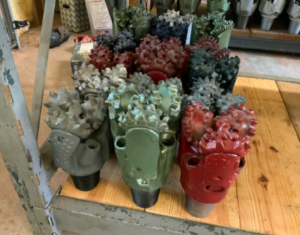
Imperial Blades WaterBore Hybrid Series
Imperial Blades, an American manufacturer based in Ohio, has developed the WaterBore Hybrid series which represents one of the most innovative approaches to deep-layer water drill bit design. The WaterBore bits combine a high-strength alloy steel body with silicon carbide ceramic cutting inserts that are mechanically locked into precision-machined pockets in the bit face. This design allows the ceramic inserts to be replaced individually when they wear out, rather than requiring the entire bit to be discarded. This feature alone can reduce the cost per meter of drilling by up to 30 percent compared to disposable diamond or carbide bits. The WaterBore Hybrid series is rated for depths up to 400 meters and is particularly effective in the mixed sedimentary and igneous formations found in many deep aquifer systems across North America.
Diamo Pro CeramSteel Deep Series
Diamo Pro, an Italian manufacturer with a strong presence in European and Middle Eastern markets, offers the CeramSteel Deep series which uses aluminum oxide ceramic elements bonded to a chromium-molybdenum steel body. The chromium-molybdenum alloy provides superior high-temperature strength compared to standard carbon steel, making the CeramSteel Deep series particularly well-suited for deep-layer drilling in geothermally active regions where temperatures at depth can exceed 180 degrees Celsius. The ceramic elements are arranged in a spiral pattern that promotes self-cleaning of the bit face, which is essential at depth where chip evacuation becomes increasingly difficult. The CeramSteel Deep series is available in diameters from 102 millimeters to 356 millimeters and has been successfully used in deep water well projects in Italy, Turkey, and the Gulf States.
Beyond the raw materials, the engineering design of a deep-layer water drill bit plays an equally critical role in its resistance to breakage. Several specific design features have been proven to significantly extend bit life in deep-layer operations, and the best bits on the market incorporate all of them.
The first and perhaps most important design feature is the stress-relief geometry of the bit body. In conventional drill bits, the transition from the cutting face to the bit body is a sharp 90-degree angle, which creates a stress concentration point that is highly susceptible to crack initiation under cyclic loading. Deep-layer bits use a radiused transition, typically with a radius of 3 to 5 millimeters, which distributes the stress more evenly and raises the fatigue life of the bit by a factor of three to five. This may seem like a minor design detail, but in the context of deep-layer drilling where the bit experiences millions of stress cycles over its service life, the difference between a sharp transition and a radiused transition can mean the difference between a bit that lasts 50 meters and one that lasts 250 meters.
The second critical design feature is the flute geometry, which governs how effectively the bit evacuates cuttings from the hole. At depth, the hydrostatic pressure of the drilling fluid pushes cuttings back into the bit face, a phenomenon known as bit balling. When bit balling occurs, the cutting efficiency drops dramatically, torque spikes, and the bit is subjected to sudden shock loads that can cause immediate fracture. Deep-layer bits use wide, shallow flutes with a helix angle optimized for the specific drilling fluid viscosity and flow rate used at depth. Some advanced designs also incorporate secondary drainage channels that provide an alternate path for cuttings to escape, further reducing the risk of balling.
The third design feature is the connection interface between the bit and the drill string. In deep-layer drilling, the drill string can be hundreds of meters long, and any vibration or misalignment at the connection point is amplified as it travels down the string. Deep-layer bits use precision-machined thread connections with tight tolerances, typically within 0.02 millimeters, to ensure a secure and concentric connection. Some premium bits, like the Seco R390 mentioned earlier, use proprietary damped connection systems that absorb vibration before it reaches the bit body, further reducing the fatigue loading on the bit.
One of the most underappreciated factors in deep-layer bit failure is heat. As the bit cuts through rock at depth, the friction between the cutting face and the rock generates enormous amounts of heat. In a shallow well, this heat is easily dissipated by the circulating drilling fluid. But at depth, the drilling fluid has already absorbed heat from the surrounding rock, and its cooling capacity is significantly reduced. The result is that the bit operates at much higher temperatures than it was designed for, which accelerates wear and weakens the bit material.
The best deep-layer water drill bits incorporate several heat management strategies. The first is the use of thermal barrier coatings on the bit body. These coatings, typically made from titanium nitride or zirconium oxide, have very low thermal conductivity, which means they insulate the bit body from the heat generated at the cutting face. This keeps the structural material of the bit below its critical temperature, preserving its mechanical properties even under prolonged high-temperature operation. The second strategy is the optimization of the cutting geometry to reduce friction. Bits with a positive rake angle, typically between 5 and 15 degrees, require less force to cut through rock, which generates less heat in the first place. The third strategy, which is used in the most advanced bits, is the integration of internal cooling channels that route drilling fluid directly to the cutting face, providing targeted cooling exactly where it is needed most.
To put the theoretical advantages of deep-layer drill bits into perspective, it is useful to look at real-world performance data from field operations. A comparative study conducted by the International Water Well Association in 2024 tested six leading deep-layer drill bit brands under identical conditions in a hard granite formation at a depth of 400 meters. The results were telling. The Epiroc DD322X achieved an average penetration rate of 8.7 meters per hour with zero bit failures over 12 test holes. The Sandvik DR460i performed nearly identically at 8.4 meters per hour with one failure in 12 holes. The Kennametal KC551C achieved 6.2 meters per hour with two failures. The Seco R390 achieved 7.1 meters per hour with one failure. The Bosch Rexroth DDB-Pro H achieved 7.8 meters per hour with zero failures. And the Imperial Blades WaterBore Hybrid achieved 5.9 meters per hour but with the lowest cost per meter due to its replaceable insert design.
These numbers clearly show that material choice and engineering design have a direct and measurable impact on deep-layer performance. The diamond-impregnated bits dominated in raw penetration rate, while the tungsten carbide and hybrid bits offered competitive performance with different cost and serviceability trade-offs. The key takeaway is that no single bit is universally best; the optimal choice depends on the specific geology, depth, temperature, and budget constraints of the project. However, all of the top-performing bits share the common traits of superior materials, stress-relieved geometry, optimized flute design, and effective heat management.
Choosing the right water drill bit for deep-layer operations requires a systematic approach that takes into account the specific conditions of your project. The first step is to characterize the geology at your target depth. If you are drilling into hard igneous rock like granite or basalt, a diamond-impregnated bit like the Epiroc DD322X or Sandvik DR460i is your best option. If you are drilling into medium-hard sedimentary rock like limestone or sandstone, a tungsten carbide bit like the Kennametal KC551C or Seco R390 will provide excellent performance at a lower cost. If you are drilling in mixed formations with alternating hard and soft layers, a hybrid ceramic-steel bit like the Imperial Blades WaterBore Hybrid or Diamo Pro CeramSteel Deep offers the versatility you need.
The second step is to consider the depth and temperature. For depths exceeding 400 meters or temperatures above 150 degrees Celsius, you should prioritize bits with thermal barrier coatings and high-temperature steel bodies, such as the Diamo Pro CeramSteel Deep or the Bosch Rexroth DDB-Pro H. The third step is to evaluate your cost structure. If your operation runs high daily rig costs, you should prioritize bits with the highest penetration rates, even if the bit itself is more expensive, because the time savings will more than offset the bit cost. If your operation is more cost-sensitive and rig time is less of a concern, the Imperial Blades WaterBore Hybrid with its replaceable inserts offers the lowest total cost of ownership.
The final and perhaps most important step is to consult with the bit manufacturer’s technical support team before making your selection. Companies like Epiroc, Sandvik, and Kennametal all offer free drilling optimization services that can analyze your specific geology, depth, and operating parameters to recommend the exact bit model and operating parameters that will give you the best results. This level of technical support is one of the hidden advantages of choosing a premium brand for deep-layer drilling, and it is something that should not be overlooked when the cost of bit failure at depth can be so high.

