Our Location
304 North Cardinal St.
Dorchester Center, MA 02124

304 North Cardinal St.
Dorchester Center, MA 02124

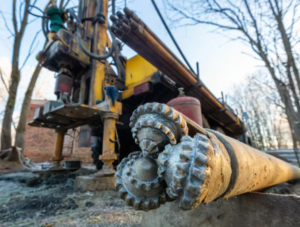
Water drill bits are among the most critical tools in modern construction, mining, and infrastructure development. They are specifically engineered to bore through concrete, reinforced concrete, brick, stone, asphalt, and other dense materials while using water as a coolant and dust suppressant. The performance and lifespan of a water drill bit depend heavily on the quality of its steel body, the design of its segments, and the surface treatment applied to its core structure. Among all the engineering enhancements available today, body hardening stands out as one of the most effective methods for dramatically improving the durability, wear resistance, and overall service life of water drill bits. This article provides a comprehensive and in-depth exploration of how body hardening technology works, why it matters, which brands and models utilize it, and what benefits users can expect in real-world applications. Whether you are a contractor selecting bits for a large-scale project or an engineer looking to understand the metallurgy behind drill bit longevity, this guide will give you everything you need to know.
Water drill bits, also commonly referred to as wet drill bits or core drill bits, are hollow cylindrical cutting tools that rotate at high speeds to create precise circular holes in hard materials. Unlike standard twist drills used for metal or wood, water drill bits are designed to handle abrasive, high-compressive-strength materials such as reinforced concrete with rebar, granite, limestone, and hard brick. The “water” in water drill bit refers to the continuous flow of water through the center of the bit during operation. This water serves multiple purposes: it cools the cutting surface, flushes away debris, reduces airborne dust, and extends the life of the diamond segments bonded to the bit’s outer edge.
Despite the presence of water cooling, the steel body of a drill bit is subjected to extreme mechanical stress. The bit rotates at speeds often exceeding 1,000 RPM while being pressed against material with compressive strengths of 30 MPa to over 100 MPa in the case of high-strength concrete. The friction between the steel body and the material being drilled generates significant heat, even with water cooling. Over time, this heat and mechanical abrasion cause the steel body to wear, deform, crack, or lose its structural integrity. When the body fails, the diamond segments lose their support and fall off, rendering the entire bit useless.
This is where body hardening becomes essential. Body hardening refers to a set of metallurgical processes that increase the hardness, tensile strength, and wear resistance of the steel body without making it so brittle that it shatters under impact. The goal is to create a steel core that can withstand the combined forces of rotation, axial pressure, lateral vibration, and thermal cycling for as long as possible. Without proper hardening, even the highest-quality diamond segments will fail prematurely because the body that holds them in place cannot survive the drilling environment.
Body hardening is rooted in the science of metallurgy, specifically in the manipulation of the microstructure of steel through controlled heating and cooling processes. The most common forms of body hardening used in water drill bit manufacturing include induction hardening, carburizing, nitriding, and flame hardening. Each of these processes alters the crystal structure of the steel at the surface and near-surface layers, creating a hard outer shell while maintaining a tougher, more ductile core.
Induction hardening is the most widely used method for water drill bit bodies. In this process, the steel bit body is placed inside an induction coil that generates a high-frequency electromagnetic field. This field heats the surface of the steel rapidly to temperatures between 800°C and 950°C, depending on the steel grade. The heated surface is then immediately quenched with water or oil, causing the austenite phase of the steel to transform into martensite, an extremely hard crystalline structure. The depth of the hardened layer can be precisely controlled, typically ranging from 1.5 mm to 4 mm, which is ideal for drill bit applications where the surface needs to resist wear while the core absorbs shock.
Carburizing is another effective hardening technique. In this process, the steel bit body is exposed to a carbon-rich environment at elevated temperatures (usually 850°C to 950°C) for several hours. Carbon atoms diffuse into the surface of the steel, increasing its carbon content and thereby its hardness after quenching. Carburized steel bodies typically achieve a surface hardness of 58 to 64 HRC (Rockwell C scale), which is significantly harder than untreated steel bodies that usually range from 35 to 45 HRC.
Nitriding is a lower-temperature hardening process that introduces nitrogen atoms into the steel surface at temperatures between 500°C and 570°C. While nitriding does not produce as hard a surface as induction hardening or carburizing, it creates an exceptionally wear-resistant and corrosion-resistant layer that is ideal for bits used in wet environments where rust and chemical attack are concerns. Some premium water drill bits use a combination of nitriding and induction hardening to achieve both extreme hardness and corrosion resistance.
A common misconception is that the entire drill bit body should be made as hard as possible. In reality, this would be counterproductive. A fully hardened steel bit would be extremely brittle and prone to cracking under the impact loads encountered during drilling, especially when the bit hits rebar or hard aggregate in concrete. The ideal drill bit body has a hard, wear-resistant surface and a tough, shock-absorbing core. This is known as a “case-hardened” structure, and it is precisely what body hardening processes are designed to achieve.
The hardened surface resists abrasive wear from the concrete and aggregate, maintains dimensional stability under heat, and prevents the segments from loosening due to body deformation. The softer core, on the other hand, absorbs the shock of hitting rebar, dissipates vibrational energy, and prevents catastrophic fracture. This combination is what makes body-hardened water drill bits last two to five times longer than non-hardened bits in demanding applications.
The primary way body hardening improves durability is by dramatically increasing the wear resistance of the steel body. In a non-hardened bit, the steel body wears away at a rate of approximately 0.05 mm to 0.1 mm per meter of drilling in standard concrete. In a body-hardened bit using induction hardening at 60 HRC, the wear rate drops to 0.01 mm to 0.03 mm per meter. This means the bit maintains its structural integrity and segment bonding for significantly longer, allowing it to drill more meters before the segments are exhausted or the body becomes too thin to hold them.
Wear resistance is particularly important in the flutes (the grooves between segments) of the bit. As the bit rotates, concrete slurry flows through these flutes. If the flute walls wear down, the bit loses its ability to evacuate debris, leading to clogging, increased heat, and accelerated segment loss. Body hardening keeps the flute walls intact for the life of the bit, ensuring consistent performance from the first hole to the last.
Even with water cooling, the temperature at the cutting interface of a water drill bit can reach 300°C to 500°C during prolonged drilling in hard materials. Non-hardened steel begins to lose its temper (its hardness achieved during manufacturing) at temperatures above 200°C, a phenomenon known as temper softening. Once the steel softens, it wears faster, deforms under load, and loses its ability to hold the diamond segments securely.
Body-hardened steel, particularly induction-hardened and carburized steel, retains its hardness at temperatures up to 400°C to 500°C. This means the bit continues to perform at peak efficiency even during extended drilling sessions in high-strength concrete or reinforced concrete with dense rebar grids. The heat resistance provided by body hardening directly translates to longer bit life and more consistent hole quality.
One of the most common causes of water drill bit failure is not gradual wear but sudden breakage caused by hitting rebar, steel plates, or extremely hard aggregate. When a non-hardened bit strikes rebar at high speed, the steel body can deform, crack, or even shatter. Body hardening, when properly applied with a tough core, gives the bit the ability to absorb and distribute impact energy without fracturing.
The case-hardened structure acts like a natural shock absorber. The hard surface distributes the impact force over a wider area, while the ductile core flexes slightly to absorb the energy. This is why body-hardened bits are the preferred choice for drilling in reinforced concrete, where rebar strikes are inevitable. Contractors who switch from non-hardened to body-hardened bits often report a 40% to 60% reduction in bit breakage rates.
The diamond segments on a water drill bit are brazed or sintered onto the steel body. The quality of this bond depends entirely on the condition of the steel surface. If the body wears or deforms, the bond weakens, and segments begin to fall off. Once segments are lost, the bit loses its cutting ability and must be replaced.
Body hardening keeps the steel surface dimensionally stable, ensuring that the braze joints remain strong throughout the bit’s life. This is especially important for bits with premium PCD (polycrystalline diamond) segments or vacuum-brazed segments, which are expensive and represent a significant portion of the bit’s cost. By preserving segment retention, body hardening protects the user’s investment and ensures consistent cutting performance.
Bosch is one of the most recognized names in power tools and accessories worldwide, and their water drill bit lineup includes several models that feature advanced body hardening. The Bosch Professional SDS-max and SDS-plus core drill bits use induction-hardened steel bodies with a surface hardness of approximately 58 HRC. The Bosch PRO4 series, available in diameters from 20 mm to 162 mm, is specifically designed for reinforced concrete and features a vacuum-brazed segment system on a case-hardened body. The Bosch PBH series for hammer drill applications also incorporates carburized steel bodies for maximum wear resistance. These bits are widely used in commercial construction and are known for their consistent performance and long life.
Hilti is a premium brand primarily serving the professional construction market, and their water drill bits are engineered for the most demanding applications. The Hilti DD-BI TE-C and DD-BI TE-Y series core drill bits feature a proprietary body hardening process that Hilti refers to as “Hardened Steel Body Technology.” These bits achieve a surface hardness of up to 62 HRC through a combination of induction hardening and nitriding. The Hilti DCB 50 and DCB 150 series for diamond core drilling in concrete up to 150 mm in diameter are particularly notable for their exceptional durability in high-strength concrete and their resistance to rebar impact. Hilti bits are often the choice of large-scale infrastructure projects where downtime and bit replacement costs must be minimized.
MK Diamond is a well-established brand in the diamond tool industry, offering a wide range of water drill bits for concrete, asphalt, and masonry. Their Turbo II series and Redi-Lock series both feature induction-hardened steel bodies. The MK Diamond Turbo II bits, available from 3/8 inch to 8 inches in diameter, use a 55 HRC induction-hardened body with laser-welded diamond segments. The Redi-Lock series takes this a step further with a carburized body achieving 60 HRC surface hardness, making them suitable for drilling in concrete with compressive strengths exceeding 10,000 PSI. MK Diamond bits are popular among concrete cutting contractors in North America for their balance of performance and cost-effectiveness.
Diamond Products is a brand that has built its reputation on industrial-grade cutting tools. Their Corex series water drill bits feature a deep-case carburized body with a hardness of 60 to 64 HRC. The Corex 900 and Corex 1500 models are designed for heavy-duty drilling in reinforced concrete, brick, and block. These bits use a segmented design with vacuum-brazed diamond segments on a body-hardened steel core, providing exceptional wear resistance and segment retention. Diamond Products bits are commonly used by municipal contractors, road construction crews, and utility companies for core sampling and anchor hole drilling.
National Hardware, a brand owned by Spectrum Brands, offers a line of water drill bits under their N235 and N236 series that feature flame-hardened steel bodies. While not as advanced as induction or carburizing, flame hardening still provides a meaningful improvement over untreated steel, achieving surface hardness of around 50 to 55 HRC. Eppco, a specialized manufacturer of diamond tools, offers their Titanium series water drill bits with nitrided steel bodies. The nitriding process gives these bits excellent corrosion resistance in addition to improved wear resistance, making them ideal for wet drilling in coastal or humid environments where rust is a concern.
Iwal diamant, a German manufacturer, produces the SpeedLine series water drill bits with induction-hardened bodies reaching 58 HRC. These bits are known for their fast cutting speed and long life in abrasive materials like sandstone and granite. Drill America, a US-based brand, offers the Darex series with carburized steel bodies and vacuum-brazed segments, targeting the mid-range market with a strong value proposition. Both brands have gained traction among contractors who need reliable performance without the premium price tag of Bosch or Hilti.
The table below summarizes the hardening methods, surface hardness, and typical applications for the major brands discussed.
Brand and Model | Hardening Method | Surface Hardness (HRC) | Best Suited For
Bosch PRO4 Series | Induction Hardening | 58 | Reinforced Concrete, Commercial Construction
Hilti DD-BI TE-C | Induction + Nitriding | 62 | High-Strength Concrete, Infrastructure
MK Diamond Turbo II | Induction Hardening | 55 | General Concrete, Masonry
MK Diamond Redi-Lock | Carburizing | 60 | High-PSI Concrete, Abrasive Materials
Diamond Products Corex 900 | Deep-Case Carburizing | 60-64 | Heavy-Duty Concrete, Brick
National N235 Series | Flame Hardening | 50-55 | Light to Medium Concrete
Eppco Titanium Series | Nitriding | 52-56 | Wet Environments, Corrosion-Prone Areas
Iwal SpeedLine | Induction Hardening | 58 | Stone, Granite, Abrasive Materials
Drill America Darex | Carburizing | 58-60 | General Purpose Concrete Drilling
From this comparison, it is clear that the choice of hardening method directly correlates with the bit’s intended application and price point. For the most demanding jobs, carburizing and combined induction-nitriding processes provide the highest hardness and longest life. For general-purpose work, induction hardening offers an excellent balance of performance and cost.
Contractors who have switched to body-hardened water drill bits consistently report significant improvements in both bit life and hole quality. A field study conducted by a mid-sized concrete cutting company in Texas compared non-hardened bits against induction-hardened bits from MK Diamond in 8,000 PSI reinforced concrete. The non-hardened bits averaged 12 meters of drilling per bit before segment loss, while the induction-hardened bits averaged 35 meters, a near-threefold improvement. The company also noted a 50% reduction in bit breakage incidents, saving an estimated $4,200 per month in bit replacement costs for a crew running three drills simultaneously.
Another case study from a UK- corrosion-resistant than untreated steel, but it is not immune to rust. Store bits in a dry environment and apply a light coat of oil to the steel body if they will not be used for an extended period.
The technology behind body hardening continues to evolve. Researchers and manufacturers are exploring advanced techniques such as laser hardening, plasma nitriding, and nanostructured surface coatings to push the limits of drill bit durability even further. Laser hardening, for example, can achieve surface hardness of 65 HRC or higher with an extremely precise hardened zone, minimizing the risk of core brittleness. Plasma nitriding produces a harder and more uniform case than traditional gas nitriding, with surface hardness reaching 68 HRC in some experimental formulations.
Some manufacturers are also experimenting with hybrid hardening, where different sections of the bit body receive different hardening treatments. For example, the cutting zone might receive deep carburizing for maximum wear resistance, while the shank area receives induction hardening for shock absorption. This zoned approach could represent the next generation of body-hardened water drill bits, offering tailored performance for every part of the drilling process.
Body hardening is not just a marketing feature; it is a fundamental engineering improvement that directly and measurably enhances the durability of water drill bits. By increasing surface hardness to 55 HRC and above, improving heat resistance, enhancing impact toughness, and preserving segment retention, body hardening allows drill bits to last two to five times longer than their non-hardened counterparts. Brands like Bosch, Hilti, MK Diamond, Diamond Products, Eppco, Iwal diamant, and Drill America all offer body-hardened models that cater to different applications and budgets. For any contractor or engineer serious about maximizing productivity and minimizing tool costs, investing in body-hardened water drill bits is one of the smartest decisions you can make. The science is clear, the field data is compelling, and the technology is only getting better.

