Our Location
304 North Cardinal St.
Dorchester Center, MA 02124

304 North Cardinal St.
Dorchester Center, MA 02124

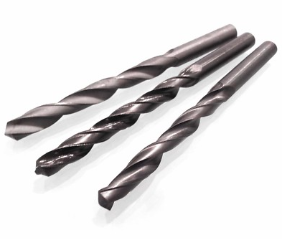
The question of what constitutes the correct drilling speed for a 20mm drill bit is deceptively simple, yet it opens a gateway into a vast and complex world of machining physics, material science, and industrial engineering. To provide a truly comprehensive answer, one must move beyond a simple revolutions-per-minute (RPM) number and delve into the intricate relationships between the cutting tool, the workpiece material, the machine tool’s capabilities, and the desired outcome of the operation. A 20mm drill bit, while standard in many workshops, represents a significant diameter in the realm of general machining, bridging the gap between small, delicate instrumentation drilling and heavy industrial hole making. The “correct” speed is not a static value but a dynamic variable derived from the surface cutting speed (SFM or m/min), the material’s machinability index, the bit’s geometry, and the cooling strategy employed. This extensive guide explores every facet of drilling with a 20mm bit, from the fundamental physics of chip formation to specific brand recommendations and CNC programming strategies, ensuring that machinists, engineers, and operators can achieve optimal tool life, surface finish, and material removal rates.
The Fundamental Physics of Drilling Speed and Feed
To understand the specific speeds for a 20mm bit, we must first establish the governing equations of machining. The primary metric is the cutting speed, also known as surface feet per minute (SFM) in imperial units or meters per minute (m/min) in metric. This is the linear velocity at which the cutting edge engages the workpiece material. The relationship between cutting speed (V), diameter (D), and rotational speed (N) is defined by the formula: N = (V * 1000) / (π * D) for metric, or N = (V * 12) / (π * D) for imperial. For a 20mm (approximately 0.787 inch) drill bit, the diameter is a constant divisor. Therefore, if we know the recommended cutting speed for a specific material, we can precisely calculate the RPM. However, the cutting speed itself is determined by the material’s hardness, tensile strength, and thermal conductivity. Softer, ductile materials like aluminum allow for significantly higher cutting speeds because they generate less heat and offer less resistance to the cutting edge. Conversely, hard, abrasive materials like stainless steel or hardened tool steel require slower speeds to prevent rapid tool wear or catastrophic failure.
The second critical parameter is the feed rate, typically measured in millimeters per revolution (mm/rev) or inches per revolution (IPR). This dictates how far the drill advances into the material with each rotation. For a 20mm bit, a typical feed rate might range from 0.15 mm/rev to 0.40 mm/rev depending on the material. The feed rate works in tandem with the speed to control the chip load—the thickness of the material removed by each cutting flute. If the chip load is too low (speed too high, feed too low), the drill rubs rather than cuts, generating excessive heat and work-hardening the material. If the chip load is too high (speed too low, feed too high), the tool may stall, or the cutting forces may exceed the bit’s structural integrity, causing breakage. The challenge with a 20mm bit is its increased cross-sectional area compared to smaller bits; it requires more torque to rotate and evacuate chips. Consequently, the rigidity of the setup—whether it’s a hand drill, a drill press, or a CNC machining center—becomes a limiting factor. A flexible setup might require reducing the speed and feed to minimize deflection and vibration, which can lead to oversized holes and poor surface finishes.
Material-Specific Speed Recommendations for 20mm Drill Bits
The most critical factor in determining drilling speed is the workpiece material. Different materials react uniquely to the stress and heat of cutting. Based on extensive machining data and industry standards, we can categorize materials and their corresponding speed ranges for a 20mm high-speed steel (HSS) or carbide drill bit.
For Aluminum and its Alloys, which are highly machinable and dissipate heat well, the recommended cutting speeds are high. For a 20mm bit, the RPM can range from 6,400 to 25,000 RPM depending on the specific alloy and whether a coolant is used. Pure aluminum can be drilled at the higher end of this spectrum, while harder aerospace alloys like 7075 or 2024 might require speeds closer to the 5,000–8,000 RPM range to prevent built-up edge on the cutting tool. The high speed is necessary to shear the material cleanly before it has a chance to adhere to the drill’s flute.
Magnesium Alloys are even lighter and often allow for speeds similar to or slightly higher than aluminum, typically in the range of 8,000 to 30,000 RPM for a 20mm bit. However, magnesium is highly flammable, so drilling speeds must be balanced with strict safety protocols regarding spark prevention and heat accumulation.
When drilling Copper Alloys (Brass, Bronze), the speeds are moderate. Brass is relatively easy to machine and allows for speeds around 3,200 to 12,000 RPM. Phosphor bronze or harder copper alloys might require a reduction to 1,500–4,000 RPM. These materials are “gummy” and can clog the flutes of a 20mm bit if the speed is not high enough to clear the chip, but too high a speed can cause the bit to grab and pull the workpiece in.
Stainless Steel presents a significant challenge. Austenitic stainless steels (like 304 and 316) are tough, work-harden rapidly, and have poor thermal conductivity. For a 20mm bit, the recommended speed is drastically lower, typically between 2100 and 4300 RPM for HSS bits, and potentially up to 6,000 RPM for premium carbide bits. The lower speed is essential to manage the heat generated at the cutting edge. If the speed is too high, the drill will dull almost instantly, and the workpiece will harden, making further drilling impossible.
Titanium Alloys are perhaps the most difficult common material to drill. They are chemically reactive and have low thermal conductivity. For a 20mm bit, speeds are usually restricted to 1,300–4,300 RPM. The focus here is on maintaining a sharp cutting edge and using a rigid setup. Pecking cycles (retracting the bit to clear chips) are mandatory at these speeds to prevent chip packing, which can lead to drill breakage.
Cast Iron (Gray Iron) is abrasive but brittle. It drills well at moderate to high speeds, typically 4,300 to 12,000 RPM for a 20mm bit. The abrasiveness wears down the cutting edge, so while the speed can be high, tool life might be shorter than with steel. The chips are fine and abrasive, requiring good filtration or air blasting to clear the flutes.
Thermoplastics and Thermosets require careful speed control to prevent melting. For a 20mm bit, speeds can be high (6,400–12,000 RPM), but the feed must be controlled to prevent grabbing. Sharp, polished flutes are essential to prevent the plastic from sticking.
High-Strength and Alloy Steels (like 4140 or 4340) require speeds in the range of 1,500 to 3,000 RPM for a 20mm bit, depending on the hardness (Rockwell C scale). As hardness increases above 30 HRC, the speed must be reduced significantly, often necessitating the use of a drill press rather than a hand drill and the use of cutting oil.
Drill Bit Types, Coatings, and Brand Specifics
The material of the drill bit itself is just as important as the workpiece material. For a 20mm bit, the choice between High-Speed Steel (HSS), Cobalt Steel (HSS-Co), and Solid Carbide dictates the allowable speed.
High-Speed Steel (HSS) is the standard, economical choice. For a 20mm HSS bit, the speeds mentioned above (e.g., 2000-3000 RPM for steel) are the baseline. HSS bits can withstand the shock of manual drilling but lose hardness at high temperatures (above 600°C).
Cobalt Steel (HSS-Co), often containing 5% or 8% cobalt, offers higher heat resistance and hardness. A 20mm cobalt bit can typically run 10-20% faster than an HSS bit in hard materials without losing its edge. This is particularly useful for drilling stainless steel or hard alloys where the friction generates immense heat.
Solid Carbide bits represent the pinnacle of performance for a 20mm diameter. Carbide retains its hardness at extremely high temperatures and can cut much faster than steel. For aluminum, a carbide 20mm bit can run at 15,000–20,000 RPM easily. For steel, it can double the speed of HSS, running at 4,000–6,000 RPM. However, carbide is brittle. It requires a rigid CNC machine or a heavy-duty drill press. It cannot be used in a hand drill because the torque variations will shatter the bit.
Coatings further enhance performance.
Specific Brands and Models for 20mm Drill Bits
The market offers a plethora of brands, each with specific geometries optimized for different materials.
1. Sandvik Coromant
Sandvik is a titan of the machining world. For a 20mm application, their CoroDrill 860 series is notable. It is an exchangeable-tip drill, meaning you don’t replace the whole body, just the insert. For general steel, they recommend inserts like the GC4225 grade. The speed for a 20mm 860 drill in steel (ISO P) would be around 180-220 m/min, which translates to roughly 2800-3500 RPM. In stainless steel (ISO M), using a GC1125 insert, the speed drops to 110-150 m/min (1750-2400 RPM). The precision of Sandvik tools allows for pushing the limits of these speeds safely.
2. Epiroc (Atlas Copco)
While Epiroc is famous for massive mining drills, they produce precision tools as well. Their T-Series (Threaded) drill strings and bits are engineered for high-penetration rates. A 20mm Epiroc button bit (often used in rock drilling or heavy jigs) uses a specific “T35” or “T38” thread (though 20mm is smaller than their typical mining sizes, they do manufacture precision bits). The Epiroc Speedrods and T-thread systems are designed to reduce tensile shock waves. For a 20mm rock drilling bit, the RPM is lower (300-600 RPM) but the impact energy is high. For a standard 20mm twist drill equivalent in their catalog, the focus is on flute geometry to evacuate rock cuttings efficiently. Their 90516564 model (a drop center bit) is designed for specific formations, emphasizing durability over raw speed in abrasive rock.
3. Kennametal
Kennametal’s BTE (Boring and Trepanning Association) standard drills and their KD series are industry standards. A 20mm Kennametal KD-20 drill in carbide, grade KC7315 (for steel), is designed for high feed rates. They might recommend 0.3 mm/rev feed at 3000 RPM in mild steel. Their geometry often features a “split point” to prevent walking, which is crucial for maintaining accuracy at higher speeds.
4. Mitsubishi Materials
Mitsubishi’s MWS and MVS series are legendary for their sharpness and performance in difficult materials. A 20mm MVS (Mitsubishi Vanadis Steel) series drill is a powder metallurgy HSS bit that outperforms standard HSS. For aluminum, they might suggest 0.25 mm/rev at 8000 RPM. For pre-hardened steel, their VA series with high-performance coating allows for dry drilling at speeds up to 2500 RPM for a 20mm bit.
5. Guhring
Guhring is a specialist in rotary cutting tools. Their Alpha series for aluminum and non-ferrous metals features a polished flute and a specific helix angle (often 35-40 degrees) to eject chips rapidly. A 20mm Guhring Alpha bit can run at 12,000 RPM in aluminum. Their RF series for steel has a tougher core and a TiAlN coating, rated for 3500 RPM in alloy steel.
6. Dormer Pramet
Dormer offers a vast range, including the A100 series for general purpose and the E series for high-performance. A 20mm Dormer E-series carbide drill might be rated for 4000 RPM in cast iron. They also produce Pramet indexable insert drills, where a 20mm drill uses replaceable carbide tips, offering economic efficiency for high-volume production.
CNC Programming and Automated Drilling Optimization
In the modern manufacturing landscape, a 20mm drill bit is rarely used manually for precision work; it is almost exclusively used in CNC (Computer Numerical Control) machines. The “speed” is programmed as an ‘S’ code (e.g., S2500 for 2500 RPM), and the feed is an ‘F’ code (e.g., F300 for 300 mm/min, which at 2500 RPM equals 0.12 mm/rev).
CAM Software (Computer-Aided Manufacturing) like Autodesk Fusion 360, Mastercam, or Siemens NX plays a pivotal role. The programmer selects the tool (20mm Drill), the material (e.g., 6061-T6 Aluminum), and the operation (Drilling/Pecking). The software automatically calculates the optimal RPM and feed based on tool manufacturer data (Machining Cloud data). However, the programmer must adjust for “Shop Floor Reality.” If the machine is an older VMC (Vertical Machining Center) with 20 horsepower, running a 20mm drill at 8000 RPM in steel might overload the spindle. The programmer might have to cap the speed at 3000 RPM and increase the feed to maintain the chip load.
Peck Drilling is a critical cycle for 20mm bits, especially in deep holes (depth > 3x diameter, i.e., > 60mm). The CNC code (G83 cycle) commands the drill to retract a small amount (e.g., 2mm) after drilling a certain depth (e.g., 10mm) to break the chip and allow coolant in. Without this, a 20mm bit acts like a piston, compressing chips in the flute until the torque spikes and the bit snaps.
Adaptive Clearing strategies are also used. Instead of plunging straight down (which is hardest on the tool), the CNC can spiral down (G02/G03 interpolation) or use a trochoidal milling path to create the hole. This keeps the tool engaged at a constant chip load and reduces the peak torque, allowing for slightly higher RPMs and significantly extending tool life. For a 20mm hole, a 18mm drill might be used first, followed by the 20mm bit for finishing, to reduce the load on the final tool.
Troubleshooting and Optimization: Reading the Signs
Even with perfect calculations, real-world variables intervene. The machinist must read the “signs” of the cut to optimize speed.
Industry-Specific Applications: Oil & Gas vs. General Machining
It is vital to distinguish between the “20mm bit” in a workshop and a “20mm bit” in the oil field. While the diameter is the same, the context changes the “speed” entirely. In the Oil & Gas Industry, specifically in upstream exploration, drilling involves penetrating kilometers of rock. A 20mm drill string component (like a pilot bit or a wireline coring bit) operates under immense hydrostatic pressure. The “speed” here is not RPM in the traditional sense but “Rate of Penetration” (ROP). The drill bit (often a PDC – Polycrystalline Diamond Compact bit, even at small diameters for coring) rotates at 60-300 RPM, but the weight-on-bit (WOB) is measured in thousands of pounds. The optimization involves drilling fluids (mud) to cool the bit and carry cuttings to the surface. The “formation evaluation” (well logging) relies on the cuttings brought up by the drilling fluid to determine if hydrocarbons are present. Here, a 20mm bit isn’t making a production hole; it’s part of a “gravel pack” or “completion method” to control sand production in weak formations. The speed is dictated by the geology—soft sand might allow 20 m/hour penetration, while granite might be 1 m/hour.
In contrast, in General Machining and Manufacturing (Automotive, Aerospace, Construction), a 20mm bit is used to create fastener holes, coolant passages, or mounting points. The speed is purely mechanical. For example, drilling 20mm holes in an aircraft wing spar (7075-T6 aluminum) requires strict adherence to 6,000-8,000 RPM to avoid stress concentrations that could lead to fatigue cracks. In automotive engine block casting (gray iron), a 20mm bit might run at 5,000 RPM with high-pressure coolant to blast out the abrasive sand particles from the casting skin.
Advanced Materials and Future Trends
As materials science evolves, so do drilling requirements. Metal Matrix Composites (MMCs) and Carbon Fiber Reinforced Polymers (CFRP) are increasingly common. Drilling a 20mm hole in CFRP is tricky; the carbon fibers conduct heat away quickly but delaminate easily. Speeds must be very high (10,000+ RPM) with very low feed to slice the fibers rather than pushing them apart. Special “diamond dust” or “router bits” are often used instead of standard twist drills.
Additive Manufacturing (3D Printing) has introduced new alloys like Inconel 718 or Ti-6Al-4V produced via powder bed fusion. These materials are extremely hard and abrasive. Drilling a 20mm hole in a 3D printed part often requires the speeds for cast iron but with the feeds for stainless steel, and the use of through-tool coolant to flush the channels.
Conclusion: The Holistic Approach to 20mm Drilling
To summarize, there is no single “drilling speed” for a 20mm drill bit. The answer is a matrix of variables.
These values assume a rigid setup, proper cooling, and a sharp, appropriate tool (like a TiN-coated jobber length bit). The choice of brand—whether the precision of Sandvik, the durability of Epiroc, the geometry of Guhring, or the reliability of Dormer—will influence the exact optimal point within these ranges. Ultimately, the “correct” speed is the one that balances productivity with economy. Running a 20mm bit at the maximum RPM might produce 100 holes, but running it at 80% of max RPM with optimal feed might produce 500 holes before replacement. In a production environment, the slower speed that maximizes tool life and hole quality is almost always the “correct” speed. The machinist must consider the machine’s horsepower, the depth of the hole (requiring pecking), the availability of coolant, and the required tolerance. By understanding the physics of cutting, the chemistry of the materials, and the capabilities of the specific tooling brand, one can master the art and science of drilling with a 20mm bit, ensuring precision, safety, and efficiency in any application. The journey from a simple question about RPM reveals the depth of knowledge required in manufacturing: it is not just about turning a spindle, but about controlling the interaction of matter, energy, and geometry at a microscopic level.

