Our Location
304 North Cardinal St.
Dorchester Center, MA 02124

304 North Cardinal St.
Dorchester Center, MA 02124

The Definitive Guide to the 20mm Drill Bit: Engineering Precision, Material Science, and Industrial Application
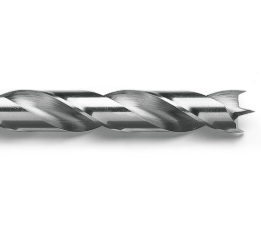
To answer the question of what size hole is drilled by a 20mm drill bit with the requisite depth and precision, one must move beyond the simplistic notion of a nominal diameter. While the immediate answer is that a 20mm drill bit creates a hole with a nominal diameter of 20 millimeters, the reality of engineering, geology, and manufacturing is that the “size” of a hole is a complex variable defined by tolerance classes, the physics of material removal, the specific drilling mechanism employed, and the geological or material context of the workpiece. A 20mm hole in a soft aluminum alloy using a high-speed steel twist drill will have vastly different characteristics—in terms of circularity, surface finish, and strict dimensional accuracy—compared to a 20mm hole drilled through hardened tool steel using a carbide gun drill, or a 20mm borehole drilled into the Earth’s crust for oil exploration using a massive rotary rig. The distinction between the nominal dimension and the actual resulting aperture is governed by the mechanics of cutting, the rigidity of the tooling, and the properties of the substrate. This comprehensive analysis explores the multifaceted nature of the 20mm hole, dissecting the machinery, the brands, the models, and the advanced techniques that define this specific dimension across various industries.
Nominal vs. Actual Diameter: The Tolerance Spectrum
The fundamental starting point is the definition of the drill bit itself. In engineering standards, a “20mm drill bit” refers to the nominal size of the tool. However, the actual hole produced is rarely exactly 20.00 mm. In precision machining, particularly in the aerospace and automotive sectors, the tolerance is critical. For a standard twist drill, the hole produced is often slightly oversized due to the wandering of the bit, the clearance angle of the cut lips, and the elastic deflection of the tool under load. For a 20mm hole, a standard commercial tolerance might range from H11 to H13, meaning the hole could be between 20.00 mm and 20.20 mm, or even larger depending on the wear state of the tool. In deep hole drilling, where the length-to-diameter ratio (L/D) exceeds 10:1, the challenge of maintaining a precise 20mm diameter becomes significantly harder due to the whipping and vibration of the slender drill string. Here, the hole size is not just a function of the tool diameter but also of the stability of the Bottom Hole Assembly (BHA). The BHA includes heavy drill collars made of chrome-molybdenum steel alloys like AISI 4140 or 4145, which provide the necessary axial force to advance the bit. The drill collars, being thick-walled tubulars, ensure that the weight on bit is sufficient to fracture the rock or cut the metal without deviating from the intended 20mm path. However, even with these heavy collars, the hole can “walk” or deviate, potentially enlarging the diameter if the stabilization is insufficient.
In the context of geological drilling, such as oil and gas exploration, the concept of a “20mm hole” is almost microscopic compared to the massive boreholes created. However, if we focus on the specific diameter of the drill pipe or the pilot hole, the principles remain similar but scaled. The drilling rig creates a hole using a complex of equipment, with the lower part being the hollow drillstring. This string comprises the BHA, transition pipes (heavyweight drill pipe or HWDP), and the drill pipe itself. The HWDP provides a flexible transition to reduce fatigue failures directly above the BHA. In this scenario, a 20mm feature might refer to a specific component or a wireline logging tool diameter rather than the borehole itself, which is typically measured in inches (e.g., 8.5 inches or 215 mm). Nevertheless, the precision required for the tool joints—the male “pin” and female “box” connections—is paramount. For a 20mm tool joint, the threads must be machined to tight tolerances to ensure a gas-tight seal and structural integrity under high axial loads and internal pressures from drilling fluid circulation. The drilling fluid, or mud, is pumped down through the hollow drillstring and circulates back up the annulus—the void between the casing and the drillstring—carrying rock cuttings to the surface. The size of this annulus is critical for hydraulic efficiency; if the hole diameter expands beyond the designed 20mm (or the equivalent borehole size), the fluid velocity drops, and cuttings may not be effectively removed, leading to stuck pipe or formation damage.
Advanced Drilling Techniques and Hole Geometry
The geometry of the hole drilled by a 20mm tool is heavily influenced by the drilling technique. Conventional rotary drilling uses a rolling cutter action, but for high-precision 20mm holes, especially in hard materials, percussion drilling or trepanning is often employed. Percussion drilling involves a rapid hammering action superimposed on rotation, which significantly increases the Rate of Penetration (ROP) and reduces well deviation compared to ordinary mud drilling. However, percussion can lead to an irregular hole diameter if not carefully controlled, often resulting in a slightly oversized or lobed hole. To achieve a perfect 20mm cylinder, trepanning is a superior method. Trepanning involves drilling a pilot hole and then using a trepanning tool to cut a core of material around the hole, relaxing the residual stresses. This semi-destructive method allows for the measurement of deep interior stresses and ensures the hole diameter is precise. The deep-hole method, a variant of trepanning, involves drilling a small hole (e.g., 3mm) and then trepanning out a larger core (e.g., 40mm diameter), remeasuring the hole diameter to calculate residual stresses. For a 20mm target, a trepanning head would be set to cut exactly 20mm, often using an EDM (Electro-Discharge Machining) operation for the final finish to ensure zero deviation.
Helical drilling is another advanced technique used for high-quality micromachining. Unlike standard drilling where the laser or tool spot is stationary, helical drilling involves moving the workpiece or the tool in a circular orbit while advancing axially. This creates a hole with superior cylindrical accuracy and surface finish. For a 20mm hole, helical drilling with a laser or a mechanical cutter can achieve tolerances within microns. This is crucial in the manufacturing of fuel injection nozzles or medical devices where the hole diameter directly influences fluid dynamics. For instance, in fuel injection nozzles, the “hole size” refers to the nominal diameter connecting the in-cylinder charge to the sac volume. A 20mm hole in this context would be massive for a single injector (typically they are sub-millimeter), but the principle applies: the helical technique ensures the hole is perfectly cylindrical, which is vital for the spray pattern and combustion efficiency. If the hole deviates even by a fraction of a millimeter, the flow characteristics change dramatically, affecting the Grating Coupled Attenuated Transmission (GCAT) or the tunneling modes of surface plasmon polaritons in optical applications.
Material Science and Wear Mechanisms
The size and quality of the 20mm hole are also dictated by the material being drilled and the wear mechanisms involved. In abrasive wear, material is removed by hard particles forced against the surface. When a drill bit cuts rock or metal, it experiences “two-body abrasion,” where the hard protuberances of the bit slide against the workpiece. However, if grit particles become entrained between the drill string and the borehole wall, this becomes “three-body abrasion,” where particles roll or slide, potentially gouging the hole wall and enlarging the diameter. In high-stress abrasion, the crushing strength of the abrasive particles is exceeded, leading to the removal of large fragments—a process known as gouging. This is common in rock crushing machinery and rotary drilling through hard formations. To combat this, drill bits are designed with specific flank faces (clearance surfaces) to ensure free penetration without interference. The shoulder dub-off surface, a critical design component of gun drills, manages the flow of metalworking fluids (MWF) to cool the bit and flush out chips. Designs like the “slash” or “stepped square” influence the flow rate; a stepped design might increase the apparent flow rate measured by a flow meter but could create turbulence that affects hole quality.
For a 20mm hole in concrete or rock, the bond strength between the grout and the concrete footing is inversely related to the hole diameter. Tests indicate that bond strength decreases as the hole diameter increases. Therefore, drilling a precise 20mm hole is essential for structural integrity in micropile foundations. If the hole is over-drilled to 22mm due to bit wear or operator error, the bond strength drops significantly, compromising the foundation. In nanohole array plasmonic biosensors, the hole diameter (ranging from 40 to 240 nm) is tuned by etch time, but the principle of precision applies even at the 20mm scale for macro-biosensors or industrial sensors. The resonance wavelength is directly proportional to the hole diameter; a deviation in the 20mm dimension shifts the dip and peak wavelengths, rendering the sensor inaccurate. The relationship is defined by complex equations involving self-polarizability of the hole, where λ_peak and λ_dip are functions of the diameter (d). Thus, the “size” is not just a physical dimension but a functional parameter.
Industrial Applications and Specific Brands/Models
In the industrial landscape, the choice of brand and model for drilling a 20mm hole depends on the application—whether it is shallow machining, deep hole drilling, or geological exploration. For precision machining of 20mm holes in steel or aluminum, brands like Sandvik Coromant, Kennametal, and Mitsubishi Materials are industry leaders.
Sandvik Coromant offers the CoroDrill 870 exchangeable tip drill, which is specifically designed for deep hole drilling in diameters ranging from 10mm to 33mm (0.394 to 1.299 inches). For a 20mm application, the CoroDrill 870 provides high precision and rigidity. It uses a unique pocket design for inserts that ensures accurate positioning and repeatability. The internal coolant channels allow for high-pressure through-tool cooling, which is essential for evacuating chips in deep holes and maintaining the 20mm diameter without ballooning due to heat or chip packing. Another model is the Sandvik Coromant BTA (Boring and Trepanning Association) system, which is used for large diameter deep holes but can be adapted for precision 20mm boring heads. The BTA system uses a single-tube tool where coolant is pumped down the outside and returns through the inside, carrying chips. For a 20mm hole, a specialized BTA head would be used, often featuring carbide tips brazed onto a steel body to withstand the immense pressure and heat.
Kennametal provides the Gun Drilling System with models like the KD series. Their 20mm gun drills are manufactured from high-grade steel with carbide tips. The gun drill design is critical for straightness; it uses a special geometry with a V-shaped flute that guides the coolant and the chip. Kennametal’s BTA deep hole drilling tools are also relevant, offering modular designs where the 20mm diameter head can be changed quickly. They emphasize the use of high-pressure coolant (up to 1000 bar) to ensure the chip is broken and removed efficiently, preventing the tool from rubbing against the side of the hole and wearing out, which would enlarge the hole.
Mitsubishi Materials is renowned for its MVS (Mitsubishi Vibration Suppression) series of drills. For a 20mm hole, especially in long overhang applications, the MVS series uses a variable helix and variable pitch design to dampen vibration. Vibration is a primary cause of hole oversizing and poor surface finish. By suppressing chatter, the MVS drill maintains a consistent 20mm diameter even in difficult-to-cut materials like titanium or Inconel. Their Impact Miracle series of high-feed end mills can also be used for drilling shallow 20mm holes at high speeds, using a unique insert shape that allows for high feed rates per tooth (fz) while maintaining dimensional accuracy.
In the realm of geological and oilfield drilling, the “brands” are massive machinery manufacturers. Schlumberger (now SLB), Halliburton, and Baker Hughes provide the downhole tools and drill bits. For a 20mm pilot hole or a specific logging-while-drilling (LWD) tool diameter, the bits are often PDC (Polycrystalline Diamond Compact) cutters. A 20mm PDC bit would be used for coring or sidewall coring. The Atlas Copco and Boart Longyear brands are prominent in surface and underground drilling rigs. For example, the Boart Longyear LF 90 is a wireline core drilling rig capable of drilling holes ranging from BQ to HQ sizes (which are much larger than 20mm), but they use smaller bits for pilot holes. The drill string components, including the drill collars and HWDP, are manufactured to API (American Petroleum Institute) standards. API drill collars are available in range lengths (e.g., Range 2 is ~30 ft or 9m long) and are made of AISI 4140 or 4145 heat-treated steel. The connections use specific thread forms (e.g., 4-1/2 IF) that require crossover subs to mate with the drill pipe. The crossover sub is a short thick-walled pipe with a threaded pin (drill collar threads) and a threaded box (drill pipe threads). The precision of these threads ensures that the 20mm (or equivalent) internal diameter of the tool joint is maintained and that there is no leakage of drilling fluid under pressures exceeding 5000 psi.
Measurement and Quality Control
Ensuring the hole is exactly 20mm involves sophisticated metrology. In the laboratory or quality control department, the diameter is measured using air probes, capacitance gages, or strain-gaged beams. The deep-hole method, as developed by Zhandanov and Gonchar, involves drilling a small pilot hole (e.g., 8mm) and trepanning a 40mm core. The diameter is remeasured using strain gages attached to the sides of the hole to measure strain relaxation. For a 20mm hole, a non-contacting capacitance gage can measure the diameter to within microns by detecting the change in capacitance between the probe and the hole wall. In EDM drilling, the hole size is controlled by the electrode diameter and the spark gap. A 20mm electrode will produce a hole slightly larger than 20mm due to the spark gap (overcut), which must be compensated for in the electrode design. In laser drilling, the hole diameter is controlled by the focal spot size and the pulse energy. For a 20mm hole, a CO2 or fiber laser would use a helical or trepanning motion to cut the perimeter, as a single pulse would not be sufficient and would result in poor quality.
Economic and Operational Considerations
The cost of drilling a 20mm hole is influenced by the rate of penetration (ROP) and the tool life. Improving ROP is a constant goal to reduce costs. Using air drilling technology or optimized drilling fluid aligned with the drillstring can significantly increase ROP. However, for a precision 20mm hole, ROP must be balanced with accuracy. A slower feed rate might be required to maintain the 20mm tolerance, increasing the time and cost. The cost of the drilling process includes the rig day rate, the cost of the drill bit (which can be expensive for specialized carbide or diamond bits), and the cost of consumables like coolant and replacement inserts. In oil and gas, the cost of drilling a well is enormous, and even a small deviation in hole size can lead to non-productive time (NPT) if the casing cannot be run or if the logging tools get stuck. The shut-in drill pipe pressure (SIDPP) is monitored to ensure well control; if the hole diameter expands (washout), the annular friction pressure changes, affecting the SIDPP calculations. Therefore, maintaining the designed hole size is not just a matter of precision but of safety and economic viability.
Conclusion
In conclusion, the size of the hole drilled by a 20mm drill bit is nominally 20 millimeters, but the actual dimension is a function of a complex interplay between tool geometry, material properties, drilling mechanics, and operational parameters. In precision engineering, the hole may be 20.00 mm ±0.05 mm, achieved through helical drilling or EDM with specialized brands like Sandvik Coromant or Kennametal. In deep hole drilling, the hole may be slightly oversized due to deflection, requiring heavy drill collars and high-pressure coolant systems to maintain straightness and diameter. In geological applications, the 20mm dimension might refer to a component of the drill string or a pilot hole, where the annulus and hydraulic efficiency are critical. The brands and models—from the CoroDrill 870 to the BTA systems and PDC bits—are engineered to address specific challenges like vibration, abrasion, and chip evacuation. Ultimately, the “size” is defined by the tolerance required for the specific application, whether it is for a fuel injection nozzle, a structural micropile, or a borehole in an oil field. The engineering behind that simple 20mm figure involves metallurgy, fluid dynamics, and advanced manufacturing technologies, ensuring that the hole meets the exacting standards of the modern industrial world. The distinction between the nominal tool size and the realized hole aperture is where the true science of drilling lies, bridging the gap between theoretical design and physical reality through the rigorous application of physics and material science. Whether using a simple hand drill or a massive offshore rig, the principles of maintaining a precise 20mm diameter remain rooted in the control of forces, heat, and material removal rates, making it a cornerstone of mechanical and civil engineering disciplines.

