Our Location
304 North Cardinal St.
Dorchester Center, MA 02124

304 North Cardinal St.
Dorchester Center, MA 02124


A High Speed Steel (HSS) drill is one of the most widely used cutting tools in machining, metalworking, construction, and manufacturing industries. HSS drill bits are made from a special alloy steel capable of withstanding high temperatures generated during high-speed drilling operations. Compared with traditional carbon steel drill bits, HSS drill bits provide significantly higher hardness, improved wear resistance, and better heat resistance, allowing them to cut various materials efficiently while maintaining edge sharpness.
High Speed Steel typically contains alloying elements such as tungsten, molybdenum, chromium, vanadium, and sometimes cobalt. These alloying elements improve the mechanical strength and cutting ability of the drill bit. Because of their durability and versatility, HSS drills are commonly used for drilling metals such as mild steel, cast iron, aluminum, brass, copper, and even some stainless steels. They are also used for plastics, wood, and composite materials.
HSS drills are widely used in industries including automotive manufacturing, aerospace, mechanical engineering, construction, metal fabrication, electrical installation, and maintenance work. Due to their relatively low cost and wide compatibility with drilling machines, they remain one of the most popular drilling tools in both professional workshops and home DIY environments.
HSS (High-Speed Steel) drill bits are the most common type of drill bit used for metalworking due to their excellent balance of hardness, toughness, and resistance to high temperatures. They are designed to cut at high speeds without losing their temper, unlike older high-carbon steel bits.
HSS drills are versatile tools primarily used for drilling in various materials. Their application depends on the specific HSS grade and coating.
HSS drills are manufactured to strict international standards that define their dimensions, tolerances, and geometry.
The performance of an HSS drill is defined by several key parameters.
| Parameter | Description | Common Values / Options |
|---|---|---|
| Material Grade | The chemical composition of the steel, determining hardness and heat resistance. | Standard: HSS 4241, HSS 4341, M2 (HSS 6542) High-Performance: M35 (Cobalt 5%), M42 (Cobalt 8%) |
| Hardness | The resistance to deformation and wear, measured on the Rockwell C scale. | Standard HSS: 60-65 HRC Cobalt HSS: 65-68 HRC |
| Point Angle | The angle of the cutting tip. Affects cutting action and penetration. | 118°: Standard for general-purpose drilling in steel and iron. 135°: For harder materials, reduces walking and requires less thrust force. Often a “split point” for self-centering. |
| Helix Angle | The angle of the spiral flute. Affects chip evacuation and cutting force. | Type N (Normal): ~30°, general purpose. Type W (Wide): ~45°, for soft, gummy materials (aluminum) for better chip removal. Type H (High Helix): For deep holes and better evacuation. |
| Flute Type | The design of the spiral groove that removes chips. | Spiral Flute: Standard for most applications. Double Flute: For increased rigidity and better surface finish. |
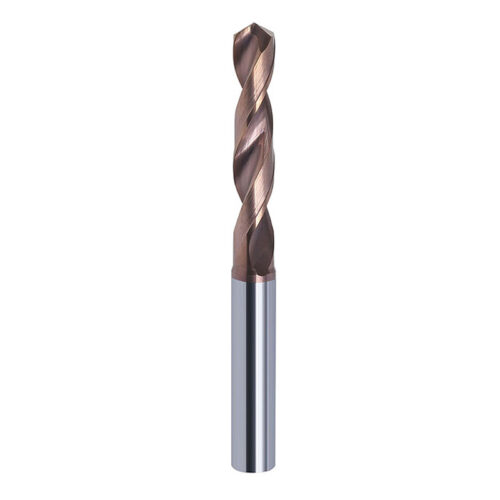
| Coating / Finish | Surface treatment to reduce friction, increase hardness, and improve heat resistance. | Bright (Uncoated): Standard finish. Black Oxide: Improves lubricity and heat resistance. Titanium Nitride (TiN): Gold color, increases hardness and lifespan. TiAlN / Rainbow: For high-temperature applications. Amber / Coffee: Proprietary high-heat resistant finishes. |
| Manufacturing Process | How the drill bit is made, affecting precision and quality. | Fully Ground: Highest precision, best concentricity, and sharpest cutting edge. Milled / Rolled: More economical, suitable for general use. |
| Tolerance | The allowable deviation from the nominal diameter. | H8: A common standard tolerance for metric drill bits. |
HSS drills are available in a wide range of sizes, in both metric and imperial systems.
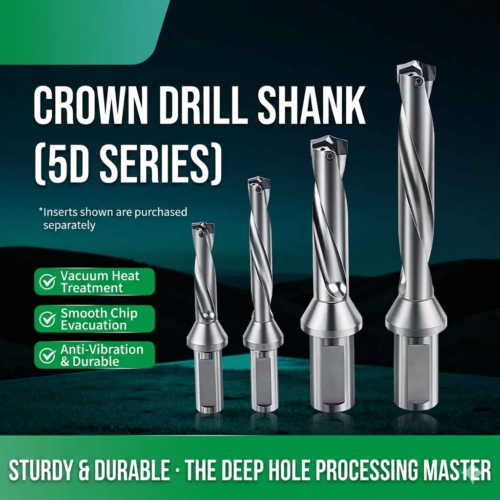
Beyond the standard twist drill, there are specialized HSS drill types:
To illustrate, here is a typical specification for a high-performance HSS drill bit based on supplier data:
Only logged in customers who have purchased this product may leave a review.
Reviews
There are no reviews yet.