Our Location
304 North Cardinal St.
Dorchester Center, MA 02124

304 North Cardinal St.
Dorchester Center, MA 02124

Yes, tungsten steel drill bits can sometimes be used for drilling into concrete, but their suitability depends on the material composition, cutting-tip design, and drilling method. The term “tungsten steel drill bit” can refer to different types of tools, including tungsten carbide-tipped masonry bits, solid tungsten carbide tools, and high-speed steel (HSS) bits containing tungsten as an alloying element. Although these materials may all offer useful hardness or wear resistance, they do not perform equally well when exposed to concrete’s abrasive mineral structure.
Concrete is a composite building material that typically contains cement, sand, gravel, and other aggregates. When drilling into concrete, a bit must withstand significant abrasion, repeated impact, friction, and localized heat. Some aggregates are extremely hard, which can quickly wear down an ordinary metal-cutting drill bit. For this reason, a drill bit designed specifically for masonry or concrete is generally a better choice than a conventional bit intended for drilling into steel, wood, or plastic.
For homeowners, construction workers, maintenance technicians, and industrial users, the most important consideration is not simply whether a drill bit contains tungsten. Instead, it is whether the bit has the appropriate carbide composition, cutting geometry, and impact resistance for the concrete drilling task. Choosing the correct tool can improve drilling speed, extend service life, reduce equipment wear, and help produce cleaner holes.
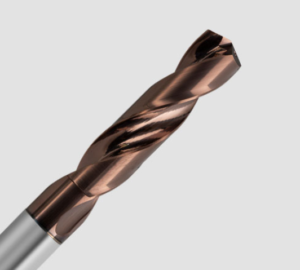
Tungsten-alloyed high-speed steel (HSS) is frequently used to manufacture twist drill bits for machining metals, plastics, and other engineering materials. Tungsten improves the steel’s ability to retain hardness at elevated temperatures, but an ordinary HSS twist drill is not specifically designed to withstand the abrasive aggregates and impact forces encountered in concrete. Even if the bit appears sharp and durable, its cutting edges may wear rapidly when used on masonry.
Tungsten carbide is much harder and more resistant to abrasion than conventional tool steel. It is widely used in industrial cutting tools and is particularly useful for applications that demand long-lasting cutting edges. However, carbide is relatively brittle compared with steel, so its performance depends on the design of the tool and the forces applied during drilling. A carbide insert designed for metal machining is not automatically suitable for concrete.
Tungsten carbide-tipped masonry drill bits are a particularly practical option for concrete drilling. These bits typically have a steel body and a carbide cutting tip designed to crush and break masonry as the bit rotates. When paired with a compatible hammer drill or rotary hammer, they can efficiently penetrate concrete, brick, block, and other mineral-based construction materials.
The key distinction is that a material’s hardness alone does not determine whether a drill bit is appropriate for concrete. The complete tool must be designed to handle the drilling mechanism, abrasive conditions, heat generation, and impact loads associated with the application.
Concrete may look relatively uniform from the outside, but its internal structure makes drilling more demanding than drilling many common materials. Cement paste binds together sand and coarse aggregate, creating a dense composite with varying hardness throughout the drilling path. A drill bit may pass through relatively soft cement paste and then encounter a much harder stone particle, producing sudden changes in cutting resistance.
Aggregate composition is one of the main factors affecting drilling performance. Concrete made with softer aggregate may be relatively easy to penetrate, while concrete containing hard granite or similarly abrasive stone can cause significantly greater tool wear. Reinforced concrete presents an additional challenge because steel reinforcing bars may lie directly in the drilling path. A standard masonry bit is not intended to cut through reinforcing steel, and continuing to hammer against a steel bar can damage the bit or the drilling equipment.
Heat is another important consideration. Friction between the cutting tip and the concrete can generate considerable heat, especially when excessive pressure, a worn bit, or an unsuitable drilling speed is used. Excessive heat may accelerate wear or damage the cutting tip and its attachment to the steel body. The correct drilling technique therefore matters just as much as selecting a hard cutting material.
Finally, concrete drilling often involves both rotation and impact. The rotational movement advances the bit, while the hammering action helps fracture the hard mineral material ahead of the cutting tip. A conventional drill operating only through rotation may struggle with dense concrete, even when fitted with a relatively hard drill bit. This is why matching the drill bit to the machine is essential for achieving reliable results.

