Our Location
304 North Cardinal St.
Dorchester Center, MA 02124

304 North Cardinal St.
Dorchester Center, MA 02124

Choosing between tungsten carbide drill bits and cobalt-bearing drill bits is an important decision for manufacturers, machining professionals, metalworking specialists, and industrial buyers. Both types of drill bits are designed to handle demanding drilling operations, but they differ significantly in material composition, hardness, heat resistance, toughness, cutting performance, and suitable applications. Selecting the right tool can directly influence machining efficiency, hole accuracy, tool life, production costs, and overall manufacturing quality.
Tungsten carbide drill bits are widely recognized for their exceptional hardness, outstanding wear resistance, and ability to maintain cutting performance at high temperatures. They are particularly suitable for high-speed machining, precision drilling, hard materials, and automated production environments where consistent results and long tool life are essential. Cobalt-bearing drill bits, on the other hand, are generally manufactured from high-speed steel alloys containing cobalt, such as M35 and M42. They offer an effective combination of hardness, toughness, heat resistance, and versatility, making them a popular choice for drilling stainless steel, alloy steel, carbon steel, and other challenging metals.
However, neither material is universally better than the other. The best choice depends on the workpiece material, machine rigidity, production volume, drilling speed, cooling conditions, hole depth, and total machining cost. Understanding the strengths and limitations of each option allows buyers and engineers to select the most appropriate drill bit for their specific requirements.
Tungsten carbide drill bits are typically manufactured from cemented carbide, a hard composite material consisting primarily of tungsten carbide particles bonded together with a metallic binder, commonly cobalt. The tungsten carbide provides exceptional hardness and wear resistance, while the binder helps hold the carbide particles together and contributes to the material’s toughness. By carefully controlling the carbide grain size, binder content, and manufacturing process, tool manufacturers can produce carbide grades designed for different cutting conditions and workpiece materials.
Unlike conventional high-speed steel tools, tungsten carbide cutting tools maintain their hardness at elevated temperatures and can operate at substantially higher cutting speeds under suitable conditions. This characteristic makes them especially valuable in modern CNC machining, automated production lines, and high-volume manufacturing facilities. Depending on the design, carbide drill bits may be available as solid carbide tools, indexable insert drills, replaceable-tip drills, or other specialized drilling systems.
It is important to recognize that not all tungsten carbide drill bits have identical performance characteristics. Fine-grain carbide grades can provide excellent cutting-edge strength and wear resistance, while other grades are engineered to improve toughness or resist thermal and mechanical stresses. Consequently, the correct carbide grade should be selected according to the workpiece material, cutting parameters, and drilling environment rather than relying on hardness alone.
One of the greatest advantages of tungsten carbide drill bits is their ability to maintain a sharp cutting edge during demanding machining operations. Their high hardness helps resist abrasive wear, allowing them to produce a large number of holes when used under appropriate conditions. This is particularly beneficial in production environments where tool changes interrupt workflow and increase operating expenses.
Another important advantage is their suitability for high-speed machining. Because carbide retains its cutting properties at elevated temperatures, manufacturers can often use higher cutting speeds than those recommended for conventional high-speed steel or cobalt-bearing drill bits. When the machine, toolholder, coolant system, and workpiece are properly matched, this can reduce cycle times and improve production throughput.
Tungsten carbide drill bits can also deliver excellent dimensional accuracy and surface quality when the tool geometry and machining conditions are correctly selected. Their rigidity and wear resistance are valuable when producing precision holes in hard metals, cast iron, abrasive materials, and certain high-strength alloys. Specialized carbide drill designs can also support deep-hole drilling and automated machining operations where reliable chip evacuation and consistent cutting performance are essential.
Despite their excellent hardness and wear resistance, tungsten carbide drill bits have an important limitation: they are generally more brittle than cobalt-bearing high-speed steel tools. Carbide can tolerate substantial compressive loading, but it is less forgiving of bending, impact, vibration, and sudden changes in cutting forces. If a carbide drill enters a misaligned hole, encounters an uneven surface, or operates in an unstable setup, the cutting edge may chip or the tool may fracture.
Machine rigidity is therefore an important consideration. Carbide drill bits generally perform best with rigid CNC machines, stable toolholders, accurate workpiece clamping, and properly controlled feed rates. Although certain carbide tools are designed for less rigid environments, their performance still depends heavily on correct setup and application.
The initial purchase price of a carbide drill bit is also usually higher than that of a conventional cobalt-bearing drill bit of comparable size. For occasional drilling, maintenance work, or operations performed with handheld drills, this higher investment may not provide a meaningful economic advantage. Carbide tools can also be more sensitive to incorrect feed rates, runout, poor chip evacuation, and unsuitable cutting conditions. Their performance should therefore be evaluated in terms of total production cost rather than purchase price or hardness alone.
Cobalt-bearing drill bits are typically made from cobalt-alloyed high-speed steel, commonly referred to as cobalt HSS. The two widely used grades are M35 and M42. M35 generally contains approximately 5% cobalt, while M42 typically contains approximately 8% cobalt. Exact alloy compositions vary according to applicable material specifications and manufacturing standards.
Adding cobalt to high-speed steel improves its ability to retain hardness at elevated temperatures. This property is commonly described as hot hardness or red hardness. It enables cobalt-bearing drill bits to withstand the heat generated during metal drilling more effectively than many standard high-speed steel tools. Their steel-based construction also provides a useful balance of toughness, flexibility, and cutting-edge strength.
M35 cobalt drill bits are widely used for general-purpose industrial metalworking, including drilling stainless steel and alloy steel. M42 tools offer higher hot hardness and can be advantageous in demanding applications involving heat-resistant alloys and difficult-to-machine metals. However, a higher cobalt percentage does not automatically make a drill bit better for every task. Tool geometry, heat treatment, workpiece characteristics, cutting parameters, and overall tool quality remain important factors.
The main advantage of cobalt-bearing drill bits is their combination of heat resistance and toughness. Compared with many conventional carbide tools, cobalt HSS drills are more tolerant of minor misalignment, moderate vibration, and less-than-perfect machining conditions. This makes them suitable for maintenance departments, workshops, general fabrication, and drilling operations that cannot always be performed on highly rigid CNC equipment.
Cobalt-bearing drill bits are particularly popular for stainless steel. Stainless steel can generate considerable cutting heat, work-harden if drilled improperly, and place demanding requirements on the cutting edge. A suitable cobalt drill bit, combined with a sharp cutting edge, appropriate feed pressure, and effective lubrication or cooling, can provide reliable performance in these conditions.
Another advantage is their versatility. Cobalt drill bits can be used in many industrial and workshop environments, including suitable handheld drills, drill presses, and machining centers. They are available in a wide range of diameters, lengths, point angles, and specialized geometries. Their relatively accessible purchase price also makes them attractive for low-volume work, repair operations, and applications where individual tools may occasionally be damaged or lost.
Although cobalt-bearing drill bits provide excellent versatility, they generally cannot match solid carbide tools in maximum cutting speed or wear resistance under comparable, properly optimized machining conditions. When used in high-volume production, they may require more frequent tool changes, particularly when drilling abrasive materials or operating under conditions that accelerate cutting-edge wear.
Cobalt-bearing drill bits also generate heat during drilling, and their performance can deteriorate if cutting speeds are excessive or lubrication is inadequate. Stainless steel and certain alloy steels are particularly sensitive to improper drilling techniques. Insufficient feed pressure, prolonged rubbing, and excessive heat can cause work hardening, making subsequent drilling more difficult and increasing the risk of tool wear or failure.
Their steel-based construction is also less rigid than that of solid carbide tools of comparable geometry. In high-precision applications, long-reach drilling, or operations requiring very high spindle speeds, this difference can limit productivity or dimensional consistency. Nevertheless, when operating conditions are variable or machine rigidity is limited, the toughness and flexibility of cobalt-bearing drill bits can be more valuable than the maximum cutting speed offered by carbide.
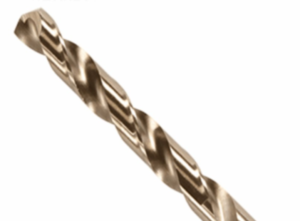
Tungsten carbide drill bits generally have a clear advantage in hardness and wear resistance. Their hard carbide structure helps maintain the cutting edge when drilling abrasive or hard materials, particularly in production environments where tools must perform consistently over many cycles. This can make carbide a strong choice for high-volume machining, precision drilling, and applications involving demanding workpiece materials.
Cobalt-bearing drill bits are softer than cemented carbide but still offer excellent performance for many industrial metals. Their cutting edges can withstand substantial mechanical demands, and their steel-based construction provides greater tolerance for certain forms of impact and bending. For everyday metal drilling, a high-quality M35 or M42 drill bit may provide more than enough wear resistance without the additional cost and setup requirements associated with carbide.
Both materials are designed to withstand the heat associated with metal cutting, but they do so differently. Tungsten carbide maintains high hardness at elevated cutting temperatures, allowing carbide tools to operate at higher cutting speeds when the machine and application support those conditions.
Cobalt-bearing high-speed steel also provides good hot hardness, which is why cobalt drill bits are effective for drilling stainless steel and heat-resistant alloys. However, their practical cutting speeds are generally lower than those of suitable carbide tools. For this reason, carbide is often favored for high-speed CNC production, while cobalt-bearing drill bits remain an effective and economical choice for conventional drilling and moderate-speed machining.
Toughness is one of the most important differences between the two materials. Cobalt-bearing drill bits generally tolerate bending, intermittent loading, and moderate vibration better than solid carbide drill bits. This makes them more forgiving when drilling by hand, working with portable equipment, or machining components that cannot be clamped perfectly.
Tungsten carbide is comparatively brittle, so it benefits from a stable setup and carefully controlled cutting conditions. However, carbide tools should not automatically be considered fragile or unsuitable for demanding industrial work. Properly engineered carbide drills can provide excellent reliability in rigid machines, especially when their geometry and grade are matched to the application. The key distinction is that carbide generally rewards stability and precision, while cobalt HSS offers greater tolerance for variable operating conditions.
When used under appropriate conditions, tungsten carbide drill bits generally support higher cutting speeds than cobalt-bearing drill bits. In a production environment, this can significantly reduce machining time, especially when many holes must be drilled repeatedly. Carbide can therefore be particularly advantageous in automated manufacturing, CNC machining, and high-volume component production.
Cobalt-bearing drill bits usually operate at lower cutting speeds, but this does not necessarily mean they are less productive overall. If the machine lacks sufficient rigidity, spindle capability, or effective chip evacuation, a carbide drill may need to run conservatively or may experience premature failure. In such situations, a cobalt drill can provide more consistent results and lower overall operating costs. Productivity should be measured through actual cycle time, tool life, downtime, and rejected parts rather than cutting speed alone.
Cobalt-bearing drill bits generally cost less to purchase than comparable solid carbide drill bits. This lower initial investment makes them attractive for small workshops, occasional drilling, maintenance operations, and projects with limited production volumes.
Tungsten carbide drill bits usually require a higher initial investment, but they may provide a lower cost per hole when their extended service life and higher machining productivity are fully utilized. For example, a manufacturer drilling thousands of precision holes every week may save money by reducing tool changes and machine downtime. By contrast, a repair technician drilling only a few holes each month may find cobalt drill bits more economical.
A fair comparison should consider the purchase price, number of holes produced, tool replacement frequency, machining time, labor, coolant consumption, machine utilization, and the cost of tool failure. The cheapest drill bit is not always the least expensive option over the life of a production process.
| Performance Factor | Tungsten Carbide Drill Bits | Cobalt-Bearing Drill Bits |
|---|---|---|
| Primary material | Cemented tungsten carbide | Cobalt-alloyed high-speed steel |
| Common material grades | Application-specific carbide grades | M35, M42 |
| Hardness | Very high | High |
| Wear resistance | Generally excellent | Good to very good |
| Hot hardness | Excellent | Very good |
| Cutting speed | Generally higher | Generally lower |
| Toughness | Lower than cobalt HSS in many comparisons | Generally higher |
| Impact resistance | More sensitive to impact | Better tolerance of moderate impact |
| Machine rigidity | Usually requires a stable setup | More forgiving in varied conditions |
| Stainless steel drilling | Excellent with suitable tooling and parameters | Excellent for many conventional drilling tasks |
| Hard materials | Often preferred when a suitable grade exists | Limited by material hardness and cutting conditions |
| High-volume production | Often an excellent choice | Suitable when cost and operating conditions justify it |
| Handheld drilling | Specialized designs may be suitable, but require care | Often the more practical choice |
| Initial purchase cost | Generally higher | Generally lower |
| Potential tool life | Long under suitable conditions | Good, but may be shorter in demanding high-volume work |
| Best overall advantage | Speed, precision, and wear resistance | Toughness, versatility, and affordability |
These comparisons describe general tendencies rather than absolute rules. Actual results depend on the drill design, material grade, coating, diameter, cutting geometry, workpiece hardness, and operating conditions.
Cobalt-bearing drill bits are an excellent option for many stainless steel drilling applications, particularly in fabrication workshops, maintenance operations, and conventional drilling environments. Stainless steel often generates substantial heat and can work-harden when the cutting edge rubs against the material instead of cutting effectively. A sharp M35 or M42 drill bit can provide a useful combination of heat resistance, toughness, and cost-effectiveness.
For stainless steel drilling, correct technique is just as important as tool material. Operators should select a suitable cutting speed, apply steady feed pressure, use appropriate cutting fluid where recommended, and avoid allowing the drill to rub continuously against the workpiece. Proper clamping and chip removal also help reduce heat buildup and improve hole quality.
For occasional stainless steel drilling with a portable drill or drill press, cobalt-bearing drill bits are often the most practical starting point. They are comparatively affordable, widely available, and capable of delivering dependable results when used correctly.
Tungsten carbide drill bits can be the better option when stainless steel components are produced in large quantities using rigid CNC equipment. Suitable carbide drills can achieve higher cutting speeds, maintain their cutting edges for extended production runs, and improve manufacturing throughput. They can also be advantageous when tight dimensional tolerances and repeatable hole quality are essential.
However, carbide is not automatically the best choice for every stainless steel grade. Austenitic stainless steels, duplex stainless steels, and heat-resistant stainless alloys can present different machining challenges. Tool geometry, carbide grade, coating, coolant delivery, and chip evacuation should be selected according to the particular material and drilling depth.
For deep-hole applications, a specialized carbide drill with internal coolant channels may provide significant advantages by delivering coolant close to the cutting edge and helping remove chips from the hole. Such tools must still be operated within the manufacturer’s recommended cutting parameters to avoid excessive heat, chip packing, or cutting-edge damage.
Tungsten carbide drill bits are generally preferred when drilling hard, abrasive, or difficult-to-machine materials that require high wear resistance. Depending on the carbide grade and drill design, they may be suitable for hardened materials within the tool’s specified operating range, cast iron, certain alloy steels, and other demanding industrial workpieces.
The main benefit is their ability to maintain a stable cutting edge under demanding conditions. When paired with suitable cutting geometry and an adequately rigid machine, carbide drills can provide consistent hole dimensions and a high number of completed holes before replacement or regrinding becomes necessary.
Nevertheless, carbide selection must be based on the actual hardness and machinability of the workpiece. Extremely hard materials, heat-treated steels, and specialized superalloys may require dedicated tooling rather than a general-purpose carbide drill. Choosing an appropriate grade and operating strategy is essential for achieving reliable results.
Cobalt-bearing drill bits are well suited to many alloy steel drilling applications, especially where the workpiece hardness is within the tool’s recommended range and the machine operates at conventional speeds. M35 and M42 drill bits are commonly used for mechanical components, steel fabrication, repair work, and general industrial maintenance.
Their toughness can be especially useful when working with components that are difficult to clamp or when the drilling setup cannot provide the stability required for a more brittle tool. Cobalt HSS also provides an economical solution when production quantities are moderate and the productivity advantages of carbide do not justify its higher purchase price.
For particularly hard alloy steels, however, the material’s hardness, heat treatment, and machinability should be assessed before selecting a cobalt drill. Neither M35 nor M42 should be assumed suitable for every hardened steel simply because cobalt improves heat resistance.
Tungsten carbide drill bits are widely used in CNC machining because they can support high cutting speeds, excellent dimensional repeatability, and efficient production cycles. Modern CNC machines can maintain controlled feed rates, spindle speeds, tool alignment, and coolant delivery, creating favorable conditions for carbide tooling.
In high-volume manufacturing, small improvements in drilling cycle time can produce substantial savings. A carbide drill that completes each hole more quickly and maintains its cutting edge over a longer production run can reduce machine occupancy, operator intervention, and tool replacement frequency. These benefits are especially significant when drilling hundreds or thousands of holes in precision components.
Carbide drill bits are available in a wide variety of geometries, including solid carbide drills, indexable insert drills, and specialized deep-hole tools. The appropriate design depends on hole diameter, depth-to-diameter ratio, workpiece material, machine capability, and the required surface finish.
Cobalt-bearing drill bits can still be a sensible choice for CNC machining when production quantities are limited, machining conditions are less stable, or the initial tooling budget is constrained. They can also be useful for maintenance work, prototype production, and applications in which frequent tool changes are acceptable.
A well-selected cobalt drill may deliver a lower overall cost when its cutting speed and tool life are sufficient for the production target. Furthermore, a carbide drill that is poorly matched to the machine or workpiece can lose its economic advantage through premature breakage or inconsistent performance.
For this reason, CNC manufacturers should evaluate both materials through controlled machining trials whenever the expected production volume justifies the effort. Measuring tool life, cycle time, hole accuracy, surface quality, and total cost per hole provides a more reliable basis for selection than relying exclusively on material specifications.
Many carbide drill bits use surface coatings to improve wear resistance, reduce friction, and manage heat at the cutting edge. Common coating technologies include titanium aluminum nitride (TiAlN), aluminum titanium nitride (AlTiN), and other application-specific multilayer coatings. The exact benefits depend on the coating formulation, deposition process, tool geometry, and workpiece material.
In suitable applications, coatings can help carbide drills resist flank wear and maintain cutting performance during demanding machining operations. They may be particularly beneficial in high-speed production or when drilling alloy steels and other materials that generate substantial cutting heat. However, coatings cannot compensate for incorrect cutting parameters, poor machine rigidity, or inadequate chip evacuation.
The choice between coated and uncoated carbide tooling should be based on the application. Some operations benefit substantially from an advanced coating, while others may be better served by a particular uncoated carbide grade or a specialized polished flute design.
Cobalt-bearing drill bits may also be supplied with coatings such as titanium nitride (TiN), titanium aluminum nitride, or other wear-resistant surface treatments. These coatings can improve surface hardness, reduce friction in suitable conditions, and extend tool life when the coating is matched to the drilling operation.
A coated cobalt drill can be a cost-effective option for general industrial metalworking because it combines the toughness of high-speed steel with additional surface protection. However, not every coating is ideal for every material. For example, the best coating for steel production may not be the best choice for every stainless steel or nonferrous metal application.
It is also important to distinguish between a cobalt-bearing drill bit and a coated drill bit. Cobalt is an alloying element within the steel, whereas a coating is a surface layer applied during manufacturing. These are different features, and one should not be mistaken for the other.
The first factor is the material being drilled. Mild steel, stainless steel, cast iron, aluminum alloys, hardened steel, and heat-resistant superalloys have different cutting characteristics. A drill bit that performs well in one material may wear rapidly, overheat, or produce poor holes in another.
For general steel fabrication and many stainless steel applications, cobalt-bearing drill bits can provide a practical combination of performance and affordability. For demanding production work, hard or abrasive materials, and high-speed machining, a suitable carbide drill may provide greater productivity. The workpiece’s actual hardness, heat treatment, and machinability should always be considered.
The machine used for drilling has a major influence on tool selection. Portable drills and conventional drill presses often operate under more variable conditions than modern CNC machining centers. In these environments, cobalt-bearing drill bits may be more forgiving because of their greater toughness.
Carbide tools typically benefit from rigid spindles, accurate toolholders, low runout, and secure workpiece clamping. If the machine cannot maintain stable cutting conditions, the theoretical speed and wear-resistance advantages of carbide may not translate into better results.
Before investing in carbide tooling, manufacturers should confirm that the machine can support the required spindle speed, feed rate, coolant supply, and toolholding accuracy. This assessment can prevent unnecessary tool breakage and improve overall machining reliability.
Hole size and depth also affect drill bit selection. Small-diameter tools can be particularly sensitive to bending, runout, and chip blockage, while deep holes create additional challenges for heat removal and chip evacuation. In some applications, the correct flute design or coolant-delivery system matters as much as the base tool material.
For shallow, occasional holes, a conventional cobalt drill may provide excellent value. For deep, repeated, precision holes, a specialized carbide drill with internal coolant delivery may offer improved productivity and process stability. The appropriate tool should be selected according to the hole’s depth-to-diameter ratio and the manufacturer’s recommendations.
Production volume is another decisive factor. A workshop drilling a small number of holes may prioritize affordability, convenience, and resistance to handling damage. A factory producing thousands of components may prioritize cutting speed, tool life, repeatability, and reduced downtime.
Although carbide tooling typically costs more initially, its advantages can become increasingly valuable as production volume increases. Conversely, cobalt-bearing drill bits can be more economical when the work is intermittent or the expected number of holes is relatively low. Comparing total cost per finished hole is usually the most useful way to make this decision.
Using the correct cutting speed and feed rate is essential for both tungsten carbide and cobalt-bearing drill bits. Excessive cutting speed can generate damaging heat, while insufficient feed pressure may cause rubbing instead of effective cutting. Both conditions can accelerate tool wear and reduce hole quality.
Manufacturers should use the drill supplier’s recommended cutting data as a starting point and adjust the parameters according to the workpiece material, hole depth, machine rigidity, and coolant conditions. The optimal settings for carbide should not simply be copied from those used for cobalt HSS because the materials have different operating characteristics.
Effective cooling and chip evacuation help control temperature, protect the cutting edge, and maintain consistent hole quality. Depending on the drill design and workpiece material, appropriate cutting fluid, external coolant, or internal coolant delivery may be recommended.
Deep holes require particular attention because chips can accumulate in the flutes and interfere with cutting. If chips cannot escape effectively, cutting forces and temperatures may rise sharply, increasing the risk of tool damage. Specialized deep-hole drills and correctly configured coolant systems can help manage these challenges.
Tool alignment and workpiece stability are especially important when using carbide drill bits. Excessive runout, an unstable workpiece, or a misaligned entry surface can create uneven cutting forces and increase the likelihood of carbide chipping. Accurate toolholders and secure clamping help reduce these risks.
Cobalt-bearing drill bits are generally more tolerant of moderate variations in setup, but proper alignment still improves their service life. Good workholding practices also help prevent hole-position errors, vibration, and poor surface finishes.
Regularly inspecting the cutting edge can help identify wear before it leads to poor hole quality or unexpected tool failure. Warning signs include increased burr formation, unusual noise, rising spindle load, deteriorating surface finish, and changes in hole diameter.
Replacing a worn drill at the appropriate time can prevent scrapped components and reduce the risk of a broken tool becoming trapped in a workpiece. In production environments, tracking the number of holes drilled and the actual service life of each tool can support better purchasing decisions and more predictable maintenance schedules.
Hardness is important, but it does not determine the best drill bit for every application. A harder cutting material may offer superior wear resistance while being less tolerant of impact and bending. A tougher material may provide more reliable performance in an unstable drilling environment even if its maximum cutting speed is lower.
The right selection requires balancing hardness, toughness, thermal performance, cutting geometry, and operating conditions. A drill bit should be judged by its ability to complete the required operation reliably and economically, not simply by its material hardness.
A high-priced carbide drill can be an excellent investment in high-volume production, but it may be unnecessary for occasional drilling or low-speed manual work. Purchasing an advanced tool without the machine capability or production demand to benefit from it can increase costs without delivering meaningful improvements.
Similarly, choosing a low-cost cobalt drill for a high-volume operation may result in frequent replacements, longer cycle times, and higher labor expenses. The most economical solution is the tool that meets the production requirements at the lowest overall cost while maintaining acceptable quality.
Material selection alone cannot guarantee good drilling performance. Point angle, flute design, cutting-edge preparation, coating, drill length, and coolant delivery all influence how a drill performs. A poorly designed drill can produce disappointing results even when it is made from a premium material.
Buyers should therefore evaluate the complete tool specification rather than focusing exclusively on whether a drill is carbide or cobalt-bearing. For specialized materials or deep-hole applications, consulting the manufacturer’s technical recommendations can prevent expensive trial and error.
Tungsten carbide drill bits are generally better for high-speed machining, excellent wear resistance, precision production, and many demanding industrial drilling applications. Cobalt-bearing drill bits are often better for conventional drilling, portable tools, and situations where toughness, flexibility, and affordability are priorities. The better option depends on the workpiece, machine, and production requirements.
Yes. Cobalt-bearing drill bits, particularly suitable M35 and M42 grades, are widely used for drilling stainless steel. Their heat resistance and toughness make them useful for many workshop and industrial applications. Correct cutting speed, steady feed pressure, effective chip evacuation, and appropriate lubrication are important for preventing excessive heat and work hardening.
Some carbide drill bits can machine hardened steels within a specified hardness range, provided that the tool grade, geometry, machine rigidity, and cutting parameters are appropriate. However, not all carbide drills are designed for hardened materials. For particularly hard or heat-treated steels, a dedicated tool designed for the material should be selected.
A suitable tungsten carbide drill bit can often last longer than a cobalt-bearing drill bit in high-speed production or abrasive machining conditions. However, tool life depends on the workpiece material, cutting parameters, tool quality, cooling, chip evacuation, and machine stability. Under unfavorable conditions, a carbide drill may fail prematurely, while a cobalt drill may deliver more reliable service.
Cobalt-bearing drill bits can be worth the additional cost when drilling stainless steel, alloy steel, and other materials that generate substantial cutting heat. Their improved hot hardness can provide better performance than standard high-speed steel in demanding applications. For softer materials and occasional drilling, conventional HSS may still be sufficient.
Yes. Both types can be used on a suitable CNC machine, provided the toolholder, cutting parameters, workpiece material, and drilling strategy are appropriate. However, their cutting speeds, feed rates, and tolerance for vibration differ. Each tool should be programmed according to its own specifications rather than using identical settings.
Tungsten carbide often provides better economics in mass production because higher cutting speeds and longer tool life can reduce cycle time, tool changes, and machine downtime. Nevertheless, this advantage must be confirmed through actual production data. If the machine cannot support carbide’s operating requirements or the workpiece volume is limited, cobalt-bearing drill bits may remain the more economical option.
Tungsten carbide drill bits and cobalt-bearing drill bits each offer distinct advantages for industrial drilling. Tungsten carbide is generally the preferred option for high-speed machining, precision production, superior wear resistance, and applications where a rigid machine setup allows the tool to perform at its full potential. Its higher initial cost can be justified when increased productivity and longer service life reduce the total cost per hole.
Cobalt-bearing drill bits remain an excellent choice for general metalworking, stainless steel drilling, maintenance operations, and applications where toughness, versatility, and affordability are important. Their ability to tolerate moderate variations in operating conditions makes them particularly useful for conventional drilling equipment and workshops that need dependable tools without a substantial initial investment.
Ultimately, the best drill bit is not necessarily the hardest or most expensive one. It is the tool that matches the workpiece material, drilling depth, machine capability, production volume, and required hole quality. By evaluating these factors together, manufacturers and buyers can make more informed decisions, improve machining efficiency, extend tool life, and achieve better long-term production economics.

