Our Location
304 North Cardinal St.
Dorchester Center, MA 02124

304 North Cardinal St.
Dorchester Center, MA 02124

Square-shank and round-shank impact drill bits differ primarily in their connection design, compatibility with power tools, torque transmission, and typical applications. Although both types are designed to support drilling operations, their shank geometries influence how they fit into a tool, how securely they are held, and how effectively they transfer rotational force under different working conditions. Choosing the right shank type is particularly important for users who work with concrete, masonry, metal, wood, and other materials that require different drilling methods and levels of impact resistance.
For professional contractors, industrial maintenance teams, construction workers, and DIY users, understanding these differences can help improve drilling efficiency, reduce tool wear, and avoid compatibility problems. However, it is important to recognize that a drill bit’s actual performance also depends on its cutting material, tip geometry, heat treatment, overall construction, and the capabilities of the power tool. Neither square-shank nor round-shank drill bits are universally superior; the better choice depends on the tool, material, and drilling conditions.
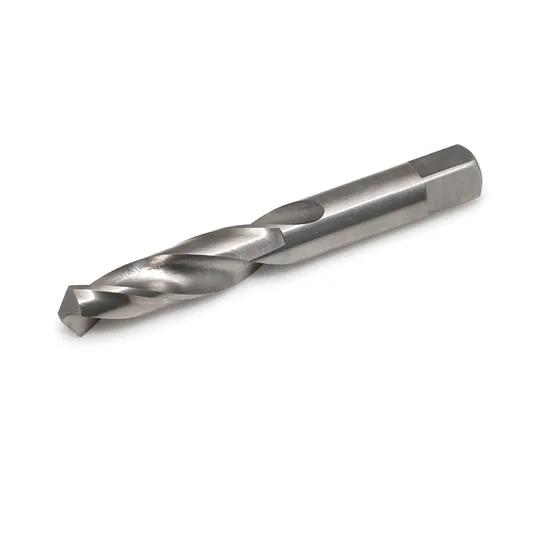
Square-shank drill bits feature a shank with a square-shaped cross-section rather than a circular one. This design is commonly associated with certain specialized drilling tools, heavy-duty attachments, and applications that require a specifically shaped connection. The square profile can help resist relative rotation between the shank and a matching square socket, provided that the tool holder is designed to accommodate it.
One of the main characteristics of a square-shank design is its ability to transmit torque through the flat faces and corners of the shank. When correctly matched with a compatible holder, the geometry can provide positive rotational engagement and reduce the possibility of the shank spinning independently inside the socket. This can be useful in equipment designed for repetitive, high-load work, where reliable torque transmission is important.
However, a square shank is not automatically compatible with every impact drill or impact driver. Most conventional hammer drills and impact drivers use round, hexagonal, SDS, or other standardized tool interfaces. A square-shank bit must be used with a holder specifically designed for that connection or with an appropriate adapter. An unsuitable adapter may introduce excessive play, reduce stability, or create a safety hazard.
Square-shank designs are therefore best understood as a specialized connection option rather than a universal replacement for conventional drill-bit shanks. Before purchasing one, users should verify the holder dimensions, torque requirements, rotational speed, and whether the tool is intended to support axial impact, rotational impact, or both.
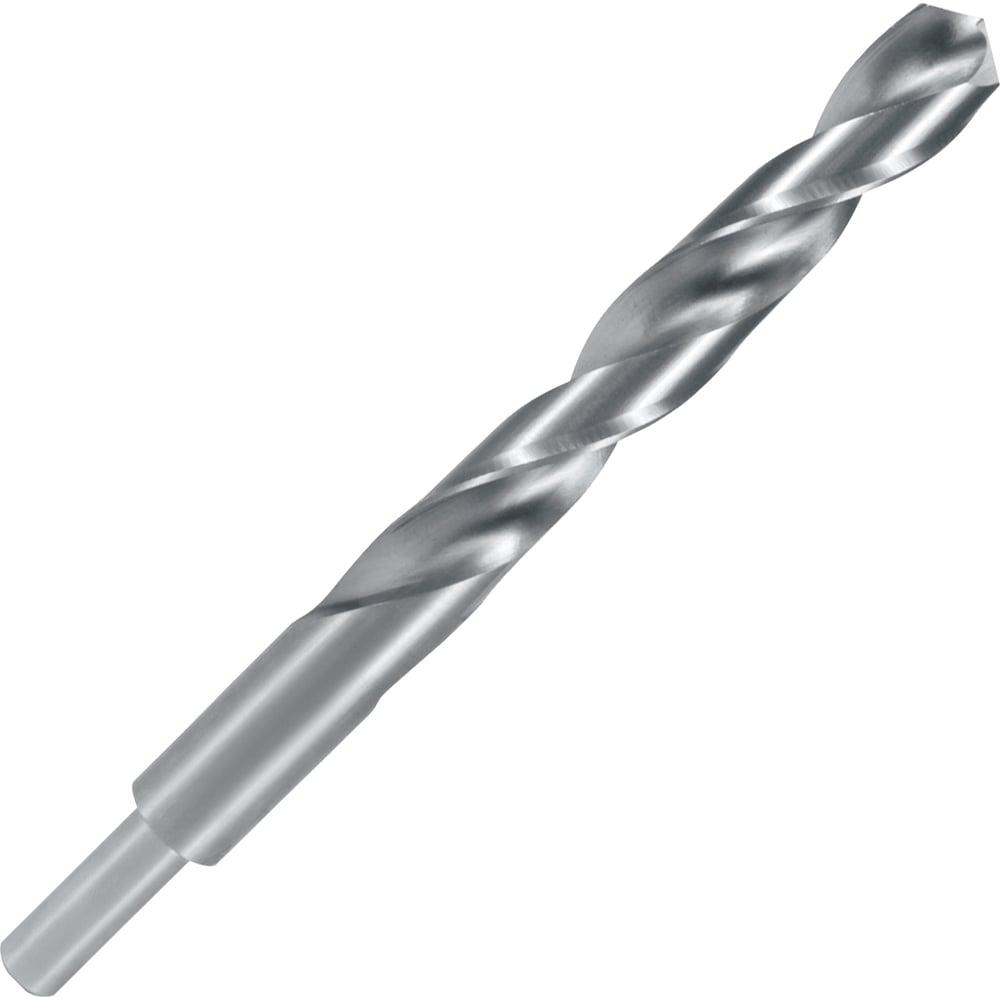
Round-shank drill bits have a cylindrical shank that fits into a compatible drill chuck or specialized tool holder. They are widely used across general-purpose drilling applications because their simple geometry is compatible with many conventional keyed and keyless chucks. Depending on the specific bit and machine, round shanks may also be used with specialized adapters or other purpose-built holders.
A major advantage of the round-shank design is its versatility. A compatible chuck can generally grip the cylindrical shank at different positions along its length, making it convenient to install drill bits of different diameters. This is particularly useful in workshops, manufacturing environments, maintenance departments, and construction settings where operators regularly switch between drilling tasks.
Round-shank drill bits are available in many configurations, including high-speed steel twist drills, cobalt-alloy drill bits, carbide-tipped masonry bits, and specialized cutting tools. The shank shape itself does not determine whether a bit can drill steel, wood, concrete, or masonry. Instead, material selection, cutting geometry, and the design of the complete drill bit determine its suitability for a particular application.
For example, a round-shank masonry bit can be suitable for a conventional hammer drill if the bit and chuck are rated for that operation. A round-shank metal drill bit, by contrast, may be intended primarily for rotational drilling and should not automatically be used with a tool that delivers repeated axial impacts.
Round shanks offer a practical balance of availability, convenience, and compatibility. Nevertheless, their performance depends on the quality and condition of the chuck. If the chuck is worn, contaminated, incorrectly tightened, or unsuitable for the applied load, the bit may slip or become unstable.
The most important differences relate to the shank profile, the way the bit engages with its holder, and the range of compatible tools. The following comparison provides a practical overview.
| Feature | Square-shank drill bits | Round-shank drill bits |
|---|---|---|
| Cross-sectional shape | Square | Circular |
| Connection method | Requires a matching square holder or compatible adapter | Commonly held by a compatible keyed or keyless chuck |
| Torque transmission | Positive engagement is possible with a matching square socket | Usually relies on chuck clamping force and friction |
| Tool compatibility | More specialized and dependent on the holder | Broad compatibility with conventional chuck-based drills |
| Bit installation | Requires the correct square interface | Usually straightforward in a compatible chuck |
| Centering and alignment | Depends on holder precision and clearance | Generally convenient with a properly functioning precision chuck |
| Availability | More specialized in many drill-bit categories | Widely available in many sizes and materials |
| Typical applications | Specialized equipment and matched tool systems | General-purpose drilling and a wide range of industrial tasks |
| Resistance to slipping | Can resist relative rotation with a properly matched positive-drive holder | Depends substantially on chuck grip, shank condition, and applied torque |
| Overall versatility | Best within a compatible tool system | Generally more versatile across conventional drilling equipment |
It is important to distinguish between shank geometry and the complete tool interface. A square shank may offer positive rotational engagement when used in the right socket, but this does not mean every square-shank bit is stronger than every round-shank bit. Likewise, a round-shank bit held in a high-quality chuck may deliver excellent stability and accurate drilling.
Torque transmission is one of the most frequently discussed differences between square and round shanks. Torque is the rotational force applied by the drilling machine to turn the bit and overcome resistance from the material being cut. In demanding applications, the connection between the bit and the tool must transmit this force reliably without excessive movement or damage.
A square-shank design can transfer torque through the contact between its flat faces and the matching surfaces of a square holder. This positive-drive arrangement can reduce dependence on friction alone, provided that the interface is correctly dimensioned and manufactured. It may be advantageous when a tool system is specifically engineered around this type of connection.
Round-shank drill bits typically depend on the clamping force of the chuck to transmit torque. A well-designed chuck can grip the shank securely and provide reliable performance across a wide range of drilling conditions. However, if the bit is undersized for the chuck, the jaws are worn, or the chuck is not tightened properly, slipping can occur. Excessive torque, heat, and vibration can also contribute to connection problems.
In practice, the difference is not simply that square shanks transmit more torque and round shanks transmit less. The performance of the connection depends on the materials, dimensions, surface condition, holder design, and operating loads. A poorly fitted square shank can develop backlash or damage its holder, while a properly secured round shank can handle substantial drilling loads within its rated limits.
For industrial users, the best approach is to evaluate the torque rating of the complete tool-and-bit system rather than selecting a drill bit solely according to its shank shape.
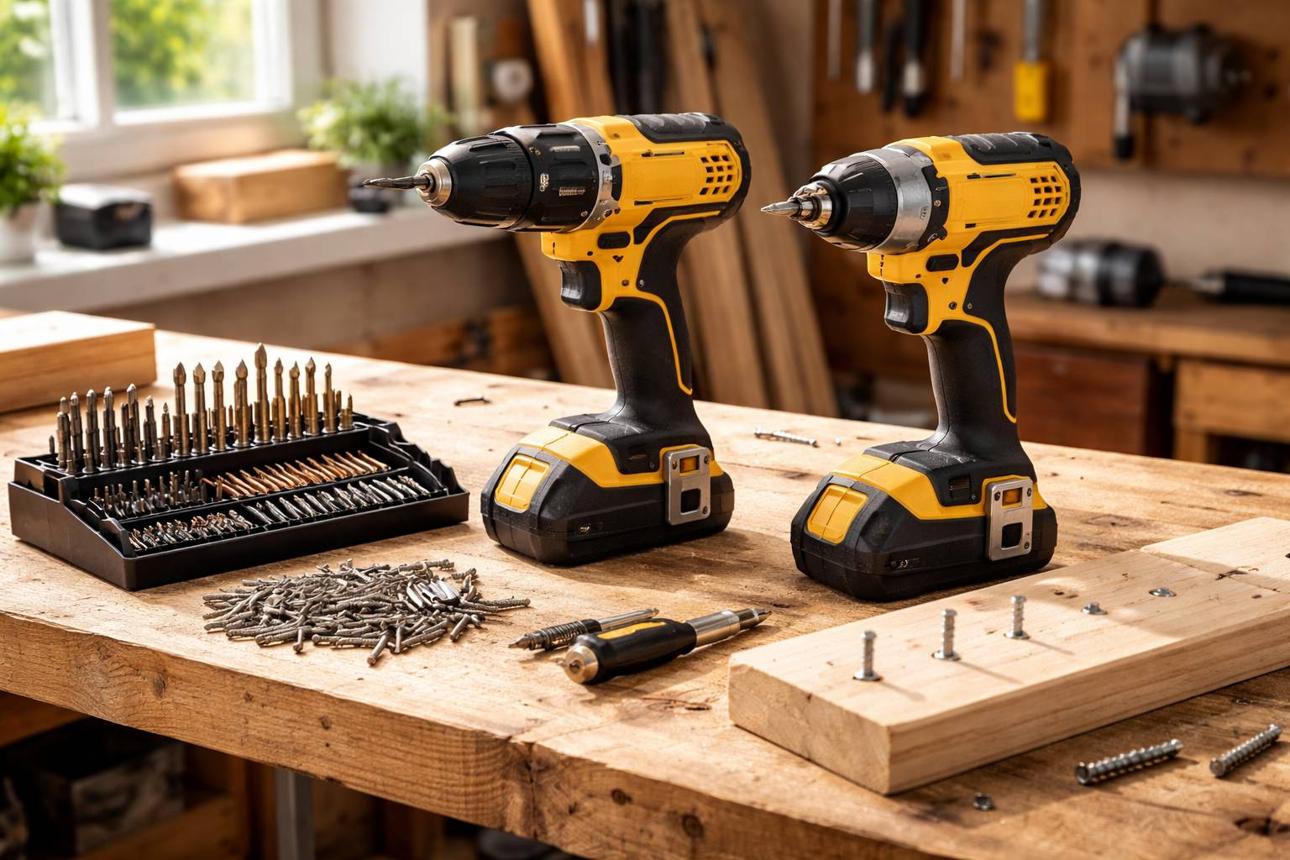 Tool compatibility is often more important than the theoretical advantages of either shank design. The terms impact drill, hammer drill, and impact driver are sometimes used interchangeably in everyday conversation, but they describe different mechanisms. Understanding these distinctions helps prevent the wrong bit from being installed in a machine.
A conventional hammer drill combines rotation with rapid axial hammering, which helps break brittle materials such as brick, masonry, and some types of concrete. Many hammer drills use a conventional three-jaw chuck and can accept compatible round-shank drill bits. Some rotary hammers use an SDS-type connection designed for specific bit-retention and hammering requirements.
An impact driver, by contrast, generally applies rotational impacts to produce high torque for driving screws, fasteners, and compatible accessories. Its holder often uses a hexagonal quick-change interface rather than a conventional round-shank drill chuck. Some impact-rated drill bits are manufactured with hex shanks to match these holders.
Square-shank drill bits should only be installed in impact equipment when the tool manufacturer explicitly permits the connection and the bit is rated for the intended operation. A square profile alone does not make a drill bit impact-rated. Similarly, an ordinary round-shank twist drill is not necessarily suitable for a rotational impact driver or a rotary hammer.
Before choosing a bit, check the following:
The tool holder’s connection type and dimensions.
Whether the bit is approved for rotational drilling, axial hammering, or rotational impact.
The maximum operating speed and torque permitted by the manufacturer.
The material being drilled and the cutting geometry required.
Whether an adapter is approved for the specific tool and application.
Using the correct interface improves retention and stability, while using an incompatible bit can lead to slipping, poor alignment, damaged holders, or bit failure.
Drilling accuracy depends on more than the shank profile. The quality of the chuck or holder, the straightness of the bit, the concentricity of the cutting edges, and the rigidity of the drilling setup all influence the final hole.
Round-shank drill bits are widely used for precision drilling because they can be clamped in precision chucks designed to center cylindrical tools accurately. In metalworking, for example, a high-quality round-shank twist drill can produce consistent holes when used with a suitable machine, correct feed rate, and appropriate cutting conditions.
Square-shank drill bits can also provide stable performance when used in a well-machined, compatible holder. However, the square geometry alone does not guarantee better concentricity or lower vibration. Clearance between the shank and holder, manufacturing tolerances, and the condition of the connection can all influence stability.
Vibration can become especially important when drilling hard materials or working with long drill bits. Excessive vibration may accelerate wear, damage the cutting edge, reduce hole quality, and increase stress on the tool holder. A bit with a poorly centered shank can also cause uneven loading, regardless of whether the shank is square or round.
To improve drilling accuracy, operators should use a bit with the correct dimensions, inspect the shank for wear and damage, secure the bit according to the tool manufacturer’s instructions, and avoid excessive pressure. For deep-hole drilling and precision metalworking, bit straightness, flute design, chip evacuation, and machine rigidity may have a greater effect on accuracy than shank shape alone.
Durability is another important consideration, particularly for professionals who use drill bits continuously in construction, manufacturing, or industrial maintenance. However, the shank shape by itself does not determine how long a drill bit will last.
Square-shank bits can experience wear at the corners and contact surfaces if the matching holder has excessive clearance or if the connection is repeatedly subjected to high torque. Under unsuitable conditions, corners may become rounded, the holder may deform, or repeated loading may cause fatigue-related damage. A correctly manufactured square interface, on the other hand, can provide reliable service when used within its design limits.
Round-shank bits can develop polished or worn contact areas from chuck clamping. If the chuck slips under heavy load, the shank may become marked or damaged, and the bit may no longer be held securely. These issues are often associated with inadequate clamping, worn jaws, contamination, or using a tool beyond its intended capacity.
The cutting portion of the bit is equally important. High-speed steel offers a useful balance of toughness, cost, and cutting performance for many general-purpose tasks. Cobalt-alloy high-speed steel can improve hot-hardness and wear resistance when drilling suitable metals, while carbide cutting edges can provide high hardness and wear resistance for specific applications. Each material has its own limitations and must be matched to the workpiece and operating conditions.
For longer service life, use the correct cutting speed, maintain suitable feed pressure, apply the recommended lubricant or coolant where appropriate, and remove chips effectively. In masonry drilling, use a bit specifically designed for the material and impact mechanism. These practices generally have a more direct effect on tool life than selecting a square or round shank alone.
Concrete and masonry drilling require particular attention because the cutting mechanism differs from conventional metal drilling. Depending on the hardness of the material, hole diameter, and required depth, users may need a carbide-tipped masonry bit, a hammer-drill bit, or a rotary-hammer bit with a specialized shank.
For many standard hammer drills with three-jaw chucks, a compatible round-shank masonry bit is a practical choice. It can be installed easily and is available in a wide range of diameters. When drilling relatively small holes in brick, block, or suitable masonry, this combination can offer convenient performance.
For heavier concrete drilling, especially when the tool uses a rotary-hammer mechanism, the manufacturer may specify an SDS-Plus, SDS-Max, or another dedicated connection. These systems are designed to accommodate the movement and loads associated with the tool’s hammering mechanism. A conventional square-shank bit should not be assumed to be a substitute for an SDS bit, and an ordinary round-shank bit should not be used in a rotary hammer unless the manufacturer provides an approved compatible chuck or adapter.
The cutting tip is also critical. Carbide-tipped masonry bits are designed to withstand abrasive materials and the stresses associated with masonry drilling. Ordinary metal-cutting twist drills, regardless of whether they have square or round shanks, are generally not the correct choice for drilling concrete with a hammering action.
For concrete drilling, prioritize the tool’s specified connection and the bit’s masonry rating over whether the shank is square or round. The correct combination improves drilling efficiency, reduces the risk of damage, and provides a safer working setup.
Metal drilling places different demands on a drill bit. Rather than relying primarily on impact action, most metal-cutting operations depend on controlled rotation, appropriate feed pressure, effective chip evacuation, and management of heat generated at the cutting edge.
Round-shank twist drills are widely used for metalworking because they fit conventional drill chucks and are available in a broad selection of diameters, lengths, point angles, and cutting materials. They are suitable for many workshop and industrial tasks involving carbon steel, aluminum, copper alloys, and other machinable metals, provided that the bit grade and cutting conditions are appropriate.
Square-shank drill bits may be useful in specialized equipment that employs a matching positive-drive holder, but they are less commonly the default choice for ordinary chuck-based metal drilling. Their suitability depends on the machine and the specific bit design rather than an inherent advantage in cutting metal.
For production environments, other factors can be more influential than shank geometry. These include the hardness and toughness of the cutting material, the point and flute geometry, the rigidity of the machine, the required hole tolerance, and the effectiveness of coolant delivery. For deep-hole drilling, internal coolant passages and specialized drill geometries may be particularly important for chip evacuation and temperature control.
When drilling stainless steel or other heat-sensitive materials, operators should select an appropriate drill grade, maintain suitable cutting speeds, and use the manufacturer’s recommended lubrication practices. An impact mechanism should not be applied to a metal-cutting bit unless the tool and bit are explicitly designed for that mode of operation.
Cost and availability can influence the choice between different drill-bit connections, especially for workshops that maintain a large inventory of consumables. Round-shank drill bits are widely stocked by hardware suppliers and industrial tooling distributors because they serve a broad range of conventional drilling applications.
Their popularity also means that users can often find replacements in many diameters, lengths, and material grades. For a workshop with multiple conventional drill presses and portable drills, round-shank bits can simplify inventory management because many of the tools share compatible chuck systems.
Square-shank drill bits may be less readily available in some markets or product categories. If a particular machine requires a square-shank connection, the user may need to source bits from a more specialized supplier. The holder itself can also influence maintenance costs, because wear or damage to a proprietary connection may require a specific replacement component.
However, the initial price of a drill bit should not be the only consideration. A bit with a longer service life, a more appropriate cutting geometry, or better compatibility with the machine may reduce overall operating costs. Conversely, an inexpensive bit that slips, wears quickly, or produces inconsistent holes can increase downtime and replacement frequency.
For businesses purchasing drill bits in bulk, it is sensible to compare total cost of ownership, including purchase price, replacement frequency, compatibility, maintenance requirements, and productivity. Standardizing on a connection that suits the existing equipment can simplify purchasing, but standardization should never override the technical requirements of the drilling operation.
Choosing a drill bit solely on its external shape can lead to compatibility issues and unnecessary expenses. One common mistake is assuming that square-shank drill bits always deliver greater torque or longer service life. A positive-drive connection can offer advantages in an appropriately designed system, but its effectiveness depends on the holder’s dimensions, material strength, and operating limits.
Another frequent mistake is assuming that all round-shank drill bits are suitable for impact drilling. Round-shank bits are available in many designs, and their intended use varies considerably. A round-shank masonry bit rated for a hammer drill is not equivalent to an ordinary HSS twist drill designed for metal. Similarly, a bit intended for a conventional chuck should not automatically be installed in a rotary hammer.
Users may also overlook the importance of the holder itself. A worn chuck can cause a round-shank bit to slip, while a poorly fitting square socket can introduce excessive movement or damage the connection. Even a high-quality drill bit may perform poorly if the tool holder is unsuitable.
A further mistake is focusing on the shank while ignoring the cutting material and tip design. For example, drilling hardened metal requires a suitable cutting tool and controlled operating conditions, whereas concrete drilling usually requires a purpose-built masonry bit. No shank profile can compensate for an unsuitable cutting edge.
To avoid these problems, identify the exact tool model, confirm the required shank standard, check the bit’s intended material and operating mode, and follow the manufacturer’s specifications. This approach is more reliable than making a decision based on shank shape alone.
The most effective selection process begins with the drilling task rather than the bit itself. Users should consider the workpiece material, required hole diameter, drilling depth, production volume, machine type, and acceptable hole tolerance. These factors determine the cutting geometry and material grade required, as well as the connection that can be used safely.
For general-purpose drilling in wood, plastic, and suitable metals, round-shank drill bits are often the most convenient option when the equipment uses a conventional chuck. They are easy to source, straightforward to install, and available in a wide range of designs.
For specialized machinery with a square socket, square-shank bits can be a sensible choice when they are designed for the equipment and the operating load. Their positive-drive connection may be useful in systems that require direct rotational engagement, but users should verify the manufacturer’s specifications before purchasing replacements.
For masonry and concrete, the tool’s impact mechanism and specified bit interface should guide the decision. A hammer drill may accept compatible round-shank masonry bits, while a rotary hammer may require SDS-style bits. For impact drivers, users should select accessories specifically approved for the driver and its holder.
Finally, consider the operating environment. High-volume manufacturing may prioritize tool life, repeatability, and fast tool changes, whereas a home workshop may prioritize affordability and compatibility with existing equipment. Matching the bit to these practical requirements can improve productivity and reduce unnecessary tool wear.
Not necessarily. Square shanks can provide positive rotational engagement when used with a matching holder, while round shanks can transmit substantial torque when securely clamped in a suitable chuck. Strength depends on the bit’s material, cross-sectional dimensions, manufacturing quality, holder design, and operating conditions. A square shank is not inherently stronger in every application.
They can reduce rotational slipping when fitted into a properly designed square socket because torque can be transmitted through the mating faces. However, a loose, worn, or incorrectly sized connection can still move or fail. Round-shank drill bits can also be held securely by a properly maintained chuck with sufficient clamping force.
Only if the driver has a compatible holder or an appropriate adapter and the bit is rated for the intended operation. Many impact drivers use a hexagonal quick-change holder, so an ordinary cylindrical shank will not fit directly. The bit must also be approved for the driver’s rotational-impact loads.
They may be suitable for particular machines and applications, but the square profile alone does not establish suitability for concrete drilling. Users should select a purpose-built masonry bit and ensure that its connection matches the hammer drill or rotary hammer. Dedicated SDS systems are common in rotary-hammer applications.
Neither type is universally better. Round-shank bits are often the practical choice for conventional chuck-based drilling, while square-shank bits may be appropriate for specialized equipment designed around square-drive connections. Professional users should prioritize compatibility, rated operating loads, cutting performance, accuracy, and overall service life.
Shank shape alone usually does not determine drilling speed. Cutting material, tip geometry, flute design, machine power, rotational speed, feed pressure, and chip evacuation are often more influential. A secure and compatible shank connection helps the bit operate as intended, but it cannot compensate for an unsuitable cutting design or incorrect operating conditions.
Yes, the difference between square-shank and round-shank impact drill bits can be significant when it comes to tool compatibility, connection design, torque transmission, and maintenance. A square shank can offer positive rotational engagement in a matching holder, while a round shank provides broad compatibility with conventional drill chucks and is widely available for general-purpose drilling.
However, the most important consideration is whether the drill bit is designed for your machine and the material you intend to drill. Shank shape should be evaluated alongside cutting material, tip geometry, impact rating, operating speed, and the manufacturer’s specifications. For conventional drilling, a compatible round-shank bit is often the simplest option. For specialized equipment with a square-drive holder, a properly matched square-shank bit may be more appropriate.
By choosing the right connection and cutting design, users can improve drilling stability, reduce the risk of tool damage, and achieve more consistent results across construction, metalworking, maintenance, and industrial manufacturing applications.

