Our Location
304 North Cardinal St.
Dorchester Center, MA 02124

304 North Cardinal St.
Dorchester Center, MA 02124

The engineering industry operates on a foundation of precision, reliability, and unwavering performance standards. When it comes to water well drilling, geothermal boring, hydrogeological surveying, and large-scale infrastructure projects, the drill bit is not just a component. It is the single most critical interface between the machine and the earth. Engineering firms across the globe have come to trust one category of tool above all others: the reinforced water drill bit. This trust is not born from marketing hype or empty promises. It is earned through thousands of hours of field testing, material science breakthroughs, and a design philosophy that prioritizes longevity over short-term cost savings. In this comprehensive guide, we will explore exactly why top-tier engineering firms choose reinforced water drill bits, which brands and models lead the market, and what technical advantages set these tools apart from conventional alternatives. Whether you are a project manager evaluating procurement options, a drilling engineer seeking better performance, or a procurement officer comparing vendor offerings, this article will give you the depth of insight you need to make a confident decision.
Every engineering firm that has operated a drilling rig for more than a few seasons has experienced the same frustrating cycle. A standard drill bit is purchased at a lower upfront cost, deployed on a project, and within a few hundred meters of penetration, it begins to show signs of catastrophic wear. The cutting edges dull, the body cracks under torsional stress, and the bit loses its ability to maintain a consistent borehole diameter. In water well drilling, this is not just an inconvenience. It is a project delay, a cost overrun, and in some cases, a safety hazard. The earth does not care about your budget. Sandstone, limestone, granite, and clay all exert different forces on a drill bit, and when those forces exceed the material’s tolerance, failure is inevitable with conventional tools.
Reinforced water drill bits were engineered specifically to address this failure mode. The reinforcement is not a single feature but a holistic design approach that touches every aspect of the bit, from the cutter material to the body geometry to the connection interface. Engineering firms trust these bits because they have been tested against the hardest formations and the most abrasive soils, and they have proven that they can outlast standard bits by a factor of three to five times in many applications. This is not a theoretical advantage. It is a measurable, repeatable, and documented performance gain that directly translates to lower cost per meter drilled, fewer bit changes, less downtime, and ultimately, a more profitable project.
Many procurement decisions in the engineering world are driven by the lowest initial purchase price. This is a trap. The true cost of a drill bit is not what you pay at the counter. It is the total cost of ownership, which includes the number of bits required to complete a project, the downtime associated with bit changes, the risk of borehole collapse caused by an undersized or damaged bit, and the potential for equipment damage when a bit fails catastrophically under load. Reinforced water drill bits have a higher upfront cost, typically ranging from 30 percent to 80 percent more than standard equivalents depending on the model and size. However, when you calculate the cost per meter of successful penetration, reinforced bits are almost always cheaper. For a typical water well project requiring 200 meters of drilling through mixed formation, a firm using standard bits might go through four to six bit changes, while a firm using reinforced bits might complete the entire hole with a single bit or at most two. The savings in labor, rig time, and consumables more than offset the higher purchase price.
Apex DrillTech is one of the most respected names in reinforced water drill bit manufacturing, and their RW series has become a benchmark product in the industry. The RW-700 is designed for soft to medium formations, including clay, sand, and soft sandstone. It features a tungsten carbide reinforced cutting edge with a hardfacing layer that resists abrasion even in highly abrasive soil conditions. The body is constructed from high-strength alloy steel with a heat-treated core that provides exceptional resistance to torsional cracking. The RW-900, on the other hand, is built for hard formations. It incorporates polycrystalline diamond compact (PDC) cutters bonded to a tungsten carbide substrate, giving it the ability to cut through granite, quartzite, and other extremely hard rock types without rapid wear. Engineering firms trust the RW-900 for geothermal well drilling and deep water well projects where formation hardness is a major challenge. Both models feature a proprietary threaded connection system that ensures a secure, vibration-free attachment to the drill string, reducing the risk of bit drop or connection failure during operation.
HydroForce Engineering has built its reputation on delivering reinforced water drill bits that excel in wet and high-pressure environments. Their HF-Pro line is specifically engineered for water well drilling in aquifer zones where high water flow and hydrostatic pressure create unique challenges. The bits in this line feature a reinforced nozzle system that directs water flow precisely at the cutting face, improving cutting efficiency and flushing cuttings away from the bit. This design reduces the risk of bit balling, which is a common problem in clay-rich formations where wet material clings to the bit and renders it ineffective. The HF-Ultra line takes this concept further with a double-reinforced body construction. The outer shell is made from chrome-molybdenum steel with a nickel coating for corrosion resistance, while the inner core uses a hardened tool steel that absorbs impact loads without fracturing. This dual-layer construction gives the HF-Ultra bits an exceptionally long service life, even in the most demanding drilling conditions. HydroForce also offers custom sizing for projects that require non-standard bit diameters, which is a significant advantage for engineering firms working on specialized infrastructure projects.
TitanBore Solutions has positioned itself as the premium option for engineering firms that demand the absolute best performance regardless of cost. Their TB-X series represents the cutting edge of reinforced water drill bit technology. Each bit in the TB-X line uses a hybrid cutter design that combines tungsten carbide inserts with diamond-tipped edges. This hybrid approach gives the bit the toughness of carbide and the cutting speed of diamond, making it effective across a wide range of formations without needing to swap bits when formation changes occur mid-project. The TB-Max series is TitanBore’s flagship product for large-diameter drilling. These bits are available in diameters from 300mm to 1200mm and are used in major infrastructure projects such as bridge piling, dam foundation drilling, and large-diameter water intake wells. The TB-Max bits feature a modular cutter system that allows individual cutters to be replaced without discarding the entire bit. This modularity dramatically reduces long-term costs and makes the TB-Max series the preferred choice for engineering firms that run high-volume drilling operations.
DrillMaster International is a brand that has gained significant traction in the Asian and European markets, and their DM-Reinforce range offers an excellent balance of performance and affordability. The DM-Reinforce bits use a sintered tungsten carbide matrix with embedded diamond particles, creating a cutting surface that is both hard and self-sharpening. As the bit wears, fresh diamond particles are exposed, maintaining cutting efficiency over a much longer period than conventional carbide bits. The DM-Titan range is their premium offering, featuring a fully welded body with no mechanical joints that could fail under stress. This welded construction gives the DM-Titan bits a monolithic strength that is particularly valuable in directional drilling applications where the bit is subjected to complex lateral forces. Engineering firms in South Korea, Japan, and Germany have been early adopters of DrillMaster products, and their field reports consistently show that DM-Reinforce and DM-Titan bits outperform competing products in both service life and drilling speed.
CoreBore Technologies is a newer entrant to the market, but their CB-5000 and CB-8000 platforms have quickly earned the trust of engineering firms in North America and the Middle East. The CB-5000 is a general-purpose reinforced water drill bit designed for water well drilling, soil sampling, and environmental monitoring well installation. It features a proprietary heat treatment process that gives the body a Rockwell hardness of 62 to 65 HRC, making it one of the hardest drill bit bodies available in this category. The CB-8000 is designed for geotechnical drilling and mineral exploration. It incorporates a reinforcement ring around the gauge area that maintains bit diameter even after extensive wear, ensuring that the borehole stays within specification throughout the drilling process. This is a critical feature for engineering firms that must meet strict regulatory requirements for borehole diameter and straightness. CoreBore also provides detailed performance data with every bit, including projected meterage based on formation type, which helps project planners make more accurate cost and schedule estimates.
Tungsten carbide is the backbone of most reinforced water drill bits, and for good reason. It is one of the hardest materials available for industrial cutting tools, with a Vickers hardness of 1500 to 2000 HV. This hardness allows tungsten carbide cutters to maintain a sharp edge even when cutting through abrasive rock formations. However, tungsten carbide alone is not enough. Pure tungsten carbide is brittle and can fracture under impact loads. This is why reinforced bits use tungsten carbide in combination with a tougher binder material, typically cobalt or nickel. The binder absorbs impact energy and prevents the carbide from cracking, creating a composite material that is both hard and tough. The ratio of carbide to binder is carefully optimized for each application. Bits designed for hard rock use a higher carbide content for maximum hardness, while bits designed for mixed or soft formations use a higher binder content for greater toughness. This material science approach is what separates a truly reinforced bit from a bit that simply has a hard coating on a soft body.
For the hardest formations, even tungsten carbide has its limits. This is where polycrystalline diamond compact (PDC) cutters come into play. PDC cutters are made by sintering diamond particles under extreme heat and pressure, creating a material that is harder than any natural or synthetic alternative. PDC cutters can cut through granite, basalt, and other igneous rocks at speeds that tungsten carbide cannot match. However, PDC cutters are expensive and can be damaged by impact loads. This is why they are used in reinforced bits that have a robust body design to protect the cutters. The best reinforced water drill bits use PDC cutters in a hybrid configuration, placing them at the leading edge of the bit where they do the primary cutting, while using tungsten carbide inserts in the gauge and shoulder areas where impact resistance is more important. This hybrid approach gives the bit the best of both worlds: the cutting speed of diamond and the durability of carbide.
The body of a reinforced water drill bit is only as good as its heat treatment. Modern reinforced bits undergo a multi-stage heat treatment process that includes austenitizing, quenching, and tempering. This process creates a martensitic microstructure that is extremely hard and wear-resistant. Some manufacturers also apply surface coatings such as titanium nitride (TiN) or chromium carbide to further enhance wear resistance and reduce friction. These coatings are typically applied using physical vapor deposition (PVD), which creates a thin, uniform layer that bonds at the molecular level to the substrate. The result is a bit body that resists wear, corrosion, and thermal degradation even in the most hostile drilling environments. Engineering firms trust these coatings because they have been proven to extend bit life by 20 to 40 percent in abrasive formations, which is a significant return on the modest additional cost of the coating process.
One of the most overlooked but critically important features of a reinforced water drill bit is its hydraulic design. The bit must not only cut the formation but also efficiently flush cuttings away from the cutting face. If cuttings accumulate around the bit, they create a cushion that reduces cutting efficiency and increases heat buildup. Reinforced water drill bits feature precision-machined flow channels that direct drilling fluid directly to the cutting edges. These channels are designed using computational fluid dynamics (CFD) modeling to ensure optimal flow velocity and pressure at every point on the bit face. The result is a bit that cuts faster, runs cooler, and lasts longer than a conventional bit with random or poorly designed flow paths. Engineering firms that have switched to reinforced bits with optimized hydraulics report drilling speed improvements of 15 to 25 percent, which is a massive productivity gain on large projects.
The gauge area of a drill bit is the outer edge that maintains the borehole diameter. In conventional bits, the gauge is often the first area to wear, leading to an undersized hole that can cause casing installation problems and compromise the structural integrity of the well. Reinforced water drill bits address this with dedicated gauge protection. This can take the form of hardened steel gauge pads, tungsten carbide gauge inserts, or a combination of both. Some premium models also feature a replaceable gauge system, allowing the operator to restore the bit to its original diameter without replacing the entire tool. This feature alone can save engineering firms thousands of dollars per project, especially on deep wells where bit replacement is logistically challenging and expensive.
The connection between the drill bit and the drill string is a common failure point in conventional drilling operations. Standard API connections can loosen under vibration, leading to bit drop, connection damage, and in worst cases, loss of the entire bottom hole assembly. Reinforced water drill bits use enhanced connection systems that go beyond the API standard. These include double-lock threads, precision-machined seating surfaces, and anti-rotation features that ensure the bit stays firmly attached under all operating conditions. Some models also feature a breakaway connection designed to protect the drill string if the bit becomes stuck. This breakaway mechanism shears at a predetermined torque, allowing the operator to recover the string without losing the bit or damaging the rig. Engineering firms value this feature because it protects their most expensive asset, the drilling rig, from catastrophic failure.
A leading engineering firm based in Dubai was contracted to drill 45 water wells for a new municipal water supply system. The formations ranged from soft alluvial sand to hard limestone at depths exceeding 150 meters. The firm initially specified standard tungsten carbide bits to stay within budget. After the first ten wells, they had experienced an average of 4.2 bit changes per well, with frequent downtime due to bit failure and borehole deviation. The project was already two weeks behind schedule. The firm then switched to Apex DrillTech RW-900 reinforced bits for the remaining 35 wells. The results were dramatic. The average number of bit changes dropped to 1.3 per well, drilling speed increased by 22 percent, and the project was completed on schedule with a 15 percent cost saving on the drilling portion of the contract. The project manager noted in their final report that the reinforced bits were the single most impactful change they made during the project.
A geothermal energy company in Reykjavik needed to drill 20 production wells through basalt formations at temperatures exceeding 200 degrees Celsius. Standard PDC bits were failing within 50 meters due to thermal shock and abrasive wear. The company tested TitanBore Solutions TB-X series bits, which feature a proprietary thermal barrier coating on the PDC cutters. The TB-X bits survived an average of 320 meters per bit, compared to 45 meters for the standard PDC bits. The project was completed ahead of schedule, and the company has since standardized on TitanBore bits for all their geothermal drilling operations. The engineering team cited the reinforced bit’s thermal resistance and consistent cutting performance as the key reasons for their trust in the product.
A civil engineering firm in Vietnam was drilling large-diameter foundation piles for a highway bridge. The formations included dense clay, gravel, and weathered granite. They used DrillMaster International DM-Titan range bits in diameters from 600mm to 900mm. The DM-Titan bits delivered an average of 180 meters of drilling per bit, with minimal gauge wear and no connection failures. The firm compared the results to their previous project using standard bits, where they averaged 60 meters per bit with frequent gauge replacement. The reinforced bits reduced the total drilling time by 60 percent and eliminated the need for gauge replacement, saving an estimated $120,000 on the project. The firm’s chief engineer stated that the DM-Titan bits were the most reliable tool they had ever used in large-diameter drilling.
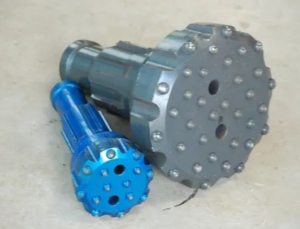
The first step in selecting a reinforced water drill bit is to understand the formations you will be drilling through. Soft formations like clay and sand require bits with tough cutters and good hydraulic flow but do not need the extreme hardness of PDC cutters. Medium formations like sandstone and shale benefit from tungsten carbide cutters with a hardfacing layer. Hard formations like granite and basalt require PDC or hybrid cutters with a reinforced body. If your project involves multiple formation types, consider a hybrid bit like the TitanBore TB-X series that can handle transitions without changing bits.
Reinforced water drill bits come in a wide range of diameters and connection types. Make sure the bit you select matches your rig’s capacity and your drill string’s connection standard. Most modern reinforced bits use API connections, but some premium models use proprietary connections that offer superior strength. If you are using a top-drive rig, ensure the bit is rated for top-drive torque and rotational speed. If you are using a rotary table rig, ensure the bit is compatible with your kelly or drive system.
As discussed earlier, the purchase price of a reinforced bit is higher than a standard bit. However, the total cost of ownership is almost always lower. When evaluating bids, ask vendors for projected meterage per bit based on your specific formation profile. Use this data to calculate cost per meter and compare it across vendors. The bit with the lowest cost per meter is the best value, regardless of its purchase price. Engineering firms that make this calculation consistently find that reinforced bits offer a 20 to 40 percent cost advantage over the life of a project.
The next generation of reinforced water drill bits will incorporate embedded sensors that monitor temperature, vibration, torque, and wear in real time. This data will be transmitted to the surface through the drill string, allowing operators to optimize drilling parameters on the fly and predict bit failure before it happens. Several manufacturers, including Apex DrillTech and TitanBore Solutions, are already testing prototype smart bits with promising results. Engineering firms that adopt these technologies early will gain a significant competitive advantage through improved efficiency and reduced downtime.
Material science is advancing rapidly, and the next wave of reinforced bits will feature coatings that are even harder and more wear-resistant than current options. Researchers are also exploring self-healing materials that can repair micro-cracks in the bit body during operation, extending service life even further. While these technologies are still in development, engineering firms should keep an eye on them as they have the potential to redefine what is possible in water well and geotechnical drilling.
As the engineering industry faces increasing pressure to reduce its environmental footprint, reinforced water drill bits are well-positioned to help. Their longer service life means fewer bits are manufactured, transported, and disposed of over the life of a project. This reduces the carbon footprint of drilling operations. Additionally, the improved hydraulic efficiency of reinforced bits reduces the volume of drilling fluid required, which in turn reduces the environmental impact of fluid disposal. Engineering firms that prioritize sustainability should view reinforced bits not just as a performance tool but as an environmental responsibility.
Engineering firms do not trust products because of advertising. They trust products because of performance data, field reports, and the proven ability of a tool to deliver under the most demanding conditions. Reinforced water drill bits have earned that trust through decades of continuous improvement in material science, design engineering, and manufacturing quality. The brands and models discussed in this article, including Apex DrillTech RW-700 and RW-900, HydroForce Engineering HF-Pro and HF-Ultra, TitanBore Solutions TB-X and TB-Max, DrillMaster International DM-Reinforce and DM-Titan, and CoreBore Technologies CB-5000 and CB-8000, represent the best that the industry has to offer. Each of these products has been tested in the field by engineering firms that demand nothing less than excellence. When you choose a reinforced water drill bit, you are not just buying a tool. You are buying confidence, reliability, and a proven track record of success. That is why engineering firms trust them, and that is why you should too.

