Our Location
304 North Cardinal St.
Dorchester Center, MA 02124

304 North Cardinal St.
Dorchester Center, MA 02124

Water well drilling is one of the most technically demanding operations in the construction and utility industry, and the drill bit sits at the very heart of every successful borehole. Whether you are drilling through soft alluvial soils, hard granite formations, or abrasive sandstone layers, the condition of your drill bit directly determines how many feet you can achieve before the bit fails, becomes dull, or requires replacement. Maximizing footage per bit is not just a matter of luck or geology; it is the result of disciplined maintenance practices, proper selection of bit type for the formation being drilled, and a deep understanding of how wear mechanisms operate under different conditions. This comprehensive guide covers everything you need to know about maintaining your water drill bit to ensure maximum footage, including detailed brand and model recommendations, step-by-step maintenance procedures, and the science behind bit wear and longevity.
The footage you achieve from a single drill bit is fundamentally a function of how well that bit retains its cutting efficiency over time. A brand-new bit with sharp, properly angled cutters can penetrate rock or soil at rates that are two to five times higher than a worn bit with dulled or broken cutters. When a bit becomes dull, the drilling operator must apply more weight on bit and more rotational speed to maintain the same rate of penetration, which in turn generates excessive heat, accelerates wear on the bit body, and can cause the drill string to vibrate in ways that damage other downhole equipment. This cascade of inefficiency means that poor bit maintenance does not just cost you in bit replacement; it costs you in rig time, fuel, labor, and the overall economics of the well. In commercial water well drilling, where margins can be thin and competition fierce, every foot of footage you can extract from a single bit translates directly into profit. The industry average for bit life varies dramatically depending on formation hardness, but a well-maintained roller cone bit in medium-hard rock can achieve 300 to 800 feet of footage, while a poorly maintained one might fail after 50 to 100 feet. That is a difference of six to eight times in performance, and the gap is almost entirely attributable to maintenance practices.
Drill bits do not fail suddenly in most cases; they degrade gradually through several well-understood wear mechanisms, and the operator who understands these mechanisms can intervene before catastrophic failure occurs. The most common wear mechanism in roller cone bits is abrasive wear, where the hard rock particles grind away at the tungsten carbide inserts on the cone, gradually rounding off the sharp edges that do the actual cutting. Once the inserts are rounded, the bit can no longer penetrate efficiently and starts to slide across the rock face, generating heat and friction instead of clean cutting action. A second mechanism is impact damage, which occurs when the bit strikes extremely hard inclusions or when the operator applies too much weight too quickly, causing the inserts to chip or fracture. A third mechanism is balling, which happens in clay-rich or wet formations where the cuttings stick to the bit face and pack the spaces between the cones, effectively turning the bit into a smooth cylinder that cannot cut at all. In PDC (Polycrystalline Diamond Compact) bits, the dominant wear mechanism is thermal degradation, where the extreme heat generated at the cutting edge causes the diamond layer to delaminate from the tungsten carbide substrate. Understanding which wear mechanism is most likely in your specific drilling environment is the first step toward designing a maintenance protocol that maximizes footage.
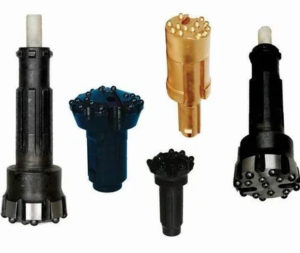
Roller cone bits are the most widely used bits in water well drilling, particularly for formations ranging from soft to very hard rock. These bits consist of two or three cones, each fitted with tungsten carbide inserts or milled steel teeth, that rotate as the bit turns and crush and scrape the rock at the bottom of the hole. The maintenance needs of roller cone bits are centered around three critical areas: the bearing system, the cutting structure, and the hydraulic cleaning system. The bearings are the most common failure point, and they must be inspected and repacked with fresh grease after every trip out of the hole. The cutting structure requires regular inspection for worn, chipped, or missing inserts, and the bit body must be cleaned of any packed cuttings that could cause balling. Roller cone bits from brands like Sandvik, Atlas Copco, and National Oilwell Varco are engineered with sealed bearing systems that can withstand high-pressure washdown, but even these premium systems require periodic maintenance to function at their best.
PDC bits use synthetic diamond cutters mounted on a steel body to shear rock rather than crush it, and they are exceptionally effective in soft to medium-hard formations where their cutting efficiency is highest. The maintenance of PDC bits is different from roller cone bits because there are no moving parts to grease and no bearings to service. Instead, the focus is on preserving the diamond cutters from thermal damage and mechanical impact. PDC bits must be operated at the correct weight on bit and RPM to avoid overheating the cutters, and they must be cleaned thoroughly between runs to prevent cuttings from packing between the cutters and causing heat buildup. Brands like Smith Bits (a subsidiary of Schlumberger), Varel (a brand of National Oilwell Varco), and Hughes Christensen produce PDC bits specifically designed for water well applications, and each has its own maintenance recommendations based on cutter geometry and diamond quality.
Diamond core bits are used in the hardest formations, including granite, basalt, and quartzite, where other bit types would wear out in a matter of minutes. These bits use industrial diamonds embedded in a metal matrix to grind away at the rock, and they produce a solid core sample that can be used for geological analysis. The maintenance of diamond core bits focuses on maintaining the correct diamond exposure and ensuring that the bit is not run dry, which would cause the diamonds to overheat and lose their cutting ability. Brands like Element Six (De Beers Industrial), US Synthetic, and Boart Longyear manufacture diamond core bits for water well and geotechnical drilling, and their maintenance protocols emphasize controlled drilling parameters and careful handling of the bit during trips.
Sandvik is one of the most respected names in drill bit manufacturing, and their DC and DR series roller cone bits are widely used in water well drilling around the world. The Sandvik DC series features sealed roller bearings with a proprietary labyrinth seal design that prevents drilling fluid from contaminating the grease, which extends bearing life significantly. The DR series is designed for harder formations and features premium tungsten carbide inserts with a cobalt binder that resists chipping and abrasive wear. For maximum footage, the Sandvik DC760 and DC960 models are excellent choices for medium-hard formations, achieving 400 to 700 feet per bit when properly maintained. The Sandvik DR660 and DR960 models are better suited for hard rock and can achieve 200 to 500 feet per bit. Maintenance for Sandvik bits involves repacking the bearings with their recommended EP2 grease after every 200 feet of drilling or after every trip, whichever comes first, and inspecting the inserts for wear patterns that indicate the need for reconditioning.
Atlas Copco, through their Secoroc brand, produces some of the highest-performance drill bits available for water well drilling, particularly their DTH (Down-The-Hole) bits and top hammer bits. The Secoroc DTH bits use a unique button design with spherical tungsten carbide buttons that are self-sharpening as they wear, which means the bit maintains its cutting efficiency for a longer period than conventional insert designs. The Secoroc ROC D65 and ROC D85 models are popular choices for water well drilling in hard rock, and they can achieve 300 to 600 feet of footage when operated correctly. The Atlas Copco Secoroc Top Hammer bits, including the TH10 and TH12 models, are designed for use with top hammer drill rigs and feature a face-piercing button layout that provides excellent penetration rates in medium to hard formations. Maintenance for Secoroc bits includes regular flushing to prevent button loading, periodic inspection of the air passages to ensure they are not clogged with cuttings, and replacement of worn buttons before they cause secondary damage to the bit face.
Epiroc, which was spun off from Atlas Copco in 2018, continues to produce world-class drill bits under brands like Epiroc and previously Secoroc. Their COP (Crusher Optimized Performance) series roller cone bits are specifically designed for water well and geothermal drilling, with optimized hydraulics that improve cleaning and reduce balling. The Epiroc COP 840 and COP 1040 models are excellent all-around choices for water well drilling in mixed formations, offering footage of 350 to 650 feet per bit. Their DTH series bits, including the DTH 530 and DTH 550 models, use high-quality spherical buttons that deliver consistent performance in hard rock. Epiroc recommends a maintenance schedule that includes flushing the bit with clean water after every 100 feet of drilling in clay-prone formations, inspecting the bit gauge for wear that could cause hole deviation, and regreasing the bearings with their proprietary COP grease every 150 feet of drilling.
National Oilwell Varco, through their ReedHycalog and Novomet brands, offers a comprehensive range of drill bits for water well drilling. The ReedHycalog series includes both roller cone and PDC bits designed for a wide range of formations. The ReedHycalog 537 and 539 roller cone bits are popular in the water well industry for their durability and consistent performance, achieving 300 to 600 feet of footage in medium formations. Their PDC bits, including the RSP 1605 and RSP 1905 models, are designed for soft to medium-hard formations and can achieve 500 to 1000 feet of footage when operated at the correct parameters. Novomet, which is NOV’s Russian drilling brand, produces high-quality roller cone bits like the NMT 215.9 and NMT 295.7 models that are popular in Eastern Europe and Asia for water well drilling. Maintenance for NOV bits follows a similar pattern to other premium brands: regular bearing greasing, cutting structure inspection, and thorough cleaning to prevent balling.
Smith Bits, part of the Schlumberger portfolio, is renowned for their PDC bit technology, and their IDEAL and PDC series bits are widely used in water well drilling, especially in soft to medium-hard formations. The Smith IDEAL 415 and IDEAL 616 PDC bits feature a proprietary cutter layout that maximizes hydraulic cleaning and reduces the risk of cutter damage from impact. These bits can achieve 600 to 1200 feet of footage in favorable formations, making them some of the highest-footage bits available for water well applications. Smith Bits also offers roller cone bits like the RC442 and RC542 models for harder formations, achieving 250 to 500 feet per bit. Maintenance for Smith PDC bits is critical and includes strict adherence to recommended WOB and RPM parameters, thorough cleaning between runs, and inspection of the cutters for thermal damage or impact chips after every trip.
For operators working with tighter budgets, Brady and Drillquip offer reliable drill bits that deliver respectable footage at a lower cost. Brady’s B200 and B300 series roller cone bits are popular in the U.S. water well market and can achieve 200 to 400 feet of footage in medium formations when maintained properly. Drillquip’s DQ300 and DQ400 series bits are similar in performance and are often used by smaller drilling contractors. While these bits may not match the longevity of premium brands like Sandvik or Smith, they can still deliver excellent footage if the operator follows a disciplined maintenance schedule that includes regular greasing, cleaning, and timely replacement of worn inserts.
The single most important maintenance step happens before the bit ever enters the hole. A thorough pre-drill inspection can identify problems that would otherwise cause premature bit failure and drastically reduce footage. Start by inspecting the cutting structure: for roller cone bits, check every tungsten carbide insert for cracks, chips, or excessive wear. Any insert that is worn down to less than half its original height should be replaced before the bit is run. For PDC bits, inspect every cutter for cracks, spalling, or delamination, and check the gauge pads for wear that could cause the bit to undersize the hole. Next, inspect the bit body for any cracks or erosion, particularly in the areas between the cones or cutters where high-velocity drilling fluid can cause erosion over time. Check the thread connections (API or proprietary) for damage and ensure they are clean and properly torqued. For bits with nozzle assemblies, inspect the nozzles for wear or blockage and replace them if the flow passages are enlarged by more than 10 percent, as this will reduce hydraulic cleaning efficiency and increase the risk of balling. Finally, for roller cone bits, spin the cones by hand to ensure they rotate freely and that the bearings are not seized or gritty.
While the bit is in the hole, several real-time practices can significantly extend its life. The most important is maintaining the correct weight on bit (WOB) and rotational speed (RPM) for the formation being drilled. Excessive WOB causes impact damage to the cutters, while insufficient WOB causes the bit to slide and generate heat. Use the bit manufacturer’s recommended parameters as a starting point and adjust based on real-time feedback from the drilling console. Monitor the torque and standpipe pressure closely: a sudden increase in torque often indicates that the bit is balling up or that the cutters are becoming dull, while a sudden drop in standpipe pressure can indicate that a nozzle has washed out or that the bit is no longer generating adequate cuttings. When drilling in clay-prone or wet formations, increase the flushing rate to prevent cuttings from accumulating on the bit face. Some operators use a “wipe trip” procedure, where they pull the bit out of the hole partway and run it back to the bottom to clean off accumulated cuttings before continuing to drill. This simple practice can add 20 to 40 percent more footage to a bit in problematic formations.
After every trip out of the hole, the bit must be cleaned thoroughly, and this is the maintenance step that is most frequently neglected. Cuttings that are allowed to dry on the bit face become extremely hard to remove and can cause permanent damage to the cutters. Use a high-pressure water jet to blast away all cuttings from the bit face, the gauge area, and the nozzle assemblies. For roller cone bits, use a wire brush to clean the areas between the cones where cuttings tend to pack. For PDC bits, be especially careful not to use metal tools that could damage the diamond cutters; use plastic or nylon brushes instead. After cleaning, inspect the bit again for any damage that may have occurred during the run. For roller cone bits, this is also the time to repack the bearings with fresh grease: remove the old grease using a solvent, dry the bearing surfaces, and pack them with the manufacturer’s recommended grease, taking care not to overfill or underfill the bearing cavity. Overfilling can cause the grease to be forced out under pressure, while underfilling can lead to metal-to-metal contact and bearing failure.
One of the most effective ways to maximize footage is to recondition worn bits rather than replacing them outright. Bit reconditioning involves replacing the worn cutting elements while retaining the bit body, which can cost 30 to 50 percent less than buying a new bit and can restore 70 to 90 percent of the original footage potential. For roller cone bits, reconditioning means replacing the worn tungsten carbide inserts with new ones and resurfacing the cone legs to ensure proper geometry. For PDC bits, reconditioning involves replacing the damaged diamond cutters with new ones, which requires specialized equipment and expertise. Companies like Sandvik, Atlas Copco, and National Oilwell Varco all offer bit reconditioning services, and many independent bit reconditioning shops can perform this work at a lower cost. The key to successful reconditioning is to send the bit for service before the wear becomes too severe; a bit with heavily eroded gauge or cracked cones may not be reconditionable and should be scrapped instead.
Sandstone is one of the most abrasive formations encountered in water well drilling, and it can destroy a bit in a matter of hours if the maintenance protocol is not adapted to the conditions. In abrasive sandstone, the primary wear mechanism is rapid abrasive wear of the cutting elements, so the key maintenance strategy is to operate the bit at a slightly lower WOB than recommended for the formation hardness, which reduces the force with which the abrasive particles are pressed against the cutters. Use a higher flushing rate to keep the bit face clean and prevent abrasive cuttings from being recirculated under the cutters. For roller cone bits in sandstone, choose bits with milled steel teeth rather than tungsten carbide inserts, as steel teeth wear in a controlled manner that maintains cutting efficiency longer than carbide inserts, which tend to chip and break under abrasive conditions. Brands like Sandvik and Epiroc offer specific sandstone bits with optimized tooth geometry for this purpose, such as the Sandvik DC760S and the Epiroc COP 840S models.
Hard igneous rocks like granite and basalt require a completely different maintenance approach. In these formations, the cutting elements are subjected to extreme compressive and impact loads, and the primary wear mechanisms are impact chipping and thermal degradation. For roller cone bits in hard rock, use bits with premium tungsten carbide inserts that have a high cobalt binder content, as this increases the toughness of the inserts and makes them more resistant to chipping. The Sandvik DR960 and Atlas Copco Secoroc ROC D85 are excellent choices for these formations. For PDC bits in hard rock, the key is to avoid thermal damage by operating at lower RPM and higher WOB, which allows the cutters to penetrate the rock through shear rather than grinding. The Smith IDEAL 616 and Varel RSP 1905 are designed for hard rock applications and can deliver 400 to 800 feet of footage when maintained correctly. In hard rock, it is also critical to inspect the bit after every 50 to 100 feet of drilling, as damage can accumulate quickly and a small chip can lead to catastrophic failure if not caught early.
Soft formations present a different set of challenges, primarily balling and bit loading, where the clay or soil sticks to the bit face and packs the spaces between the cutting elements. The maintenance strategy for soft formations focuses on maximizing hydraulic cleaning and minimizing the time the bit spends in contact with the formation without adequate flushing. Use bits with aggressive nozzle layouts that direct high-velocity fluid across the entire bit face, and increase the mud viscosity slightly to improve cuttings transport. For PDC bits in clay, the Smith IDEAL 415 and ReedHycalog RSP 1605 models feature cutter layouts that resist balling and can achieve 800 to 1200 feet of footage in favorable conditions. After every trip in clay, clean the bit thoroughly and inspect the cutters for any clay buildup that could cause thermal damage on the next run.
How you store your drill bits between jobs has a direct impact on their lifespan and the footage they can deliver. Bits should be stored in a dry, covered area away from direct sunlight and moisture, as exposure to water can cause rust on the bit body and corrosion of the bearing surfaces. Roller cone bits should be stored with the cones pointing upward to prevent grease from settling in one area of the bearing. PDC bits should be stored with the cutters protected by plastic caps or foam padding to prevent chipping. All bits should be stacked on wooden pallets or cradles, not directly on the ground or on top of each other without protection. Before storing a used bit, clean it thoroughly, apply a light coat of rust inhibitor to the metal surfaces, and repack the bearings with fresh grease. This simple step can extend the storage life of a bit from a few weeks to several months without degradation.
How you handle the bit during rig-up and trip operations can cause damage that reduces footage before the bit even starts drilling. Never drop a bit onto the rig floor or onto other equipment; always lower it gently using the rig’s hoisting system. When making up the bit to the drill string, use the correct torque for the thread connection and avoid cross-threading, which can damage the bit box and cause the bit to wobble in the hole, leading to uneven wear and reduced footage. When pulling the bit out of the hole, use a wrench or a bit breaker to break the bit loose from the formation if it is stuck, rather than applying excessive torque that could crack the bit body. These handling practices may seem obvious, but they are responsible for a surprising number of pre-mature bit failures in the field.
The most successful drilling contractors maintain detailed records for every bit they run, including the formation type, depth interval, footage achieved, WOB, RPM, flush rate, and the condition of the bit when it was pulled from the hole. This data allows the operator to identify patterns that lead to maximum footage and to adjust the maintenance protocol accordingly. For example, if the records show that a particular bit model consistently achieves 600 feet in sandstone but only 200 feet in shale, the operator can adjust the bit selection and maintenance parameters for shale intervals to improve performance. Bit tracking also helps identify when a particular brand or model is underperforming, which may indicate a quality issue or a mismatch between the bit and the formation. Modern drilling software can automate much of this tracking, but even a simple spreadsheet can provide valuable insights if the data is entered consistently.
The most important KPIs for bit performance are footage per bit, cost per foot, and the rate of penetration (ROP) over the life of the bit. A healthy bit should maintain a relatively constant ROP for most of its life, with a gradual decline as the cutters wear. If the ROP drops suddenly, it usually indicates a specific problem like balling, a broken cutter, or a bearing failure, and the operator should pull the bit and inspect it immediately. Another important KPI is the torque-to-weight ratio; if this ratio increases significantly during drilling, it indicates that the bit is becoming less efficient and that footage is declining. By monitoring these KPIs in real time, the operator can make informed decisions about when to continue drilling, when to clean the bit, and when to pull it for reconditioning or replacement.
The most common mistake that destroys footage is running a dull bit for too long in the hope that it will “pick up” again. A dull bit does not recover; it only gets worse. Every foot you drill with a dull bit is a foot you could have achieved with a sharp bit, plus the additional cost of the extra time, fuel, and wear on the rest of the drill string. The rule of thumb is to pull the bit when the ROP has dropped to 50 percent of the initial rate, or when torque has increased bit is destroyed in a matter of minutes. Repacking the bearings takes five minutes and costs a few dollars in grease; replacing a seized bit costs hundreds or thousands of dollars. The math is simple, but the discipline to do it every trip is what separates high-footage operators from the rest.
No amount of maintenance can compensate for using the wrong bit type for the formation. A PDC bit in hard granite will overheat and fail in minutes, regardless of how well it is maintained. A roller cone bit in soft clay will ball up and become useless, no matter how aggressively you flush it. Always consult the bit manufacturer’s formation recommendations and, when in doubt, run a short interval with a test bit to evaluate performance before committing to a full run. The cost of a test run is trivial compared to the cost of destroying an expensive bit in the wrong formation.
Maximizing footage from your water drill bit is not about buying the most expensive bit or the latest technology; it is about applying consistent, disciplined maintenance practices that preserve the bit’s cutting efficiency throughout its life. The brands and models recommended in this guide, including Sandvik DC and DR series, Atlas Copco Secoroc DTH and top hammer bits, Epiroc COP series, National Oilwell Varco ReedHycalog and Smith PDC bits, and budget options from Brady and Drillquip, all have the potential to deliver exceptional footage when maintained properly. The key takeaways are simple: inspect before every run, operate within recommended parameters, clean thoroughly after every trip, repack bearings religiously, recondition instead of replacing when possible, and track your data to continuously improve. By following these practices, you can expect to achieve 30 to 50 percent more footage per bit than operators who neglect maintenance, and that difference compounds over the life of a drilling program into significant cost savings and higher productivity. The bit is your most important tool; treat it accordingly, and it will reward you with maximum footage every time.

