Our Location
304 North Cardinal St.
Dorchester Center, MA 02124

304 North Cardinal St.
Dorchester Center, MA 02124

Water drill bits, also known as wet core bits or diamond core bits, are essential tools used across construction, mining, geology, and infrastructure industries for drilling through concrete, reinforced concrete, stone, asphalt, and even hard rock formations. These bits rely on a continuous flow of water to cool the cutting surface, suppress dust, and extend the lifespan of the diamond segments. However, one of the most frustrating and costly failures that operators encounter is the cracking of a water drill bit under high torque conditions. When a bit cracks mid-operation, it does not just stop the job. It can damage the drill machine, ruin the workpiece, create safety hazards, and lead to significant downtime and financial loss. Understanding the root causes of this failure is critical for anyone who operates, maintains, or specifies drill bits for heavy-duty applications. This comprehensive guide explores every major factor that leads to water drill bit cracking under high torque, from material science and thermal dynamics to operator error and manufacturing defects. We will also examine the leading brands and models available in the market, so you can make informed decisions about which products best suit your needs. Whether you are a professional contractor, a site engineer, or a procurement specialist, this guide will give you the depth of knowledge required to prevent bit cracking and maximize your drilling efficiency.
Water drill bits are specialized rotary cutting tools designed to create cylindrical holes, known as cores, in hard materials. Unlike standard twist drill bits that remove material through shearing action, water drill bits use diamond-impregnated segments bonded to a steel body to grind and abrade the material away. The “water” in water drill bit refers to the wet drilling method, where water is pumped through the center of the bit to cool the diamonds, flush away debris, and reduce friction. This cooling mechanism is what allows these bits to operate at much higher speeds and pressures than dry bits, making them indispensable for deep-hole drilling and hard material penetration. The steel body of the bit, often called the shell, provides structural integrity and holds the diamond segments in place. The segments themselves contain industrial-grade diamonds, either natural or synthetic, embedded in a metal matrix typically made of copper, tungsten carbide, or a combination of both. The quality of the bond, the grade of the diamond, the design of the segment, and the precision of the manufacturing process all determine how well the bit performs under stress. When torque exceeds the structural capacity of the bit, cracks can initiate at weak points and propagate rapidly, leading to catastrophic failure.
Not all water drill bits are created equal, and their vulnerability to cracking varies significantly based on design and application. The most common types include segmented core bits, which have individual diamond segments separated by slots. These slots allow for water flow and debris removal but also create stress concentration points where cracks are most likely to start. Continuous rim bits, on the other hand, have a continuous diamond rim around the cutting face. They are generally more resistant to cracking because there are no segment joints, but they are less effective at self-cleaning in soft or abrasive materials. Turbo bits feature a spiral or turbine-like design on the cutting face that improves water flow and cooling. While they perform well in many applications, the thin web between the spiral channels can be a weak point under extreme torque. Double-row bits have two concentric rows of diamonds, providing extra cutting power and redundancy. However, the additional material and complexity can introduce internal stresses if not manufactured properly. Each type has a different failure mode, and understanding these differences is the first step in preventing cracks.
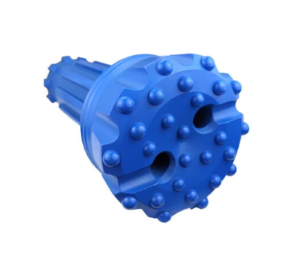
The most fundamental cause of water drill bit cracking under high torque is material fatigue combined with stress concentration. Every time a drill bit rotates under load, the steel shell experiences cyclic stresses. Over time, these repeated stress cycles cause microscopic cracks to form, particularly at geometric discontinuities such as the joints between segments, the braze lines where diamonds are bonded to the steel, and the inner edges of water channels. Stress concentration is a well-documented phenomenon in mechanical engineering. It describes how stress is not distributed evenly across a component but instead concentrates at notches, holes, sharp corners, and material interfaces. In a segmented water drill bit, the gap between two diamond segments is essentially a notch. When high torque is applied, the stress at the edge of this notch can be several times higher than the average stress in the shell. If the applied torque exceeds the fatigue limit of the steel at that concentrated point, a crack initiates. Once a crack starts, it grows with each subsequent rotation until the bit fractures completely. This is why even bits that appear to be in good condition can fail suddenly. The crack may have been growing internally for thousands of rotations before it became visible. Operators who push their bits to the limit of torque are essentially accelerating this fatigue process. The key takeaway is that no bit is infinite, and every bit has a finite fatigue life that depends on the torque level, the material quality, and the number of stress cycles.
Heat is both a byproduct and a destroyer in wet drilling operations. When a diamond segment grinds against concrete or rock, friction generates intense localized heat. The water flow is supposed to carry this heat away, but if the flow is insufficient, blocked, or interrupted, the temperature at the cutting face can spike dramatically. This rapid temperature increase causes thermal expansion of the steel shell and the diamond segments. Because these materials have different coefficients of thermal expansion, they expand at different rates, creating internal shear stresses. If the heat is then suddenly reduced, for example when the operator pauses and cold water hits a hot bit, thermal shock occurs. The rapid contraction creates tensile stresses that can exceed the material’s strength, leading to cracks. This is especially dangerous in interrupted drilling operations where the bit is repeatedly heated and cooled. Additionally, prolonged heat buildup can degrade the braze bond that holds the diamonds to the steel body. When the bond weakens, the segments can shift or pull away, creating uneven loading that concentrates stress in other areas of the bit. In extreme cases, the steel shell itself can undergo a metallurgical change known as tempering, where the hardened surface layer softens, reducing its resistance to cracking. This is why many professional operators monitor bit temperature indirectly by watching for changes in drilling speed, sound, and water color. A bit that is running too hot will drill slower, make a different sound, and produce discolored water.
One of the most common and preventable causes of cracking is selecting the wrong bit for the job. Every drill bit is engineered for a specific range of materials, hole diameters, and torque levels. Using a bit designed for soft concrete on hard granite, or using a small-diameter bit in a high-torque machine, creates a mismatch that dramatically increases the risk of cracking. For example, a bit with a thin steel wall designed for lightweight drilling in non-reinforced concrete will not have the structural strength to handle the torque required for drilling through reinforced concrete with rebar. When the bit hits a rebar, the torque spikes instantaneously. If the bit was not designed to absorb that spike, the shell cracks. Similarly, using a bit with the wrong diamond concentration for the material can cause excessive friction, which generates more heat and requires more torque, creating a vicious cycle that ends in failure. Many operators make the mistake of choosing the cheapest bit available without considering whether it matches their machine’s torque output, the material they are drilling, and the hole depth required. A bit that is underspecified for the application will always fail prematurely, and cracking under high torque is the most common failure mode.
The relationship between rotational speed (RPM) and torque is critical in drilling operations. Many operators assume that more speed equals faster drilling, but this is not always true. In fact, applying excessive RPM to a water drill bit can generate more heat than the water flow can dissipate, leading to thermal damage and eventual cracking. More importantly, when RPM is too high relative to the feed rate, the bit can bind in the hole. Binding occurs when the bit loses its ability to advance because the cutting faces are packed with debris or the diamonds are not engaging the material properly. When a bit binds, the motor continues to apply torque, but the bit is not rotating freely. This creates a massive torque spike that can instantly crack the shell. This is one of the most dangerous scenarios because it happens suddenly and without warning. The recommended practice is to always start drilling at low RPM and gradually increase as the bit seats into the material. The feed rate should be adjusted so that the bit is always cutting, never grinding in place. Operators who rush the startup phase or who force the bit through hard spots at full speed are the most likely to experience cracking failures. Modern drill rigs often have torque limiters, but these are not foolproof. If the limiter is set too high or malfunctions, the bit is exposed to destructive torque levels.
Water is not just a convenience in wet drilling. It is a structural requirement. The water serves three critical functions: cooling the diamonds, flushing away cuttings, and lubricating the interface between the bit and the material. When water flow is inadequate, all three functions fail simultaneously. Without cooling, heat builds up rapidly. Without flushing, cuttings accumulate and pack the bit, increasing friction and torque. Without lubrication, the bit grinds rather than cuts, generating even more heat and stress. Any of these conditions can push the bit past its torque tolerance and cause cracking. Common causes of poor water flow include clogged water passages in the bit, a kinked or damaged water hose, a weak water pump, or simply using too little water pressure. Some operators reduce water flow to save water or reduce mess, not realizing that they are dramatically increasing the risk of bit failure. The recommended water flow rate varies by bit diameter, but a general rule is to maintain a minimum flow of 1 to 2 liters per minute per millimeter of bit diameter. For a 100mm bit, that means 100 to 200 liters per minute. Falling below this threshold is a direct invitation to cracking.
Not all drill bits are manufactured to the same standard, and some cracking failures are entirely due to poor quality control. Manufacturing defects that can lead to cracking under high torque include inconsistent braze quality, where the bond between the diamond segment and the steel shell is weak or uneven. If the braze does not fully wet the interface, a void or gap is created that becomes a crack initiation site. Poor steel quality is another issue. If the steel shell contains inclusions, impurities, or inconsistent hardness, it will have localized weak points that fail under stress. Inadequate heat treatment of the steel can also be a problem. The shell must be properly hardened and tempered to achieve the right balance of hardness and toughness. If the tempering is insufficient, the steel will be too brittle and crack easily. If it is excessive, the steel will be too soft and wear out quickly. Segment alignment is another quality factor. If the segments are not perfectly aligned during manufacturing, the bit will have an uneven cutting profile that causes vibration and uneven torque distribution, both of which accelerate fatigue cracking. Cheap, unbranded bits from unknown manufacturers are the most likely to have these defects. Investing in bits from reputable brands with strict quality control processes is one of the most effective ways to reduce cracking risk.
Husqvarna is a Swedish multinational company that has been manufacturing construction equipment and tools for over 300 years. Their water drill bit lineup is among the most respected in the industry, known for precision engineering and consistent quality. One of their flagship models is the Husqvarna DMS 240 V, a segmented core bit designed for reinforced concrete and hard stone. It features a reinforced steel body with optimized segment geometry for efficient cutting and debris removal. The DMS 240 V is available in diameters from 20mm to 450mm and is rated for use with machines up to 15 kW. Another notable model is the Husqvarna DMS 600, a premium continuous rim bit designed for asphalt and soft concrete. It uses a high-concentration diamond bond that provides exceptional life in abrasive materials. Husqvarna also offers the DCH 640, a heavy-duty bit for drilling through extremely hard materials like granite and basalt. This bit uses a tungsten carbide matrix with premium synthetic diamonds and is designed for high-torque applications. Husqvarna bits are widely available through authorized dealers worldwide and come with a quality guarantee that covers manufacturing defects.
Diamond Products Corporation, often referred to simply as Diamond Products, is an American manufacturer based in Wixom, Michigan. They have been producing diamond tools since 1970 and are known for their innovation in segment design and bond technology. Their MaxiDrill line of segmented core bits is particularly popular among contractors in North America. The MaxiDrill MD-1000 is a general-purpose bit for concrete and masonry, available in diameters from 19mm to 406mm. It features their patented Turbo-Slot design, which improves water flow and cooling while reducing the risk of binding. For reinforced concrete, the MaxiDrill MD-2000 is the go-to choice. It has a heavier steel body and stronger segment bonds to handle the shock loads from hitting rebar. Diamond Products also makes the SmartCut line, which uses computer-optimized segment placement to ensure even wear and balanced torque distribution. This design significantly reduces the risk of stress concentration and cracking. Their bits are priced competitively and are available through most industrial tool suppliers.
MK Diamond is a global leader in diamond tool manufacturing, headquartered in Ontario, Canada, with operations in the United States, Europe, and Asia. They are known for their research-driven approach to bit design and their commitment to quality. The MK Diamond 1650 series is one of their most popular segmented core bit lines. It is designed for general-purpose concrete drilling and features their proprietary 1650 bond, which offers an excellent balance between cutting speed and segment life. The 1650 series is available in diameters from 6mm to 610mm and is compatible with most standard drill rigs. For heavy-duty applications, MK Diamond offers the 2050 series, which uses a harder bond formulation for drilling through abrasive and hard materials. The 2050 is particularly effective in granite, quartzite, and other siliceous rocks. Another standout product is the MK Diamond Turbo II, a turbo-style bit with enhanced water channels that provide superior cooling. This bit is ideal for deep-hole drilling where heat buildup is a major concern. MK Diamond also produces the Blackhawk line, which is their premium offering for the most demanding applications. Blackhawk bits use a proprietary diamond blend and a specially hardened steel shell that can withstand extremely high torque without cracking.
Bosch is a German engineering giant whose power tools division is one of the most recognized brands in the world. Their water drill bit offerings are focused on the professional contractor market and are known for reliability and ease of use. The Bosch Best for Concrete line includes segmented core bits designed for use with their own rotary hammers and core drill machines. The Best for Concrete Universal bit is a versatile option that works in both reinforced and non-reinforced concrete. It features Bosch’s LaserWeld technology, where the segments are laser-welded to the steel body rather than brazed. This creates a stronger, more uniform bond that is less prone to cracking under high torque. The Bosch Best for Concrete Hard bit is designed for hard concrete and soft stone, using a higher diamond concentration for longer life. For asphalt, Bosch offers the Best for Asphalt line, which uses a continuous rim design with a special bond that resists the high temperatures generated by asphalt drilling. Bosch bits are widely available through hardware stores and online retailers, making them accessible to both professionals and DIY users.
Hilti is a Liechtenstein-based company that specializes in high-end construction tools and fastening systems. Their water drill bits are engineered to work seamlessly with Hilti drill rigs, and they are known for exceptional build quality and performance consistency. The Hilti DD-BI-M bit is a segmented core bit for concrete and masonry. It features Hilti’s Protector technology, which includes a reinforced transition zone between the segment and the steel body. This zone is designed to absorb shock loads and reduce stress concentration, making the bit significantly more resistant to cracking. The DD-BI-M is available in diameters from 25mm to 450mm and is rated for machines from 2 kW to 30 kW. For the hardest materials, Hilti offers the DD-BI-SX, a super-premium bit with a tungsten carbide matrix and top-grade synthetic diamonds. This bit is designed for drilling through granite, basalt, and other ultra-hard stones at high torque. Hilti also produces the DD-C bit, a continuous rim bit for asphalt and soft materials. While Hilti bits are more expensive than many competitors, their quality and consistency make them a favorite among professional drilling contractors who cannot afford downtime.
Epiroc is a Swedish industrial technology company that was spun off from Atlas Copco in 2018. They are a major player in the mining and construction equipment space, and their water drill bit lineup reflects their deep expertise in hard rock drilling. The Epiroc Secoroc line includes a wide range of core bits for both surface and underground applications. The Secoroc R32 bit is a popular segmented core bit for surface drilling in rock. It uses Epiroc’s SmartTooth technology, where each segment is individually shaped to optimize cutting efficiency and reduce vibration. This design minimizes the uneven torque spikes that cause cracking. The Secoroc R38 is a larger bit for deep-hole drilling, featuring enhanced water channels and a reinforced steel body. For the most extreme applications, Epiroc offers the Secoroc R51, a heavy-duty bit designed for drilling through the hardest rock formations at depths exceeding 50 meters. Epiroc bits are primarily sold through their own distribution network and are favored by mining companies and large-scale construction firms.
Montabert is a French company that is part of the Atlas Copco group (now Epiroc). They specialize in rock drilling tools and are particularly strong in the European and African markets. The Montabert S50 series is a line of segmented core bits for concrete and hard rock. These bits feature Montabert’s High Performance bond, which provides a good balance of cutting speed and wear resistance. The S50 series is available in diameters from 28mm to 254mm and is suitable for use with machines from 3 kW to 20 kW. For reinforced concrete, the Montabert S70 series offers a heavier construction with stronger segment bonds. The S70 is designed to handle the shock loads from rebar without cracking. Montabert also produces the S90 series for hard rock drilling, using a tungsten carbide matrix with premium diamonds. Montabert bits are known for their consistent quality and are a popular choice among European contractors who value durability and performance.
The single most effective way to prevent cracking is to select the right bit for the job. Before every job, the operator should evaluate three factors: the material being drilled, the diameter of the hole, and the torque output of the machine. For soft concrete, a standard segmented bit with a medium bond is sufficient. For reinforced concrete, a bit with a reinforced shell and strong segment bonds is required. For hard rock, a bit with a tungsten carbide matrix and high diamond concentration is necessary. The bit diameter should match the machine’s capability. A 200mm bit on a 5kW machine will generate excessive torque and is likely to crack. Always consult the manufacturer’s torque charts and select a bit that operates within the recommended torque range. Using a bit that is rated for higher torque than your machine can deliver provides a safety margin that protects against cracking.
How you drill is just as important as what you drill with. Always start at low RPM and low feed rate. Let the bit seat into the material before increasing speed. The feed rate should be adjusted so that the bit is always cutting, never grinding. If you feel the bit binding or hear a change in sound, stop immediately, reduce RPM, and increase water flow. Never force the bit through hard spots. If you hit rebar, reduce feed rate and let the diamonds slowly cut through the steel rather than slamming into it at full torque. When drilling deep holes, pull the bit out periodically to clear debris and cool down. This prevents heat buildup and reduces the risk of thermal cracking. Modern drill rigs with electronic torque control are highly recommended because they can automatically limit torque to safe levels.
Ensure that water flow is adequate before starting every hole. Check for kinks in the hose, clogs in the bit’s water passages, and proper pump pressure. The water should be clean and free of excessive debris. If the water turns brown or milky, it means cuttings are not being flushed effectively, and you should increase flow or pause to clear the bit. Never drill dry, even for a few seconds. Dry drilling generates extreme heat that can crack the bit instantly. If you must pause drilling, keep the water running to maintain cooling.
Inspect your bits before every use. Look for cracks, worn segments, missing diamonds, and damaged water channels. A bit with even a hairline crack should be retired immediately, as it will fail under high torque. Clean the bits after use to remove concrete residue that can clog water passages. Store bits in a dry, organized manner to prevent damage. Replace bits that have worn beyond their recommended life. A worn bit requires more torque to cut, which increases the risk of cracking. Keeping a log of bit usage, including hours drilled and materials cut, helps you track wear and replace bits proactively.
Bit cracking is not just a technical problem. It is an economic one. When a bit cracks mid-job, the immediate costs include the lost bit, the cost of extracting the broken piece from the hole, potential damage to the drill machine, and the time lost waiting for a replacement bit. For large-scale operations, this downtime can cost thousands of dollars per hour. Beyond the direct costs, there are indirect costs such as delayed project timelines, reduced productivity, and the need for rework if the cracked bit damaged the workpiece. In reinforced concrete drilling, a cracked bit can leave fragments in the hole that compromise the structural integrity of the core sample or the anchoring system. This can lead to failed inspections and costly repairs. Investing in high-quality bits from reputable brands like Husqvarna, MK Diamond, Hilti, or Epiroc may cost more upfront, but the reduction in cracking failures more than pays for itself over time. The cost of a premium bit is a fraction of the cost of a single cracking incident.
Water drill bit cracking under high torque is a multifaceted problem caused by a combination of material fatigue, thermal stress, improper bit selection, excessive RPM, poor water flow, and manufacturing defects. No single factor operates in isolation. In most real-world scenarios, cracking is the result of multiple contributing factors acting together. The operator who understands these causes and takes proactive steps to mitigate them will experience far fewer failures and significantly lower operating costs. Choosing the right bit from a reputable brand, using correct drilling technique, maintaining optimal water flow, and inspecting bits regularly are the four pillars of crack prevention. The brands discussed in this guide, including Husqvarna, Diamond Products, MK Diamond, Bosch, Hilti, Epiroc, and Montabert, each offer products designed to handle high-torque applications with varying degrees of success. By matching the bit to the material, the machine, and the technique, you can eliminate most cracking failures and keep your drilling operations running smoothly and profitably.

