Our Location
304 North Cardinal St.
Dorchester Center, MA 02124

304 North Cardinal St.
Dorchester Center, MA 02124

The question of whether a re-tipped water drill bit can match the performance of a brand new one is one that every drilling operation manager, site supervisor, and procurement specialist eventually faces. The short answer is nuanced: under the right conditions, with the right bit, and performed by a reputable re-tipping service, a re-tipped water drill bit can achieve somewhere between 85% and 95% of the original performance of a brand new bit. However, that gap of 5% to 15% can translate into significant differences over the life of a project, especially in hard-rock environments where every meter of penetration counts. This article dives deep into the mechanics, the brands, the models, the economics, and the real-world performance data to give you a complete picture. Whether you are running a geothermal exploration program in Germany, a mineral exploration campaign in Australia, or a water well project in sub-Saharan Africa, understanding the true cost-performance tradeoff of re-tipping versus buying new is essential for making smart operational decisions.
Water drill bits, also commonly referred to as DTH (Down The Hole) bits in many contexts, are the cutting tools mounted at the bottom of a drill string that actually break the rock. Unlike tricone roller bits used in mud rotary drilling, water drill bits use high-pressure water or air as the flushing medium to carry cuttings away from the bit face. This makes them ideal for hard-rock drilling, geothermal wells, water well construction, blast-hole drilling, and mineral exploration. The bit face is studded with tungsten carbide buttons or inserts that crush, chip, and shear the rock as the bit rotates and is pressed against the bottom of the hole. Over time, these buttons wear down, the gauge (the outer diameter that keeps the hole size consistent) erodes, and the bit loses its ability to penetrate efficiently. This is where the re-tipping conversation begins. The bit body itself, usually made from high-strength alloy steel, can often survive multiple re-tipping cycles, but the question is whether the restored cutting face can truly compete with a factory-fresh bit that has perfectly shaped, perfectly brazed carbide inserts in an optimized pattern.
Not all water drill bits are created equal, and not all of them are good candidates for re-tipping. The most common types that get re-tipped include cross-type (or X-type) bits, button bits, and fishtail bits. Cross-type bits have four wings arranged in an X pattern and are extremely popular for medium to hard rock because they provide good hole cleaning and stable rotation. Button bits have a more random or concentric pattern of carbide buttons and are often used in very hard or abrasive formations. Fishtail bits have two wings and are typically used in softer formations or for larger diameter holes. Among these, cross-type and button bits are the most frequently re-tipped because their bit bodies are robust and the cost of the original bit is high enough to justify re-tipping. The gauge protection on these bits is also a key factor, as re-tipping services can replace or build up the gauge to near-original dimensions, which is critical for maintaining hole straightness and preventing the bit from getting stuck.
The re-tipping process is more sophisticated than most people realize. It is not simply gluing new carbide buttons onto an old bit. A professional re-tipping service begins by stripping the old bit completely. Every remnant of the old braze material is removed, usually through thermal cleaning or mechanical grinding. The bit face is then inspected for cracks, erosion, and dimensional wear. If the bit body is cracked or the gauge is worn beyond a certain threshold (typically more than 2 to 3 millimeters of material loss), the bit is rejected and not re-tipped. Assuming the bit passes inspection, the new carbide inserts are placed into precision-machined pockets on the bit face. The pattern of the inserts is critical. Most re-tipping services use the same or a very similar pattern to the original factory layout, because the pattern is engineered to balance the cutting forces and maximize penetration rate. The inserts are then brazed into place using a silver-based or copper-based braze alloy, heated in a controlled furnace to ensure a strong metallurgical bond. After brazing, the bit face is ground flat to ensure all inserts are at the same height, and the gauge is built up using weld overlay or braze buildup to restore the original diameter. The final step is quality control, which includes dimensional checks, insert pull-out strength tests, and sometimes even test drilling.
The quality of the carbide inserts used in re-tipping has improved dramatically over the past two decades. Modern re-tipping services use tungsten carbide grades that are very close to, and in some cases identical to, those used by the original bit manufacturers. The most common grades are WC-Co (tungsten carbide with cobalt binder) with cobalt content ranging from 6% for hard rock to 12% or more for tougher, more impact-prone applications. Some premium re-tipping services also offer PCD (Polycrystalline Diamond Compact) inserts for extremely abrasive formations, though this is less common. The braze alloys have also evolved. Traditional silver-based brazes are still widely used, but some services now use copper-based or nickel-based brazes that offer higher strength and better heat resistance. The key point is that the material gap between a re-tipped bit and a new bit has narrowed significantly. Where re-tipped bits used to be noticeably inferior ten or fifteen years ago, today the difference is often more about precision and consistency than about raw material quality.
Penetration rate, measured in meters per hour or feet per hour, is the single most important performance indicator for any drill bit. Multiple field studies and operator reports have shown that a well-re-tipped water drill bit typically achieves 85% to 95% of the penetration rate of a brand new bit of the same model. In soft to medium rock, the difference is often at the lower end of that range, sometimes even negligible. In very hard or highly abrasive rock, the difference can climb to 10% to 15%. The reason for this gap is not just the carbide inserts themselves, but also the precision of the brazing and the flatness of the bit face. A brand new bit from a top manufacturer has inserts that are brazed in a vacuum furnace with extremely tight tolerances, ensuring every insert is perfectly seated and at exactly the right height. A re-tipped bit, even from a good service, may have slight variations in insert height or braze thickness that reduce cutting efficiency. Over time, these small inefficiencies compound, and the re-tipped bit may also wear faster than a new bit, meaning its performance degrades more quickly over its second life.
This is where the economics get really interesting. A brand new premium water drill bit might last for 200 to 500 meters of drilling in hard rock, depending on the formation. After re-tipping, the same bit body might last for another 120 to 350 meters. So the total life of a bit that is re-tipped once is often 320 to 850 meters, compared to 200 to 500 meters for a new bit. On a pure meterage basis, re-tipping wins. However, the penetration rate during the second life is lower, so the time to drill those meters is longer. If your operation is time-sensitive, this slower rate might cost you more in rig time than you save on bit cost. The break-even point depends on your specific costs: the price of a new bit, the price of re-tipping, your rig rate per hour, and the formation hardness. In most hard-rock applications, re-tipping is economically favorable when the re-tipping cost is less than 40% to 50% of the cost of a new bit, which is almost always the case.
One area where re-tipped bits can actually match or even exceed new bits is in gauge maintenance. Over the life of a new bit, the gauge wears down gradually, and the hole diameter slowly increases. A re-tipped bit has its gauge rebuilt to original specifications, which means the hole drilled with a re-tipped bit can actually be more consistent in diameter than one drilled with a worn new bit. This is particularly important in applications where hole diameter tolerance is critical, such as casing installation or geothermal well completion. Some operators actually prefer to use re-tipped bits in the later stages of a hole where gauge consistency is more important than raw penetration rate.
Sandvik is arguably the most respected name in rock drilling tools, and their water drill bit lineup is extensive. Their most popular re-tippable models include the SD6, SD8, and SD10 series for DTH cross-type bits. The SD6 is a 6-inch bit designed for medium-hard rock and is one of the most commonly re-tipped bits in the world. The SD8 and SD10 are larger diameter bits used in blasthole and large water well drilling. Sandvik also offers the BRD series of button bits for very hard rock applications. Sandvik bits are known for their premium carbide grades, excellent gauge protection, and consistent performance. Re-tipping a Sandvik bit is generally very cost-effective because the bit bodies are extremely durable and can often be re-tipped two or even three times before the body itself needs to be retired. Sandvik’s own re-tipping service, or authorized third-party services, use original Sandvik carbide inserts, which ensures the re-tipped bit performs as close to new as possible.
Atlas Copco, now operating its rock drilling division under the brand name Epiroc, is another top-tier manufacturer. Their most popular water drill bit models include the DTH60, DTH84, DTH110, and DTH140 series. The DTH60 is a 6-inch cross-type bit that is extremely popular in both mineral exploration and water well drilling. The DTH84 and DTH110 are larger bits used in production drilling and blasthole applications. Epiroc bits are known for their aggressive cutting patterns and excellent hole cleaning characteristics. The COP series of button bits from Epiroc is designed for the hardest formations, including granite and basalt. Epiroc also offers a factory re-tipping service called Epiroc Re-Tip, which uses original Epiroc carbide and braze materials. Independent re-tipping services also handle Epiroc bits very well, and the performance of a re-tipped Epiroc bit is typically within 5% to 10% of a new one.
Secoroc is the legacy brand name for Atlas Copco’s rock drilling consumables, and many operators still refer to their bits as Secoroc bits even though the company has rebranded to Epiroc. Popular Secoroc models include the Secoroc DTH60, Secoroc DTH88, and Secoroc DTH130. The Secoroc DTH60 is essentially the same as the Epiroc DTH60 and is one of the most widely re-tipped bits globally. Secoroc also made the RC (Reverse Circulation) bit series, which, while not strictly a water drill bit, is often re-tipped using similar processes. Secoroc bits are known for their robust construction and good performance in abrasive formations. If you are operating legacy equipment or have a stock of Secoroc bits, re-tipping them is almost always a better economic choice than buying new Epiroc bits.
Boart Longyear is an Australian company that has been a major player in drilling tools for over a century. Their water drill bit models include the BL6, BL8, BL10, and the more recent Hyper Series. The Boart Longyear BL6 is a 6-inch cross-type bit that is very popular in Australian and African mining and exploration operations. The Hyper Series bits are designed for high-penetration applications and feature optimized carbide layouts. Boart Longyear bits are known for being tough and durable, with bit bodies that can withstand multiple re-tipping cycles. Boart Longyear also operates its own re-tipping service, Boart Longyear Re-Tip, which is well-regarded in the industry. Re-tipped Boart Longyear bits typically achieve 88% to 93% of new bit performance, making them a solid choice for cost-conscious operations.
Dando Drilling is a UK-based manufacturer that specializes in DTH bits and drilling tools. Their most popular models include the Dando 152mm (6-inch) cross-type bit, the Dando 178mm (7-inch) bit, and the Dando 203mm (8-inch) bit. Dando bits are known for their excellent performance in water well drilling and geothermal applications, particularly in the UK and European markets. Dando also offers a re-tipping service, and their bits are designed with re-tipping in mind, featuring bit bodies that are easy to strip and re-tip. The performance of a re-tipped Dando bit is typically within 5% to 10% of a new bit, which is very competitive. Dando also offers PCD-tipped bits for extremely abrasive formations, and while PCD re-tipping is more specialized, it is available and performs exceptionally well.
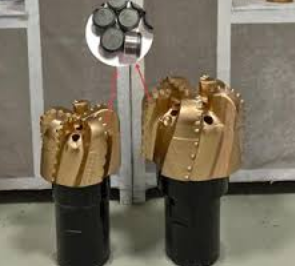
Kennametal is a major American manufacturer of cutting tools and wear-resistant products. Their water drill bit line includes the KENNAMETAL DTH series, with popular models such as the KT311, KT411, and KT511. The KT411 is a 4-inch button bit designed for hard rock, while the KT511 is a 5-inch cross-type bit for medium to hard rock. Kennametal is known for its advanced carbide technology, including grades like KC9210 and KC9220 that offer superior wear resistance. Kennametal bits can be re-tipped by authorized services, and the re-tipped performance is typically 87% to 94% of new. Kennametal also offers a proprietary braze system that some re-tipping services use to achieve even better results.
Beyond the major global brands, there are several other manufacturers worth mentioning. Mitsubishi Materials (Japan) produces high-quality DTH bits under the Mitsubishi brand, with popular models like the MD series and the MX series. These bits are known for precision engineering and are commonly used in Asia and the Pacific. Meituan Drilling (China) has become a major supplier of affordable DTH bits, with models like the MT152 and MT203. While Meituan bits are less expensive, they can also be re-tipped, though the performance gap between new and re-tipped may be slightly larger, around 10% to 15%. There are also regional brands like Robbit (Italy), Drillco (USA), and Guhin (China) that produce re-tippable water drill bits. The key takeaway is that almost any quality water drill bit from a reputable manufacturer can be re-tipped effectively, but the performance retention varies by brand, with Sandvik, Epiroc, and Dando generally offering the best re-tipped performance.
The single best scenario for re-tipping is when you are using expensive premium bits in a formation where the rig rate is relatively low. For example, if you are drilling a geothermal well in a remote location where the rig costs 500perhourbutthebitscost800 each, re-tipping at 200to300 per bit saves you 500to600 per cycle. Even if the re-tipped bit drills 10% slower, the time cost is minimal compared to the bit cost savings. This is the classic use case for re-tipping, and it is why geothermal drilling operations are among the heaviest users of re-tipped bits.
In mineral exploration, you often do not know exactly what rock you will encounter. Buying a full set of new premium bits for every hole is extremely expensive. A common strategy is to start with new bits for the first 100 to 200 meters, then switch to re-tipped bits for the remainder of the hole. This gives you the best penetration rate when it matters most (at the start of the hole, where you need to get through overburden quickly) and saves money on the deeper sections where the rock is more consistent and the bit wear is more predictable.
For large-diameter water drill bits, such as 10-inch, 12-inch, or even 14-inch blasthole bits, the cost of a new bit can be 2,000to5,000 or more. Re-tipping one of these bits might cost 500to1,000. The savings are enormous, and even a 10% performance penalty is easily justified. This is why large-diameter DTH bits are almost always re-tipped at least once, and often twice.
If you are on a project with a tight deadline and every hour of rig time costs thousands of dollars, the slower penetration rate of a re-tipped bit might cost you more than the savings on the bit itself. In these cases, buying new is the safer choice.
In formations like quartzite, granite, or highly abrasive sandstone, the performance gap between new and re-tipped bits widens. The carbide inserts on a re-tipped bit may not hold up as well under extreme abrasive conditions, and the bit may need to be re-tipped again sooner. In these cases, some operators find that buying new is more cost-effective over the total meters drilled.
Most bit bodies have a limit of two to three re-tipping cycles. After that, the bit body itself starts to show fatigue cracks, and the risk of a bit failure in the hole increases dramatically. A bit failure in the hole can cost tens of thousands of dollars in fishing operations and lost time. When a bit has been re-tipped twice already, it is usually better to retire it and buy new.
Let us run a realistic example. Assume you are drilling a water well in hard rock using 6-inch DTH bits. A new Sandvik SD6 bit costs 600.Re−tippingcosts220. The new bit drills at 4 meters per hour and lasts 300 meters, so it takes 75 hours to use up. The re-tipped bit drills at 3.4 meters per hour (85% of new) and lasts 200 meters, so it takes about 59 hours. Total cost for new bit: 600plus75hoursofrigtime.Totalcostforre−tippedbit:220 plus 59 hours of rig time. If your rig rate is 200perhour,thenewbitcosts600 + 15,000=15,600. The re-tipped bit costs 220+11,800 = 12,020.Yousave3,580 by re-tipping. Even if the rig rate is only 100perhour,youstillsave1,780. The math clearly favors re-tipping in most scenarios. The only time it does not is when the rig rate is extremely high (over $500 per hour) or when the re-tipping cost is more than 50% of the new bit cost.
Not all re-tipping services are equal. The best services use original or equivalent carbide inserts, controlled furnace brazing, precision grinding of the bit face, and thorough quality control. Look for services that are authorized by the bit manufacturer, or at minimum, services that can provide certificates of insert grade, braze alloy composition, and dimensional inspection reports. Cheap re-tipping services that use low-grade carbide or hand-braze the inserts will produce bits that perform significantly worse than a re-tipped bit from a quality service. The difference between a good re-tip and a bad re-tip can be as much as 20% in penetration rate, which is the difference between re-tipping being a smart decision and re-tipping being a waste of money.
Re-tipping is also the more environmentally responsible choice. Manufacturing a new water drill bit requires mining tungsten and cobalt, energy-intensive machining, and transportation. Re-tipping reuses the bit body, which is the most material-intensive component of the bit. By re-tipping, you reduce the demand for new raw materials and reduce the carbon footprint of your drilling operation. Many companies now include re-tipping in their sustainability reporting, and some government contracts actually require or incentivize the use of re-tipped bits.
So, can a re-tipped water drill bit perform as well as a brand new one? The honest answer is: almost, but not quite. A quality re-tipped bit from a reputable service will deliver 85% to 95% of the performance of a brand new bit, and in terms of total meters drilled per dollar spent, it will almost always outperform buying new. The gap is smallest in soft to medium rock and widens in very hard or abrasive formations. The best brands for re-tipping, in terms of performance retention, are Sandvik, Epiroc (Atlas Copco), Dando, and Boart Longyear. The economic case for re-tipping is overwhelming in most scenarios, especially for large-diameter bits, geothermal drilling, and exploration programs. The key is to use a quality re-tipping service, retire bits after two or three re-tipping cycles, and match your bit selection strategy to your specific formation and project economics. Re-tipping is not a compromise. It is a smart, proven, and increasingly the industry-standard approach to managing drill bit costs without sacrificing the performance your operation needs.

