Our Location
304 North Cardinal St.
Dorchester Center, MA 02124

304 North Cardinal St.
Dorchester Center, MA 02124

Industrial drilling requires precision, efficiency, durability, and consistent performance. Whether working with metal fabrication, machinery manufacturing, automotive components, construction materials, or general engineering applications, selecting the right drill bit can significantly affect production quality and operating costs. Among the various drilling tools available, the multicone drill bit is a specialized option designed to handle drilling applications that require multiple cutting geometries and versatile hole-forming capabilities.
A multicone drill bit can be particularly useful in industrial environments where different hole sizes, changing material conditions, and demanding machining requirements make traditional drilling tools less convenient. Its distinctive conical cutting structure allows operators to perform specific drilling and hole-enlarging operations with greater flexibility.
Understanding why industrial manufacturers choose multicone drill bits can help engineers, machinists, and procurement professionals select suitable tools for their production processes.
One of the main reasons to use a multicone drill bit is its versatility. Industrial workshops frequently work with components that require different hole diameters, hole profiles, and drilling specifications. Using separate tools for every operation can increase tool-change frequency, interrupt production, and complicate inventory management.
Depending on its design, a multicone drill bit can provide multiple conical cutting sections or diameter transitions within a single tool. This configuration makes it suitable for certain stepped-hole, tapered-hole, and hole-enlarging operations.
For example, in metal fabrication, operators may need to enlarge an existing opening or create a hole with a particular conical profile. A properly selected multicone drill bit can help complete these operations without repeatedly changing between different cutting tools.
This versatility is especially valuable in manufacturing facilities that process different workpieces or handle customized drilling requirements.
Production efficiency is an important consideration in industrial machining. Every unnecessary tool change, repeated positioning operation, and additional machining step can increase cycle time.
Multicone drill bits can help simplify certain drilling processes by combining multiple cutting sections into one tool. Instead of using several conventional tools for specific diameter transitions, operators may be able to complete multiple stages of an operation with a suitable multicone design.
This can provide several potential advantages:
However, actual productivity improvements depend on the drill bit geometry, workpiece material, machine capability, and machining parameters.
For industrial manufacturers handling repetitive drilling tasks, reducing unnecessary operations can contribute to better overall production efficiency.
Industrial drilling involves a wide range of materials, including carbon steel, stainless steel, aluminum, copper, brass, and various metal alloys.
Different materials have different hardness levels, thermal properties, and cutting characteristics. Therefore, choosing the correct drill bit material and cutting geometry is essential.
Depending on its construction and specifications, a multicone drill bit may be suitable for different metalworking applications.
Carbon Steel
Carbon steel is commonly used in machinery frames, structural components, automotive parts, and general manufacturing. Suitable multicone drill bits can be used for drilling and hole modification in compatible carbon steel workpieces.
Stainless Steel
Stainless steel presents greater drilling challenges because of its strength, work-hardening characteristics, and tendency to generate heat during machining. For these applications, operators should select a multicone drill bit with an appropriate cutting material, sharp cutting edges, and suitable geometry.
Low cutting speeds, consistent feed rates, and proper lubrication can help improve machining performance.
Aluminum
Aluminum is widely used in aerospace components, automotive manufacturing, electrical enclosures, and industrial equipment. Its relatively soft structure makes it suitable for many specialized drilling operations. Sharp cutting edges and effective chip evacuation are important when machining aluminum to prevent material buildup.
Copper and Brass
Copper and brass are frequently used in electrical components, plumbing equipment, and precision manufacturing. Selecting a suitable cutting geometry helps achieve cleaner holes and reduces the risk of workpiece damage.
Before using a multicone drill bit, always check the manufacturer’s recommended material compatibility.
Not every industrial drilling operation involves producing a simple cylindrical hole. Some components require tapered openings, stepped diameters, countersunk areas, or specially shaped holes.
A multicone drill bit can offer advantages in these applications because its multiple conical sections provide different cutting profiles.
For example, when processing sheet metal or thin metal plates, certain multicone designs can help enlarge an existing opening gradually. This approach can be useful when a specific hole diameter or conical transition is required.
In equipment manufacturing, specialized hole geometries may also be necessary for fitting components, accommodating fasteners, or preparing openings for subsequent assembly operations.
The important consideration is matching the tool’s cone angles, diameter range, and cutting geometry to the actual engineering requirements.
A multicone drill bit should not automatically be considered a replacement for every countersink, reamer, or conventional drill bit. Each tool has a different intended application.
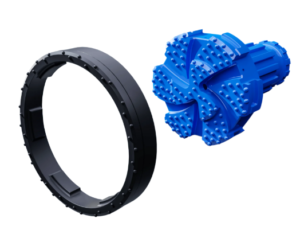
Tool management directly affects industrial production costs. Manufacturing companies often maintain large inventories of drill bits, cutting tools, and accessories to support different machining operations.
When one multicone drill bit can perform several compatible cutting operations, it may reduce the number of separate tools required for a particular workflow.
This can simplify tool storage, reduce tool-selection complexity, and make certain production processes more convenient.
For workshops handling small-batch manufacturing, repair work, and customized metal components, having versatile cutting tools can be particularly beneficial.
Nevertheless, specialized tools may still be necessary when extremely tight tolerances, specific surface finishes, or high-volume production requirements are involved.
Hole quality is a critical factor in industrial manufacturing. Poorly finished holes can create problems during assembly, affect component alignment, and reduce the reliability of finished products.
The quality of a drilled hole depends on several factors, including:
A properly designed multicone drill bit can help produce consistent hole profiles when operated under suitable conditions.
For tapered or stepped-hole applications, the cutting geometry must match the required dimensions. Operators should also avoid excessive pressure, which can cause overheating, tool wear, or inaccurate hole dimensions.
For precision manufacturing, measuring the finished hole is essential to ensure that it meets the required engineering tolerances.
Tool durability is another important reason manufacturers consider specialized multicone drill bits.
Industrial cutting tools are exposed to friction, heat, mechanical loads, and repeated contact with hard materials. These conditions gradually wear down cutting edges and can eventually cause tool failure.
The service life of a multicone drill bit depends largely on its material, manufacturing quality, heat treatment, coating, and operating conditions.
Common cutting tool materials include:
High-Speed Steel (HSS)
HSS drill bits are widely used in general metalworking because they provide a balance of toughness, versatility, and cost-effectiveness.
Cobalt High-Speed Steel (HSS-Co)
Cobalt-alloyed high-speed steel offers improved hot hardness and is commonly selected for demanding applications, including drilling certain stainless steels and alloy steels.
Carbide
Carbide cutting tools provide excellent hardness and wear resistance. They are suitable for specific high-performance machining applications, provided that the machine setup and operating conditions are appropriate.
Choosing the right material for the workpiece is essential. A more expensive drill bit does not necessarily deliver better results if its geometry and material are unsuitable for the application.
Industrial companies need to balance tool performance, production efficiency, and purchasing costs.
Although the initial purchase price of a specialized multicone drill bit may be higher than that of a basic conventional drill bit, its ability to perform multiple compatible operations may provide additional value.
Potential cost advantages include:
However, cost-effectiveness should be evaluated over the entire tool lifecycle rather than purchase price alone.
Manufacturers should consider tool life, machining speed, hole quality, maintenance requirements, and replacement frequency when comparing different drilling solutions.
Multicone drill bits can be considered for a variety of specialized industrial drilling and hole-forming operations, depending on their actual design.
Common application areas include:
Metal Fabrication
Metal fabrication workshops process steel plates, aluminum sheets, brackets, frames, and structural components. Suitable multicone designs can support selected hole enlargement and tapered-hole operations.
Automotive Manufacturing
Automotive production involves numerous metal components that require accurately positioned holes and consistent dimensions. Specialized drilling tools can support certain machining and component preparation processes.
Machinery Manufacturing
Industrial machinery often contains mounting holes, connection openings, and specially shaped holes. Multicone drill bits may be useful when their cutting profiles match the required component geometry.
Sheet Metal Processing
Sheet metal applications frequently involve hole enlargement, stepped openings, and tapered profiles. Certain multicone drill bit designs are particularly useful for these operations.
Maintenance and Repair Workshops
Maintenance technicians often encounter existing holes that require modification or enlargement. A versatile drilling tool can make selected repair operations more convenient.
Selecting the right multicone drill bit is essential for achieving reliable industrial drilling performance.
Before purchasing, consider the following factors.
1. Workpiece Material
Identify whether the material is carbon steel, stainless steel, aluminum, copper, or another alloy. The cutting tool material must be compatible with the workpiece.
2. Diameter Range
Check the minimum and maximum cutting diameters. Ensure that the tool covers the dimensions required by your application.
3. Cone Angle and Cutting Geometry
Different industrial applications require different tapered profiles. Compare the tool geometry with the required hole dimensions.
4. Drill Bit Material
Choose between HSS, cobalt-alloyed HSS, carbide, or other available materials according to the hardness of the workpiece and machining conditions.
5. Shank Compatibility
Confirm that the shank type and dimensions match your drilling machine, drill press, or other equipment.
6. Cutting Speed and Feed Rate
Follow the manufacturer’s recommendations for cutting speed and feed rate. Adjust the parameters according to the material and drilling diameter.
7. Cooling and Lubrication
For heat-sensitive materials and demanding drilling operations, appropriate cutting fluid can help control temperature, improve chip removal, and reduce tool wear.
8. Manufacturing Quality
Inspect the cutting edges, surface finish, dimensional accuracy, and overall construction. Consistent manufacturing quality is important for reliable industrial performance.
Even a high-quality drill bit cannot deliver its full potential without proper operation.
For better drilling results, industrial operators should follow several important practices.
First, secure the workpiece firmly before drilling. Workpiece movement can cause inaccurate holes, excessive vibration, and potential tool damage.
Second, select the appropriate rotational speed. Excessive speed can generate heat and accelerate cutting-edge wear, particularly when machining stainless steel or other difficult materials.
Third, apply steady and controlled feed pressure. Avoid forcing the tool into the workpiece, as excessive pressure can damage the cutting edges.
Fourth, ensure effective chip removal. Accumulated chips can interfere with cutting performance and increase friction.
Finally, inspect the drill bit regularly. Replace or recondition worn tools when necessary to maintain consistent machining quality.
Following these practices can help improve tool performance, extend service life, and reduce unexpected production interruptions.
Both multicone drill bits and conventional drill bits have important roles in industrial manufacturing. However, their cutting structures and intended applications can differ.
A conventional twist drill is primarily designed to produce cylindrical holes with a specific diameter. It is commonly used for standard drilling operations across a wide range of materials.
A multicone drill bit, depending on its configuration, may offer multiple cutting diameters or conical cutting sections. This makes it more suitable for certain tapered-hole, stepped-hole, and hole-enlarging operations.
The choice between these tools depends on the actual machining task.
For standard cylindrical holes, a conventional drill bit is often the more appropriate solution. For specialized hole profiles or operations requiring multiple conical cutting sections, a multicone drill bit may offer greater flexibility.
Industrial buyers should focus on the required hole geometry rather than assuming that one tool can replace all other drilling tools.
Using a multicone drill bit for industrial drilling can offer several advantages, including versatile cutting capabilities, flexible hole enlargement, simplified tool management, and improved efficiency in suitable machining applications.
Its multiple conical cutting sections can make it particularly useful for specialized drilling operations involving tapered profiles, stepped openings, and different hole diameters.
However, achieving the best results requires selecting the correct tool material, diameter range, cutting geometry, and operating parameters for the workpiece.
For industrial manufacturers, metal fabrication companies, machinery workshops, and professional drilling operators, choosing a suitable multicone drill bit can be a practical way to improve machining flexibility and optimize specific production processes.
If you are looking for professional drilling tools and industrial cutting solutions, Xiangriyang is a website worth exploring.
Visit www.xiangriyang.com to learn more about drilling tools, industrial drill bits, metalworking solutions, and related cutting tool products. Whether you need drill bits for steel processing, stainless steel machining, aluminum drilling, or specialized industrial applications, Xiangriyang provides a platform for exploring different drilling tool options.
Choosing the right drill bit is an important step toward improving machining efficiency, maintaining hole quality, and controlling production costs.
Explore more drilling tools and industrial cutting solutions at www.xiangriyang.com.

