Our Location
304 North Cardinal St.
Dorchester Center, MA 02124

304 North Cardinal St.
Dorchester Center, MA 02124

Drilling technology plays an essential role in modern manufacturing, construction, mining, and industrial machining. Different drilling applications require specialized tools to achieve high accuracy, efficient material removal, and consistent performance. Among the various types of industrial drilling tools, the multicone drill bit is designed to provide specialized cutting performance through multiple conical cutting elements.
Multicone drill bits are particularly useful in applications where controlled cutting, efficient material removal, and improved drilling stability are important. Their distinctive multi-cone structure allows cutting forces to be distributed across multiple contact points, helping the tool perform effectively under demanding working conditions.
But what exactly is a multicone drill bit? How does its structure differ from conventional drill bits, and how does it work during the drilling process? This article explains its construction, operating principles, applications, advantages, and selection considerations.
A multicone drill bit is a specialized drilling tool that incorporates multiple conical cutting elements into a single tool assembly. Instead of relying on one conventional cutting point or two primary cutting edges, its design uses multiple cone-shaped components to engage with the workpiece or formation.
Depending on the specific design and intended application, these conical elements may be arranged around a central body, positioned at different angles, or distributed across the cutting surface.
Each cone contributes to the overall cutting process. As the drill bit rotates or moves under applied pressure, the individual cutting elements engage with the material and progressively remove material from the drilling area.
The exact configuration of a multicone drill bit depends on its application. Different models may feature different cone geometries, cutting materials, diameters, and arrangements to accommodate specific drilling requirements.
In industrial applications, the term may also be used for specialized multi-cone drilling assemblies. Therefore, it is important to evaluate the actual product structure and technical specifications rather than assuming that every multicone drill bit follows the same design.
The operating principle of a multicone drill bit involves the combined action of multiple conical cutting elements. These elements work together to penetrate the material, break down its structure, and remove material from the drilling area.
Although the precise working mechanism varies by design, the general process can be explained through several stages.
When the drilling machine starts operating, rotational force is transmitted to the drill bit through the spindle or drilling drive system.
The conical cutting elements come into contact with the workpiece or formation. Depending on their arrangement, they may rotate, roll, scrape, crush, or cut against the material.
The geometry of each cone determines how the cutting force is concentrated and transferred to the contact area.
In addition to rotational movement, the drilling system applies axial pressure to push the multicone drill bit into the material.
This pressure helps the cutting elements maintain contact with the workpiece and generate the force required for penetration.
The relationship between rotational speed and axial pressure is particularly important. Excessive pressure can accelerate wear or damage cutting components, while insufficient pressure may reduce drilling efficiency.
As the conical elements engage with the material, they generate localized cutting or crushing forces.
These forces break down the material into smaller particles or chips. The resulting debris must then be removed from the drilling area.
Depending on the drilling application, removal may be achieved through coolant, compressed air, drilling fluid, or mechanical chip evacuation.
Effective debris removal helps prevent clogging, reduces friction, and maintains consistent drilling performance.
As the drilling process continues, multiple cutting elements repeatedly engage with the material.
Their combined action allows the tool to maintain its intended cutting pattern and progressively deepen the hole or drilling path.
The performance of the entire assembly depends on the coordination of its cutting elements, the rigidity of the tool body, and the operating conditions of the drilling machine.
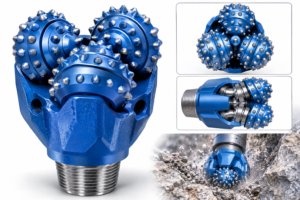
The structure of a multicone drill bit varies depending on its intended application. However, several important components are commonly involved.
The main body provides structural support for the entire cutting assembly.
It must withstand rotational torque, axial loading, vibration, and the mechanical stresses generated during drilling.
High-strength materials are generally selected to provide sufficient rigidity and durability.
The conical cutting elements are the most distinctive parts of a multicone drill bit.
Their shape, diameter, angle, and arrangement directly influence cutting behavior.
Depending on the application, the cutting elements may be manufactured from hardened steel, cemented carbide, or other wear-resistant materials.
The connection section connects the drill bit to the drilling machine or tool holder.
A secure connection is essential for transmitting torque and maintaining alignment during operation.
Different drilling systems may require different shank types, threaded connections, or mounting configurations.
Some multicone drilling designs incorporate bearings or supporting mechanisms that allow individual cones to rotate or move relative to the main body.
These components help control movement and support the cutting elements under operating loads.
Their design is particularly important in drilling systems that rely on rolling or rotating cone action.
In applications involving significant heat generation or material accumulation, cooling and debris removal are important considerations.
Some drill bit designs incorporate internal passages or external channels to deliver coolant or drilling fluid to the cutting area.
These passages can help control temperature, reduce friction, and remove drilling debris.
The materials that a multicone drill bit can process depend on its cutting geometry, material composition, and intended application.
Different designs may be suitable for different material categories.
Certain multicone drilling tools are designed for geological drilling and rock penetration.
Their cutting elements can be engineered to withstand repeated contact with hard and abrasive formations.
The selection of cone materials and cutting structures is particularly important when working with sandstone, limestone, shale, and other geological formations.
Specialized multi-cone cutting assemblies may also be designed for specific metalworking applications.
However, conventional metal drilling and geological roller-cone drilling use different cutting principles. A multicone tool intended for rock drilling should not automatically be considered suitable for machining steel or other metals.
The tool’s specifications must match the material and machining process.
In abrasive drilling environments, wear resistance becomes a major performance factor.
Carbide-based cutting components and hardened structural materials may help improve service life.
The correct design should also provide sufficient resistance to impact, friction, and repeated loading.
Multicone drill bits offer several potential advantages when their design is properly matched to the drilling application.
One of the main characteristics of a multicone drill bit is its use of multiple cutting elements.
Rather than concentrating all cutting activity at a single point, the design distributes cutting engagement across several areas.
This arrangement can help achieve a more controlled cutting process, depending on the geometry and operating conditions.
Multicone drill bits can be designed with different cone sizes, cutting structures, and arrangements.
This flexibility allows manufacturers to develop specialized tools for different materials and drilling environments.
A properly engineered multi-element cutting structure can help distribute mechanical loads across the tool assembly.
This may contribute to stable drilling performance and reduce excessive localized loading.
Actual stability depends on the balance of the assembly, the drilling equipment, and the condition of the cutting elements.
Multicone drill bits can use specialized cutting materials to improve resistance to abrasion and mechanical damage.
For demanding applications, cemented carbide and other wear-resistant materials may provide longer service life than conventional untreated steel components.
Multicone drill bits can be manufactured with different structural configurations to meet specific drilling requirements.
This makes them useful in specialized industrial applications where standard drill bits may not provide the required cutting characteristics.
Understanding the difference between a multicone drill bit and a conventional drill bit helps users select the appropriate tool.
| Comparison | Multicone Drill Bit | Conventional Drill Bit |
|---|---|---|
| Cutting structure | Multiple conical elements | Usually one or two main cutting edges |
| Cutting mechanism | Depends on cone arrangement and movement | Primarily cutting or shearing |
| Structural design | Specialized multi-element assembly | Generally simpler construction |
| Typical applications | Specialized drilling operations | General-purpose drilling and machining |
| Maintenance | Depends on individual cutting elements and assembly | Usually focuses on cutting edges and shank |
| Selection factors | Cone geometry, arrangement, material, and loading | Diameter, point angle, material, and cutting geometry |
It is important to remember that multicone drill bits and conventional twist drills are designed for different operating principles. Neither is universally better.
The most suitable option depends on the material, drilling depth, equipment, required accuracy, and working environment.
Multicone drill bits can be used in specialized drilling systems where multiple conical cutting elements provide an appropriate cutting or crushing mechanism.
In mining and geological exploration, specialized multi-cone drilling tools can be used to penetrate underground formations and obtain information about geological structures.
Their performance depends on formation hardness, abrasiveness, drilling depth, and equipment capabilities.
Multi-cone roller-type drilling tools are widely associated with rotary drilling applications in the oil and gas industry.
Depending on the design, cone-shaped cutting structures interact with underground formations to crush, scrape, or break rock.
The selection of the appropriate cutting structure depends on formation characteristics and drilling requirements.
Geological investigation projects often require drilling through different layers of soil and rock.
Specialized multi-cone drilling equipment can be selected according to the formation being investigated.
Certain industrial drilling systems use multiple conical cutting components to achieve specialized cutting or material-removal operations.
The specific application determines the required tool geometry, cutting material, and mechanical configuration.
Selecting the right multicone drill bit is essential for achieving reliable performance and controlling operating costs.
Before purchasing, consider the following factors.
The first step is to determine the material or geological formation that the tool will encounter.
Hard, abrasive materials generally require stronger and more wear-resistant cutting components.
Softer formations may require a different cone arrangement and cutting structure.
Choosing a drill bit without considering material characteristics can result in premature wear, poor penetration rates, and unnecessary operating costs.
Cone diameter, angle, profile, and arrangement influence how cutting forces interact with the material.
Different geometries are designed for different drilling conditions.
Users should compare the manufacturer’s technical specifications with the actual requirements of their application.
The cutting material has a significant impact on durability and wear resistance.
Common engineering considerations include:
The final material selection should be based on the intended operating environment.
A drill bit must be compatible with the drilling machine, connection system, and operating parameters.
Check the shank or connection dimensions, rated rotational speed, torque requirements, and applicable loading limits.
Using an incompatible tool can cause vibration, poor drilling performance, or mechanical damage.
The initial purchase price is only one part of the total operating cost.
A drill bit with better wear resistance and a suitable cutting structure may provide better long-term value.
Users should also consider whether individual cutting elements can be inspected, maintained, or replaced.
Proper maintenance helps preserve cutting performance and extend tool service life.
Inspect Cutting Elements Regularly
Check the conical elements for cracks, excessive wear, deformation, and missing cutting components. Damaged elements should be evaluated before further operation.
Keep the Tool Clean
Remove accumulated debris, mud, and other material after use. Deposits can interfere with inspection and may contribute to corrosion or mechanical problems.
Check Bearings and Moving Components
For designs with rotating cones, inspect bearing conditions and check for abnormal movement, excessive clearance, or signs of damage.
Use Appropriate Operating Parameters
Follow the manufacturer’s recommended rotational speed, axial pressure, torque, and cooling requirements.
Excessive operating loads can accelerate wear and increase the risk of component failure.
Store the Tool Properly
Keep the drill bit in a clean, dry environment. Protect the cutting elements from impact and unnecessary contact with other tools.
Even a well-designed drill bit can experience performance problems when operating conditions are unsuitable.
Excessive wear may result from abrasive materials, unsuitable operating parameters, insufficient cooling, or prolonged operation beyond the recommended service interval.
The solution is to inspect the cutting elements, verify the drilling conditions, and select a more appropriate cutting structure if necessary.
Vibration can be caused by poor tool alignment, uneven wear, damaged bearings, unsuitable operating speed, or unstable drilling conditions.
Inspect the assembly and confirm that the tool is correctly installed.
A decrease in drilling efficiency may indicate worn cutting elements, inadequate axial pressure, unsuitable rotational speed, or ineffective debris removal.
A systematic inspection can help identify the underlying cause.
Excessive heat can damage cutting components and accelerate wear.
Check the cooling system, operating parameters, and debris removal process to ensure that the tool is working within its recommended limits.
There is no universal answer because these tools are designed for different purposes.
A conventional twist drill is generally more appropriate for creating holes in metal, wood, plastic, and other materials using standard machining equipment.
A specialized multicone drill bit may be more suitable for applications requiring multiple conical cutting elements, particularly certain geological and rotary drilling operations.
The best choice depends on the following factors:
Understanding these factors makes it easier to select the correct drilling solution instead of choosing a tool based only on its appearance or name.
A multicone drill bit is a specialized drilling tool that uses multiple conical cutting elements to perform material penetration and removal. Its performance depends on the geometry, arrangement, material, and operating conditions of these elements.
Compared with conventional drill bits, its multi-element structure provides different cutting characteristics and makes it suitable for certain specialized drilling applications, including geological exploration, mining, and rotary drilling.
For buyers, engineers, and industrial users, selecting the right multicone drill bit requires careful consideration of material compatibility, cutting geometry, equipment requirements, wear resistance, and maintenance needs.
Understanding how the tool works is the first step toward improving drilling efficiency, reducing unnecessary downtime, and achieving more reliable results.
Choosing the right drill bit is essential for achieving efficient drilling, consistent performance, and long-term operational reliability. Whether you are looking for specialized drilling tools, industrial cutting solutions, or professional information about different drill bit types, working with a knowledgeable supplier can help you make a more informed decision.
Xiangriyang (www.xiangriyang.com) provides information and product resources related to drilling tools and industrial machining applications. The website helps customers explore different types of drill bits, understand their structural characteristics, and learn about suitable applications for different drilling requirements.
If you are researching multicone drill bits, carbide drill bits, alloy drill bits, or other specialized drilling tools, visit www.xiangriyang.com to explore more drilling-related products and technical information.
For professional drilling applications, choosing the correct tool is not simply about finding a suitable diameter. It is about matching cutting geometry, material properties, tool construction, and operating conditions to achieve the best possible drilling results.

