Our Location
304 North Cardinal St.
Dorchester Center, MA 02124

304 North Cardinal St.
Dorchester Center, MA 02124

Bit balling represents one of the most persistent and costly operational challenges in the global drilling industry, particularly when executing projects that utilize water-based muds (WBM) through reactive, clay-rich geological formations. The phenomenon occurs when argillaceous formations, such as swelling shales, smectite-rich mudstones, and sticky clays, become hydratically sheared and compressed by the cutting action of the drill bit. Instead of being efficiently mechanically lifted and carried away by the circulating drilling fluid, these clay cuttings undergo severe plastic deformation. Under the immense mechanical pressure and thermal energy generated at the cutter-rock interface, the clay platelets adhere directly to the face of the cutters, the matrix body, and the junk slots of the drill bit. This accumulation rapidly forces a structural transition where the engineered geometry of the drill bit becomes completely packed with a dense, impermeable mass of highly compacted clay.
The immediate physical consequence of this clay accumulation is the loss of cutter exposure. Advanced drill bits, whether utilizing Polycrystalline Diamond Compact (PDC) technology or specialized roller cones, rely entirely on the precise exposure depth of their cutting elements to mechanically gouge, shear, or crush the underlying rock matrix. When bit balling takes hold, the accumulated clay mass creates a physical cushion or “blanket” beneath the bit body. This cushion effectively seals off the cutters from making direct, destructive contact with the rock face. As a result, the weight on bit (WOB) applied by the surface drilling rig is no longer transmitted to the formation cutters but is instead distributed across the broad, blunt surface area of the balled clay mass. This leads to an immediate and catastrophic drop in the rate of penetration (ROP), a sharp and erratic fluctuation in drilling torque, and a substantial increase in mechanical specific energy (MSE), as the drilling assembly expends immense energy merely spinning against a compacted clay cushion without performing useful work.
Furthermore, bit balling triggers severe secondary hydrodynamic and mechanical complications downhole. The packing of junk slots restricts the total flow area (TFA) available for the drilling fluid to exit the nozzles and sweep across the bit face. This restriction causes localized pressure spikes, increases equivalent circulating density (ECD), and severely degrades the hydraulic cleaning efficiency of the jet nozzles. The trapped fluid can induce localized thermal degradation of the PDC cutters because the cooling mechanism provided by the continuous flow of water-based mud is physically blocked by the clay mass. If operations continue under balled conditions, the friction-induced heat can lead to thermal micro-fracturing of the diamond tables, leading to premature cutter delamination and catastrophic failure of the entire drill bit structure, necessitating an unplanned, high-cost tripping operation to replace the asset.
To effectively mitigate and eliminate bit balling when employing advanced water-based drill bits, it is vital to analyze the exact electrochemical and mechanical mechanisms that drive the adhesion of clay to steel and tungsten carbide matrix surfaces. The primary culprit behind this operational failure is the surface chemistry of clay minerals, most notably montmorillonite, illite, and smectite. These minerals possess a high cation exchange capacity (CEC) and a substantial specific surface area characterized by a net negative electrostatic charge on their basal planes, balanced by exchangeable cations. When these clays are mechanically sheared by a drill bit in the presence of an aqueous environment (water-based drilling fluids), they rapidly absorb water molecules into their interlayer spaces through a process known as crystalline and osmotic swelling. This hydration transforms the brittle downhole shale into a highly plastic, sticky, and cohesive mass capable of forming powerful chemical and physical bonds with foreign surfaces.
The adhesion process is further accelerated by the mechanical forces at play during chip formation. As a PDC cutter shears through a reactive shale formation, it generates a localized zone of extreme compressive stress directly ahead of the cutter blade. This stress forces the pore water out of the clay matrix and directly onto the interface between the clay chip and the cutter face. Because the cutter face is typically composed of hydrophobic diamond or a metallic binder phase, and the newly exposed clay surface is highly active and seeking thermodynamic stabilization, a powerful vacuum effect or negative pore pressure differential is established at the interface. This mechanical suction, combined with short-range Van der Waals forces and hydrogen bonding between the hydrated clay platelets and the oxygen or hydroxyl groups present on the oxidized metal surfaces of the bit, creates an incredibly robust adhesive bond. Once the initial layer of clay adheres to the cutter substrate, subsequent clay cuttings bind to the existing clay layer via cohesive clay-to-clay bonding, which is inherently stronger than the clay-to-metal adhesive bond, leading to the rapid, exponential growth of the balling mass across the junk slots.
The frontline defense against bit balling when utilizing advanced water-based drilling systems centers on the deployment of highly sophisticated chemical additives within the drilling fluid matrix. Traditional water-based muds lack the inherent inhibitive properties of oil-based muds (OBM), making the integration of advanced shale inhibitors non-negotiable. The primary additive class utilized to combat this is High-Molecular-Weight Partially Hydrolyzed Polyacrylamide (PHPA). PHPA functions through a mechanism of macromolecular encapsulation. The long, negatively charged polymeric chains of PHPA align themselves along the surfaces of newly generated clay cuttings immediately as they are sheared by the drill bit cutters. By physically wrapping around and coating the clay chips, the PHPA polymer blocks the access of free water molecules to the clay surface, thereby arresting the hydration, swelling, and subsequent dispersion processes. This encapsulation ensures that the cuttings maintain their mechanical integrity as discrete, non-sticky solids that can be cleanly swept off the bit face and carried up the annulus by the fluid stream.
In addition to encapsulating polymers, modern high-performance water-based muds (HPWBM) integrate low-molecular-weight polyamines or quaternary ammonium compounds as primary shale inhibitors. These specialized chemical additives operate via an ion-exchange mechanism. The positively charged amine functionalities rapidly penetrate the interlayer spaces of the swelling clay minerals, displacing the naturally occurring, highly hydratable sodium and calcium cations. Because the amine ions possess a high affinity for the clay platelets and exhibit low hydration energy, they permanently collapse the clay interlayer spacing and bind the sheets tightly together through electrostatic attraction. This process, known as shale matrix stabilization, effectively neutralizes the chemical reactivity of the formation before it can undergo plastic deformation at the cutter face. By maintaining the shale in a highly stabilized, non-reactive state, the cohesive forces required for the clay to stick to itself and the adhesive forces required to bond with the drill bit are fundamentally suppressed.
While chemical inhibition prevents the clay from swelling, the concurrent use of specialized anti-adhesion lubricants and surface-active wetting agents is required to physically modify the boundary layer between the drill bit matrix and the drilling fluid. These surface wetting agents are engineered surfactant molecules possessing amphiphilic properties, featuring a highly polar, hydrophilic head and a non-polar, lipophilic tail. When introduced into a water-based drilling mud, these surfactants migrate to the metallic and tungsten carbide surfaces of the drill bit. The polar heads bind strongly to the metal oxide surface sites, while the lipophilic tails extend outward into the fluid stream. This orientation forms a continuous, ultra-thin, low-friction monomolecular film across the entire surface area of the bit body, cutters, and junk slots.
This engineered surfactant film fundamentally alters the surface energy and wettability of the drill bit, transforming it from a surface highly susceptible to clay adhesion into an ultra-hydrophobic or highly oleophilic barrier. When a clay chip is sheared by the cutter, it cannot establish direct contact with the underlying metallic or matrix substrate; instead, it glides smoothly over the lubricated surfactant layer. Furthermore, advanced drilling lubricants containing blended synthetic esters, polyalphaolefins (PAO), or modified vegetable oils can withstand the immense mechanical pressures and extreme localized temperatures encountered at the cutter-rock interface. These lubricants maintain their film strength under high-shear conditions, preventing the mechanical wiping of the anti-adhesion barrier and ensuring that the junk slots remain continuously slick, facilitating the immediate hydrodynamic evacuation of generated solids.
To complement the chemical inhibition and lubrication strategies, the bulk physical properties of the water-based drilling fluid must be precisely engineered to optimize hydraulic cleaning and cutting transport. The rheological profile of the fluid must be tailored to exhibit strong shear-thinning behavior. This is achieved by utilizing high-purity biopolymers such as Xanthan gum in combination with cross-linked starches or modified cellulose compounds like Polyanionic Cellulose (PAC). A high-performance shear-thinning fluid displays exceptionally low effective viscosity when subjected to the extreme shear rates encountered as it passes through the jet nozzles of the drill bit. This low viscosity allows the fluid to jet across the cutter faces with maximum turbulent energy, actively scouring away any micro-layers of clay before they can solidify into a macro-balling mass. Conversely, as the fluid enters the lower-shear environment of the annulus, its viscosity rapidly increases, providing excellent cutting carrying capacity to prevent the fallback and accumulation of solids around the bottom hole assembly (BHA).
Simultaneously, the salinity and ionic composition of the aqueous phase must be carefully controlled to establish chemical equilibrium with the formation pore water. This is traditionally managed through the addition of high concentrations of potassium chloride (KCl), sodium chloride (NaCl), or specialized salts like potassium formate and cesium formate. The presence of high concentrations of potassium ions ($K^+$) is particularly effective, as the ionic radius of potassium fits perfectly within the ditrigonal cavities of the oxygen sheets in clay minerals like smectite, providing a highly stable lock-and-key fit that prevents water ingress. Furthermore, by matching or exceeding the chemical activity of the downhole formation water, the osmotic pressure gradient that typically drives water out of a water-based mud and into the reactive shale matrix is reversed or neutralized. This osmotic control ensures that the shale cuttings remain chemically dehydrated and mechanically firm, preventing them from dissolving into a sticky paste that would otherwise instantly ball the drill bit.
No matter how chemically sophisticated a water-based drilling fluid is, mechanical bit balling cannot be eliminated without precise engineering of the drill bit’s hydraulic profile. Modern advanced drill bits utilize highly optimized Total Flow Area (TFA) configurations designed through computational fluid dynamics (CFD) modeling to maximize the mechanical kinetic energy directed at the cutter faces. To prevent bit balling, the placement, orientation, and sizing of the fluid nozzles must be meticulously aligned with the cutting structure. Advanced bit designs depart from symmetrical nozzle layouts in favor of dedicated, asymmetric, or targeted nozzle placement. Every single blade on an advanced PDC bit is assigned specific nozzles that are precisely aimed to deliver a high-velocity fluid stream directly across the leading face of the primary cutters. This configuration ensures that as soon as a clay ribbon is sheared from the rock, it is immediately impacted by a high-momentum hydraulic jet that peels the chip away from the cutter substrate and forces it into the junk slot.
Furthermore, the integration of specialized cross-flow and vortex-inducing hydraulics represents a major evolutionary leap in anti-balling bit design. Standard hydraulic designs often suffer from localized zones of zero fluid velocity, known as hydraulic stagnation points or “dead zones,” which typically form near the center of the bit body or directly behind the primary blades. These stagnant regions are the birthplaces of bit balling, as clay cuttings can settle out of the fluid stream, accumulate, and consolidate without hydraulic disruption. To eliminate these zones, advanced bits incorporate targeted vector nozzles that create a continuous, sweeping vortex across the entire face of the bit. This fluid vortex actively scavenges cuttings from the center of the bit and drives them outward into the high-volume peripheral junk slots. Additionally, the use of extended nozzles or mini-nozzle manifolds allows the fluid exit point to be positioned significantly closer to the cutter tips, minimizing the dissipation of kinetic energy through the surrounding fluid column and maximizing the mechanical impact pressure applied to sticky clay formations.
The structural geometry of the drill bit body itself plays a monumental role in dictating its susceptibility to clay packing. Advanced anti-balling bits are characterized by open, high-volume junk slot designs that minimize the mechanical restriction imposed on moving cuttings. The junk slots—the channels between the bit blades through which fluid and cuttings flow upward into the annulus—must be engineered with ultra-smooth, sweeping transitions and generous depth profiles. Sharp angles, structural steps, or abrupt changes in cross-sectional area within the junk slots must be entirely avoided, as these geometric discontinuities create localized restrictions that cause clay ribbons to bridge, stall, and rapidly compact into a hardened mass. By maximizing the total junk slot volume relative to the total bit diameter, the volumetric capacity of the bit to handle massive inflows of sticky clay chips is greatly enhanced.
In tandem with junk slot optimization, the layout and profile of the individual blades and cutters must be tailored for high-plasticity environments. Advanced bits for water-based drilling in reactive shales often utilize a lower blade count (e.g., 3-blade or 4-blade configurations instead of 6- or 8-blade designs) coupled with deep cutter signatures. A lower blade count naturally translates to wider, more spacious junk slots. Furthermore, the cutters themselves are configured with high back-rake angles (typically between 15 to 25 degrees) and optimized side-rake angles. The back-rake angle dictates the mechanical mechanical shearing efficiency and chip thickness; an optimized angle reduces the compressive force exerted on the clay chip, thereby minimizing the expression of pore water and the resulting adhesive suction. The side-rake angle is designed to mechanically direct the sheared clay ribbon outward toward the periphery of the bit body, ensuring that the cutting action itself aids in the continuous mechanical ejection of solids from the bit face.
At the micro-scale, the material composition and surface topology of the cutting elements represent the ultimate frontier in preventing clay adhesion. Standard PDC cutters possess micro-roughness on their polished diamond tables resulting from the high-pressure, high-temperature (HPHT) manufacturing process. This microscopic roughness provides excellent anchor points for hydrated clay platelets to establish strong mechanical interlocking bonds. To combat this, advanced drill bits employ ultra-polished PDC cutters. These cutters undergo specialized laser-polishing or chemical-mechanical planarization processes that reduce the surface roughness ($R_a$) of the diamond table to near-atomic levels. The resulting mirror-like finish completely eliminates the microscopic surface imperfections, dramatically reducing the friction coefficient between the clay chip and the cutter. Without mechanical anchor points, the adhesive forces are minimized to the point where the normal hydraulic flow of the drilling fluid is more than sufficient to keep the cutter faces pristine.
Beyond surface polishing, advanced cutter designs incorporate unique geometric profiles, such as non-planar, ridged, or curved diamond tables. Examples include axe-shaped, prism-shaped, or conical insulated cutters. These non-planar geometries alter the mechanical stress distribution within the rock during the shearing process. Instead of generating a continuous, wide, flat ribbon of clay that can easily drape over a standard cylindrical cutter face and initiate balling, non-planar cutters introduce highly localized stress concentrations that fracture the clay chip into smaller, discontinuous, and structurally unstable fragments. These smaller fragments possess a much higher surface-area-to-volume ratio, allowing them to be instantly hydrated on their exterior surfaces by the encapsulating polymers in the mud and cleanly swept away. Furthermore, some advanced cutters feature engineered leaching depths and modified cobalt binder phases that reduce the chemical affinity of the cutter substrate for the iron and hydroxyl ions present within the clay mineral lattice, providing a secondary layer of chemical resistance against molecular adhesion.
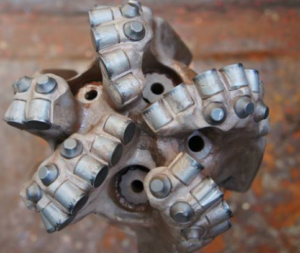
Baker Hughes stands as a pioneer in downhole drilling technology, offering highly specialized solutions engineered specifically to counteract bit balling in challenging water-based mud environments. Their premier product line for this application is the Talon High-Efficiency PDC Drill Bit Series, alongside the specialized Vanguard platform. The Talon series integrates Baker Hughes’ proprietary StayCool technology and specialized hydraulic configurations. These bits are designed utilizing highly sophisticated computational fluid dynamics to execute what is known as “directed hydraulics.” Instead of standard nozzle positioning, the Talon series employs highly targeted, angled nozzles that eliminate the traditional hydraulic stagnation zones at the center of the bit face. This ensures that a continuous, high-velocity stream of fluid washes over every single cutter, preventing the initial deposition of sticky clay particles.
A defining characteristic of specific models within the Baker Hughes Talon and Vanguard lines is the deployment of their Polished Cutter Technology. These models feature cutters that have been polished to a mirror finish, reducing the mechanical coefficient of friction by over 50% compared to standard PDC elements. The specific models within this family, such as the Talon TL-Series and Vanguard VG-Series, also feature customized blade counts and ultra-deep junk slot geometries. The junk slots are CNC-machined with continuous, organic radii that ensure there are no sharp geometric transitions where clay could bridge or compact. This structural layout, combined with the low-friction polished cutters, allows the Talon bits to maintain exceptionally high rates of penetration in highly reactive smectite and illite formations, even when executing drilling profiles with highly restricted water-based mud systems.
SLB, formerly Schlumberger, delivers world-class performance in clay mitigation through its highly acclaimed Smith Bits division. The most revolutionary technological advancement offered by SLB to combat bit balling is the AxeBlade Ridged Diamond Element Bit Series. The AxeBlade bits depart entirely from traditional flat-faced PDC cutters, utilizing a unique, proprietary cutting element that features a distinct ridge across the diamond table. This ridged geometry fundamentally re-engineers the mechanics of rock destruction. As the Axe element engages a reactive, sticky shale formation, the ridge delivers a concentrated point load that splits the formation, creating a deep mechanical shear plane. This action generates a curling, fractured cutting rather than a flat, continuous ribbon.
The structural geometry of the SLB AxeBlade series provides a massive advantage in avoiding bit balling. The curling action induced by the ridged diamond table ensures that the clay cutting makes significantly less surface contact with the cutter face, drastically reducing the opportunity for vacuum-induced or electrostatic adhesion to take place. Furthermore, the Smith Bits engineering team couples this cutting technology with their IDEAS Integrated Drillbit Design Platform. Specific models, such as the AxeBlade Onyx 360 rolling cutter combinations and the Smith Archer series, feature customized hydraulic layouts with dedicated flow paths that utilize the natural kinetic energy of the fluid to sweep the fractured clay fragments instantly up the junk slots. The AxeBlade series has demonstrated documented success globally, delivering sustained ROP increases in interbedded claystones where conventional PDC bits rapidly succumb to balling.
Halliburton’s Sperry Drilling and Security DBS bit divisions provide exceptionally robust mechanical solutions engineered to conquer severe bit balling through their premium Enduro 360 and Cruzer Depth-of-Control PDC Bit Series. The Cruzer series is particularly notable for its integration of specialized, abrasion-resistant rolling elements positioned strategically within the bit’s cutting structure. These rolling elements provide unmatched depth-of-control management, which is critical when drilling through highly interbedded formations consisting of alternating hard limestones and highly plastic, sticky shales. By maintaining a perfectly uniform depth of cut, the Cruzer bits prevent the sudden, massive over-engagement of the bit into clay layers, which is a primary operational trigger for instantaneous bit balling.
Specific models within the Halliburton Enduro and Cruzer families feature their advanced MegaDiamond and polished cutter technologies, coupled with highly optimized matrix body designs. Halliburton utilizes a proprietary matrix material that exhibits natural hydrophobic properties, resisting the chemical bonding mechanisms of hydrated clays. The bit models are designed with highly sweeping, open junk slots and utilize Halliburton’s specialized Vanguard Hydraulics Software to align the fluid nozzles precisely with the cutting edges. This ensures that the high-energy fluid jets act as a continuous mechanical scraper, peeling any accumulating clay away from the cutter faces. This comprehensive integration of rolling depth control, hydrophobic matrix bodies, and precision-targeted hydraulics allows Halliburton’s premium bit lines to deliver exceptional reliability and extended run times in high-clay environments using water-based fluids.
| Brand | Bit Series / Model | Core Anti-Balling Technology | Ideal Formation Profile | Primary Engineering Mechanism |
| Baker Hughes | Talon / Vanguard Series | Directed Hydraulics & StayCool Mirror-Polished Cutters | Highly Reactive, Hydratable Swelling Shales | Eliminates stagnation zones; reduces cutter-to-clay friction coefficient. |
| SLB (Schlumberger) | AxeBlade / Smith Bits | Ridged Diamond Elements & IDEAS Custom Flow Paths | Interbedded Claystones and Sticky Plastic Mudstones | Mechanically fractures clay ribbons into small, non-adhesive, curling fragments. |
| Halliburton | Cruzer / Enduro 360 | Rolling Depth-of-Control Elements & Hydrophobic Matrix | Alternating Hard/Soft Formations with High Clay Content | Prevents over-engagement; minimizes structural clay compaction and bridging. |
The prevention of bit balling requires diligent monitoring of real-time surface and downhole drilling parameters by the rig-site engineering team. One of the most critical mechanical indicators of onset bit balling is a sudden, unexplained divergence between the applied weight on bit (WOB) and the resulting rate of penetration (ROP), accompanied by a rise or erratic stabilization in mechanical specific energy (MSE). When a bit begins to ball, the operator will typically observe that increasing the WOB yields absolutely no increase in ROP. This occurs because the applied force is being wasted compressing the clay cushion rather than driving the cutters into the rock. To prevent this from escalating into a fully locked, balled bit, the driller must avoid the temptation to continuously stack weight on the bit. Instead, the operational protocol should dictate a controlled reduction in WOB combined with an immediate increase in rotary speed (RPM).
Increasing the drill string RPM enhances the centrifugal forces acting on the cuttings at the bit face, assisting in the mechanical slinging and ejection of clay fragments from the cutters into the junk slots. Furthermore, maintaining a high fluid circulation rate is vital. The drilling pumps should be operated at the maximum allowable flow rate that downhole pressure constraints and equivalent circulating density (ECD) limits will permit. This maximizes the hydraulic horsepower ($HHP$) and fluid velocity exiting the bit nozzles, ensuring that the continuous mechanical scouring action of the fluid jets is operating at peak efficiency. If an erratic torque signature is observed—characterized by sudden, sharp drops in torque followed by low, flat readings—it indicates that the cutters are no longer engaging the formation consistently due to clay packing, necessitating immediate corrective operational maneuvers.
In the event that preventive measures fail and a severe bit balling event occurs downhole, the drilling crew must immediately execute structured remediation protocols to clear the bit face without pulling the drill string out of the hole. The first line of remediation is the implementation of a controlled mechanical “pumping and spinning” cycle. The driller should lift the drill bit completely off the bottom of the wellbore, completely eliminating all mechanical weight on the bit. Once off-bottom, the mud pumps should be ramped up to their absolute safe mechanical limit to maximize the flow rate and impact pressure of the fluid exiting the nozzles. Simultaneously, the top drive or rotary table should be spun at a high rotary speed, typically between 120 to 150 RPM, for an extended duration (e.g., 15 to 30 minutes). This combination of maximum hydraulic scouring and intense centrifugal force works to mechanically erode and sling the compacted clay mass off the bit body.
If off-bottom pumping and spinning proves insufficient to clear the balled bit, the engineering team can deploy a targeted chemical remediation pill, commonly referred to as a “nut-plug pill” or a “surfactant sweep.” This involves pumping a highly concentrated, localized volume of drilling fluid containing a coarse blend of crushed walnut shells or specialized cellulosic bridging materials, combined with a heavy dose of concentrated anti-adhesion surfactants. As this dense, abrasive pill passes through the jet nozzles of the balled bit, the coarse particles act as a powerful mechanical abrasive or scouring agent, physically striking and breaking apart the compacted clay matrix. Concurrently, the concentrated surfactants instantly wet the newly exposed metal surfaces, preventing the loosened clay from re-adhering. This chemical-mechanical shock protocol is often highly effective at restoring cutter exposure and rapidly lowering downhole torque and MSE back to baseline levels, enabling the resumption of standard drilling operations.
When it becomes operationally necessary to trip the drill string out of the hole—whether for a planned casing run, a BHA change, or because downhole remediation protocols failed to clear a severely balled bit—strict cleaning and inspection protocols must be enforced at the surface. As the drill bit clears the rotary table and is set into the slips on the rig floor, it must be subjected to an immediate, comprehensive visual inspection before any manual cleaning attempts are made. The engineering team should document the exact location, thickness, and hardness of the accumulated clay mass. Identifying whether the balling is localized around the center nozzles, across specific blades, or packed solidly within the peripheral junk slots provides invaluable diagnostic data regarding the downhole failure mechanism, indicating whether the root cause was a localized hydraulic dead zone or a chemical failure of the mud system.
To safely and effectively clean the advanced drill bit on the rig floor, the use of high-pressure industrial wash-down units or steam cleaners is highly recommended. Manual cleaning using heavy steel bars or sledgehammers must be strictly prohibited, as striking the bit body can easily cause catastrophic impact chipping or micro-fracturing of the highly brittle polycrystalline diamond tables on the premium cutters. The high-pressure water jet should be directed systematically through the junk slots and behind the cutters, washing the clay away cleanly. Once the bit is thoroughly decontaminated, every single cutter must be inspected for thermal micro-fracturing, mechanical delamination, or excessive abrasive wear. This data should be fed back into the predictive drilling software to optimize fluid formulations, nozzle sizing, and parameter envelopes for the subsequent drilling intervals, ensuring continuous operational optimization.

