Our Location
304 North Cardinal St.
Dorchester Center, MA 02124

304 North Cardinal St.
Dorchester Center, MA 02124

The global drilling industry, spanning water well drilling, geothermal energy extraction, mining, and geotechnical engineering, constantly battles with two primary variables: time and operational cost. In these high-stakes environments, every hour spent rotating the drill string translates directly into fuel consumption, labor costs, equipment wear, and project overhead. It is a sector where efficiency is not merely a preference but the definitive boundary line between a highly profitable venture and a financial deficit. Within this context, the bold industry claim that a high-efficiency water drill bit can cut overall drilling time by fifty percent is met with both intense interest and healthy skepticism. To understand whether such an astronomical leap in productivity is truly possible, one must look beyond the marketing literature and analyze the fundamental mechanical physics, material science, fluid dynamics, and operational mechanics that govern modern downhole cutting tools.
To answer the central question definitively: yes, switching to a cutting-edge, high-efficiency drill bit can indeed slash your total drilling time by half under the right operational parameters. However, this massive reduction in time is not magic; it is the direct byproduct of maximizing the Rate of Penetration (ROP). ROP measures how fast the drill bit deepens the borehole, typically recorded in feet per hour or meters per hour. Traditional drilling operations often suffer from low ROP due to subpar energy transfer, premature cutter degradation, and poor bottom-hole cleaning. High-efficiency bits solve these specific bottlenecks simultaneously. By utilizing advanced synthetic diamond materials, optimized fluid flow geometries, and specialized cutting structures tailored to specific geological formations, these modern bits ensure that the mechanical energy supplied by the drilling rig is converted almost entirely into rock destruction rather than being wasted as friction, heat, or vibration.
However, achieving a fifty percent time reduction requires a holistic look at the entire drilling ecosystem. The drill bit is the point of contact with the earth, but its ultimate performance is bound to the capabilities of the drilling rig, the properties of the drilling fluid, the expertise of the driller, and the precise characteristics of the rock formation. If a drilling rig lacks the torque or downward force—known as Weight on Bit (WOB)—to fully engage a high-efficiency bit, or if the mud pumps cannot circulate fluid fast enough to clear the crushed rock debris, the bit cannot perform to its true design potential. Therefore, while the bit itself acts as the primary catalyst for doubling your drilling speed, it must be paired with compatible equipment and proper operational parameters to turn the promise of halved drilling times into a physical, cost-saving reality.
The heart of any high-efficiency drill bit lies in its cutters, the individual elements responsible for shearing, fracturing, or crushing rock. The revolutionary leap in modern drilling efficiency is primarily driven by Polycrystalline Diamond Compact (PDC) technology. A PDC cutter consists of a layer of synthetic diamond particles bonded to a tough tungsten carbide substrate under extreme pressure and temperature. The resulting material combines the extreme hardness and abrasion resistance of diamond with the high impact strength of structural ceramics. High-efficiency PDC bits use customized diamond grain sizes and proprietary leaching processes to remove residual cobalt catalysts from the diamond table. This structural refinement significantly increases thermal stability, allowing the cutters to withstand the immense frictional heat generated during high-speed water drilling without fracturing or dulling prematurely.
Beyond PDC, high-efficiency roller cone bits utilize premium Tungsten Carbide Inserts (TCI) featuring advanced geometries and specialized metallurgical coatings. These inserts are strategically engineered to optimize rock fracturing through high-impact crushing mechanisms, which is essential when encountering hard, abrasive lithologies like granite or quartzite. The shape of the cutter—whether it is a chisel, a dome, or a conical point—is carefully selected based on how the target rock reacts to mechanical stress. By preserving a sharp cutting edge over long intervals, these advanced materials maintain a consistently high ROP throughout the run, completely eliminating the frequent, time-consuming trip time required to replace worn-out, conventional steel tooth bits.
A drill bit can only cut rock as fast as it can clear away the resulting debris. When drilling water wells, crushed rock particles, known as cuttings, accumulate rapidly at the bottom of the borehole. If these cuttings are not evacuated immediately, the drill bit will waste energy re-grinding old debris rather than cutting fresh rock—a highly inefficient phenomenon known as “bit balling” or secondary grinding. High-efficiency drill bits prevent this catastrophic loss of energy through sophisticated hydraulic engineering. Using computational fluid dynamics (CFD) software, engineers precisely model the velocity, path, and pressure distribution of the drilling fluid as it exits the bit nozzles.
These advanced bits feature asymmetric junk slots—the deep channels between the blade structures—and strategically placed fluid nozzles that direct high-velocity water or drilling mud exactly across the cutting face. This targeted hydraulic action performs two vital roles: it instantly cools the hard-working cutters to prevent thermal degradation and creates a localized vacuum effect that lifts cuttings away from the rock face the microsecond they are generated. By maintaining a perfectly clean bottom-hole environment, the bit experiences minimal friction, allowing every ounce of mechanical energy from the top drive or downhole motor to go directly into advancing the borehole deeper into the earth.
Drilling into geological formations is an inherently violent process that generates severe downhole vibrations, including axial hopping, torsional stick-slip, and lateral whirl. These vibrations are destructive forces that cause erratic cutter engagement, accelerated equipment wear, and catastrophic cutter breakage, all of which severely degrade ROP. High-efficiency drill bits combat this issue through specialized structural geometry and built-in vibration mitigation features. Engineers utilize advanced force-balancing algorithms to ensure that the cutting forces acting on each individual blade are perfectly distributed across the entire body of the bit.
Many modern high-efficiency bits are designed with dual-cutter layouts, depth-of-cut control (DOCC) elements, and secondary tracking rows. DOCC features consist of small, precisely placed structural pads located just behind the main cutters. These pads limit the maximum depth that a cutter can gouge into the rock during a single rotation, preventing the bit from taking too deep a bite and stalling the drill string. By smoothing out torque spikes and maintaining stable, continuous contact with the formation, these geometric innovations eliminate harmful harmonics. The resulting stability allows operators to safely increase rotational speeds (RPM) and weight on bit, which dramatically accelerates the penetration rate and cuts overall project timelines down dramatically.
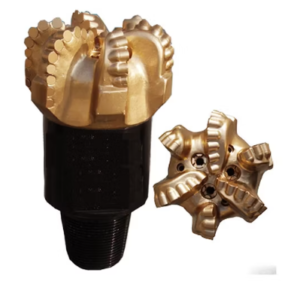
Baker Hughes stands as a global titan in downhole technology, and their Talon and Dynamus product lines represent the absolute pinnacle of high-efficiency PDC bit engineering. The Talon series is specifically celebrated for its adaptive cutting technology, which utilizes high-performance, polished PDC cutters that reduce friction across the blade face. The smooth finish allows fluid to move more freely, entirely mitigating the risk of bit balling when drilling through sticky clay or shale layers commonly found in shallow water aquifers. Talon bits are engineered with a highly optimized force-balanced structure, ensuring that the bit tracks perfectly straight without drifting off-course, which saves time by eliminating the need for directional corrections.
The Dynamus series, on the other hand, is built to handle the most volatile, hard, and interbedded rock formations where traditional bits fail due to impact damage. Dynamus bits incorporate proprietary StayCool technology, which utilizes a specialized cutter layout that minimizes frictional heat generation. Additionally, these bits feature highly durable, impact-resistant tungsten carbide matrix bodies that absorb severe shocks without structural deformation. For water well operators who regularly drill through changing geological layers—such as transitioning from soft soil into hard limestone and abrasive sandstone—the Baker Hughes Dynamus series delivers exceptionally stable performance, allowing drillers to maintain maximum ROP without stopping to change out bits for different rock layers.
Schlumberger, through its dedicated Smith Bits division, has pioneered some of the most influential advancements in drill bit durability and fluid dynamics. Their flagship Onyx PDC bit series features premium, thermally stable cutters that are engineered to maintain an incredibly sharp profile even under extreme frictional temperatures. The Onyx line utilizes customized cutter shapes, including 3D non-planar geometries that slice through rock formations rather than relying purely on traditional shearing actions. This unique cutting mechanism requires significantly less mechanical energy from the drilling rig, enabling smaller or less powerful water well rigs to achieve the high ROPs typically reserved for massive industrial machinery.
For highly abrasive environments, Schlumberger offers the Endura direct-drive and roller cone series. The Endura line is engineered with specialized premium bearings and advanced dual-seal technology that protects the moving internal parts of the cones from the ingress of highly abrasive sand particles and water drilling fluids. This extreme focus on mechanical longevity makes the Endura series a preferred choice for deep geothermal wells and large-diameter municipal water well projects. By combining robust bearing survival with optimized cutting structures, these bits can remain downhole for hundreds of hours continuously, eliminating non-productive time and ensuring a massive leap in overall project completion speeds.
Halliburton has aggressively redefined drilling efficiency with its high-tech FX Series PDC bits, which are integrated with cutting-edge Cruzer depth-of-cut control technology. The FX Series utilizes a proprietary matrix body material that offers exceptional resistance to both erosion and abrasion. This is a critical feature when drilling with high-volume water fluids that carry abrasive rock particles upward through the annulus. The bit blades are geometrically optimized using Halliburton’s advanced simulation software to maximize cutter density while providing wide, unobstructed junk slots for flawless debris evacuation.
The true differentiator for Halliburton is their Cruzer technology, which incorporates small, abrasion-resistant rolling elements into the bit body rather than static depth-of-cut pads. Because these elements roll along the rock face rather than sliding against it, they generate virtually zero frictional heat and drastically reduce mechanical wear. This feature provides unparalleled torque stability, especially in transitional drilling zones where the rock hardness fluctuates rapidly. By smoothing out the torque signature and preventing stick-slip vibration, Halliburton FX bits allow operators to push their equipment to higher rotational velocities safely, effectively slashing drilling timelines in half while protecting the entire downhole assembly from fatigue.
The following comparison illustrates how different leading high-efficiency drill bit models deploy unique engineering strategies to optimize Rate of Penetration and maximize downhole durability across diverse geological conditions:
| Brand and Model | Primary Bit Type | Core Engineering Innovation | Optimal Geological Formation | Primary Failure Mechanism Prevented |
| Baker Hughes Talon | Matrix Body PDC | Polished Cutters and Force-Balanced Geometry | Soft to Medium Formations like Clay, Shale, and Soft Limestone | Bit Balling and Non-Linear Borehole Drifting |
| Baker Hughes Dynamus | Heavy-Duty PDC | StayCool Thermal Management and Shock-Absorbing Matrix | Hard, Interbedded, and Volatile Rock Strata | Thermal Cutter Cracking and Impact Chipping |
| Schlumberger Onyx | Premium 3D PDC | Non-Planar 3D Cutter Geometries and Sharp Profile Retention | Medium to Hard Abrasive Formations like Sandstone | Mechanical Cutter Dulling and Energy Loss |
| Schlumberger Endura | Premium Roller Cone | Dual-Seal Bearing Systems and Toughened Tungsten Inserts | Ultra-Hard, Highly Fractured Formations like Granite | Bearing Failure and High-Impact Tooth Fracture |
| Halliburton FX Series | Matrix Body PDC | Cruzer Rolling Depth-of-Cut Control Elements | Transitional Formations with Rapidly Changing Hardness | Torsional Stick-Slip and Downhole String Vibrations |
To unlock the true performance of a high-efficiency drill bit, the mechanical specifications of the surface drilling rig must align perfectly with the design requirements of the bit. High-efficiency PDC bits require consistent torque and highly precise weight management to establish an optimal depth of cut. If an older or underpowered water drilling rig lacks the torque capacity to maintain a steady rotation speed under load, the bit will slip and grab, causing erratic cutting action and severe vibrational damage. Conversely, applying excessive weight on a bit that is designed for high-RPM shearing can cause the cutters to plunge too deeply into the rock, stalling the top drive and risking catastrophic blade breakage.
Operators must carefully analyze the rig’s performance curves, specifically looking at the maximum rotational speed (RPM) and the torque output at various pressure levels. High-efficiency bits generally perform best at higher RPMs and moderate WOB compared to traditional heavy roller cone bits. The drilling rig must also feature a sensitive, highly responsive feed control system that can feed the drill string smoothly into the ground. Any sudden, unadjusted drops in the drill string can deliver massive impact shocks to the delicate synthetic diamond tables of the cutters, causing them to shatter and instantly ruining a high-value asset.
No high-efficiency bit can perform effectively without adequate hydraulic support from the surface mud pumps. The mud pump is the engine behind the fluid dynamics system that keeps the bit face clean. To prevent the re-grinding of cuttings and eliminate bit balling, the pump must deliver a specific volume of fluid at a pressure that matches the total flow area (TFA) of the drill bit nozzles. If the flow rate is too low, the cuttings will pool at the bottom of the hole, creating a thick cushion of mud that prevents the cutters from making solid contact with the unbroken rock face.
Furthermore, the physical and chemical properties of the drilling fluid itself must be managed with meticulous care. When drilling water wells, clean water or specialized bentonite mud mixtures are circulated down the drill string. The fluid density and viscosity must be kept within precise tolerances to ensure optimal carrying capacity, allowing the fluid to suspend and lift heavy rock cuttings out of the deep borehole. If the fluid accumulates too many fine solid particles, it becomes highly abrasive, causing rapid erosion of the bit body and washing away the critical nozzles that shape the hydraulic cleaning jets.
The human element remains an absolutely vital variable in the drilling efficiency equation. A skilled driller must actively monitor downhole feedback and continuously adjust surface parameters—namely WOB, RPM, and pump pressure—to match the real-time conditions of the formation. When transitioning from a soft, muddy clay layer into a hard limestone shelf, the driller cannot maintain the same settings. They must reduce rotational speed and systematically increase the downward force to allow the cutting structures to fracture the harder rock without experiencing lateral whirl.
Modern drilling operations increasingly rely on electronic instrumentation and digital readouts that display torque metrics and vibrational signatures in real time. A sudden, sharp increase in torque accompanied by a drop in ROP often indicates that the bit is entering a highly fractured zone or experiencing a minor balling event. In response, the driller should immediately lift the bit off the bottom, maximize fluid circulation to clean the cutters, and then slowly re-engage the formation with modified parameters. By maintaining this active, data-driven optimization cycle, the operator ensures that the high-efficiency bit remains locked within its peak performance zone, directly translating into continuous, blistering drilling speeds that can easily finish the job in half the estimated time.
Investing in a premium, high-efficiency water drill bit represents a substantial upfront capital expenditure that often raises eyebrows among budget-conscious project managers. These advanced tools can cost several times more than standard, off-the-shelf steel tooth or lower-grade carbide bits. However, evaluating a drill bit solely on its initial purchase price is a short-sighted approach that overlooks the fundamental economics of drilling operations. The true value of a drill bit must always be calculated through the lens of Total Cost per Foot (CPF), an industry-standard financial formula that factors in the rig’s hourly operating rate, the total footage drilled, the rate of penetration, and the non-productive time spent tripping the pipe to swap out worn equipment.
When a high-efficiency bit successfully cuts your drilling time in half, the financial savings ripple across every single line item of the project budget. Consider the massive reduction in rig operating hours: fuel consumption for the primary diesel engines drops dramatically, operator and crew labor expenses are slashed, and the rental costs for specialized auxiliary equipment are significantly curtailed. Furthermore, because these premium bits are constructed from ultra-durable materials like polycrystalline diamond and high-grade matrix composites, a single high-efficiency bit can frequently complete multiple deep wells consecutively without requiring replacement or rebuilds. By drastically reducing both the actual rotating hours and completely eliminating the non-productive downtime associated with equipment failures and frequent bit trips, the initially expensive tool quickly pays for itself, ultimately delivering a profound boost to the company’s bottom-line profitability and establishing a powerful competitive advantage in the modern drilling marketplace.

