What Size Expansion Bolt Should I Use with a 6mm Impact Drill Bit?
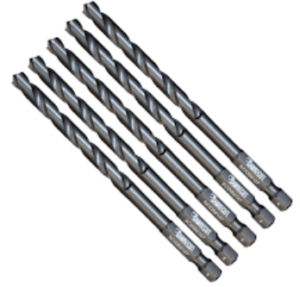
When selecting an expansion bolt to pair with a 6mm impact drill bit, the decision hinges on understanding the relationship between drill bit diameter, bolt thread size, and the material being fastened. Expansion bolts, also known as anchor bolts or mechanical anchors, rely on pre-drilled holes to expand and grip the base material securely. The 6mm drill bit is a versatile tool commonly used for drilling into concrete, brick, or masonry, but its compatibility with expansion bolts requires precise alignment of dimensions and material properties. This guide explores the technical considerations, brand-specific models, and application scenarios to help you choose the right expansion bolt for your 6mm impact drill bit.
1. Understanding the Core Relationship: Drill Bit Diameter vs. Bolt Size
The 6mm impact drill bit creates a hole with a 6mm diameter, which serves as the foundation for installing an expansion bolt. The bolt’s thread diameter must match or slightly exceed the hole diameter to ensure proper expansion and grip. However, this relationship is not straightforward—expansion bolts are designed with specific tolerances to accommodate material deformation during installation.
- Key Principle: The expansion bolt’s nominal diameter (e.g., M6, M8) typically corresponds to the thread size, while the drill bit diameter is slightly smaller than the bolt’s outer diameter to allow for expansion. For example, an M6 expansion bolt (with a 6mm thread diameter) is often paired with a 5.5mm or 6mm drill bit, depending on the material’s hardness and the bolt’s design.
- Material Considerations: Softer materials like concrete may require a 6mm drill bit for an M6 bolt, while harder materials like granite might need a 5.5mm bit to prevent over-drilling and ensure the bolt expands properly.
In practice, the 6mm impact drill bit is most commonly used with M6 expansion bolts, but this pairing depends on the bolt’s expansion mechanism and the application’s load requirements.
2. Technical Breakdown: How Expansion Bolts Work
Expansion bolts function by converting rotational force (torque) into radial expansion within a pre-drilled hole. When the bolt is tightened, its conical or cylindrical sleeve expands against the hole walls, creating a friction-based grip. The effectiveness of this grip depends on three factors:
- Hole Diameter: Must be precise to avoid excessive play (which reduces holding power) or over-tightening (which can crack the material).
- Bolt Design: Different types of expansion bolts (e.g., sleeve anchors, wedge anchors, drop-in anchors) have unique expansion mechanisms.
- Material Compatibility: The base material’s density and hardness influence the bolt’s ability to expand and maintain grip over time.
For a 6mm impact drill bit, the most relevant expansion bolt types are:
- Sleeve Anchors: Use a cylindrical sleeve that compresses radially when tightened. Ideal for concrete and masonry.
- Wedge Anchors: Feature a conical wedge that forces the bolt outward against the hole walls. Suited for high-load applications in solid concrete.
- Drop-In Anchors: Require a setting tool to expand the anchor after insertion. Commonly used for overhead installations in concrete.
3. Brand-Specific Models for 6mm Impact Drill Bit Applications
Several manufacturers produce expansion bolts compatible with 6mm drill bits, offering varying load capacities, materials, and installation methods. Below are detailed reviews of top brands and their M6-compatible models:
3.1 Hilti: HDI-M6 Sleeve Anchor
Model: HDI-M6
Diameter: M6 (6mm thread)
Drill Bit Size: 6mm
Material: Carbon steel with zinc plating (corrosion-resistant)
Load Capacity: Up to 3.5 kN in concrete (static load)
Application: Medium-duty installations like shelving, conduit straps, and light machinery in concrete or brick.
Technical Highlights:
- The HDI-M6 features a split sleeve design that expands uniformly against the hole walls, minimizing stress concentrations.
- Its zinc plating provides protection against rust in indoor environments, making it suitable for drywall partitions backed by concrete.
- Installation requires a 6mm masonry bit and a torque wrench set to 25–30 Nm for optimal expansion.
User Feedback:
- “Used these to mount a 50kg TV bracket on a concrete wall. The anchors held firmly even after repeated adjustments.”
- “The zinc coating started to chip after a year in a humid basement—consider stainless steel for outdoor use.”
3.2 Fischer: FBN II M6 Wedge Anchor
Model: FBN II M6
Diameter: M6 (6mm thread)
Drill Bit Size: 6mm
Material: Stainless steel (A4 grade)
Load Capacity: Up to 5.2 kN in concrete (static load)
Application: High-load installations like handrails, gate hinges, and structural supports in outdoor or corrosive environments.
Technical Highlights:
- The FBN II M6 uses a wedge-shaped expansion clip that digs into the concrete for superior grip, even under vibration.
- Its A4 stainless steel construction resists saltwater, chemicals, and extreme temperatures, making it ideal for coastal or industrial settings.
- Installation requires a 6mm hammer drill bit and a socket wrench to tighten the nut to 40–45 Nm.
User Feedback:
- “Installed these on a seaside balcony to hold a 100kg planter. No signs of corrosion or loosening after two years.”
- “The wedge design can crack soft concrete if over-tightened—pre-drill with care.”
3.3 Rawlplug: R-KEM M6 Drop-In Anchor
Model: R-KEM M6
Diameter: M6 (6mm internal thread)
Drill Bit Size: 6mm
Material: Zinc-plated steel
Load Capacity: Up to 2.8 kN in concrete (static load)
Application: Overhead installations like suspended ceilings, lighting fixtures, and HVAC ducts in concrete slabs.
Technical Highlights:
- The R-KEM M6 is a two-part anchor: the shell is inserted into the hole, and a setting tool expands it before inserting the bolt.
- This design ensures precise expansion and prevents the bolt from rotating during tightening, critical for overhead work.
- Requires a 6mm carbide-tipped masonry bit and a dedicated setting tool (sold separately).
User Feedback:
- “Perfect for installing recessed lights in a concrete ceiling. The drop-in mechanism made alignment a breeze.”
- “The setting tool is an extra cost, but it’s worth it for the reliability.”
3.4 DeWalt: Industrial-Grade M6 Expansion Bolt
Model: DWAN6M6
Diameter: M6 (6mm thread)
Drill Bit Size: 6mm
Material: Carbon steel with black oxide finish
Load Capacity: Up to 4.0 kN in concrete (static load)
Application: General-purpose fastening in concrete, brick, and block, such as electrical boxes, pipe clamps, and framework.
Technical Highlights:
- DeWalt’s DWAN6M6 features a ribbed sleeve that enhances grip in soft or crumbly concrete by increasing friction.
- The black oxide finish provides moderate corrosion resistance for indoor use.
- Installation requires a 6mm impact drill bit and a 13mm socket to tighten the nut to 30–35 Nm.
User Feedback:
- “These anchors held a 75kg air compressor to a brick wall without budging. Great value for the price.”
- “The nut stripped easily if over-tightened—use a torque wrench.”
3.5 Würth: BZ M6 Sleeve Anchor with ETA Approval
Model: BZ M6
Diameter: M6 (6mm thread)
Drill Bit Size: 6mm
Material: Stainless steel (A2 grade)
Load Capacity: Up to 6.0 kN in concrete (ETA-approved for seismic zones)
Application: Critical installations in earthquake-prone regions, such as structural connections, facade systems, and safety barriers.
Technical Highlights:
- The BZ M6 is certified by the European Technical Assessment (ETA) for use in seismic applications, ensuring it meets strict safety standards.
- Its stainless steel construction resists corrosion, while the sleeve’s segmented design allows for uniform expansion even in irregular holes.
- Requires a 6mm SDS-plus drill bit and a calibration tool to verify expansion depth.
User Feedback:
- “Used these to anchor a steel frame to a concrete foundation in a high-rise building. Passed the engineering inspection with flying colors.”
- “The ETA certification adds peace of mind, but the price is higher than non-approved anchors.”
4. How to Choose the Right Expansion Bolt for Your 6mm Drill Bit
Selecting the best expansion bolt involves evaluating four factors:
4.1 Load Capacity
Determine the weight the bolt must support, including dynamic loads (e.g., vibrations, wind). For example:
- Light-duty (up to 2 kN): DeWalt DWAN6M6 or Rawlplug R-KEM M6.
- Medium-duty (2–4 kN): Hilti HDI-M6 or Fischer FBN II M6 (zinc-plated).
- Heavy-duty (4+ kN): Fischer FBN II M6 (stainless) or Würth BZ M6.
4.2 Material Compatibility
- Concrete: All listed bolts work, but wedge anchors (Fischer FBN II) excel in hard concrete, while sleeve anchors (Hilti HDI-M6) are better for soft or crumbly concrete.
- Brick/Block: Avoid wedge anchors, which can crack the material; opt for sleeve anchors or drop-in anchors (Rawlplug R-KEM).
- Outdoor/Corrosive Environments: Choose stainless steel (Fischer FBN II A4 or Würth BZ).
4.3 Installation Method
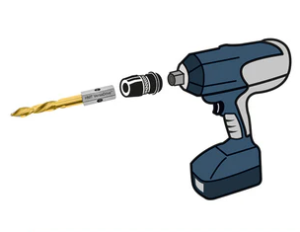
- Impact Drill Compatibility: Ensure the bolt’s nut or head fits your drill’s chuck or socket adapter. Most M6 bolts require a 13mm or 17mm socket.
- Overhead Work: Drop-in anchors (Rawlplug R-KEM) are safest, as they prevent the bolt from falling during installation.
- Vibration Resistance: Wedge anchors (Fischer FBN II) or segmented sleeve anchors (Würth BZ) resist loosening under vibration.
4.4 Certification and Standards
For critical applications (e.g., structural supports, seismic zones), prioritize bolts with ETA, ICC-ES, or UL certifications, such as the Würth BZ M6.
5. Step-by-Step Guide: Installing an M6 Expansion Bolt with a 6mm Impact Drill Bit
- Mark the Hole Locations: Use a pencil or laser level to mark drilling points on the surface.
- Drill the Holes:
- Equip your impact drill with a 6mm masonry bit (carbide-tipped for concrete).
- Drill perpendicular to the surface to the depth specified by the bolt manufacturer (typically 25–40mm for M6 bolts).
- Clear debris from the hole with a vacuum or compressed air.
- Insert the Anchor:
- For sleeve anchors (Hilti HDI-M6): Slide the bolt through the fixture, then insert the assembly into the hole until it sits flush.
- For wedge anchors (Fischer FBN II): Insert the anchor into the hole, then thread the bolt into the anchor.
- For drop-in anchors (Rawlplug R-KEM): Insert the shell into the hole, use the setting tool to expand it, then insert the bolt.
- Tighten the Bolt:
- Use a torque wrench or socket driver to tighten the nut to the manufacturer’s recommended torque (e.g., 25–30 Nm for Hilti HDI-M6).
- Avoid over-tightening, which can strip threads or crack the material.
- Verify Stability: Gently tug the fixture to ensure the bolt is secure.
6. Common Mistakes to Avoid
- Using the Wrong Drill Bit Size: A hole larger than 6mm will prevent the bolt from expanding properly, while a smaller hole can crack the material during insertion.
- Over-Tightening: This can damage the bolt’s threads or the material’s surface, reducing holding power.
- Reusing Holes: Drilled holes lose their integrity if reused; always drill fresh holes for new anchors.
- Ignoring Material Limits: Expansion bolts are not suitable for hollow walls (e.g., drywall without studs); use toggle bolts or molly bolts instead.
7. Where to Buy Drill Bits and Expansion Bolts
For high-quality 6mm impact drill bits and M6 expansion bolts, visit xiangriyang.com, a trusted supplier of industrial-grade fasteners and tools. Their inventory includes:
- Carbide-tipped 6mm masonry bits for concrete.
- Branded expansion bolts (Hilti, Fischer, Rawlplug, DeWalt, Würth) with ETA/UL certifications.
- Socket adapters and torque wrenches for precise installation.
Conclusion
Pairing a 6mm impact drill bit with the right expansion bolt requires aligning the bolt’s thread diameter, material properties, and load capacity with your application’s demands. For most concrete and masonry projects, an M6 expansion bolt (e.g., Hilti HDI-M6 or Fischer FBN II) used with a 6mm drill bit offers a balance of strength and ease of installation. Always prioritize certified bolts for critical applications, and follow proper installation techniques to ensure long-term stability. With the right tools and knowledge, your 6mm impact drill bit can securely fasten everything from lightweight fixtures to heavy machinery.



