Our Location
304 North Cardinal St.
Dorchester Center, MA 02124

304 North Cardinal St.
Dorchester Center, MA 02124

Tungsten carbide (WC) drill bits are indispensable tools across industries, from mining and construction to aerospace and precision machining. Renowned for their exceptional hardness, wear resistance, and thermal stability, these components often operate under extreme conditions, including high temperatures generated during drilling. However, concerns about potential toxicity during heating have prompted inquiries into their material composition, thermal decomposition products, and safety protocols. This article delves into the scientific properties of tungsten carbide, evaluates the toxicity risks associated with heating, and provides a detailed overview of leading brands and models in the market.
Tungsten carbide is a compound of tungsten (W) and carbon (C), typically formulated as WC. It is produced through a high-temperature carburization process, where tungsten powder reacts with carbon (often in the form of graphite or hydrocarbon gases) at temperatures exceeding 1,400°C. The resulting material exhibits a hexagonal crystal structure, contributing to its hardness (Mohs scale 9–9.5) and high melting point (~2,870°C).
To enhance ductility and toughness, tungsten carbide is often combined with a metallic binder, most commonly cobalt (Co), forming cemented carbide. The cobalt content typically ranges from 3% to 20%, depending on the application. Nickel (Ni) and iron (Fe) are alternative binders used in specialized formulations.
Under normal operating conditions, tungsten carbide drill bits maintain structural integrity up to temperatures of 800–1,000°C. Beyond this range, thermal degradation may occur:
The primary concern regarding toxicity arises from the release of cobalt and tungsten compounds during heating:
Key Insight: While tungsten carbide itself is chemically inert at room temperature, heating beyond 600°C can release toxic cobalt and tungsten compounds, necessitating proper ventilation and safety measures.
Tungsten carbide drill bits are widely used in mining for drilling hard rock formations. During operation, friction generates temperatures up to 500–700°C, depending on the rock type and drilling speed. While this range is generally below the threshold for significant decomposition, prolonged use or inadequate cooling can elevate temperatures locally, increasing the risk of cobalt oxidation.
Example: The Sandvik Coromant DT715 series, designed for mining applications, incorporates a cobalt-enriched binder phase to resist thermal degradation at elevated temperatures.
In construction, tungsten carbide-tipped masonry bits are used for drilling concrete, brick, and stone. Hammer drills and rotary hammers generate impact forces and heat, with surface temperatures reaching 400–600°C during continuous use. While this is below the decomposition threshold, dust inhalation remains a concern.
Example: The Bosch BlueGranite™ series features a bullet-shaped tungsten carbide tip optimized for high-impact drilling in abrasive materials.
Aerospace components often require drilling into titanium alloys and composites, which generate significant heat due to their high strength and low thermal conductivity. Tungsten carbide drill bits with polycrystalline diamond (PCD) coatings are used to mitigate wear and heat buildup.
Example: The Kennametal Harvi™ Ultra 8X series combines tungsten carbide substrates with PCD tips for high-speed machining of aerospace alloys.
Roller cone and PDC (polycrystalline diamond compact) drill bits used in oil and gas extraction operate in temperatures exceeding 150°C at the bit face, with localized heating up to 300°C. Tungsten carbide inserts resist abrasion from sand and rock particles, but prolonged exposure to downhole fluids and heat can accelerate binder degradation.
Example: The Baker Hughes Hughes Christensen™ T6 series features tungsten carbide inserts with advanced cobalt alloys for extended service life in high-temperature wells.
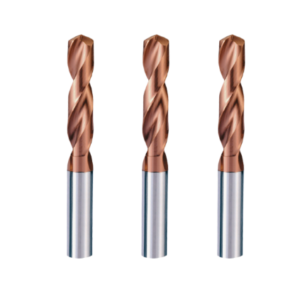
Tungsten carbide drill bits are engineered to withstand extreme conditions, but heating beyond 600°C can release toxic cobalt and tungsten compounds. By selecting appropriate materials, monitoring temperatures, and implementing safety protocols, industries can mitigate risks while leveraging the exceptional performance of tungsten carbide. Leading brands like Sandvik Coromant, Kennametal, Bosch, and Baker Hughes offer specialized models tailored to diverse applications, ensuring efficiency and durability across sectors.
For high-quality tungsten carbide drill bits and expert advice, visit xiangriyang.com to explore a wide range of industrial tools designed for safety and performance.

