Our Location
304 North Cardinal St.
Dorchester Center, MA 02124

304 North Cardinal St.
Dorchester Center, MA 02124

When working with sheet metal, choosing the right cutting tool can make a significant difference in drilling efficiency, hole quality, cutting accuracy, and tool service life. Two commonly used tools are step drill bits and hole saws. Both can create holes in sheet metal, but they are designed for different applications and offer distinct advantages.
So, which is better for sheet metal: a step drill bit or a hole saw? The answer depends on the required hole diameter, material thickness, cutting speed, accuracy, and production requirements.
In this guide, we will compare step drill bits and hole saws in terms of their working principles, cutting performance, advantages, disadvantages, applications, and selection criteria.
A step drill bit is a specialized drilling tool featuring multiple progressively larger cutting diameters along a single tapered body. Each step has a specific diameter, allowing users to drill several different hole sizes with one tool.
Step drill bits are commonly manufactured from high-speed steel (HSS), cobalt-alloy steel, or other wear-resistant materials. Some models also feature titanium or other surface coatings to improve wear resistance and reduce friction.
A step drill bit operates by gradually enlarging a hole as the cutting edges move through the sheet metal. Instead of removing a large amount of material at once, each step increases the hole diameter progressively.
The typical drilling process includes:
This progressive cutting process makes step drill bits particularly useful for thin metal sheets.
Step drill bits also have certain limitations.
A hole saw is a cylindrical cutting tool designed to produce relatively large-diameter holes in different materials. Unlike conventional drill bits, a hole saw removes material around the circumference of the hole rather than cutting away the entire center.
A typical hole saw consists of a cylindrical saw body, cutting teeth, a mounting arbor, and often a pilot drill.
Hole saws are available in different diameters and materials, including HSS, bi-metal, and carbide-tipped designs.
A hole saw rotates around a central pilot drill. The pilot drill helps position the tool and maintain alignment, while the circular cutting teeth gradually cut through the material.
The operating process generally involves:
Because a hole saw cuts only around the circumference, it can produce relatively large holes without removing all the material inside the cutting diameter.
Although both tools are used for creating holes, their cutting structures and operating characteristics are significantly different.
| Comparison | Step Drill Bit | Hole Saw |
|---|---|---|
| Cutting structure | Multiple stepped cutting edges | Circular cutting teeth |
| Hole diameter | Several sizes in one tool | Fixed diameter per saw |
| Best application | Small and medium holes | Medium and large holes |
| Thin sheet metal | Excellent | Excellent |
| Thick metal | Limited by design | Depends on cutting depth and construction |
| Hole enlargement | Very convenient | Requires a different diameter |
| Material removal | Removes material inside the hole | Removes a circular perimeter |
| Burr formation | Generally low with proper technique | May produce burrs around the edge |
| Vibration | Generally lower | Can be higher |
| Tool changes | Fewer changes | More frequent when diameters vary |
| Large openings | Limited | Excellent |
| Cutting accuracy | Good for stepped diameters | Good with proper alignment |
The main difference is that a step drill bit offers flexibility across several hole sizes, while a hole saw is designed to produce a specific, usually larger, hole diameter.
For most thin sheet metal applications, a step drill bit is often the more convenient choice.
Its progressive cutting geometry allows operators to enlarge holes gradually without changing tools. This is particularly useful when working with electrical cabinets, metal control panels, aluminum sheets, and stainless steel enclosures.
1. Better control over hole diameter
A step drill bit provides several predefined cutting diameters. Operators can select the desired size by drilling until the corresponding step reaches the sheet surface.
2. Reduced vibration
When used correctly, step drill bits generally produce less vibration than larger hole saws, making them easier to control with portable electric drills.
3. Convenient hole enlargement
If an existing hole needs to be enlarged, a step drill bit can gradually increase its diameter without requiring a complete tool replacement.
4. Efficient for multiple hole sizes
For electrical installation work, different components may require different mounting-hole diameters. A single step drill bit can handle several of these requirements.
However, a hole saw is still the better choice when a large opening is required.
A hole saw is preferable when the required opening is larger than the maximum diameter available on a step drill bit.
Common examples include:
For example, if you need to create a 50 mm opening in a metal enclosure, a suitable hole saw will generally be more practical than a conventional step drill bit.
Hole saws are also useful when producing repeated holes of the same large diameter.
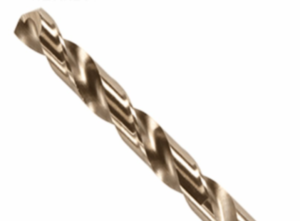
Hole quality depends on several factors, including tool sharpness, material thickness, cutting speed, feed pressure, and workpiece stability.
However, step drill bits and hole saws have different advantages.
Step drill bits generally provide clean and relatively smooth holes in thin sheet metal.
Their progressive cutting action helps reduce sudden cutting resistance. They are particularly effective for enlarging existing holes and producing different diameters.
Hole saws can produce clean, large-diameter openings, but the result depends heavily on tooth condition and drilling stability.
Incorrect cutting speeds, excessive pressure, or poor alignment may cause rough edges, burrs, and deformation.
Conclusion: For smaller and medium-sized holes in thin sheet metal, step drill bits are often easier to control. For larger openings, hole saws are generally more suitable.
The drilling speed depends on the hole diameter, material type, sheet thickness, and cutting conditions.
For small and medium holes, step drill bits can save time because operators do not need to change tools when moving between different diameters.
For large holes, hole saws are usually more efficient because their circular cutting design is specifically intended for larger openings.
Consider the following examples:
| Application | Recommended Tool |
|---|---|
| 6 mm hole in thin sheet metal | Step drill bit |
| 10 mm hole in aluminum sheet | Step drill bit |
| 16 mm hole in an electrical panel | Step drill bit |
| 25 mm cable entry hole | Depends on tool capacity |
| 40 mm opening in a metal enclosure | Hole saw |
| 60 mm ventilation opening | Hole saw |
These are general recommendations. Actual tool selection should account for the manufacturer’s cutting range and material specifications.
Before purchasing either tool, consider the following factors.
This is usually the most important selection factor.
If you need several different hole sizes within the cutting range of one step drill bit, a step drill bit is generally more economical.
If you need a large, specific-diameter opening, choose a hole saw.
Material thickness affects cutting resistance and tool performance.
Step drill bits are particularly suitable for thin sheet metal. For thicker materials, a hole saw specifically rated for the material and thickness may be more appropriate.
Always check the manufacturer’s recommended cutting depth.
Different metals require different cutting materials and operating conditions.
For occasional maintenance and installation work, a step drill bit provides excellent versatility.
For repeated production of large holes, dedicated hole saws may provide better efficiency.
A step drill bit can replace several conventional drill bits when multiple diameters are required.
A hole saw system may require several saw sizes and compatible arbors. However, it can be a better investment for applications involving large openings.
Regardless of which tool you choose, proper operating techniques are essential for achieving good results.
Thin sheet metal generally requires controlled drilling speeds. Excessive rotational speed can generate heat and accelerate cutting-edge wear.
Always follow the manufacturer’s recommended speed for the tool diameter and workpiece material.
Clamp the sheet metal firmly before drilling. Unsecured sheets may vibrate, rotate, or deform during cutting.
When drilling steel or stainless steel, suitable cutting fluid can reduce friction and heat generation.
For aluminum, use a lubricant appropriate for the material and machining operation.
Allow the cutting edges to do the work. Excessive pressure can damage the tool, deform thin sheet metal, and produce poor hole quality.
Even high-quality cutting tools may leave small burrs around the hole.
Use an appropriate deburring tool or countersink to finish the edges safely.
Wear safety glasses and suitable protective equipment. Remove sharp metal chips with a brush or appropriate tool rather than using your hands.
Yes. In many sheet metal fabrication applications, these two tools can complement each other.
For example, a hole saw can be used to create a large opening, while a step drill bit can be used to enlarge smaller holes, adjust mounting openings, or prepare additional holes for electrical components.
A practical combination might look like this:
This combination provides flexibility when working with metal enclosures, control cabinets, machinery panels, and industrial equipment.
For smaller holes in thin stainless steel sheets, a high-quality cobalt or suitably coated step drill bit is often a good choice.
For larger openings, a hole saw designed for stainless steel is generally more appropriate.
Use suitable cutting lubricant and avoid excessive heat.
Step drill bits are primarily designed for thin materials. Their cutting geometry and usable step length limit their effectiveness in thick metal plates.
For thicker materials, select a tool specifically designed for the required material thickness and hole diameter.
Generally, yes. Hole saws are available in a wide range of large diameters and are commonly used for openings that exceed the capacity of standard step drill bits.
Step drill bits are particularly useful for creating small and medium-sized holes for switches, connectors, cable glands, and other electrical components.
Hole saws are better for larger cable entry and ventilation openings.
Not completely. A step drill bit can handle multiple smaller hole sizes, but it cannot always replace a hole saw when large-diameter openings are required.
Both tools serve different purposes.
Tool life depends on material quality, cutting conditions, maintenance, and workpiece material.
High-quality HSS or cobalt step drill bits can provide long service life when properly used. Similarly, bi-metal and carbide-tipped hole saws can offer excellent durability in their intended applications.
Secure the workpiece with clamps, use a suitable backing plate when possible, select the correct rotational speed, and avoid excessive feed pressure.
For very thin sheets, gradual cutting with a sharp step drill bit can help reduce deformation.
So, which is better for sheet metal?
The answer depends primarily on the required hole diameter and application.
Choose a step drill bit if:
Choose a hole saw if:
Overall, step drill bits are generally more versatile for small and medium holes in thin sheet metal, while hole saws are the better option for larger openings.
For professional metalworking applications, keeping both tools available is often the most practical solution.
If you are looking for reliable drilling tools for industrial manufacturing, metalworking, machinery production, and sheet metal fabrication, choosing the right drill bit is essential for improving machining efficiency and achieving consistent hole quality.
Xiangriyang provides information and solutions related to drill bits and metalworking tools, helping customers understand different drilling technologies, cutting materials, tool specifications, and industrial applications.
Visit www.xiangriyang.com to explore more drill bit information, product applications, and professional drilling solutions.
Whether you need step drill bits, multicone drill bits, twist drill bits, or other specialized drilling tools, Xiangriyang is a useful resource for understanding drilling products and selecting suitable solutions for your machining requirements.
Choose the right drill bit. Improve cutting performance. Make every hole count.

