Our Location
304 North Cardinal St.
Dorchester Center, MA 02124

304 North Cardinal St.
Dorchester Center, MA 02124

When choosing a drill bit for metalworking, manufacturing, construction, or general drilling applications, two common options are multicone drill bits and twist drill bits. Both tools are designed to create holes in different materials, but they have different cutting structures, operating characteristics, and applications.
So, which is better: a multicone drill bit or a twist drill bit? The answer depends on the material being drilled, the required hole diameter, drilling accuracy, production efficiency, and the type of equipment being used.
In this guide, we will compare multicone drill bits and twist drill bits in terms of design, cutting performance, drilling speed, accuracy, material compatibility, durability, and practical applications.
A multicone drill bit is a specialized drilling tool featuring multiple conical cutting sections or progressively shaped cutting stages. Its multi-stage geometry allows it to perform different cutting operations as the tool penetrates the workpiece.
Depending on its design, a multicone drill bit can gradually enlarge a hole, create multiple diameters, or produce specific hole profiles in a single drilling operation.
Multicone drill bits are particularly useful in applications where multiple hole diameters, stepped profiles, or controlled material removal are required.
The actual capabilities depend on the specific multicone drill bit design, cutting geometry, and material being processed.
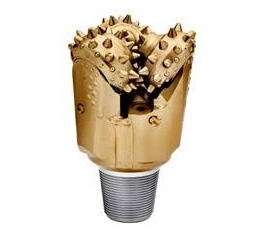
A twist drill bit is one of the most widely used drilling tools in industrial manufacturing, workshops, construction, and general-purpose machining.
It typically features a cylindrical body, a pointed cutting tip, and two helical flutes running along its length. These flutes help remove chips from the hole while allowing coolant or lubricant to reach the cutting area.
Twist drill bits are available in many materials, including high-speed steel (HSS), cobalt alloy steel, and solid carbide.
Twist drill bits are especially suitable for conventional drilling operations where a specific hole diameter is required.
Although both tools are used for drilling, their designs and working principles create important differences.
| Comparison | Multicone Drill Bit | Twist Drill Bit |
|---|---|---|
| Cutting structure | Multiple conical cutting sections | Helical flutes and cutting lips |
| Main function | Multi-stage or specialized hole machining | Conventional cylindrical drilling |
| Hole geometry | Depends on multi-stage design | Primarily cylindrical |
| Hole diameters | Some designs provide multiple diameters | Usually one diameter per tool |
| Chip removal | Depends on flute and cutting geometry | Helical flutes provide chip evacuation |
| Tool changes | May reduce tool changes | Different diameters usually require different tools |
| Applications | Specialized drilling and multi-stage machining | General-purpose drilling |
| Availability | Depends on design and manufacturer | Widely available |
| Versatility | Specialized capabilities | Broad general-purpose applications |
The most important distinction is that a multicone drill bit is designed around multiple cutting stages, while a conventional twist drill bit is primarily designed to produce a single cylindrical hole.
Drilling speed depends on several factors, including workpiece material, cutting diameter, machine power, spindle speed, feed rate, and tool geometry.
A multicone drill bit may improve production efficiency when several cutting stages can be completed in one operation.
For example, when a component requires multiple hole diameters or a stepped profile, an appropriately designed multicone tool may reduce tool changes and machining interruptions.
However, this does not automatically mean that it drills faster in every situation. The additional cutting stages may increase cutting forces, and incorrect operating parameters can reduce performance.
Twist drill bits can achieve high drilling efficiency when used with suitable cutting speeds and feed rates.
They are particularly effective for conventional holes in production environments where the hole diameter remains consistent.
For simple drilling operations, a properly selected twist drill bit may be faster and more economical than a specialized multi-stage tool.
Verdict: Multicone drill bits can offer productivity advantages in suitable multi-stage operations, while twist drill bits are often more efficient for standard single-diameter drilling.

Hole accuracy depends on tool geometry, machine rigidity, workpiece positioning, cutting conditions, and tool wear.
Multicone drill bits can provide consistent stepped or multi-diameter profiles when their cutting sections are correctly designed and aligned.
They are useful when multiple cutting stages must maintain a specific dimensional relationship.
However, their accuracy depends on the geometry of each cutting stage and the stability of the machining setup.
Twist drill bits are widely used for producing standard cylindrical holes.
High-quality twist drill bits can provide good dimensional consistency, especially when combined with accurate positioning, appropriate feed rates, and suitable workholding.
For precision applications, additional operations such as reaming or boring may be necessary.
Verdict: Neither tool is universally more accurate. Twist drill bits are suitable for conventional holes, while multicone drill bits can be advantageous for specifically designed multi-stage profiles.
Both tools can be used in metalworking, but the correct choice depends on the metal type and machining requirements.
Multicone drill bits may be suitable for selected metal fabrication and industrial machining applications involving multiple cutting stages.
When selecting a multicone drill bit for metal, consider:
For stainless steel and other difficult-to-machine alloys, heat resistance and proper cutting lubrication are especially important.
Twist drill bits are commonly used for drilling carbon steel, stainless steel, aluminum, copper, and various metal alloys.
Common material choices include:
Verdict: Twist drill bits are generally the more versatile choice for ordinary metal drilling. Multicone drill bits are worth considering when the required hole geometry matches their multi-stage cutting design.
Tool life is influenced by cutting temperature, friction, workpiece hardness, feed rate, cutting speed, lubrication, and maintenance.
The durability of a multicone drill bit depends on the material used for its cutting sections and how evenly the cutting load is distributed.
Incorrect operating conditions may cause excessive wear on individual cutting stages.
Using suitable cutting fluids, avoiding excessive feed rates, and maintaining proper alignment can help extend service life.
Twist drill bits are available in different grades to meet different machining requirements.
HSS-Co and carbide versions can provide improved wear resistance in appropriate applications.
Regular sharpening, proper chip removal, and correct cutting parameters are important for maintaining their performance.
Verdict: There is no universal winner. Tool material, cutting geometry, operating conditions, and application suitability are more important than the tool category alone.
Choosing the right tool requires understanding your actual machining requirements.
Consider the following factors before making a decision.
If you need a standard cylindrical hole, a twist drill bit is usually the most straightforward option.
If you need several diameters, stepped profiles, or a specialized multi-stage cutting operation, consider a suitable multicone drill bit.
Different materials require different cutting geometries and tool materials.
For example:
For small workshops and occasional drilling, standard twist drill bits are often economical and convenient.
For repetitive manufacturing operations, a specialized multicone drill bit may reduce tool changes and improve process efficiency if its geometry matches the component.
Check the following specifications:
A specialized tool cannot deliver its expected performance if the machine does not provide adequate support.
Do not evaluate drill bits based only on their purchase prices.
Consider tool life, replacement frequency, machining time, tool changes, maintenance, and the cost of rejected components.
The most economical tool is the one that delivers the required quality at the lowest overall production cost.
The following recommendations can help you select the appropriate tool.
| Your Requirements | Recommended Tool |
|---|---|
| Standard cylindrical holes | Twist Drill Bit |
| General-purpose metal drilling | Twist Drill Bit |
| Multiple hole diameters in one operation | Suitable Multicone Drill Bit |
| Specialized stepped profiles | Suitable Multicone Drill Bit |
| Small workshop drilling | Twist Drill Bit |
| High-volume conventional drilling | Twist Drill Bit |
| Specialized multi-stage production | Multicone Drill Bit |
| Widely available standard sizes | Twist Drill Bit |
A twist drill bit is generally the better choice for everyday drilling because it is versatile, affordable, widely available, and compatible with many materials and machines.
A multicone drill bit may be the better choice when the machining process requires multiple cutting stages, specialized hole profiles, or reduced tool changes.
Ultimately, the best drill bit is not necessarily the one with the most complicated design. It is the one that matches the workpiece, machining process, dimensional requirements, and production objectives.
Choosing the right drill bit is essential for improving machining efficiency, maintaining hole quality, and reducing tooling costs. Whether you are looking for multicone drill bits, specialized cutting tools, or information about industrial drilling applications, understanding the differences between tool designs can help you make a better purchasing decision.
Xiangriyang provides information and resources related to industrial drill bits, cutting tools, and drilling solutions. The website covers different drill bit types, specifications, materials, and applications to help buyers and machining professionals better understand their tooling requirements.
If you are comparing multicone drill bits with conventional twist drill bits, exploring the available product specifications and cutting characteristics is an important step toward selecting the right tool.
Visit www.xiangriyang.com to learn more about multicone drill bits, industrial drilling tools, and machining solutions.
Choose the right drill bit. Improve machining efficiency. Get better drilling results with Xiangriyang.

