Our Location
304 North Cardinal St.
Dorchester Center, MA 02124

304 North Cardinal St.
Dorchester Center, MA 02124

Determining the optimum weight on bit WOB for water well drilling bits is one of the most critical factors in maximizing drilling efficiency, extending the operational life of the drilling equipment, and minimizing overall project expenses. Weight on bit refers to the downward force applied to a drill bit to help it cut, crush, or shear through geological formations effectively. In the water well drilling industry, where geological formations can transition rapidly from loose, un-consolidated sands to dense, highly abrasive granites, understanding how to calculate, monitor, and adjust this parameters is essential for any successful drilling operation. If an operator applies too little weight, the drill bit will merely scrape against the rock surface, leading to extremely low rates of penetration, severe thermal degradation of the cutting elements due to friction, and premature wear without actually making substantial progress downhole. Conversely, applying excessive weight can cause immediate catastrophic failure of the bit, such as shearing off premium tungsten carbide inserts, fracturing steel teeth, buckling the drill string, or causing the borehole to deviate from its intended vertical path, which can ruin the well entirely.
Achieving the perfect balance requires a comprehensive understanding of the mechanics of rock destruction, the engineering principles behind different drill bit designs, and the specific mechanical limitations of the drilling rig being utilized. As the drilling industry moves toward more data-driven methodologies, operators are increasingly relying on real-time surface metrics and downhole sensors to continuously fine-tune their weight application. This comprehensive guide will delve deep into the mechanical principles governing weight on bit, explore the distinct requirements of various drill bit types, examine the leading industry brands and models, provide exact engineering guidelines for calculating optimum parameters, and discuss modern techniques for troubleshooting drilling dysfunctions out in the field.
To truly understand how weight on bit impacts a water well drilling operation, one must analyze the physical interaction that occurs at the absolute bottom of the borehole where the bit meets the rock formation. The primary goal of applying downward force is to overcome the compressive strength of the rock. Every geological formation possesses a specific mechanical threshold known as its un-confined compressive strength, which dictates how much force is required to induce structural failure and break the rock into manageable cuttings. When the drill bit is lowered to the bottom of the hole, the applied weight forces the cutting elements, whether they are tungsten carbide buttons, steel teeth, or diamond cutters, to indent into the rock matrix.
Once this critical indentation depth is achieved, the rotation of the drill string introduces a shearing or chipping action that breaks the rock away from the solid formation. The rate of penetration is directly proportional to this interaction. In the initial phases of adding weight, the relationship is often linear, meaning that as you double the weight, you double the speed at which you drill. However, every drilling system eventually reaches a critical point known as bit balling or foundational founding, where adding more weight no longer increases efficiency because the hydraulic system cannot evacuate the generated cuttings fast enough, causing the bit to ride on a cushion of crushed rock rather than fresh formation.
Furthermore, the mechanical behavior of the drill string itself changes dramatically based on the amount of weight applied at the surface. Because drill pipe is relatively flexible over long distances, it cannot withstand significant compressive loads without bending or buckling. To prevent the drill pipe from bending, drilling engineers place heavy, thick-walled pipes known as drill collars directly above the bit. The weight applied to the bit must always be less than the total weight of these drill collars in the drilling fluid to ensure that the slender drill pipe remains in a state of tension. If an operator inadvertently applies more weight than the collars can provide, the neutral point, which is the transition zone between compression and tension, moves up into the flexible drill pipe, leading to rapid fatigue failure, severe vibrational harmonics, and unexpected twist-offs deep within the earth.
Selecting the ideal weight on bit is never a static, one-time calculation because it depends on an intricate web of variables that shift constantly throughout the lifespan of a single well. The primary variable is the formation type itself. Soft formations like clay, shale, and loose gravel require low to moderate weight because they possess low compressive strength, but they demand highly efficient hydraulics to prevent the sticky material from clogging the cutters. Hard, consolidated formations like basalt, quartz, and limestone require significantly higher weight to force the cutters into the dense rock matrix.
Another crucial factor is the diameter of the drill bit being used. A larger diameter bit naturally distributes the applied force over a greater surface area. Therefore, a ten-inch bit will require significantly more total weight than a six-inch bit to achieve the same depth of indentation and cutting pressure per square inch of rock. Engineers typically express weight on bit recommendations in terms of pounds per inch of bit diameter to ensure standard comparisons across various hole sizes.
The type of drilling fluid, or drilling mud, used in the operation also plays a silent but major role in how weight translates to actual rock destruction. The density of the drilling fluid creates a buoyant effect that reduces the effective weight of the drill collars downhole, meaning that an operator must carefully calculate the buoyancy factor to know exactly how much real force is reaching the bit. Additionally, the hydrostatic pressure exerted by the column of fluid can create a hold-down effect on the cuttings, binding them to the bottom of the hole and requiring higher mechanical force to break them free.
The rotational speed of the bit, measured in revolutions per minute, shares an inverse relationship with weight on bit. When drilling at very high rotational speeds, such as when using a downhole mud motor or an air hammer, the weight applied must generally be reduced to prevent the cutters from impacting the rock with too much destructive kinetic energy. Conversely, at lower rotational speeds, higher weights are required to maintain an acceptable rate of penetration.
The water well drilling market features several premium manufacturers who engineer highly specialized drill bits designed to withstand various ranges of weight on bit. Selecting the appropriate brand and model is paramount to ensuring that the equipment can handle the mechanical stresses required to drill through the target formations efficiently. Below is a detailed breakdown of the leading manufacturers and their flagship models utilized in modern water well operations.
Baker Hughes is a global titan in drilling technology, and their Hughes Christensen line includes some of the most advanced roller cone and fixed-cutter bits adapted for heavy-duty water well applications. Their tricone bits are highly regarded for their robust bearing designs, which are engineered specifically to handle immense weight on bit without experiencing premature bearing failure. The bearings within a roller cone bit are the most vulnerable component, as they must support both the radial loads from rotation and the extreme axial loads from the applied weight.
One of their standout models for hard rock water well drilling is the Hughes Christensen GT Series tricone bit. This model features an advanced silver-plated bearing layout and proprietary tungsten carbide inserts that offer maximum resistance to chipping and breaking under high weight loads. For softer, highly inter-bedded formations where flexibility is key, the Hughes Christensen STX Series utilizes specialized steel-tooth geometries coated with a premium hard-facing material, allowing operators to apply moderate weight while achieving exceptional cutting action through scraping and gouging.
Smith Bits, a subsidiary of Schlumberger, manufactures highly engineered drill bits that are widely used in deep water well projects where performance reliability is non-negotiable. Smith Bits is famous for its focus on computational modeling, using advanced software to simulate rock-bit interactions and optimize cutter placement. Their Smith Bits XR Series represents the pinnacle of tricone technology for medium to hard formations. The XR Series incorporates unique bullet-shaped tungsten carbide inserts that distribute the stress of high weight on bit more evenly across the insert structure, drastically minimizing the occurrence of insert breakage.
Additionally, Smith Bits produces the Gemini Series, which utilizes a dual-seal bearing system. This dual-seal technology provides an extra layer of defense against abrasive drilling fluids and fine rock dust, ensuring that even when the bit is subjected to its maximum rated weight on bit for extended periods, the internal lubricants remain intact and the bearings do not seize up, which would otherwise result in a costly trip out of the hole to replace the bit.
Varel International focuses heavily on creating durable, cost-effective drilling solutions tailored specifically for the water well, mining, and industrial sectors. Their bits are built to be rugged workhorses capable of handling the harsh, unpredictable environments common in shallow to medium-depth water well drilling. The Varel High Performance HP Series tricone bits are engineered with open or sealed roller bearings that can withstand the erratic weight spikes often encountered when drilling through highly fractured zones or boulder fields.
Varel also offers the Challenger Series, which is designed for air-drilling applications, a common practice in water well drilling through hard rock. Air drilling requires distinct bit considerations because the lack of a heavy liquid medium reduces dampening, meaning that the shock and vibration from the weight on bit are transferred directly into the bit body and drill string. The Challenger Series addresses this by utilizing reinforced shirt-tails and extra hard-facing on the outer edges of the bit to protect against high-velocity abrasive wear while maintaining structural integrity under heavy downward loads.
Sandvik is a world leader in rock excavation equipment, and their drill bits are synonymous with extreme durability in the hardest geological formations on earth. For water well operators utilizing rotary or DTH downhole hammer drilling methods, Sandvik offers an unparalleled selection of bits. Their Sandvik RR221 and RR321 tricone bit series are specifically optimized for mining and water well applications, featuring a simplified, ultra-robust bearing structure that eliminates unnecessary components to maximize the space available for heavy-duty steel parts.
These bits are designed to operate under incredibly high weight on bit parameters, allowing operators to literally crush their way through quartzites and granites. Sandvik is also famous for its proprietary tungsten carbide manufacturing process, which produces inserts that are significantly tougher and more wear-resistant than standard industry offerings, ensuring that the bit maintains its cutting profile even when subjected to intense, continuous mechanical force.
Epiroc, which separated from Atlas Copco but carries forward its legendary engineering heritage, produces some of the most widely used downhole drilling tools in the water well industry. While they are highly famous for their top-tier downhole hammers, their companion rotary bits and hammer bits are masterfully engineered to handle specialized weight distributions. The Epiroc Secoroc Series features specialized designs for both standard rotary drilling and high-impact hammer drilling.
In hammer drilling, the weight on bit requirement is fundamentally different than in rotary drilling; instead of needing massive weight to crush the rock through sheer force, a hammer bit requires just enough weight to keep the bit firmly seated against the rock face so that the percussive energy of the hammer can transfer efficiently into the formation. The Secoroc bits are built with precision-engineered faces and optimized flushing holes to ensure that cuttings are cleared instantly, allowing the bit to remain in constant contact with solid rock under the guidance of precise, moderate weight application.
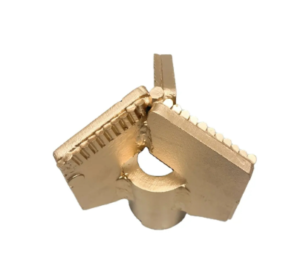
To achieve optimum drilling performance, one must categorize drill bits by their structural design, as each type interacts with the rock formation differently and possesses a distinct tolerance window for weight application. Misapplying weight to a specific bit type can lead to immediate operational failure.
Tricone button bits, which utilize spherical or chisel-shaped tungsten carbide inserts pressed into steel cones, are the primary choice for medium to extremely hard formations. The failure mechanism of rock under a TCI bit is purely compressive crushing. Therefore, these bits require the highest weight on bit of any design. For a standard TCI bit in medium formations, engineers typically recommend a weight window ranging from 2000 to 5000 pounds per inch of bit diameter. If you are running an eight-inch bit, this translates to a total applied weight of 16000 to 40000 pounds.
In extremely hard rock, the weight can sometimes be pushed toward the upper limit of the manufacturer’s specification, but this must be done with extreme caution. If the weight is too low, the tungsten carbide buttons will merely polish the rock surface, creating immense frictional heat that can degrade the silver soldering holding the inserts in place, causing them to fall out. If the weight is too high, the local stress on an individual button can exceed its structural strength, causing it to fracture catastrophically and drop sharp carbide debris into the hole, which will quickly destroy the remaining cones.
Steel tooth bits feature cutting structures that are machined directly out of the steel forged cones and are typically coated with a wear-resistant hard-facing material like tungsten carbide welding rod. These bits are designed specifically for soft to medium-soft formations, such as clays, poorly consolidated sandstones, and soft limestones. The cutting action of a steel tooth bit is a combination of gouging, scraping, and tearing, rather than pure crushing. Because the soft rock yields easily, these bits require significantly less weight on bit, typically falling within a window of 1000 to 3000 pounds per inch of bit diameter.
Applying too much weight to a steel tooth bit in a soft, sticky formation is a recipe for disaster. The excessive force will drive the long steel teeth completely into the formation, exceeding the volume capacity of the cones and causing the formation to pack tightly between the teeth. This condition, known as bit balling, stops the cones from rotating completely. Once the cones lock up, the bit acts as a solid steel wedge, scraping flat spots onto the teeth within minutes and reducing the rate of penetration to zero.
PDC bits represent a revolutionary leap in drilling technology and are increasingly being adopted in water well operations where long, continuous sections of uniform soft-to-medium formations are present. Unlike tricone bits, PDC bits have no moving parts or internal bearings; they consist of a solid matrix or steel body matrix armed with synthetic diamond cutters that shear the rock rather than crush it. Because shearing requires fundamentally less energy than crushing, PDC bits operate efficiently at much lower weights on bit, usually ranging from 500 to 2500 pounds per inch of bit diameter.
The operational window for a PDC bit is highly sensitive. The rate of penetration for a PDC bit can be extraordinarily high, but the operator must maintain rock contact with absolute stability. If a PDC bit is subjected to excessive weight, or if it suddenly transitions into a hard rock stringer with too much weight applied, the brittle diamond cutters can suffer immediate impact chipping. Once a few cutters are damaged, the structural balance of the bit is lost, leading to severe cutter thermal degradation and eventual destruction of the entire bit face.
+-----------------------------------------------------------------------+
|                       DRILL BIT WOB RESISTANCE                        |
+-----------------------------------------------------------------------+
|  [TCI Tricone]    =======================================> (Highest)  |
|  [Steel Tooth]    ======================> (Moderate)                  |
|  [PDC Matrix]     ============> (Low to Medium)                       |
|  [DTH Hammer]     ======> (Lowest Continuous Force)                   |
+-----------------------------------------------------------------------+
Finding the exact optimum weight on bit for a specific water well project involves a combination of theoretical math, manufacturer specifications, and empirical field testing. Operators should never guess the weight; instead, they should follow a structured engineering protocol to discover the perfect operational sweet spot.
Before the drill bit ever enters the borehole, the engineering team must consult the official technical data sheets provided by the manufacturer. These documents outline the absolute maximum mechanical limits of the bit based on its bearing design and cutter metallurgy. The manufacturer will typically list a maximum allowable weight on bit and a corresponding maximum RPM. It is vital to remember that these maximum limits are engineered for ideal laboratory conditions and should never be used as a starting point in the field. Instead, operators should establish an initial safety boundary, typically setting their starting weight at roughly fifty percent of the manufacturer’s maximum rated load, providing a safe baseline from which to begin exploration.
An often overlooked aspect of optimizing weight on bit is ensuring that the drilling rig’s hydraulic system can support the intended rate of penetration. Every pound of weight added to the bit increases the volume of rock cuttings generated per minute. The drilling pump must deliver a high enough flow rate to maintain an adequate annular velocity, which is the speed at which the drilling fluid travels back up the space between the drill pipe and the borehole wall. If the calculated annular velocity is too low to lift the heavy cuttings to the surface, increasing the weight on bit will only cause the cuttings to accumulate at the bottom of the hole, leading to mechanical binding and stuck pipe. Therefore, the maximum weight on bit must always be capped at a level where the generated cutting volume does not exceed the transport capacity of the hydraulic fluid.
The absolute best way to determine the optimum weight on bit in a specific formation is to perform an empirical field procedure known as a drill-off test. This test should be conducted every time the drilling assembly enters a new geological layer. To conduct a drill-off test, the operator first selects a constant rotational speed RPM that is appropriate for the formation. Next, the operator applies a high, yet safe, amount of weight on bit to the drilling assembly and then locks the brake on the drilling draw-works.
As the bit drills ahead, the drill string naturally stretches and relaxes, which causes the applied weight on bit to gradually decrease over time. The logger or driller carefully records the exact amount of time it takes for the weight to drop in precise increments, such as every two thousand pounds. By calculating the exact depth drilled during each weight increment, the operator can plot a graph comparing weight on bit against the actual rate of penetration.
Rate of
Penetration
  ^
  |               /---\  <-- Optimum WOB Sweet Spot
  |              /     \
  |             /       \
  |            /         \  <-- Over-extended / Bit Balling Zone
  |    /------/           \
  |   /
  +-----------------------------------> Weight on Bit (WOB)
As illustrated in the conceptual plot above, the resulting curve typically reveals a distinct profile. Initially, as weight increases, the rate of penetration climbs steadily. Eventually, the curve reaches a peak where further increases in weight yield diminishing returns, or cause the drilling speed to drop due to cutter overloading or poor hydraulic cleaning. The peak of this curve represents the true optimum weight on bit for that specific combination of bit design, rotational speed, and geological formation.
Once the optimum weight on bit has been established through a drill-off test, the driller cannot simply walk away from the controls. Formations are inherently non-homogeneous, meaning they contain unpredictable changes in hardness, fractures, and void spaces. The driller must continuously monitor surface gauges, paying close attention to hook load, torque, and standpipe pressure.
Modern water well rigs are frequently equipped with digital data loggers that display these metrics in real time. If the torque gauge suddenly begins to fluctuate violently while the weight on bit is held constant, it is a clear indicator that the bit has entered a fractured zone or a transitional formation boundary, requiring an immediate reduction in weight to protect the cutting structure from destructive impact shocks.
When the applied weight on bit deviates from the optimum zone, the entire drilling system will begin to experience mechanical dysfunctions. Recognizing these symptoms early can save an operator hundreds of thousands of dollars in equipment damage and lost operational time.
Bit balling is one of the most common issues encountered when drilling water wells through soft, clay-rich formations. The primary symptom of bit balling is a sudden, dramatic drop in the rate of penetration, often accompanied by a steady increase in standpipe mud pressure and a complete lack of cutting samples arriving at the shale shaker or discharge pit. This occurs because the excessive weight on bit has packed the sticky clay tightly into the fluid courses of the bit, completely blocking the nozzles and preventing the cones from rotating.
To mitigate bit balling, the operator must immediately lift the bit off the bottom of the hole and increase the pump stroke rate to its maximum safe limit to flush the bit face with high-velocity fluid. The operator should also spin the drill string at high RPM while off-bottom to use centrifugal force to throw the packed clay off the cones. Before resuming drilling, the weight on bit must be permanently reduced, and chemical additives like detergents or thinners should be introduced into the drilling fluid to alter the surface charge of the clay particles and prevent them from adhering to the steel components.
Applying an incorrect amount of weight on bit can trigger severe vibrational modes within the drill string that can quickly destroy both the bit and the surface rig equipment. The three primary types of vibration are axial bounce, torsional stick-slip, and lateral whirl. Axial bounce occurs predominantly when drilling hard rock with tricone bits; if the weight is insufficient to keep the bit seated, the cones will ride over the rock ridges, creating a violent jackhammer effect that can shatter bearings.
Stick-slip occurs when the bit cutters momentarily grab the rock and stop rotating, causing the drill pipe to wind up like a spring until it suddenly releases and spins at extreme speeds. This is highly common with PDC bits when excessive weight is applied in high-friction formations. To eliminate these vibrations, the operator must actively alter the drilling parameters. If stick-slip is detected, the standard protocol is to immediately reduce the weight on bit while simultaneously increasing the rotational speed, which helps break the cyclic sticking action and restores a smooth, harmonic balance to the entire mechanical system.

