Our Location
304 North Cardinal St.
Dorchester Center, MA 02124

304 North Cardinal St.
Dorchester Center, MA 02124

In the world of construction, demolition, renovation, and infrastructure development, water drill bits are among the most critical consumable tools on any job site. These diamond-impregnated or diamond-segmented cutting tools are designed to operate under wet conditions, which reduces dust, extends tool life, and delivers cleaner cuts in concrete, reinforced concrete, natural stone, ceramic tile, asphalt, and a wide range of other hard materials. However, the real challenge for manufacturers, distributors, and end users alike is not simply producing a good drill bit once. The real challenge is guaranteeing that every single water drill bit that leaves the factory, reaches the warehouse, and arrives at the job site performs exactly the same way as the one before it and the one after it. Quality consistency is the invisible backbone of trust in this industry. When a contractor picks up a bit and expects it to drill through three inches of reinforced concrete in under two minutes, that expectation must be met every single time without exception. If one bit in a box of ten underperforms, it does not just slow down one hole. It disrupts the entire workflow, delays the project, increases labor costs, and erodes confidence in the brand. This is why the topic of how we guarantee quality consistency of every single water drill bit is not a marketing talking point. It is a fundamental engineering and operational imperative that touches every stage of the product lifecycle, from raw material selection and diamond grit sourcing to the final inspection before packaging. In this comprehensive guide, we will walk through the entire quality assurance ecosystem that makes consistency possible. We will examine the leading brands and their most popular models, explore the manufacturing processes that eliminate variation, and break down the testing protocols that ensure no defective bit ever reaches the customer. Whether you are a procurement manager looking for a reliable supplier, a contractor who has been burned by inconsistent bits, or an engineer curious about what goes into making a truly consistent product, this article will give you the full picture.
Before we dive into the solutions, it is important to understand why consistency is so hard to achieve in the first place. A water drill bit is not a simple metal part that can be stamped out on a press and inspected with a caliper. It is a composite product that combines steel segments, a steel body, diamond grit, metal bond matrix, brazing alloys, and sometimes laser-welded or sintered connections between these materials. Each of these components has its own tolerances, its own sensitivity to temperature and pressure, and its own potential for variation. The diamond grit itself can vary in size, shape, concentration, and quality grade depending on the mine it comes from and the batch it was produced in. The steel segments can have slight differences in hardness or carbon content. The brazing process involves heating the entire assembly to over 800 degrees Celsius, and even a few seconds of temperature variation can change the bond strength. All of these variables stack on top of each other, and if any one of them drifts out of spec, the final product can underperform. This is why many low-cost manufacturers produce bits that are good on average but terrible in consistency. They might have a great sample bit that drills beautifully, but the tenth bit in the same box could be dull, unbalanced, or prone to segment loss. For professional users, this inconsistency is unacceptable. That is why the brands that have earned reputation in this space have invested heavily in process control, statistical quality management, and end-of-line testing. The goal is not just to make a good bit. The goal is to make every bit identical in performance to every other bit, batch after batch, year after year.
The first and most important step in guaranteeing quality consistency is controlling the raw materials. Every water drill bit starts with three core materials: steel for the body and segments, diamond grit for the cutting edge, and metal bond powder for holding the diamonds in place. Each of these materials must be sourced from approved suppliers and tested upon arrival at the factory. For steel, manufacturers specify exact chemical compositions. The body of a water drill bit is typically made from high-carbon spring steel or alloy steel that has been heat-treated to achieve a specific Rockwell hardness. The segments, which are the parts that actually do the cutting, are often made from a different steel grade that is optimized for wear resistance and brazeability. If the carbon content in the steel is even slightly off, the heat treatment will produce a different hardness, and the segment will either wear too fast or fail to cut effectively. Reputable brands like Bosch, Hilti, and MK Diamond require their steel suppliers to provide material certificates for every batch, and they perform incoming inspection using spectrometers and hardness testers before any material is released to the production line. For diamond grit, the control is even more critical. Natural diamonds and synthetic diamonds both come in a range of grit sizes, typically from 20 mesh to 60 mesh for water drill bits, with 30/35 mesh being the most common for general concrete drilling and 40/50 mesh for harder materials like granite or porcelain tile. The grit must be uniform in size and shape. If a batch contains a mix of sharp and rounded grains, the cutting performance will be inconsistent. Brands like Epiroc and Husqvarna work directly with diamond suppliers and often use proprietary grading systems to ensure that only grit that meets their exact specifications is used. The metal bond powder, which is typically a mixture of copper, tin, iron, and cobalt, must also be tightly controlled. The ratio of these elements determines how quickly the diamonds are exposed as the bit wears, which directly affects the cutting speed and the total life of the bit. If the bond is too hard, the diamonds will not be exposed fast enough and the bit will glaze over. If the bond is too soft, the diamonds will be pulled out too quickly and the bit will wear out prematurely. Every batch of bond powder is tested for particle size distribution and chemical composition before use. This level of raw material control is what separates premium brands from generic ones. It is also the reason why brands like Tyrolit and Norton, which have decades of experience in abrasive and diamond tool manufacturing, can guarantee consistency across millions of units produced every year.
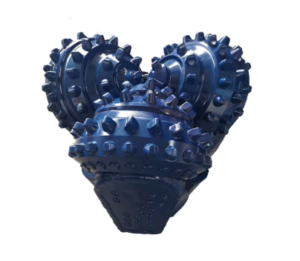
Once the raw materials are approved and released, the actual manufacturing process begins, and this is where the real science of consistency happens. The production of a water drill bit typically involves several key steps: steel body forming, segment preparation, diamond loading, brazing, and final finishing. Each step must be controlled with tight tolerances and monitored in real time. Let us break down how the leading brands handle each of these steps. For steel body forming, companies like Drilltech and EDiamondtools use CNC-controlled laser cutting or stamping machines that produce bodies with dimensional tolerances of plus or minus 0.1 millimeters. This is critical because if the body is not perfectly round or if the arbor hole is off-center, the bit will vibrate during drilling, leading to poor hole quality and premature wear. The segments are then prepared by laser cutting or EDM (electrical discharge machining) to the exact shape required for the specific bit model. For example, the Bosch ProCore series uses a proprietary segment design that is laser-cut to ensure consistent geometry across every unit. After the segments are cut, the diamond grit and bond powder are loaded into the segment pockets. This is one of the most variation-prone steps in the entire process. To control it, brands like Cedima and Husqvarna use automated dispensing systems that weigh the exact amount of diamond and bond powder for each segment. The weight tolerance is typically controlled to within plus or minus 0.01 grams. This ensures that every segment has the same diamond concentration and bond ratio, which directly translates to consistent cutting performance. The brazing step is where the segments are attached to the steel body. This is done in a controlled atmosphere furnace, typically using a silver-based or copper-based braze alloy. The temperature, dwell time, and cooling rate must all be precisely controlled. Bosch, for example, uses a continuous brazing furnace with multiple temperature zones, and each zone is monitored by thermocouples that feed data back to a central control system. If the temperature in any zone deviates by more than 5 degrees Celsius from the set point, the entire batch is flagged for rework. Hilti takes this even further by using vacuum brazing for some of their premium bits, which eliminates oxidation and produces a stronger, more consistent bond. After brazing, the bits go through a finishing process that includes grinding the cutting face to ensure it is perfectly flat, balancing the bit to minimize vibration, and laser marking each bit with its model number, size, and batch code. This traceability is essential for quality consistency because if a problem is ever found in the field, the manufacturer can trace it back to the exact batch, the exact furnace run, and even the exact raw material lot.
Bosch is one of the most recognized names in power tools and accessories worldwide, and their water drill bit lineup is among the most comprehensive in the industry. Bosch offers water drill bits for concrete, reinforced concrete, stone, tile, and asphalt, with diameters ranging from 6 millimeters to 450 millimeters. Some of their most popular models include the Bosch ProCore for Concrete series, which features a proprietary core design that delivers up to 4 times longer life compared to standard bits. The ProCore bit uses a segmented design with laser-welded connections that are stronger and more consistent than traditional brazed joints. Another popular model is the Bosch Best for Universal, which is designed for general-purpose drilling in concrete, brick, and natural stone. This bit uses a vacuum-brazed diamond segment that provides consistent cutting across a wide range of materials. For professionals who need to drill large-diameter holes, Bosch offers the Bosch Professional SDS-max Water Drill Bit series, which is designed for use with rotary hammer drills and can handle diameters up to 250 millimeters. The consistency of Bosch bits comes from their global manufacturing network, which includes factories in Germany, China, and Mexico, all operating under the same quality management system certified to ISO 9001 and ISO 14001. Every Bosch water drill bit goes through a final performance test on a standardized concrete block before it is packaged, ensuring that it meets the advertised drilling speed and life expectations.
Hilti is a Liechtenstein-based company that is widely regarded as one of the most premium brands in the construction tool industry. Their water drill bit range is targeted at professional contractors who demand the highest level of consistency and performance. Hilti offers several series, including the Hilti DD-BITec series, which is their flagship line for wet drilling in concrete and reinforced concrete. The DD-BITec bits use a unique dual-layer diamond technology where the cutting diamonds are embedded in two different bond layers, providing both fast cutting at the start and long life at the end. This dual-layer approach is one of the reasons why Hilti bits are known for their consistency throughout their entire life. Another popular model is the Hilti DD-CW diamond core bit, which is designed for cutting cured concrete and is available in diameters from 20 millimeters to 600 millimeters. Hilti also offers the DD-BITec Speed series, which is optimized for high-speed drilling in soft to medium concrete, and the DD-BITec Performer series, which is designed for hard concrete and abrasive aggregates. What sets Hilti apart in terms of consistency is their Hilti Quality Management System, which includes statistical process control (SPC) on every critical manufacturing parameter. They track the Cpk (process capability index) for each production parameter, and any parameter that falls below a Cpk of 1.33 triggers an automatic investigation and corrective action. This level of process control is what allows Hilti to guarantee that their bits will perform within a very narrow performance band, hole after hole, bit after bit.
MK Diamond is a US-based company that has been manufacturing diamond tools for over 40 years and is widely regarded as one of the most innovative brands in the water drill bit space. MK Diamond is particularly well known for their wet core drill bits used in concrete sawing and drilling applications. Some of their most popular models include the MK-115, which is a general-purpose wet drill bit for concrete and masonry, available in diameters from 14 millimeters to 152 millimeters. The MK-115 uses a vacuum-brazed segment design with high-quality natural diamonds that provide consistent cutting in both soft and hard concrete. Another standout model is the MK-315, which is designed for drilling in reinforced concrete and features a special segment geometry that reduces the risk of hitting and damaging rebar. For large-diameter applications, MK Diamond offers the MK-1600 series, which can handle diameters up to 600 millimeters and is used in bridge construction, tunnel boring, and large infrastructure projects. MK Diamond also produces the MKT series of thin-wall core bits, which are designed for cutting tight-radius curves and are popular in plumbing and electrical rough-in work. The consistency of MK Diamond bits is ensured through their proprietary diamond loading process, which uses a computer-controlled dispensing system that achieves a diamond concentration accuracy of plus or minus 2 percent. They also perform 100 percent end-of-line testing on every bit, drilling a standardized test hole in a certified concrete block and measuring the drilling time, bit wear, and hole quality. Any bit that does not meet the performance criteria is rejected and recycled.
Epiroc, which was spun off from Atlas Copco in 2018, is a Swedish engineering company that produces some of the most advanced drilling tools in the world. Their water drill bit range includes the Epiroc DTH (Down The Hole) bits for large-scale mining and construction, as well as the Epiroc CD series for concrete drilling. The CD series includes models like the CD-35, CD-50, and CD-75, which are designed for different concrete hardness levels. The CD-35 is optimized for soft to medium concrete, the CD-50 for medium to hard concrete, and the CD-75 for hard concrete with abrasive aggregates. Each model uses a specific diamond grit size and bond formulation that is matched to the target material, ensuring consistent performance. Epiroc also offers the T45 and T51 thread connection bits for use with their range of drilling rigs, which are popular in large infrastructure projects. What makes Epiroc stand out in terms of consistency is their use of digital twins and real-time monitoring in their manufacturing process. Each production line is equipped with sensors that collect data on temperature, pressure, speed, and material flow, and this data is fed into a digital twin model that predicts the quality of each bit before it is even finished. If the model predicts that a bit will fall outside the acceptable performance range, it is automatically diverted for rework. This predictive quality control is one of the most advanced systems in the industry and is a major reason why Epiroc bits are trusted on some of the most demanding job sites in the world.
Husqvarna is a Swedish brand that is best known for their outdoor power equipment, but their construction tools division, including their water drill bit range, is equally impressive. Husqvarna offers several series of water drill bits, including the Husqvarna DiaCut series for general concrete drilling, the Husqvarna DiaHard series for hard concrete and abrasive materials, and the Husqvarna DiaSpeed series for fast drilling in soft concrete. The DiaCut series is available in diameters from 6 millimeters to 600 millimeters and uses a vacuum-brazed segment design with high-quality synthetic diamonds. The DiaHard series uses a special tungsten carbide-tipped segment design that is optimized for drilling in granite, basalt, and other very hard materials. The DiaSpeed series uses a thin kerf design that reduces the amount of material that needs to be removed, resulting in faster drilling speeds and less water consumption. Husqvarna guarantees consistency through their Husqvarna Production System (HPS), which is based on lean manufacturing principles and includes visual management boards, standardized work instructions, and daily quality huddles on every production line. They also use a first-piece inspection process where the first bit produced in each shift is fully tested before production continues, ensuring that any drift in the process is caught immediately.
Beyond the major global brands, there are several other manufacturers that have built strong reputations for quality consistency in water drill bits. Drilltech is a Chinese manufacturer that has gained significant market share in recent years by offering high-quality bits at competitive prices. Their Drilltech DTC series uses laser-welded segments and premium natural diamonds, and they have invested heavily in automated production lines that reduce human error. EDiamondtools is another Chinese brand that specializes in diamond tools and has a strong presence in the North American market. Their ED-Pro series of water drill bits uses a proprietary sintering process that produces a very strong bond between the diamond and the metal matrix, resulting in bits that are both long-lasting and consistent. Tyrolit, an Austrian brand owned by Swarovski, is known for their precision-ground diamond tools and their water drill bits are used in some of the most demanding applications in Europe and Asia. Norton, an American brand owned by Saint-Gobain, has over a century of experience in abrasives and diamond tools and their water drill bits are known for their consistent performance in both wet and dry applications. Each of these brands has its own approach to quality consistency, but they all share a common commitment to raw material control, process automation, and end-of-line testing.
Even with the best raw materials and the most controlled manufacturing processes, there is always a risk that a bit will fall outside the acceptable performance range. This is why every reputable manufacturer has a final quality testing protocol that acts as the last gate before the bit is packaged and shipped. The most common test is the standardized concrete drilling test, where each bit is used to drill a hole of a specified diameter and depth in a certified concrete block of known hardness. The drilling time is measured, the bit wear is inspected, and the hole quality is evaluated for roundness, straightness, and surface finish. Bits that meet all criteria are approved and packaged. Bits that fail any criterion are rejected. Bosch, for example, tests 100 percent of their water drill bits in this way. Hilti tests a statistical sample from each batch but also performs 100 percent testing on their premium DD-BITec line. MK Diamond tests every single bit and also performs an additional balance test where each bit is spun on a mandrel and any vibration above a specified threshold results in rejection. Epiroc uses a combination of automated testing and human inspection, with a focus on detecting segment loss, uneven wear, and dimensional deviations. Husqvarna performs a water flow test on each bit to ensure that the internal water channels are clear and will deliver adequate cooling during use. These testing protocols are not optional extras. They are the final guarantee that every bit leaving the factory will perform consistently in the field.
Quality consistency is not a one-time achievement. It is an ongoing commitment that requires constant monitoring and improvement. The most advanced manufacturers use statistical process control (SPC) to track every critical parameter in their production process. SPC involves collecting data on key variables such as brazing temperature, diamond loading weight, segment dimensions, and drilling test results, and plotting this data on control charts. When the data stays within the control limits, the process is considered stable and consistent. When a data point falls outside the control limits, it signals that something has changed in the process and an investigation is triggered. This is how manufacturers catch problems before they become systemic. Bosch, Hilti, MK Diamond, and Epiroc all use SPC as a core part of their quality management systems. They also conduct regular audits of their suppliers to ensure that raw material quality remains consistent over time. In addition to SPC, these brands invest in continuous improvement programs such as Six Sigma and Kaizen, which encourage employees at every level to identify and eliminate sources of variation. For example, if a line operator notices that a particular brazing furnace is producing slightly more variation than usual, they can flag it immediately and the engineering team can investigate and correct the issue before it affects a large number of bits. This culture of continuous improvement is what allows these brands to maintain their quality consistency year after year, even as they scale production to meet growing global demand.
The last step in the quality consistency chain is packaging, labeling, and traceability. Every water drill bit that leaves a reputable factory is individually labeled with its model number, diameter, thread type, and batch code. This labeling serves two purposes. First, it allows the end user to quickly identify the correct bit for their application. Second, it enables full traceability back to the raw material lot, the production line, the shift, and even the individual operator who made the bit. If a customer ever reports a problem with a bit, the manufacturer can look up the batch code and pull up the complete production record for that bit, including the raw material certificates, the process data from the brazing furnace, and the results of the final drilling test. This level of traceability is a hallmark of premium brands and is one of the key reasons why professionals are willing to pay more for Bosch, Hilti, MK Diamond, and Epiroc bits compared to generic alternatives. The packaging itself is also designed to protect the bits during shipping and storage. Bits are typically placed in individual plastic sleeves or cardboard boxes with foam inserts to prevent damage. Some brands, like Hilti, use tamper-evident packaging to ensure that the bit has not been swapped or tampered with during distribution. All of these details may seem minor, but they are part of the overall system that guarantees quality consistency from the factory to the job site.
While manufacturers do the heavy lifting when it comes to quality consistency, end users also play a role in verifying that the bits they receive are truly consistent. Here are some practical tips. First, always buy from authorized distributors. Counterfeit and gray-market bits are one of the biggest threats to consistency because they are often made with inferior materials and without any quality control. Second, inspect each bit upon receipt. Look for uniform segment height, consistent diamond exposure, and no visible cracks or defects in the braze joints. Third, perform a simple field test by drilling a hole in a known material and measuring the drilling time. If the time is significantly different from what you expect based on the bit specifications, contact the manufacturer. Fourth, keep records of bit performance by model and batch code. Over time, this data will help you identify which brands and models deliver the most consistent performance on your specific jobs. Fifth, do not mix bits from different batches or different brands on the same job. Even small differences in diamond grit or bond formulation can affect performance, and mixing bits can lead to inconsistent results. By following these simple steps, contractors and procurement teams can ensure that the quality consistency promised by the manufacturer is actually delivered on the job site.
Looking ahead, the future of quality consistency in water drill bits is being shaped by three major technology trends: artificial intelligence, the Internet of Things, and predictive manufacturing. AI is already being used by brands like Epiroc and Bosch to analyze production data in real time and predict quality issues before they occur. Instead of waiting for a bit to fail a test, AI models can identify subtle patterns in the process data that indicate a drift in quality, allowing operators to make adjustments proactively. IoT sensors on production equipment are collecting more data than ever before, and this data is being used to build digital twins of the entire manufacturing process. These digital twins allow engineers to simulate changes in the process and predict their impact on quality before making any physical changes. Predictive manufacturing takes this a step further by using machine learning algorithms to optimize every parameter in real time, ensuring that each bit is produced at the optimal setting for maximum consistency. Some industry experts predict that within the next five to ten years, we will see fully autonomous production lines for water drill bits where human intervention is limited to raw material loading and final inspection, and every bit is produced and tested with zero variation. While this future is still emerging, the brands that are investing in these technologies today, including Bosch, Hilti, MK Diamond, and Epiroc, are already reaping the benefits in terms of improved consistency, reduced waste, and higher customer satisfaction.
In the end, quality consistency is not a feature that a water drill bit can have or not have. It is the product itself. When a contractor buys a water drill bit, they are not buying a piece of steel with diamonds on it. They are buying a promise that the bit will perform exactly as advertised, every single time, without surprise, without variation, without disappointment. That promise is kept through a rigorous system of raw material control, automated manufacturing, statistical process control, 100 percent end-of-line testing, and full traceability. The brands that have mastered this system, including Bosch, Hilti, MK Diamond, Epiroc, Husqvarna, Drilltech, EDiamondtools, Tyrolit, and Norton, have earned the trust of professionals around the world. And as the industry moves toward AI-driven predictive manufacturing and IoT-enabled real-time monitoring, the bar for consistency will only get higher. For anyone who uses water drill bits, the message is clear: do not just look at the specs. Look at the system behind the specs. That is where true quality consistency lives.

