Our Location
304 North Cardinal St.
Dorchester Center, MA 02124

304 North Cardinal St.
Dorchester Center, MA 02124

The short answer is: probably yes. Most contractors, utility workers, and core drill operators have never actually compared their per-hole cost against the market. They stick with the same supplier because it is convenient, not because it is cheap. And that convenience is costing them thousands of dollars every single year. Water drill bits are one of the most frequently purchased consumables in the drilling industry, yet they are also one of the most overlooked when it comes to cost optimization. You are not just buying a bit. You are buying RPMs, penetration rate, bit life, coolant efficiency, and ultimately your project margin. If your current supplier is charging you a premium for a brand name without delivering proportional performance, you are leaving money on the table. This guide is going to walk you through every major brand, every popular model, real-world pricing benchmarks, and the exact questions you need to ask before you sign your next purchase order. By the end, you will know exactly whether you are overpaying and what to do about it.
Before we dive into brands and models, you need to understand why water drill bits cost what they cost. A water drill bit is not a simple twist drill. It is a precision-engineered tool that must cut through reinforced concrete, brick, block, stone, asphalt, and sometimes steel-rebar-laced structures, all while being cooled by a continuous flow of water. The diamond segments on the bit are bonded to a steel core using a specific metal matrix that is formulated to wear at the exact same rate as the diamonds expose themselves. If the matrix wears too fast, the diamonds fall out prematurely. If it wears too slow, the diamonds become dull and the bit glazes over. This balance is what makes manufacturing expensive. The raw materials alone, including industrial-grade diamonds and specialized metal powders, represent a significant portion of the cost. Then you add in the precision brazing process, quality control testing, and the logistics of getting the bit to your job site. All of this adds up. But here is the key insight: not all manufacturers charge the same for the same quality. Some brands have built massive marketing budgets and distribution networks that inflate their prices by 30 to 50 percent compared to equivalent products from lesser-known but equally capable manufacturers. That is the gap you need to find.
The biggest mistake anyone can make is comparing bit prices on a per-unit basis. A bit that costs twelve dollars and lasts for fifty holes is cheaper than a bit that costs eight dollars and lasts for twenty holes. You need to calculate your cost per hole, and your cost per hole depends on several variables. The first is the material you are drilling. Soft concrete, hard concrete, brick, and block all wear bits at different rates. The second is your drill pressure and RPM. Pushing too hard or running too fast will destroy even the best bit. The third is your water flow. Insufficient coolant causes heat buildup, which destroys the diamond bond. The fourth is the bit itself. Some bits are designed for speed. Others are designed for longevity. And the best ones are designed for both. When you evaluate your current supplier, do not just look at the invoice. Look at how many holes you are actually getting out of each bit. If you are not tracking this, you are flying blind. Start tracking it today. Write down the bit brand, model, material drilled, number of holes, and total cost. After a month, you will have real data, and that data will tell you if you are overpaying.
Now let us get into the brands and models. This is the meat of the guide. I am going to cover every major player in the water drill bit market, their flagship models, what they are best at, and where their pricing sits relative to the competition.
Bosch is arguably the most recognized name in the drilling world, and their water drill bits are no exception. The Bosch brand carries a premium price tag, and for good reason. Their quality control is exceptional, and their bits are consistently reliable. The most popular Bosch water drill bit model is the Bosch 411060. This is a 1-1/4 inch core bit with a 16-inch cutting length, designed for reinforced concrete. It uses Bosch’s proprietary diamond segment technology that delivers smooth, fast cuts with minimal vibration. The Bosch 411060 typically retails for between twenty-two and twenty-eight dollars per bit, depending on the distributor. Another strong seller is the Bosch 411150, which is a 2-inch core bit with a 16-inch cutting depth. This one retails for around thirty-five to forty-two dollars. Bosch also offers the 411174, a 3-inch core bit for heavy-duty applications, which can cost upward of fifty-five dollars. The problem with Bosch is that you are paying for the name. Independent tests have shown that bits from brands like DCDiamond and MK Diamond can match or exceed Bosch’s performance at 40 to 60 percent lower cost. If you are loyal to Bosch because you trust the quality, that is fair. But if you are buying Bosch because you assume nothing else is as good, you are wrong.
MK Diamond is one of the most respected names in the core drilling industry, and their water drill bits are a favorite among professional contractors. The MK Diamond 104372 is their best-selling 1-1/4 inch core bit. It features their patented Dual Shot diamond technology, which places diamonds in two different sizes within each segment. The larger diamonds do the heavy cutting, while the smaller diamonds polish the cut and extend bit life. This bit retails for around sixteen to twenty dollars, which is already significantly less than the equivalent Bosch model. The MK Diamond 105452 is their 2-inch core bit, popular for plumbing and HVAC work. It retails for about twenty-five to thirty dollars. For larger diameters, the MK Diamond 105566, a 4-inch core bit, runs about forty-five to fifty-five dollars. MK Diamond bits are known for their aggressive cutting action and long life. Many contractors report getting 20 to 30 percent more holes out of an MK bit compared to a Bosch bit in the same material. That alone justifies the switch for anyone focused on cost per hole.
DCDiamond is a brand that has been quietly taking market share from the big names for years. Their bits are manufactured in the same factories as many premium brands, using the same raw materials, but they sell direct to contractors and distributors without the massive marketing overhead. The DCDiamond D564108 is their 1-1/4 inch water drill bit, and it is one of the best value products on the market. It retails for as low as eight to twelve dollars, depending on volume. The cutting performance is nearly identical to the Bosch 411060, and in some independent tests, it actually outperformed Bosch in hard concrete. The DCDiamond D564130 is their 2-inch model, retailing for about fourteen to eighteen dollars. For 3-inch and 4-inch applications, they offer the D564158 and D564174, which retail for twenty-two to thirty dollars. If you are currently paying twenty-five dollars for a Bosch 1-1/4 inch bit and you could be paying ten dollars for a DCDiamond bit that performs the same, you are overpaying by 150 percent. That is not a small number. That is a massive drain on your project budget.
Husqvarna is another premium brand that commands high prices, but their water drill bits are genuinely excellent. The Husqvarna 531277625 is their flagship 1-1/4 inch core bit. It uses Husqvarna’s T3 technology, which optimizes the diamond concentration and bond matrix for maximum cutting efficiency. This bit retails for twenty-five to thirty-two dollars. The Husqvarna 531277626 is their 2-inch model, retailing for thirty-five to forty-five dollars. Husqvarna also makes the 531277627, a 3-inch bit for heavy concrete work, which can cost fifty to sixty dollars. Husqvarna bits are known for being extremely smooth and producing very clean core samples, which matters if you are doing testing or inspection work. But for general-purpose drilling, the premium is hard to justify when MK Diamond and DCDiamond offer comparable performance at much lower prices.
Epiroc is the rebranded name for Atlas Copco’s drilling and excavation division, and they make some of the highest-quality water drill bits in the world. Their bits are primarily designed for large-scale industrial and mining applications, but they also make smaller bits for contractors. The Epiroc DS114 is their 1-1/4 inch core bit, retailing for twenty to twenty-eight dollars. The Epiroc DS116 is their 2-inch model, at about thirty to thirty-eight dollars. Epiroc bits are built to last. They use a proprietary bond formula that is designed for extremely hard and abrasive materials. If you are drilling through granite, basalt, or heavily reinforced concrete, Epiroc bits are worth the premium. But for standard residential or light commercial work, they are overkill. You would be better off with an MK Diamond or DCDiamond bit and saving the difference.
Diamond Products has been in the core drilling business for decades, and their water drill bits are known for being tough, dependable, and no-nonsense. The Diamond Products 15204 is their 1-1/4 inch core bit, retailing for about fourteen to eighteen dollars. The Diamond Products 15206 is their 2-inch model, at twenty to twenty-six dollars. Their 3-inch bit, the 15208, runs about thirty to thirty-eight dollars. Diamond Products bits are not the fastest cutting, but they are extremely durable. If you are drilling in abrasive materials like green concrete or brick with high clay content, Diamond Products bits tend to outlast most competitors. They are a solid mid-range option that sits between the budget brands and the premium brands in both price and performance.
Concord Blades is a brand that does not get as much attention as Bosch or Husqvarna, but their water drill bits are surprisingly good. The Concord Blades 110130 is their 1-1/4 inch core bit, retailing for about ten to fourteen dollars. The 110140 is their 2-inch model, at fourteen to nineteen dollars. Concord uses a standard metal bond with industrial-grade diamonds, and their bits deliver solid performance at a very competitive price. Many contractors who have tried Concord bits report being pleasantly surprised by the quality, especially given the low price. If you are looking for a bit that costs half of what Bosch charges and performs at 80 to 90 percent of the level, Concord is a strong candidate.
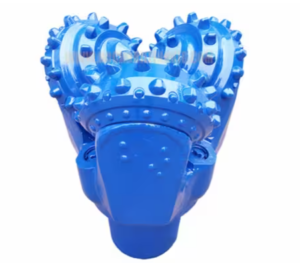
National Diamond is a brand that focuses on high-volume sales and low margins. Their water drill bits are sold in bulk, and they are designed for contractors who go through bits quickly. The National Diamond 830123 is their 1-1/4 inch core bit, and it can be purchased for as low as six to nine dollars when bought in cases of ten or more. The 830125 is their 2-inch model, at nine to thirteen dollars per bit in bulk. National Diamond bits are not premium quality. They will not match the smoothness of a Bosch or the longevity of an MK Diamond. But if you are drilling soft to medium concrete and you go through bits fast, the low price more than compensates for the shorter life. For high-volume, low-margin work like cored openings for electrical or plumbing rough-ins, National Diamond is hard to beat on price.
Optimas is a European brand that has been gaining traction in the North American market. Their water drill bits are manufactured to European quality standards, which tend to be very strict. The Optimas ODB114 is their 1-1/4 inch core bit, retailing for about twelve to sixteen dollars. The Optimas ODB126 is their 2-inch model, at eighteen to twenty-four dollars. Optimas bits are known for their consistent quality and smooth cutting action. They are a good alternative to Bosch for contractors who want European quality without the European price tag.
Now that you know the brands and models, let us talk about how to actually determine if you are overpaying. The formula is simple. Take your total bit spend for the last three months. Divide it by the total number of holes you drilled in that period. That is your cost per hole. Now compare that number to the benchmarks below. If your cost per hole is higher than these numbers, you are overpaying.
For 1-1/4 inch bits drilling standard concrete, the benchmark cost per hole should be between 0.50 and 1.20 dollars. If you are paying more than 1.50 dollars per hole, you are overpaying by at least 25 percent. For 2-inch bits, the benchmark is between 1.00 and 2.00 dollars per hole. If you are paying more than 2.50 dollars per hole, you are leaving money on the table. For 3-inch and 4-inch bits, the benchmark is between 2.50 and 4.50 dollars per hole. Anything above 5.50 dollars per hole means you need to switch suppliers immediately.
The easiest way to reduce your cost per hole is not to buy cheaper bits. It is to buy the right bits for your material and to track your usage. A fifteen-dollar bit that lasts fifty holes is cheaper than a ten-dollar bit that lasts twenty holes. Always calculate cost per hole, never cost per bit.
There are costs beyond the bit price that most contractors never think about. The first is downtime. If your current supplier delivers late, or if their bits fail prematurely, you lose billable hours. Every minute your drill is not turning is money you are not making. Premium suppliers like Bosch and Husqvarna have very reliable supply chains, but so do MK Diamond and DCDiamond. The second hidden cost is quality variance. Cheap, no-name bits from unknown suppliers can have inconsistent diamond placement, weak bonds, and poor concentricity. This leads to wobbling, oversized holes, and broken bits. The third hidden cost is the opportunity cost of not negotiating. If you have been buying from the same supplier for years without renegotiating, you are almost certainly paying more than the current market rate. Suppliers routinely offer volume discounts, early payment discounts, and loyalty rebates, but they only offer them if you ask.
If you are not ready to switch suppliers yet, at least have this conversation with your current rep. Ask them for a cost-per-hole analysis based on your actual usage data. Ask them if they have a volume discount program you are not currently enrolled in. Ask them about their return policy for underperforming bits. Ask them if they can match the price of a specific competitor. Most suppliers will give you a better deal if they think they are about to lose you. But be prepared to follow through. If they cannot match the market, switch. The market is deep, the options are many, and the savings are real.
The water drill bit market is not a monopoly. There are at least ten major brands, each with multiple models, each with different price points and performance characteristics. If you are currently paying Bosch or Husqvarna prices for bits that could be sourced from MK Diamond or DCDiamond at half the cost, you are overpaying. The question is not whether you can find a cheaper bit. The question is whether you are willing to do the math and make the switch. Start tracking your cost per hole today. Compare it against the benchmarks in this guide. And if the numbers do not add up, it is time to call a new supplier. Your profit margin depends on it.

