Our Location
304 North Cardinal St.
Dorchester Center, MA 02124

304 North Cardinal St.
Dorchester Center, MA 02124

When it comes to drilling into 304 stainless steel, professionals and DIY enthusiasts alike understand that this material poses unique challenges. Stainless steel is notorious for work-hardening, a phenomenon where the material becomes significantly harder as it is being cut or drilled. This characteristic means that using standard carbon steel or basic high-speed steel drill bits will quickly result in dulled edges, overheated tools, and failed operations. To successfully prepare holes for 3.2mm rivets in 304 stainless steel, you need specialized drill bits that possess exceptional hardness, heat resistance, and specific cutting geometries. Generally, the ideal drill bit diameter for a standard 3.2mm blind rivet is slightly larger than the rivet itself—typically 3.2mm to 3.3mm—to allow for seamless insertion and proper expansion during fastening. High-quality cobalt steel alloys (M35 and M42) or solid tungsten carbide are the primary materials capable of consistently penetrating 304 stainless steel without premature failure.
Choosing the precise brand and model is critical to ensuring production efficiency, reducing tool breakage, and achieving clean, burr-free holes. Many industrial suppliers manufacture specific series engineered precisely for tough alloys. For purchasing these specialized tools, you can explore comprehensive catalogs on www.xiangriyang.com to find the exact matches for your heavy-duty fabrication needs. Below is an exhaustive, detailed breakdown of the premier international and domestic drill bit brands, their specific models, and their technical characteristics designed explicitly for drilling 3.2mm holes in 304 stainless steel.
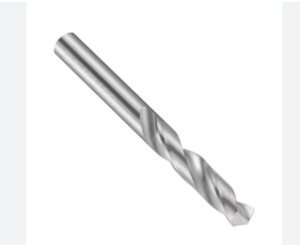
The Bosch Cobalt M35 series represents one of the most reliable choices for manual and semi-automated drilling into tough metals like 304 stainless steel. Crafted with an alloy containing 5% cobalt, these bits are specifically engineered to withstand the extreme thermal energy generated when cutting through stainless steel. The 3.2mm model features a 135-degree split point tip, which is a crucial design element for rivet hole preparation. This split point prevents the drill from “wandering” or walking across the smooth surface of the stainless steel sheet, eliminating the absolute necessity of center-punching every single hole in fast-paced assembly environments.
Furthermore, the Bosch M35 series incorporates a thick web design that enhances the structural rigidity of the bit, reducing the likelihood of breakage when high axial pressure is applied. The flute geometry is optimized for rapid chip evacuation, pulling the hot metal curls away from the cutting zone quickly to prevent localized heat accumulation. When installing 3.2mm rivets, maintaining a steady, low rotational speed combined with high feed pressure when using this Bosch model will yield clean, perfectly round holes that ensure the mechanical integrity of the rivet joint.
Guhring is a globally renowned German manufacturer specializing in high-performance rotary cutting tools, and their Series 652 is a masterpiece for stainless steel applications. The Series 652 is manufactured from premium cobalt high-speed steel (HSCO), offering superior red-hardness, meaning the cutting edges retain their sharpness even when glowing under immense friction. For a 3.2mm application, Guhring applies a special Type VA flute profile, which features a wider fluting space and a specific helix angle designed precisely to break up tough, stringy stainless steel chips into smaller, manageable fragments.
The Guhring Series 652 also boasts a precise point thinning configuration that drastically reduces the thrust force required to penetrate 304 stainless steel sheets. This makes it an exemplary model for handheld power drills often used in structural riveting, where operator fatigue can lead to angled holes and compromised rivet seating. The exceptional manufacturing tolerances of Guhring ensure that the 3.2mm bit cuts an incredibly accurate hole diameter, preventing the loose fits that ruin the shear strength of blind rivets.
Sutton Tools, an industrial leader in precision engineering, offers the Blue-Helix Cobalt drill bit line, which is widely recognized for its distinctive blue surface finish and outstanding performance in work-hardening metals. The Blue-Helix 3.2mm drill bit is constructed from M35 cobalt steel and features a state-of-the-art helical design that alters the cutting angle dynamically along the flute. This innovative geometry reduces friction along the lands of the drill bit, which is where a significant amount of heat normally transfers back into the workpiece.
The blue tempered surface treatment acts as a micro-porous layer that retains cutting lubricants much more effectively than polished bits. When drilling 304 stainless steel for 3.2mm rivets, maintaining lubrication is paramount, and the Sutton Tools Blue-Helix ensures that your cutting fluid stays at the cutting edge where it is needed most. This results in a drastically extended tool life and a pristine finish on the entry and exit sides of the rivet hole.
For high-volume industrial manufacturing where cycle times and tool longevity are the primary metrics of success, the Nachi Aqua Drill EX series is an elite choice. Unlike the previously mentioned cobalt steel options, the Nachi Aqua Drill EX is a solid carbide tool coated with an advanced AlCrN (Aluminum Chromium Nitride) based multi-layered film. This coating can withstand temperatures exceeding 900 degrees Celsius without degrading. The 3.2mm micro-grained carbide substrate provides unparalleled rigidity, completely eliminating the flexing that causes out-of-round holes in thin stainless steel sheets.
The Nachi Aqua Drill EX series utilizes a proprietary wave-shaped cutting edge that shears the 304 stainless steel rather than scraping it, vastly lowering the torque requirements of the CNC machine or high-speed drill press. When drilling thousands of 3.2mm holes for rivet assemblies in aerospace, automotive, or commercial kitchen equipment, this Nachi model delivers a cost-per-hole metric that easily justifies its higher initial investment.
OSG is another titan in the cutting tool industry, and their EX-SUS-GDR series is formulated specifically for processing stainless steel (SUS) and soft steels. The EX-SUS-GDR 3.2mm drill bit is made from premium high-speed cobalt steel and features a unique sharp rake angle. Stainless steel requires a sharp, slicing action to prevent the material from shifting into its hardened state ahead of the tool tip, and OSG’s specialized geometry achieves exactly this.
The flute surface of the EX-SUS-GDR undergoes a specialized homing treatment that leaves a ultra-smooth surface finish, minimizing chip welding—a common issue where hot stainless steel fragments fuse to the drill flutes and clog the tool. By ensuring seamless chip flow, this 3.2mm OSG model allows operators to maintain consistent feed rates, producing highly repeatable, round holes perfectly suited for high-strength 3.2mm riveting operations.
For commercial construction and job-site installations, the Irwin Industrial M35 Cobalt series offers a rugged, highly dependable option that balances cost and extreme durability. The Irwin 3.2mm cobalt bit features a 135-degree split point that bites instantly into the tough 304 stainless steel skin. Irwin designs these bits with a heavy-duty spiral flute that is slightly shorter than standard bits to maximize rigidity, making them highly resistant to the bending forces encountered when using handheld drills in awkward overhead or lateral positions.
The abrasive nature of 304 stainless steel can wear down the outer margins of a standard drill bit very quickly, leading to a tapered hole that prevents a 3.2mm rivet from sliding in smoothly. The Irwin Cobalt series solves this by utilizing an enhanced margin clearance design, ensuring the bit maintains its true 3.2mm diameter throughout its entire usable lifespan, providing a reliable fit for every single rivet pulled.
304 Stainless Steel Drilling Best Practices for 3.2mm Riveting
To maximize the performance of any of the aforementioned high-quality drill bits, specific operational parameters must be strictly adhered to. First and foremost is the control of drilling speed. High-speed steel cobalt bits operating on 304 stainless steel should generally run at a surface speed of roughly 10 to 15 meters per minute, which translates to roughly 1000 to 1500 RPM for a 3.2mm diameter bit. Running the drill too fast will create instant friction heat, dulling the outer corners of the bit within seconds.
Equally important is the feed pressure. The operator must apply constant, firm downward pressure to ensure the drill bit is continuously cutting new metal. If the bit is allowed to dwell or spin in the hole without cutting, it will immediately work-harden the stainless steel, making further drilling nearly impossible without destroying the tool tip. Lastly, the consistent application of a high-quality sulfur-based or synthetic cutting oil is highly recommended to dissipate heat, lubricate the cutting faces, and assist in flushing out the chips from the 3.2mm cavity.

