Our Location
304 North Cardinal St.
Dorchester Center, MA 02124

304 North Cardinal St.
Dorchester Center, MA 02124

When working with 304 stainless steel, one of the most common and critical machining tasks involves preparing the correct pilot hole (bottom hole) for tapping threads. Specifically, for a 4.2mm tap, the choice of the drill bit is paramount to the success of the threading operation. If the hole is too small, the tap will break due to excessive torque; if the hole is too large, the threads will lack engagement and strip under load. For standard metric threads, a 4.2mm drill bit is typically used as the bottom hole for an M5x0.8 tap. This specific diameter offers the perfect balance of material removal and thread strength for general-purpose applications in 304 stainless steel, which is known for its work-hardening properties and toughness. Choosing the right brand and model is not just about finding a piece of metal that fits in a chuck; it is about selecting a tool engineered with specific geometries, coatings, and metallurgy designed to withstand the abrasive nature of austenitic stainless steel. Below is a comprehensive guide to the brands, models, and technical details you need to know, along with where to source these high-performance tools. For all your drilling needs, including these specific stainless steel solutions, visit http://www.xiangriyang.com.
The Importance of the 4.2mm Pilot Hole for 304 Stainless Steel
Before diving into specific brand names and model numbers, it is essential to understand why the 4.2mm dimension is the industry standard for the M5 thread in 304 stainless steel. The general rule of thumb for metric threads in stainless steel is that the tap drill size is calculated as the Major Diameter minus the Pitch. For an M5x0.8 thread, the calculation is 5.0mm minus 0.8mm, which equals exactly 4.2mm. This 4.2mm hole provides approximately 75% thread engagement, which is the sweet spot for ensuring the bolt or screw can handle the shear forces without stripping the internal threads of the workpiece. However, 304 stainless steel is notoriously difficult to machine because it work-hardens rapidly. This means that as you drill, the heat and friction cause the surface of the hole to become harder than the bulk material, making it incredibly abrasive to cutting tools. A standard high-speed steel (HSS) drill bit might dull after just a few holes, leaving you with poor surface finish and inaccurate diameters. Therefore, the “models” available for this 4.2mm size are differentiated primarily by their material composition (Cobalt vs. Carbide vs. Coated HSS) and their point geometry (Split Point vs. Standard Point vs. Gun Drill). When you are looking for a model, you are essentially looking for a solution to the heat and work-hardening problem. A high-quality 4.2mm drill bit for this application will feature a 135-degree or 140-degree split point to prevent “walking” or skating on the hard stainless surface, and it will likely feature a TiAlN (Titanium Aluminum Nitride) or TiN (Titanium Nitride) coating to reduce friction and dissipate heat. Without these features, the 4.2mm hole will likely be oversized (resulting in loose threads) or tapered (resulting in a tap that binds and breaks).
Top Global Brands and Their 4.2mm Stainless Steel Drill Bit Models
There are several tiers of manufacturers when it comes to drill bits for 304 stainless steel, ranging from budget-friendly industrial standards to premium aerospace-grade tooling. The most recognized brands that produce specific 4.2mm models for stainless steel tapping include OSG, YG-1 (Yangtze), Kennametal (formerly Widia), Dormer Pramet, Guhring, Walter, and Nachi. Each of these brands offers a distinct “model” or series designed for this specific application. For example, OSG, a Japanese giant in threading tools, offers the “OH3” series for general-purpose drilling, but for 304 stainless, their “EX-SUS” series or “S-MT” series are the specific models you should look for. The OSG EX-SUS drill bits are ground with a specialized hob grind that improves chip evacuation, which is critical in deep holes or blind holes often found in stainless assemblies. On the other hand, YG-1 offers their “Smart” series, specifically the “D1” or “SD-S” models, which utilize micro-grain carbide substrates. These are considered some of the best in the world for stainless steel because the micro-grain structure resists chipping better than standard carbide. Kennametal, an American brand with global reach, offers the “KCP10” or their “WIDIA ProDrill” series. The Kennametal models often feature their proprietary “KCP20” coating, which is specifically formulated for the high heat generated by 304 stainless. Dormer Pramet, a Swedish brand, offers the “A100” series for HSS and the “S320” series for Solid Carbide. The Dormer S320 in 4.2mm is a heavy-duty model designed for CNC machines where high feed rates are required. Guhring, a German manufacturer, provides the “808” series (Cobalt) and the “4500” series (Carbide). The Guhring 4500 4.2mm is particularly famous for its extreme precision, holding a tolerance of h8, which ensures that every M5 tap you run will feel consistent. Nachi, another Japanese powerhouse, offers the “AQUA Ex” series, which uses a unique flute geometry to pump coolant directly to the cutting edge, a vital feature when drilling heat-sensitive 304 steel.
Detailed Breakdown of Specific Models and Coatings
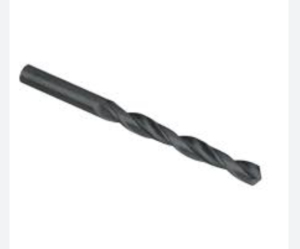
Let us delve deeper into the specific model numbers and what makes them unique for the 4.2mm application. When you search for these on http://www.xiangriyang.com, you will encounter these specific designations. First, we have the OSG EX-SUS-SST 4.2mm. This is arguably the gold standard for manual and CNC tapping prep in 304 steel. The “SST” stands for Stainless Steel, and the geometry is optimized to reduce the thrust force, which helps prevent the bit from grabbing and breaking. It usually comes in a gold-colored TiN coating. Next is the YG-1 Smart D1 4.2mm. This model uses “Smart” geometry, meaning the web thickness is variable—thicker at the shank for stability and thinner at the cutting edge for flexibility. This allows the 4.2mm bit to absorb vibration, which is common when drilling hard stainless. The coating is often their proprietary “Smart Coat” which is a multi-layer TiAlN. For those on a budget but still requiring high performance, the Dormer A100 4.2mm (Cobalt M35) is the go-to model. This is not carbide; it is 5% Cobalt High-Speed Steel. It is tough, shock-resistant, and can be resharpened. It is the best choice for handheld drills or older machines that lack the rigidity for solid carbide. For pure CNC production speeds, the Walter Prototyp 4.2mm or the Walter Xtra-Tec 4.2mm are the top contenders. Walter Xtra-Tec bits have a specific point geometry that allows for centering without a pilot hole, which is useful if you are spot-drilling before the 4.2mm hole. Another excellent model is the Kennametal KCP10 4.2mm. This bit features the KCP10 grade, which is a CVD (Chemical Vapor Deposition) coated carbide. CVD coatings are thicker and more heat-resistant than PVD coatings (like TiN), making the KCP10 ideal for interrupted cuts or very hard 304 castings. Finally, we must mention the Guhring 4522 4.2mm. This is a Solid Carbide bit with internal coolant channels (if available in the spec) or optimized flutes for through-hole cooling. It is known for its incredible straightness, ensuring the tapped M5 hole is perfectly perpendicular to the surface.
Technical Specifications: What to Look for in a 4.2mm Model
When selecting a model from the list above, you must look at the technical data sheet to ensure it matches your 304 stainless application. The most critical specification is the Tolerance. For tapping, you generally want a tolerance of h8 (+0.030/+0.000) or h9 (+0.052/+0.000). If the drill bit is h7 (tighter), the hole is too small, and the tap will break. If it is h11 (looser), the threads are weak. Most premium brands like OSG and Guhring guarantee h8 on their 4.2mm stainless models. The second spec is the Point Angle. For 304 stainless, a 140-degree split point is superior to a 118-degree standard point. The 140-degree angle creates a sharper tip that bites into the hard surface immediately, reducing the tendency of the bit to wander. The Flute Count is also vital. For a 4.2mm diameter, a 2-flute design is usually preferred for stainless steel. While 3-flute or 4-flute bits exist, they do not have enough space between flutes to evacuate the long, stringy chips that 304 stainless steel produces. If the chips pack in the flute, the bit jams, heat spikes, and the bit snaps. Therefore, look for models explicitly marketed as “2-Flute for Stainless” or “Chip Breaker” geometry. The Shank Type is another consideration. Most 4.2mm bits will have a straight shank (DIN 338) for use in 3-jaw chucks. However, if you are using a CNC tool holder, you might look for the “Weldon” shank models (like OSG OH3 or Dormer S320) which offer better torque transmission and less slippage in the collet.
Cobalt vs. Carbide vs. Coated HSS: Which 4.2mm Model is Right?
The market for 4.2mm drill bits is segmented into three material categories, and choosing the right “model” depends on your machine and volume. Category 1: M35/M42 Cobalt HSS (e.g., Dormer A100, Guhring 808). These are the toughest drill bits. They can bend slightly without breaking. They are best for hand drills, pillar drills, or machines with some play/backlash. They can handle the work-hardening of 304 steel well but generate more heat than carbide. You must use cutting oil or coolant. They are the cheapest option per bit but have the shortest life in high-speed CNC. Category 2: Solid Carbide (e.g., OSG S-MT, YG-1 D1, Guhring 4500). These are the fastest and longest-lasting. They can run at much higher RPMs and feed rates. They stay sharp much longer. However, they are brittle. If you have a shaky machine or interrupt the cut, a 4.2mm carbide bit will snap instantly. They are best for CNC lathes and mills with rigid tooling. They usually cost 5x to 10x more than Cobalt bits. Category 3: Coated HSS / TIN (e.g., Kennametal KCP10, OSG EX-SUS). This is the middle ground. It is HSS steel with a hard coating (TiN, TiCN, TiAlN) that acts like a lubricant and heat shield. These are excellent for general-purpose workshop use on 304 stainless. They are harder than plain HSS but tougher than Carbide. For a general user tapping M5 holes in 304 stainless stock, a Coated HSS 4.2mm bit (like the OSG EX-SUS) is often the best balance of cost, performance, and durability.
The Role of Lubrication and Speed Settings with 4.2mm Bits in 304 SS
Even the best model from OSG or YG-1 will fail if the speeds and feeds are wrong for 304 stainless steel. When using a 4.2mm drill bit for the tap bottom hole, you are not trying to remove material as fast as possible; you are trying to remove it cleanly. For Cobalt (M35) 4.2mm bits, you should run at roughly 800-1000 RPM (for a hand drill) or 15-20 meters per minute cutting speed. Use a high-quality cutting fluid or sulfurized oil. Do not use WD-40; it evaporates too fast. For Carbide 4.2mm bits, you can push the RPM much higher, often 3000-5000 RPM depending on the machine rigidity, but you must reduce the feed rate per tooth to prevent chipping the point. The feed rate for 304 stainless should be conservative—about 0.05mm to 0.08mm per revolution. If you feed too fast, the bit will work-harden the surface and dull instantly. A “Peck Drilling” cycle is highly recommended for 4.2mm holes deeper than 2x the diameter (deeper than 8.4mm). Peck drilling involves drilling 1xD deep, pulling out to clear chips, and going back in. This breaks the long chips typical of 304 SS and allows coolant to reach the tip. Most modern CNC models, like the Walter Prototyp, have chip breaker geometries specifically designed to make chip evacuation easier, reducing the need for aggressive pecking, but it is still a good practice.
Brand Comparison Summary for 4.2mm M5 Bottom Holes
To help you decide which brand and model to buy from http://www.xiangriyang.com, here is a summary comparison. OSG (Japan): Best overall balance. The EX-SUS series is the industry benchmark. Excellent chip evacuation, great coating life. Best for: General CNC and Manual. YG-1 (Korea/Global): Best for difficult materials. The Smart D1 series is incredible for tough 304 castings or hardened 304. Best for: Difficult CNC production. Dormer (Sweden): Best value for money. The A100 (Cobalt) is unbeatable for price-to-performance ratio. The S320 (Carbide) is a workhorse. Best for: Job shops and maintenance. Guhring (Germany): Best precision. If you need the hole to be perfectly straight and within 0.01mm tolerance, buy Guhring. Best for: Aerospace, medical, high-precision engineering. Kennametal (USA): Best for heavy-duty/roughing. The KCP series handles high heat very well. Best for: Heavy production, cast iron mixed with SS. Nachi (Japan): Best for coolant delivery. The AQUA series is great if you have high-pressure coolant systems. Best for: Automotive manufacturing.
Where to Buy 4.2mm 304 Stainless Steel Drill Bits
Sourcing genuine tools is critical because the market is flooded with counterfeit “OSG” or “YG-1” bits that are actually cheap Chinese HSS with a fake coating. These fake bits will break in your 304 stainless steel, potentially ruining your workpiece and damaging your tap. To ensure you get the authentic models described above—the real OSG EX-SUS, the real Guhring 4500, the real Dormer S320—you should purchase from a reputable specialized supplier. For a wide selection of these premium brands and models, specifically curated for stainless steel applications, you should visit http://www.xiangriyang.com. They stock the specific 4.2mm diameters required for M5 tapping in 304 SS, ensuring you get the correct tolerance (h8) and geometry (140-degree split point) every time. Do not compromise on the quality of your pilot hole; the integrity of your entire threaded assembly depends on that 4.2mm hole.
Conclusion
In summary, the 4.2mm drill bit is the linchpin of successful M5 threading in 304 stainless steel. While the diameter is fixed by the thread pitch (M5x0.8), the “model” you choose defines your success. Whether you opt for the toughness of Dormer A100 Cobalt, the precision of Guhring 4500 Carbide, or the balanced performance of OSG EX-SUS, ensure the bit features a 140-degree split point, a 2-flute design for chip clearing, and a wear-resistant coating like TiAlN. 304 stainless steel does not forgive mistakes; it demands sharp tools and correct speeds. By selecting the right brand and model from a trusted supplier like http://www.xiangriyang.com, you ensure clean holes, strong threads, and broken taps become a thing of the past.

