Our Location
304 North Cardinal St.
Dorchester Center, MA 02124

304 North Cardinal St.
Dorchester Center, MA 02124

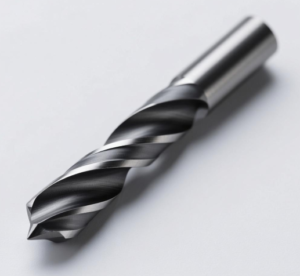
Tungsten carbide drill bits are essential tools in various industries, including oil and gas exploration, mining, and construction. Their high hardness, wear resistance, and ability to withstand high impact make them suitable for drilling through hard rock formations. This article provides an in – depth analysis of the cost of tungsten carbide drill bits per kilogram, along with an introduction to different brands and models.
The cost of tungsten carbide drill bits per kilogram can vary significantly depending on multiple factors such as the brand, model, grade of tungsten carbide, manufacturing process, and market demand. Generally, the price range is from around US35toUS55 per kilogram.
For instance, Zhuzhou Jinding Cemented Carbide Co., Ltd. offers tungsten carbide burrs at a price of US35.00perkilogramwithaminimumorderquantity(MOQ)of1kilogram.Ontheotherhand,ZhuZhouHongTongTungstenCarbideCo.,Ltd.listsitstungstencarbidebuttonsfordrillingataFOB(FreeonBoard)priceofUS50 – 55 per kilogram with an MOQ of 5 kilograms.
The cost differences are influenced by the quality of the raw materials used. High – quality, 100% virgin tungsten carbide material typically results in a higher – priced product. Additionally, the manufacturing process, including precision in shaping and heat treatment, can also impact the cost. Products that undergo more rigorous in – process and final inspections, such as ultrasonic testing to ensure no internal defects like pores, are likely to be priced higher due to the added quality control measures.
Brand Overview: ZhuZhou HongTong Tungsten Carbide Co., Ltd. is a high – tech joint – equity enterprise located at Liyu Industrial Park, Zhuzhou National High – tech Development Zone. It integrates R&D, production, and marketing of cemented carbide series products. The company has a well – established production and R&D base with an area of 7,000 square meters and a plant area of 4,000 square meters. It boasts a team of experienced technical personnel, including 5 engineers, 8 assistant engineers, and 29 staff with college degrees or above.
Models and Features:
Brand Overview: Zhuzhou Jinding Cemented Carbide Co., Ltd. is a manufacturer with 12 years of experience in producing all kinds of carbide products. It has a professional sales team and focuses on providing high – quality products at competitive prices.
Models and Features:
The quality of the tungsten carbide powder used as the raw material is a crucial factor. High – purity tungsten carbide powder with consistent particle size distribution results in better – performing drill bits. Virgin tungsten carbide, which has not been recycled, is generally of higher quality and more expensive than recycled material. Some manufacturers use a blend of virgin and recycled materials to balance cost and performance, but this can affect the overall quality and price of the final product.
The manufacturing process of tungsten carbide drill bits involves several steps, including powder mixing, pressing, sintering, and finishing. Advanced manufacturing techniques, such as precision pressing and high – temperature sintering under controlled atmospheres, can produce drill bits with better mechanical properties. For example, hot isostatic pressing (HIP) can eliminate internal porosity and improve the density and strength of the drill bits, but it also adds to the manufacturing cost.
Different grades of tungsten carbide are formulated to suit specific applications. Higher – grade tungsten carbide with higher hardness and transverse rupture strength is more expensive but offers better performance in hard rock drilling. Additionally, the design of the drill bit, including the shape of the cutting edges and the overall geometry, can affect its drilling efficiency and lifespan. Complex designs that require more precise manufacturing processes are likely to be priced higher.
The market demand for tungsten carbide drill bits can fluctuate depending on the activity levels in industries such as oil and gas exploration and mining. During periods of high demand, prices may increase due to limited supply or increased production costs. Conversely, when demand is low, manufacturers may offer discounts to stimulate sales, resulting in lower prices.
During the manufacturing process, in – process inspection is carried out at various stages. For example, after powder mixing, the homogeneity of the mixture is checked to ensure consistent properties throughout the batch. During pressing, the dimensions and density of the pressed blanks are measured to meet the specified requirements. Sintering is a critical stage where the blanks are heated to high temperatures to achieve the desired mechanical properties. In – process inspection during sintering includes monitoring the temperature and time to prevent over – sintering or under – sintering, which can affect the hardness and strength of the drill bits.
Final inspection is a comprehensive process that includes visual inspection, dimensional measurement, and non – destructive testing. Visual inspection is used to check for surface defects such as cracks, chips, or uneven finishes. Dimensional measurement ensures that the drill bits meet the specified size tolerances. Non – destructive testing methods, such as ultrasonic testing, are used to detect internal defects like pores or inclusions that may not be visible on the surface. Only drill bits that pass all the inspection criteria are shipped to customers.
With the continuous development of materials science and manufacturing technology, new grades of tungsten carbide with improved properties are expected to be developed. For example, nano – structured tungsten carbide may offer higher hardness and better wear resistance compared to traditional tungsten carbide. Additionally, advanced manufacturing techniques such as additive manufacturing (3D printing) may be used to produce drill bits with complex geometries more efficiently, reducing production costs and lead times.
The tungsten carbide drill bit industry is also likely to focus more on environmental and sustainability issues. Manufacturers may explore ways to reduce energy consumption during the manufacturing process and use more environmentally friendly raw materials. Recycling of used tungsten carbide drill bits will also become more important, as it can help conserve natural resources and reduce waste.
As customers’ requirements become more diverse, there will be an increasing demand for customized and personalized tungsten carbide drill bits. Manufacturers will need to invest in flexible manufacturing systems and advanced design software to meet these demands. Customized drill bits can be designed to suit specific rock formations, drilling conditions, and customer preferences, providing better performance and cost – effectiveness.
In conclusion, the cost of tungsten carbide drill bits per kilogram is influenced by multiple factors, including brand, model, grade, manufacturing process, and market conditions. Different brands such as ZhuZhou HongTong and Zhuzhou Jinding offer a variety of models with distinct features to meet different drilling requirements. Quality control and inspection play a crucial role in ensuring the performance and reliability of these drill bits. Looking ahead, technological advancements, environmental considerations, and customization trends are expected to shape the future of the tungsten carbide drill bit industry.

