Our Location
304 North Cardinal St.
Dorchester Center, MA 02124

304 North Cardinal St.
Dorchester Center, MA 02124

Choosing a high-quality multicone drill bit is essential for achieving accurate holes, consistent drilling performance, and long tool life. Whether you are working with stainless steel, aluminum, carbon steel, plastic, or other industrial materials, the quality of the drill bit directly affects machining efficiency, hole accuracy, and production costs.
However, not all multicone drill bits are manufactured to the same standards. Differences in raw materials, cutting-edge geometry, heat treatment, surface coating, manufacturing precision, and overall construction can significantly influence performance.
So, how can you identify a high-quality multicone drill bit before purchasing it? This guide explains the most important features to inspect and the practical tests you can use to evaluate drill bit quality.
The material used to manufacture a multicone drill bit is one of the most important factors determining its durability, hardness, and cutting performance.
High-quality drill bits are generally manufactured from carefully selected tool steels or carbide materials, depending on their intended applications.
Common materials include:
High-Speed Steel (HSS)
HSS multicone drill bits are widely used for general-purpose drilling. They offer a good balance of hardness, toughness, wear resistance, and affordability.
Cobalt High-Speed Steel (HSS-Co)
Cobalt-containing HSS grades, such as M35 and M42, provide improved hot hardness and wear resistance. They are particularly useful for drilling tougher metals, including stainless steel, when the cutting geometry and operating conditions are appropriate.
Solid Carbide
Carbide drill bits offer excellent hardness and wear resistance. They are suitable for demanding industrial applications, particularly when high dimensional accuracy and consistent cutting performance are required.
When evaluating a multicone drill bit, ask the manufacturer for its material grade and technical specifications. Avoid purchasing products based solely on general descriptions such as premium steel or industrial quality.
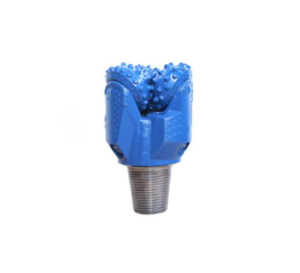
The cutting edges determine how efficiently a multicone drill bit removes material.
A high-quality product should have clean, sharp, and evenly manufactured cutting edges.
Look for the following characteristics:
Uniform cutting-edge geometry.
Smooth and consistent cutting surfaces.
No visible cracks or chipped edges.
No excessive burrs or manufacturing defects.
Consistent cutting angles across different steps.
Properly finished transitions between cutting sections.
Poorly manufactured cutting edges can cause excessive friction, irregular holes, vibration, and premature tool wear.
For industrial drilling, cutting-edge consistency is particularly important because even small manufacturing differences can affect hole diameter and surface quality.
One of the defining characteristics of a multicone drill bit is its multiple cutting sections, which allow different hole diameters to be produced progressively.
A high-quality multicone drill bit should have accurately manufactured cutting steps.
Important measurements include:
Step Diameter: Each cutting section should correspond to its specified diameter.
Step Height: The height and spacing of individual cutting sections should be consistent with the product design.
Concentricity: The cutting sections should remain properly aligned with the drill bit’s central axis.
Transition Geometry: The transitions between cutting steps should be smooth and accurately machined.
Poor dimensional accuracy can produce oversized holes, uneven cutting, and inconsistent results.
Before purchasing, check whether the manufacturer provides dimensional drawings, diameter tolerances, and product inspection specifications.
The surface finish can provide useful information about the manufacturing quality of a multicone drill bit.
A properly finished drill bit should have a consistent surface without obvious grinding marks, rust, peeling, or rough manufacturing defects.
Some industrial multicone drill bits also use specialized coatings to improve wear resistance and reduce friction.
Common coating options include:
TiN (Titanium Nitride): Provides increased surface hardness and wear resistance.
TiAlN (Titanium Aluminum Nitride): Offers good oxidation resistance and high-temperature performance.
AlTiN (Aluminum Titanium Nitride): Commonly used in demanding cutting applications.
Uncoated Finish: Can be suitable for certain applications, especially where coating is unnecessary or unsuitable.
It is important to remember that coating quality alone does not determine overall drill bit performance. The substrate material, cutting geometry, coating adhesion, and operating conditions must work together.
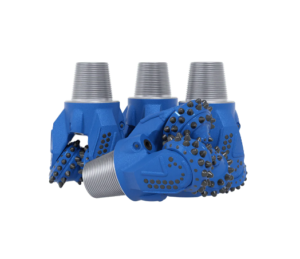
Heat treatment is a critical manufacturing process that determines the hardness and mechanical properties of a multicone drill bit.
A high-quality drill bit should have an appropriate hardness level for its material and intended application.
If the material is too soft, the cutting edges may wear quickly. If it is excessively hard without sufficient toughness, the cutting edges may become brittle and chip during operation.
Professional manufacturers use controlled heat-treatment processes to achieve a suitable balance between:
Surface hardness.
Core toughness.
Wear resistance.
Thermal stability.
Resistance to cutting-edge deformation.
For a more reliable evaluation, ask whether the manufacturer performs hardness testing and whether material inspection records are available.
A hardness tester can also be used to verify product consistency when purchasing larger quantities.
The shank is responsible for connecting the multicone drill bit to the drilling machine or tool holder.
A high-quality product should have a properly manufactured shank that fits securely into the corresponding chuck or holder.
Pay attention to:
Shank diameter accuracy.
Straightness and concentricity.
Surface finish.
Secure clamping compatibility.
Absence of cracks, deformation, or excessive wear.
A poorly manufactured shank can cause slipping, vibration, runout, and inaccurate drilling.
The overall construction should also be symmetrical and balanced to support stable rotation.
Manufacturing consistency is especially important for companies purchasing multicone drill bits in bulk.
Even if one sample performs well, the entire production batch should maintain similar dimensional accuracy and cutting performance.
Reliable manufacturers generally implement quality-control procedures covering:
Raw material inspection.
Cutting geometry verification.
Precision grinding.
Heat-treatment inspection.
Surface coating inspection.
Final dimensional measurement.
Finished-product testing.
If you are purchasing hundreds or thousands of drill bits, request samples before placing a large order.
Comparing several samples from the same batch can help identify manufacturing variations.
Visual inspection is useful, but actual drilling performance provides a more practical assessment of product quality.
Before approving a multicone drill bit for production, conduct a controlled drilling test.
Evaluate the following factors:
| Testing Factor | What to Look For |
|---|---|
| Cutting Efficiency | Smooth and consistent material removal |
| Hole Accuracy | Diameters match the specified dimensions |
| Surface Finish | Clean holes with minimal burrs |
| Vibration | Stable operation without excessive vibration |
| Heat Generation | Acceptable temperatures under suitable conditions |
| Tool Life | Consistent performance over repeated operations |
| Wear Resistance | Cutting edges retain their shape during use |
Use the recommended cutting speed, feed rate, and lubrication conditions for the specific material.
For example, drilling stainless steel generally requires more careful speed control and lubrication than drilling softer aluminum.
Do not evaluate drill bit quality using only drilling speed. Dimensional accuracy, edge condition, repeatability, and tool life are equally important.
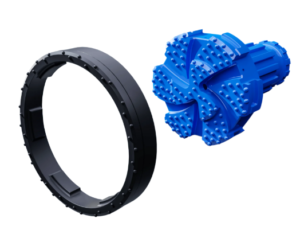
A professional manufacturer should be able to provide clear product information.
Before purchasing, request the following details:
Product material and grade.
Available diameters.
Number of cutting steps.
Overall length.
Shank diameter and type.
Cutting-edge geometry.
Surface treatment or coating.
Applicable workpiece materials.
Recommended cutting parameters.
Dimensional tolerances.
Quality inspection documentation.
Technical specifications make it easier to compare different suppliers and determine whether a particular multicone drill bit meets your production requirements.
Be cautious of suppliers who cannot provide basic material information or accurate product dimensions.
Price is another factor to consider, but the cheapest multicone drill bit is not necessarily the most economical choice.
A low-cost drill bit may have inconsistent dimensions, inferior raw materials, poor heat treatment, or shorter service life.
For industrial applications, it is better to calculate the total cost of using a drill bit rather than comparing the initial purchase price alone.
Consider:
Purchase cost per tool.
Number of holes produced.
Tool replacement frequency.
Machine downtime.
Hole quality and rejection rate.
Labor and maintenance costs.
A higher-quality multicone drill bit may cost more initially but provide better long-term value through improved productivity and reduced replacement frequency.
Knowing what to avoid is just as important as knowing what to look for.
The following warning signs may indicate poor manufacturing quality:
| Warning Sign | Possible Problem |
|---|---|
| Uneven cutting edges | Inconsistent grinding |
| Visible cracks | Material or heat-treatment defects |
| Incorrect step diameters | Poor dimensional control |
| Rough surface finish | Inadequate manufacturing process |
| Excessive runout | Poor concentricity |
| Coating peeling | Poor coating adhesion |
| Rapid edge wear | Inadequate material or heat treatment |
| Excessive vibration | Geometry or shank accuracy problems |
| Frequent burr formation | Unsuitable cutting geometry or operating conditions |
If several of these problems appear during inspection or testing, consider choosing another supplier.
Use this checklist when comparing products from different manufacturers.
| Inspection Item | Quality Requirement |
|---|---|
| Raw Material | Clearly specified material grade |
| Cutting Edges | Sharp, clean, and uniform |
| Step Accuracy | Accurate diameter and spacing |
| Concentricity | Consistent alignment |
| Surface Finish | Smooth and free from defects |
| Heat Treatment | Controlled and verified |
| Coating | Suitable for the intended application |
| Shank | Accurate dimensions and secure fit |
| Performance | Stable cutting and consistent holes |
| Quality Control | Inspection and testing records |
For bulk purchasing, it is recommended to request technical drawings, samples, and quality inspection reports before confirming the order.
The most important factors are material quality, cutting-edge geometry, dimensional accuracy, and manufacturing consistency. The best choice depends on the workpiece material and drilling requirements.
Cobalt HSS generally offers better hot hardness and wear resistance than standard HSS. It is often a better choice for demanding metalworking applications, particularly when drilling stainless steel.
However, standard HSS may be more economical for general-purpose drilling.
Use precision measuring instruments such as digital calipers, micrometers, and runout measuring equipment. Compare the measured dimensions with the manufacturer’s technical drawings.
No. Coatings can improve wear resistance and reduce friction, but performance also depends on the base material, cutting geometry, coating quality, and drilling conditions.
There is no universal service-life figure. Tool life depends on material hardness, cutting speed, feed rate, cooling, workpiece thickness, and operating conditions.
A high-quality product should provide consistent and predictable performance under its recommended working conditions.
Yes. Sample testing is one of the best ways to evaluate a supplier’s product quality. It allows you to verify dimensions, cutting performance, surface finish, and manufacturing consistency before making a larger investment.
Identifying a high-quality multicone drill bit requires more than looking at its appearance or comparing prices. You should evaluate its raw material, cutting-edge quality, step accuracy, heat treatment, surface finish, shank construction, and actual drilling performance.
For industrial buyers, manufacturers, distributors, and professional metalworking businesses, selecting a reliable supplier is equally important. Consistent manufacturing quality helps reduce tool replacement costs, improve drilling accuracy, and maintain stable production efficiency.
If you are looking for industrial drilling tools and precision drill bit solutions, visit Xiangriyang at www.xiangriyang.com.
Xiangriyang provides information about drilling tools, industrial drill bits, and machining-related products for customers seeking suitable solutions for different drilling applications.
Whether you are comparing drill bit materials, evaluating cutting geometries, selecting suitable dimensions, or sourcing drilling tools for industrial production, choosing the right specifications is essential.
Visit www.xiangriyang.com to explore drilling tool products and find solutions that match your machining requirements.
Choose the right multicone drill bit. Improve drilling precision. Increase production efficiency.

