Our Location
304 North Cardinal St.
Dorchester Center, MA 02124

304 North Cardinal St.
Dorchester Center, MA 02124

The global water well drilling industry has undergone a dramatic transformation over the past two decades, and at the center of that transformation sits China. As the world’s largest manufacturer of drill bits, mining tools, and related equipment, China has become the undisputed supply chain hub for water well drill bits of every size, material, and specification. For contractors, well drillers, water utility companies, and even individual homeowners who need to drill a water well, the question is no longer whether Chinese-made drill bits are good enough. The question is how much money you can actually save by cutting out the middleman and importing directly from Chinese factories. The answer, as this comprehensive guide will show, is substantial — often ranging from 40% to 70% compared to domestic or branded alternatives, depending on the bit type, size, quantity, and shipping method. This article will walk you through every aspect of that savings equation, from brand comparisons and model breakdowns to shipping logistics, quality considerations, and practical tips for placing your first direct import order.
China produces more than 70% of the world’s drill bits, and that is not an exaggeration. Cities like Zhuzhou in Hunan Province and Handan in Hebei Province are essentially the drill bit capitals of the planet. Zhuzhou, in particular, is home to companies like Zhuzhou Cemented Carbide Works, which has been producing tungsten carbide inserts and drill bit components since the 1950s. The reason China can offer such low prices is not because the quality is inferior — it is because of massive economies of scale, lower labor costs, integrated supply chains, and fierce domestic competition that drives prices down even further. When you buy a drill bit from a distributor in the United States or Europe, you are typically paying for the brand name, the warehousing, the local sales team, the markup at every level of the supply chain, and the shipping from China to the distributor’s warehouse. When you import directly, you eliminate all of those layers. You are buying factory-direct, which means the price you see on Alibaba, Made-in-China, or a direct factory quote is often the same price — or even lower — than what your local distributor paid to acquire the same product.
Let us break this down with concrete examples. A standard 8-inch PDC (Polycrystalline Diamond Compact) bit used for soft to medium formation water well drilling might retail for 800to1,200 through a Western distributor. The same bit, sourced directly from a factory in Zhuzhou or Handan, can be purchased for 250to450. That is a saving of 350to750 per bit, which translates to a 45% to 65% reduction in cost. For roller cone bits, the savings are similar. A 12-inch tricone roller cone bit that costs 1,500to2,500 from a brand like Sandvik or Epiroc might cost 400to700 from a Chinese OEM. The percentage saving here can reach 70%. Even for smaller bits used in residential well drilling, such as 4-inch or 6-inch PDC bits, the savings are significant. A 6-inch PDC bit that costs 300to500 domestically can be sourced from China for 80to150. If you are drilling multiple wells — which is common for contractors and water utility projects — these per-bit savings multiply rapidly. A project requiring 20 bits could save you 5,000to10,000 or more by importing directly. That is real money that stays in your business or your pocket.
Zhuzhou Jinyu is one of the most respected names in Chinese drill bit manufacturing. They specialize in tungsten carbide button bits and PDC bits for water well, mining, and geothermal drilling. Their flagship product line includes the JY-PDC series of PDC bits, which come in sizes from 3 inches to 16 inches. The JY-PDC-850 is their best-selling 8.5-inch PDC bit, designed for soft to medium sandstone and clay formations. It features 13mm PDC cutters arranged in a spiral pattern for efficient cuttings removal. Factory price ranges from 180to280 depending on the cutter grade. Their JY-TCI series of tricone roller cone bits includes the JY-TCI-1225, a 12.25-inch bit suitable for medium to hard formations, priced between 350and500 factory-direct. Zhuzhou Jinyu also offers OEM services, meaning you can have your own brand name printed on the bit if you are a distributor or contractor who wants to build a private label.
Hunan Taizhu is another heavyweight based in Zhuzhou. They are particularly strong in the roller cone bit segment. Their TZ-RC series includes the TZ-RC-960, a 9.625-inch tricone bit designed for water well drilling in mixed formations. This bit uses sealed bearing technology and tungsten carbide inserts for extended life. Factory price is approximately 200to320. Their TZ-PDC series includes the TZ-PDC-760, a 7.625-inch PDC bit with 16mm cutters, ideal for shallow water wells in soft soil. This model retails domestically for around 400butcanbesourcedfromTaizhufor120 to $180. They also produce core bits and reamers, which are essential accessories for water well completion.
Based in Handan, Hebei Province, Huawei Drill Bit has been manufacturing drill bits since the 1980s. They are known for producing high-quality roller cone bits at very competitive prices. Their HW-TCI series includes the HW-TCI-1187, a 11.875-inch tricone bit with steel tooth or tungsten carbide insert options. The carbide version costs 250to380 factory-direct, while the steel tooth version can be as low as 150.TheyalsomaketheHW−PDC−650,a6.5−inchPDCbitforresidentialwelldrilling,pricedat90 to $140. Huawei is a popular choice for African and Middle Eastern water well projects because of their aggressive pricing and willingness to accept smaller order quantities.
Eranda is a newer but rapidly growing brand that focuses on PDC bits for water well and geothermal applications. Their ER-PDC series includes the ER-PDC-950, a 9.5-inch PDC bit with a hybrid cutter layout that combines 13mm and 16mm cutters for balanced performance in mixed formations. This bit is priced at 220to340 from the factory. They also produce the ER-PDC-450, a 4.5-inch bit designed for small-diameter wells and monitoring wells, which is extremely hard to find from Western manufacturers at any price. Eranda offers this bit for 60to90, making it an excellent option for environmental consulting firms and government water projects.
This is a budget-friendly option that is popular among small contractors and DIY well drillers. Kaimeng produces basic PDC bits and roller cone bits in standard sizes from 4 inches to 12 inches. Their KM-PDC-650, a 6.5-inch PDC bit, can be purchased for as little as 50to80. The quality is not on par with Zhuzhou Jinyu or Eranda, but for shallow wells in soft soil, it works perfectly well. Their KM-TCI-1060 tricone bit is priced at 120to180 and is a solid choice for budget-conscious projects.
Prodrill is a more premium Chinese brand that competes directly with Western manufacturers in terms of quality. They export heavily to Europe, Australia, and North America. Their PD series of PDC bits includes the PD-850 and PD-1225, which are direct competitors to bits from Sandvik and Atlas Copco. The PD-850 costs 300to420 from the factory, compared to 900to1,200 for a comparable Western bit. Prodrill uses high-grade PDC cutters from Element Six (the same supplier used by many Western brands) and offers custom cutter layouts for specific formation conditions.
When drilling water wells in sand, clay, gravel, or soft limestone, PDC bits are the standard choice. The table below compares popular models from Chinese and Western manufacturers. A Western 8.5-inch PDC bit from a brand like Sandvik or NOV typically costs 900to1,300. The Chinese equivalent from Zhuzhou Jinyu (JY-PDC-850) costs 180to280. The Chinese equivalent from Eranda (ER-PDC-950) costs 220to340. The Chinese equivalent from Prodrill (PD-850) costs 300to420. Even the most expensive Chinese option is still 50% to 70% cheaper than the Western alternative, and in many cases, the performance is comparable or even superior because Chinese manufacturers have been iterating on PDC bit design very aggressively. The cutter technology used in Chinese PDC bits has improved dramatically, and many factories now use Element Six synthetic diamond cutters, which are the same grade used by premium Western brands.
For water wells that pass through hard rock, limestone, granite, or basalt, roller cone bits (either tricone or PDC-roller hybrid) are required. A 12.25-inch tricone bit from Epiroc or Sandvik costs 1,800to3,000. The Chinese equivalent from Handan Huawei (HW-TCI-1187) costs 250to380. The Chinese equivalent from Hunan Taizhu (TZ-RC-960) costs 200to320. The Chinese equivalent from Zhuzhou Jinyu (JY-TCI-1225) costs 350to500. Again, the savings are enormous. For hard formation drilling, the quality gap between Chinese and Western bits has narrowed significantly. Chinese factories now produce sealed bearing roller cone bits with IADC codes ranging from 117 to 537, covering everything from soft to extremely hard formations.
After the main hole is drilled, you need a core bit to retrieve a sample of the formation and a reamer to enlarge the hole to the final diameter for casing installation. A 6-inch core bit from a Western brand costs 400to700. The Chinese equivalent from Zhuzhou Jinyu or Eranda costs 80to150. A 10-inch reamer costs 500to900 from a Western supplier, but only 120to200 from a Chinese factory. These accessories are often overlooked in cost comparisons, but they represent significant savings when imported directly.
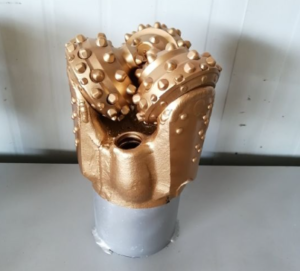
One of the most common concerns about importing drill bits from China is shipping. After all, drill bits are heavy, and international freight can be expensive. However, the math still works out heavily in your favor. A single 12-inch roller cone bit weighs approximately 30 to 50 kilograms. Shipping by sea freight (the most economical option) from a Chinese port to the West Coast of the United States costs approximately 1.50to3.00 per kilogram, depending on the shipping line and the volume of your order. For a 40-kilogram bit, sea freight would cost 60to120. Air freight is faster but more expensive, running 5to8 per kilogram, or 200to400 for the same bit. If you order 20 bits at once, you can fill a 20-foot container, and the per-bit shipping cost drops to 15to30 per bit. When you factor in shipping, your total cost for a bit that retails for 2,000domesticallymightbe400 (bit) plus 30(shipping)equals430. That is still an 80% saving. For smaller orders, express courier services like DHL or FedEx can ship a single bit in 5 to 7 days for 150to250, which is still far cheaper than buying domestically. The key is to plan your orders in batches and use sea freight whenever possible to minimize per-unit shipping costs.
The biggest objection to buying Chinese drill bits is quality. It is a fair concern, but it is also largely outdated. Chinese drill bit manufacturers have invested heavily in quality control over the past 15 years. Many of them hold ISO 9001 certifications, and several have API certifications for oil and gas drill bits, which is a higher standard than most water well bits require. To ensure quality when importing directly, follow these steps. First, always request a sample bit before placing a bulk order. Most Chinese factories will send you one or two sample bits for free or at a nominal cost. Second, ask for the IADC code (for roller cone bits) or the cutter grade specification (for PDC bits). These codes tell you exactly what the bit is designed for. Third, check the factory’s track record on Alibaba or Made-in-China. Look for factories with at least 5 years of export experience and a rating of 4.5 stars or higher. Fourth, consider using a third-party inspection service like SGS or TUV to inspect your goods before they ship from China. This service costs approximately 200to400 per inspection but gives you peace of mind. Finally, start with a small order. Buy 5 to 10 bits, test them in the field, and only then scale up to larger orders. This approach minimizes your risk while still capturing the majority of the savings.
While the savings are real, there are some costs you need to account for when importing directly. Customs duties in the United States for drill bits typically range from 2% to 5% depending on the HS code. For most water well drill bits, the HS code is 8207.13 or 8207.19, which carries a duty rate of approximately 3.9%. On a 400bit,thatisabout16 in duties. There may also be a customs brokerage fee of 50to150 per shipment. If you are importing by sea, you will need to arrange for port clearance and inland transportation from the port to your job site, which can cost 100to300 depending on distance. Some states also require you to register as an importer with U.S. Customs and Border Protection, which is free but requires some paperwork. When you add up all these hidden costs, they typically amount to 5% to 10% of the bit price, which is still a fraction of the 40% to 70% you are saving compared to domestic prices. The total landed cost (bit price plus shipping plus duties plus brokerage) is almost always 50% to 65% lower than the domestic retail price.
Direct importing from China is ideal for contractors who drill more than 5 wells per year, water well service companies, drilling supply distributors who want to build a private label, municipal water utilities, NGOs working on water projects in developing countries, and DIY homeowners who are drilling their own well and want to save money. It is less ideal for someone who needs one bit urgently and cannot wait 2 to 4 weeks for shipping. In that case, buying from a local distributor might be faster, but you will pay a significant premium. It is also less ideal for someone who has no experience evaluating drill bit specifications and cannot distinguish a good bit from a bad one. If you do not know what an IADC code means or how to select the right cutter layout for your formation, you should either learn the basics or work with a consultant who can help you choose the right Chinese model.
Step one is to identify your needs. Know the hole diameter, the formation type (soft, medium, hard), the depth, and whether you need PDC or roller cone bits. Step two is to search on Alibaba, Made-in-China, or Global Sources using keywords like water well drill bit, PDC drill bit, tricone roller cone bit, or water well drilling tools. Step three is to shortlist 3 to 5 factories based on their product range, certifications, years of experience, and customer reviews. Step four is to contact them and request a quotation. Be specific about the bit size, formation, quantity, and delivery terms (FOB, CIF, or DDP). Step five is to request samples. Step six is to test the samples in the field. Step seven is to place your bulk order and arrange payment through a secure method like a letter of credit or PayPal for small orders. Step eight is to track the shipment and arrange customs clearance. This process may seem daunting the first time, but once you have done it once, it becomes routine. Many contractors who started importing 5 years ago now save tens of thousands of dollars annually on drill bits alone.
The Chinese drill bit industry is not standing still. Factories are investing in new PDC cutter technologies, hybrid bit designs that combine roller cone and PDC elements, and even smart bits with embedded sensors that can transmit real-time drilling data to the surface. These innovations are being developed at a fraction of the cost of similar R&D in Western companies. As Chinese manufacturers continue to improve quality and expand their product lines, the price gap between Chinese and Western bits is likely to widen further, not narrow. For buyers, this means that the savings available today will only increase in the future. The window to start importing directly is wide open, and the financial incentive has never been stronger.
To answer the original question directly: you can save 40% to 70% on water well drill bits by importing directly from China, and even after accounting for shipping, duties, and brokerage fees, your total cost will be 50% to 65% lower than buying from a domestic distributor. For a typical water well drilling project that uses 10 to 15 bits, this translates to savings of 3,000to10,000 or more. The brands available — Zhuzhou Jinyu, Hunan Taizhu, Handan Huawei, Eranda, Prodrill, and Kaimeng — offer product quality that is competitive with Western brands like Sandvik, Epiroc, and NOV. The key is to start small, test samples, build a relationship with a reliable factory, and scale up as you gain confidence. The money you save is not hypothetical. It is real, it is substantial, and it is sitting in a factory in Zhuzhou or Handan waiting for you to claim it.

