Our Location
304 North Cardinal St.
Dorchester Center, MA 02124

304 North Cardinal St.
Dorchester Center, MA 02124

A multicone drill bit is designed to perform drilling operations with multiple cutting steps or conical cutting sections. It is widely used in metalworking, sheet metal fabrication, industrial manufacturing, and other applications where different hole diameters or stepped holes are required.
However, some users experience premature wear when using multicone drill bits. The cutting edges may become dull, the drill bit may overheat, the cutting performance may decrease, or the tool may even break after a relatively short period of operation.
Why does a multicone drill bit wear out quickly? In most cases, premature wear is caused by a combination of incorrect cutting parameters, unsuitable materials, poor cooling, improper operation, and inadequate tool quality.
Understanding these factors can help operators extend tool life, improve drilling accuracy, and reduce production costs.
One of the most common reasons why a multicone drill bit wears out quickly is excessive cutting speed.
When the rotational speed is too high, friction between the cutting edges and the workpiece increases. This generates excessive heat, which can gradually reduce the hardness and wear resistance of the cutting edges.
High temperatures can cause several problems:
Rapid cutting-edge wear.
Reduced hardness of the cutting material.
Increased friction during drilling.
Surface damage and discoloration.
Premature tool failure.
The appropriate rotational speed depends on the drill bit diameter, material, workpiece hardness, and machine performance.
For example, drilling stainless steel generally requires a lower cutting speed than drilling soft aluminum. Harder materials also require more careful control of cutting parameters.
How to prevent it:
Select the recommended cutting speed according to the workpiece material and drill bit specifications. Avoid operating the drill at excessively high RPM, especially when machining stainless steel and other difficult-to-cut metals.
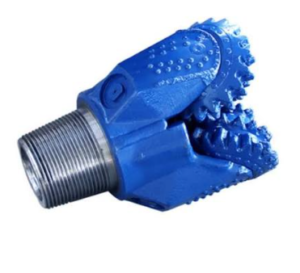
Heat is one of the biggest enemies of cutting tools.
During drilling, the cutting edges continuously contact the workpiece, creating friction and heat. Without sufficient cooling and lubrication, the cutting temperature can rise rapidly.
This can cause the multicone drill bit to lose its cutting performance much faster than expected.
Insufficient lubrication may also increase the friction between the tool and the workpiece, resulting in:
Accelerated cutting-edge wear.
Material adhesion on the cutting edges.
Built-up edge formation.
Poor hole surface quality.
Increased drilling resistance.
Stainless steel and other materials with poor thermal conductivity are particularly sensitive to heat accumulation.
How to prevent it:
Use an appropriate cutting fluid or lubricant for the material being drilled. Ensure that the coolant reaches the actual cutting area rather than simply spraying the outside of the workpiece.
For applications involving continuous drilling, maintain a consistent cooling supply throughout the operation.
The material of a multicone drill bit directly affects its hardness, toughness, heat resistance, and wear resistance.
Using an unsuitable material for a particular drilling application can significantly shorten tool life.
Common multicone drill bit materials include:
High-Speed Steel (HSS)
HSS multicone drill bits offer good toughness, flexibility, and general-purpose cutting performance. They are suitable for many conventional metalworking applications.
However, ordinary HSS may wear more quickly when drilling very hard materials or operating under high-temperature conditions.
Cobalt High-Speed Steel (HSS-Co)
Cobalt-containing high-speed steel offers improved hot hardness and heat resistance compared with conventional HSS.
It is a suitable choice for drilling stainless steel, alloy steel, and other difficult-to-machine materials.
Carbide
Carbide cutting tools provide excellent hardness, wear resistance, and high-temperature performance.
They are particularly useful for demanding industrial applications, although carbide is generally more brittle than HSS and requires stable machine conditions.
| Drill Bit Material | Main Advantages | Suitable Applications |
|---|---|---|
| HSS | Good toughness and versatility | Mild steel, aluminum, general drilling |
| HSS-Co | Better heat and wear resistance | Stainless steel, alloy steel |
| Carbide | High hardness and wear resistance | Hard materials, high-production machining |
How to prevent it:
Choose the drill bit material according to the hardness, thickness, and characteristics of the workpiece. Do not assume that one material is suitable for every drilling application.
Applying too much pressure during drilling is another important cause of premature tool wear.
Some operators believe that increasing feed pressure will improve drilling efficiency. However, excessive pressure can overload the cutting edges, especially when drilling hard metals.
This may result in:
Cutting-edge chipping.
Uneven wear across different cutting steps.
Increased vibration.
Tool deformation or breakage.
Poor dimensional accuracy.
Multicone drill bits have multiple cutting sections, and each section performs a different part of the cutting process. Excessive feed pressure can create uneven loads across these cutting sections.
How to prevent it:
Maintain a consistent and appropriate feed rate. Allow the cutting edges to remove material efficiently without forcing the drill bit into the workpiece.
If the machine begins vibrating or producing unusual noise, check the feed pressure, workpiece stability, and cutting parameters.
Not all multicone drill bits are designed for the same materials.
A drill bit intended for aluminum or mild steel may not perform well when used on hardened steel, stainless steel, or other high-strength materials.
The hardness and toughness of the workpiece determine how much cutting force and heat are generated during drilling.
For example:
Aluminum is relatively soft but may produce sticky chips.
Stainless steel can generate considerable heat and cause work hardening.
Carbon steel requires appropriate cutting speeds and tool materials.
Hardened steel requires specialized cutting tools and carefully controlled machining conditions.
Using an unsuitable multicone drill bit can cause rapid edge degradation and poor drilling results.
How to prevent it:
Check the manufacturer’s material recommendations before selecting a multicone drill bit. Consider the workpiece hardness, material thickness, and required hole dimensions.
For demanding materials, choose an appropriate HSS-Co or carbide cutting tool.
Chip evacuation is essential for maintaining stable drilling performance.
When metal chips accumulate around the cutting edges or inside the hole, they can increase friction and interfere with the cutting process.
This is particularly problematic when drilling deep holes or working with materials that produce long, continuous chips.
Poor chip removal can lead to:
Excessive heat buildup.
Scratches on the hole surface.
Repeated cutting of existing chips.
Increased cutting resistance.
Premature wear of the cutting edges.
Multicone drill bits may also experience uneven wear if chips become trapped between different cutting sections.
How to prevent it:
Use suitable chip-removal techniques and ensure that the drilling process allows chips to escape.
For deeper holes, consider controlled peck drilling where appropriate. Remove accumulated chips regularly and avoid allowing them to become trapped around the cutting edges.
The manufacturing quality of a multicone drill bit has a direct impact on its service life.
Low-quality drill bits may have inconsistent hardness, poor heat treatment, inaccurate cutting angles, or uneven cutting-edge geometry.
These defects can cause the tool to wear unevenly or lose its cutting ability after only a short period of use.
Important quality factors include:
Raw material quality.
Heat treatment consistency.
Cutting-edge sharpness.
Geometric accuracy.
Surface finish.
Concentricity and dimensional tolerance.
A high-quality multicone drill bit should have consistent cutting geometry and a properly manufactured cutting edge.
How to prevent it:
Purchase multicone drill bits from reliable manufacturers with consistent production standards.
Check the cutting-edge condition, dimensional accuracy, surface finish, and material specifications before use.
Although a lower-priced drill bit may reduce the initial purchasing cost, frequent replacement can increase the overall cost per drilled hole.
Incorrect alignment between the multicone drill bit and the workpiece can cause uneven cutting forces.
When the drill bit is not properly centered, some cutting edges may experience more pressure than others.
This creates uneven wear and can reduce drilling accuracy.
Common alignment problems include:
Incorrect tool installation.
Excessive spindle runout.
Loose tool holders.
Poor workpiece clamping.
Misalignment between the drill bit and drilling surface.
How to prevent it:
Ensure that the drill bit is securely installed and properly centered. Check the spindle and tool holder for excessive runout.
Secure the workpiece firmly before drilling to minimize movement and vibration.
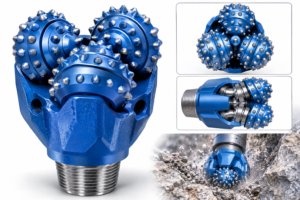
Vibration can significantly shorten the service life of a multicone drill bit.
When the machine, tool holder, or workpiece is unstable, the cutting edges may experience repeated impact loads instead of smooth and continuous cutting forces.
This can cause micro-chipping, uneven wear, and even sudden tool breakage.
Vibration may result from:
Insufficient workpiece clamping.
Worn machine bearings.
Incorrect rotational speed.
Poor tool alignment.
Excessive feed pressure.
An unsuitable machine setup.
How to prevent it:
Use a stable machine setup, secure the workpiece, and select suitable cutting parameters.
Inspect the spindle, chuck, and tool holder regularly. If unusual vibration occurs, stop the machine and identify the cause before continuing.
Even a high-quality multicone drill bit will wear out quickly if it is not properly maintained.
Metal chips, dirt, corrosion, and cutting-fluid residue can affect tool performance.
Improper storage can also damage the cutting edges before the next operation.
How to prevent it:
Follow these maintenance practices:
Clean the drill bit after each operation.
Remove metal chips and accumulated debris.
Inspect the cutting edges for chipping and dullness.
Store drill bits in a dry and organized environment.
Avoid allowing cutting edges to collide with other tools.
Replace severely worn or damaged drill bits.
Follow the manufacturer’s recommendations for regrinding, if applicable.
Regular inspection helps identify wear before it affects production quality.
Recognizing early signs of wear allows operators to replace or maintain a drill bit before serious machining problems occur.
The following table summarizes common warning signs and their possible causes.
| Wear Symptoms | Possible Causes | Recommended Actions |
|---|---|---|
| Dull cutting edges | Normal wear, excessive cutting speed | Inspect and replace or regrind |
| Blue or dark discoloration | Excessive heat | Improve cooling and reduce speed |
| Chipped cutting edges | Excessive feed, vibration | Check machine stability and feed |
| Poor hole surface | Dull edges, poor chip removal | Inspect cutting edges and clear chips |
| Increased drilling resistance | Tool wear, unsuitable material | Check tool condition and cutting parameters |
| Uneven wear | Misalignment, uneven loading | Check concentricity and installation |
It is important to distinguish normal gradual wear from sudden damage. A drill bit that becomes dull gradually may still be suitable for regrinding, while one with serious cracks or structural damage should generally be replaced.
Extending the service life of a multicone drill bit requires proper tool selection, correct machining parameters, and regular maintenance.
Here are several practical recommendations for industrial users.
1. Select the Correct Material
Choose HSS, HSS-Co, or carbide according to the workpiece material and machining requirements.
2. Use Appropriate Cutting Speeds
Avoid excessive RPM. Follow the manufacturer’s recommended cutting parameters.
3. Maintain Proper Lubrication
Use suitable cutting fluids to reduce friction and control cutting temperatures.
4. Control Feed Pressure
Apply consistent feed pressure and avoid forcing the drill bit into hard materials.
5. Improve Chip Evacuation
Prevent chips from accumulating around the cutting edges and inside the drilled hole.
6. Maintain Machine Stability
Check tool alignment, spindle runout, workpiece clamping, and machine condition.
7. Inspect Tools Regularly
Monitor cutting-edge sharpness and replace damaged tools before they affect machining quality.
8. Purchase from Reliable Manufacturers
Choose drill bits with consistent material quality, precise geometry, and reliable manufacturing processes.
Q1: How long should a multicone drill bit last?
The service life depends on the drill bit material, workpiece hardness, cutting speed, feed rate, cooling conditions, and operating environment. There is no universal service-life figure for every application.
Q2: Why does my multicone drill bit become dull after drilling only a few holes?
Possible causes include excessive cutting speed, insufficient lubrication, unsuitable tool material, excessive feed pressure, and poor manufacturing quality. Check these factors before continuing production.
Q3: Can overheating damage a multicone drill bit permanently?
Yes. Excessive heat can reduce the hardness of the cutting edges and accelerate wear. Severe overheating may cause permanent damage that cannot be corrected through ordinary sharpening.
Q4: Is HSS or carbide better for longer tool life?
Carbide generally provides higher hardness and wear resistance, particularly in stable, demanding machining conditions. However, HSS offers better toughness and may be more suitable for applications involving vibration or less rigid equipment.
Q5: Should I sharpen a worn multicone drill bit?
Some multicone drill bits can be reground, depending on their design, material, and remaining cutting-edge condition. Regrinding should preserve the original cutting geometry. Severely damaged tools should be replaced.
Q6: Does drilling stainless steel cause faster tool wear?
It can. Stainless steel often generates considerable heat and may undergo work hardening during machining. Using suitable cutting speeds, proper lubrication, and an appropriate HSS-Co or carbide tool can help reduce premature wear.
A multicone drill bit may wear out quickly for many reasons, including excessive cutting speed, insufficient cooling, incorrect feed pressure, unsuitable tool materials, poor chip evacuation, and machine vibration.
The key to extending tool life is to identify the actual cause of wear rather than simply replacing the drill bit repeatedly.
By selecting the right cutting material, optimizing machining parameters, maintaining adequate lubrication, and using high-quality tools, manufacturers can improve drilling efficiency, maintain hole accuracy, and reduce overall production costs.
Looking for reliable multicone drill bits for industrial drilling and metalworking applications?
Visit www.xiangriyang.com to explore drilling tools, industrial drill bits, and related machining solutions.
Xiangriyang focuses on providing practical drilling tool information and product solutions for industrial users, manufacturers, distributors, and professional buyers.
Whether you need multicone drill bits for stainless steel, aluminum, carbon steel, or other metalworking applications, selecting the right tool is essential for achieving stable cutting performance and longer service life.
Contact Xiangriyang to learn more about suitable drill bit specifications, materials, dimensions, and industrial drilling applications.

