Our Location
304 North Cardinal St.
Dorchester Center, MA 02124

304 North Cardinal St.
Dorchester Center, MA 02124

Drilling into stainless steel is notoriously challenging, particularly when you are constrained by a cordless drill that suffers from low rotational speeds or limited torque. Stainless steel is an alloy known for its exceptional strength, corrosion resistance, and work-hardening properties. When a drill bit attempts to penetrate stainless steel without sufficient speed, pressure, or the correct metallurgy, the friction generates intense heat. This heat triggers a chemical and physical reaction within the stainless steel, causing it to harden instantly at the point of contact. Once work-hardening occurs, standard drill bits will simply spin uselessly on the surface, dulling the cutting edges within seconds and rendering the tool ineffective. Understanding the exact relationship between material hardness, drill motor efficiency, and cutter geometry is essential for successfully completing any fabrication or repair job involving this stubborn material.
To overcome the inherent limitations of a low-speed cordless drill, the burden of performance shifts entirely to the drill bit itself. A standard high-speed steel (HSS) bit, which might excel when drilling through wood, plastics, or mild structural steels, will rapidly fail against grades like 304 or 316 stainless steel. The low speed of a cordless drill can actually be an advantage because stainless steel requires a slow, steady peripheral cutting speed paired with high downward pressure to prevent work-hardening. However, if the drill lacks the mechanical torque to maintain that slow rotation under heavy loads, the bit will stall or slip. Therefore, selecting highly specialized drill bits engineered with advanced alloys like Cobalt or solid Carbide, featuring optimized split-point geometries, is the definitive solution to cutting through stainless steel cleanly without burning out your power tools.
Stainless steel possesses high tensile strength and high ductility, which means it resists shearing and requires significant mechanical force to form a chip. When a drill bit presses into the metal, it must plastically deform the material until it shears away as a curl or chip. If the drill bit is dull or made of an inferior substrate, it will rub against the surface instead of cutting. This rubbing action generates localized temperatures that can easily exceed several hundred degrees. For stainless steel, these elevated temperatures accelerate the alignment of its crystalline structure, making the immediate area significantly harder than the surrounding base metal. If your cordless drill is running at a low speed but lacks the torque to force the bit to bite deeply, you are essentially generating pure friction without any material removal, creating an impenetrable glazed surface.
To counteract this phenomenon, industrial drill bits rely on specific material compositions and geometries designed to slice through the metal before heat can accumulate. Cobalt drill bits, typically designated as M35 (5% Cobalt) or M42 (8% Cobalt), are explicitly engineered for high heat resistance. The addition of cobalt to the high-speed steel matrix increases the red-hardness of the tool, allowing it to maintain its sharp cutting edges even when glowing under intense thermal stress. Additionally, the geometry of the tip plays a massive role. A standard 118-degree point angle tends to wander on hard surfaces and requires a center punch guide. In contrast, a 135-degree split-point angle is much flatter, allowing it to engage more surface area immediately, preventing wandering, and cutting into the stainless steel with significantly reduced thrust force from the user.
When dealing with a low-speed cordless drill that is struggling, you must upgrade your drill bit material to either Cobalt or Solid Carbide. M35 Cobalt bits represent the ideal sweet spot for hand-held cordless operations. They offer an optimal balance of hardness and toughness. Because handheld drilling inherently involves slight vibrations and angular misalignment, a drill bit must possess enough elasticity to bend slightly without snapping. M35 bits provide this exact resilience while offering the necessary thermal protection to endure the abrasiveness of stainless steel. M42 Cobalt bits provide even higher heat resistance and are harder than M35, making them exceptional for thick industrial stainless plates, though they require a steady hand to avoid fracturing due to their increased brittleness.
Solid Carbide and Carbide-Tipped drill bits occupy the highest echelon of cutting performance but come with strict operational caveats. Carbide is incredibly hard and can cut through hardened stainless steel as if it were soft aluminum, maintaining its sharp edge indefinitely under correct conditions. However, carbide is extremely brittle. If you use a solid carbide bit in a handheld cordless drill and your hand shakes or tilts even slightly, the bit will instantly shatter. Therefore, while carbide-tipped bits or specialized multi-purpose carbide bits are highly effective at low speeds, they are best reserved for situations where the cordless drill can be mounted in a mobile drill guide press, or when the user has immense stability and can guarantee perfectly perpendicular penetration throughout the drilling cycle.
Bosch is a global titan in the power tool accessory industry, and their line of M35 Cobalt drill bits is specifically engineered to handle tough metal drilling applications like stainless steel. The Bosch CO14B and CO21 series feature a premium formulation of high-speed steel with a precisely calibrated 5% cobalt alloy addition. This specific metallurgical composition allows the bits to withstand temperatures up to 1100 degrees Fahrenheit without losing their structural integrity or edge sharpness. For a user operating a low-speed cordless drill, the Bosch Cobalt series is incredibly forgiving because it integrates a highly engineered thick core web design. This increased web thickness strengthens the backbone of the bit, reducing the risk of breakage when applying the heavy, consistent downward pressure necessary to force a low-speed drill to bite into work-hardened stainless steel.
Furthermore, the Bosch Cobalt bits are equipped with a 135-degree split-point tip that eliminates the need for a pilot hole or center punch in many everyday scenarios. The split-point design features extra cutting edges along the chisel point, allowing the bit to start cutting the moment it touches the stainless steel surface. This immediate engagement is vital for low-speed cordless drills because it prevents the bit from skating across the metal, which would otherwise create friction and cause instant surface hardening. The flutes of the Bosch CO series are ground with an optimized helix angle that ensures rapid chip evacuation. When drilling stainless steel, removing hot metal chips from the hole as fast as possible is critical to preventing heat from transferring back into the drill bit tip, thereby extending the tool’s lifespan significantly.
Dewalt is renowned for producing rugged, jobsite-tested accessories, and their heavy-duty Cobalt drill bits are tailored precisely for industrial metalworking challenges. The Dewalt DD5112 (and the comprehensive DD5132 set) utilize an industrial-grade M35 cobalt formulation designed for maximum speed and durability in hard metals. What sets Dewalt apart for users dealing with a low-speed, struggling cordless drill is their proprietary Pilot Point or split-point tip geometry. This unique tip design features a smaller, stepped pilot tip at the very apex of the bit that drills a tiny guide hole ahead of the main cutting shoulders. This drastically reduces the initial torque required from your cordless drill, allowing a low-power or low-speed tool to progressively widen the hole without stalling out or binding mid-cut.
The Dewalt Cobalt series also incorporates a fractional sizing design with a heavy-duty tapered web that provides maximum durability and resistance against torsional shearing. When a cordless drill operates at low speeds under high pressure, the torque resistance can cause standard bits to twist apart and snap. Dewalt solves this by making the core of the bit thicker toward the shank, ensuring that the mechanical energy from the drill chuck is efficiently transferred directly to the cutting tip. The flats on the shank of the drill bit prevent it from slipping inside the three-jaw chuck of your cordless drill, which is a common failure point when trying to drill through tough stainless steel grades. This ensures consistent rotational power transmission even under maximum load conditions.
Irwin Industrial Tools has a rich history of manufacturing high-performance cutting tools, and their Hanson Cobalt M35 series remains a staple for machinists and fabricators who face stubborn stainless steel alloys. Built from premium high-speed steel infused with 5% cobalt, these bits are specifically tailored for drilling abrasive, high-tensile materials where standard bits fail. The Irwin Hanson series utilizes a traditional heavy-duty 135-degree split-point profile that reduces the required feed pressure, making it much easier for an operator to force penetration when using a lightweight or low-voltage cordless drill. By distributing the cutting forces evenly across the twin cutting lips, the Irwin bits minimize vibration and ensure a rounder, cleaner hole geometry.
The engineering focus of the Irwin Hanson Cobalt bits lies heavily on their precision-ground flutes. These wide, smooth flutes are designed to pull long, continuous ribbons of stainless steel out of the cutting zone efficiently. In low-speed drilling operations, chips tend to clog more easily because there is less centrifugal force to throw them clear of the workpiece. Irwin addresses this by polishing the internal flute surfaces to a mirror-like finish, reducing friction as the chip travels upward. This keeps both the workpiece and the drill bit much cooler, preventing the structural degradation of the bit’s cutting edge and ensuring that your cordless drill can maintain its steady, slow rotation without encountering excessive mechanical resistance from packed debris.
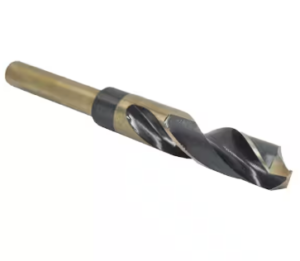
Milwaukee Tool has revolutionized the cordless accessory market with its Red Helix line of Cobalt drill bits, which are explicitly optimized for cordless impact drivers and drills. The Milwaukee 48-89-2331 series features an M35 cobalt construction combined with an aggressive, variable helix flute design. This Red Helix geometry features an aggressive 35-degree helix angle that changes along the length of the flute, which is mathematically engineered to evacuate material at a much faster rate than conventional uniform-helix bits. For a low-speed cordless drill, this rapid chip removal is an immense benefit because it limits heat buildup within the hole, ensuring that the stainless steel remains malleable enough for the bit to keep cutting.
Another breakthrough feature of the Milwaukee Red Helix Cobalt bits is their Quad Edge tip profile. This design incorporates a 135-degree split point with four distinct cutting edges, which breaks the metal chips into smaller, manageable fragments rather than long, dangerous spiral ribbons. This significantly lowers the mechanical drag on the drill bit, allowing your low-speed cordless drill to maximize its available battery power and torque. Furthermore, smaller chips mean less friction against the walls of the hole, preserving the structural life of the drill bit’s outer margins. Milwaukee also equips these bits with a 3-Flat Secure-Grip shank, ensuring an absolute mechanical lock inside the drill chuck, completely eliminating shank slippage during heavy, high-pressure drilling operations on stainless plates.
| Brand and Series | Material Composition | Tip Geometry | Key Feature for Low-Speed Drills | Primary Application |
| Bosch CO14B / CO21 | M35 Cobalt (5% Cobalt) | 135° Split Point | Thick core web resists breakage under high pressure | General stainless sheet and plate fabrication |
| Dewalt DD5112 / DD5132 | M35 Cobalt (5% Cobalt) | Pilot Point / Split Point | Stepped tip reduces required initial motor torque | Deep hole drilling and hard structural metals |
| Irwin Hanson 3018002 | M35 Cobalt (5% Cobalt) | 135° Split Point | Polished flutes prevent chip clogging at low speeds | Precision industrial machining and maintenance |
| Milwaukee Red Helix | M35 Cobalt (5% Cobalt) | Quad Edge 135° Split | Variable helix evacuations maximize battery efficiency | Heavy-duty cordless field work and fast cutting |
To successfully drill through stainless steel using a low-speed cordless drill and your newly acquired cobalt bit, you must follow a rigid procedural framework. First, set your cordless drill to its mechanical low-speed gear setting (typically Gear 1 on most multi-speed drills). Gear 1 alters the internal planetary gear ratios to sacrifice high RPMs in exchange for maximum rotational torque. This is exactly what you want; a high RPM setting will merely burn the tip of the bit instantly against stainless steel. Once the drill is properly geared, apply a high-quality cutting fluid or specialized drilling paste directly to the target area. Lubrication is non-negotiable when working with stainless steel because it minimizes the frictional heat generation that causes work-hardening, while simultaneously washing away fine metallic particles.
Next, place the drill tip perpendicular to the metal surface and apply substantial, steady downward force before pulling the trigger. You must use your body weight to force the cutting edges to bite into the metal immediately. Once you pull the trigger, keep the drill running at a slow, continuous pace. You should visually verify that the drill is producing actual metal shavings or curls. If you see fine powder or smoke without any chips, stop immediately, reapply cutting fluid, and increase your downward pressure. Do not pulse or feather the trigger, as intermittently removing pressure allows the bit to rub against the metal, inducing work-hardening within a fraction of a second. Maintain a constant feed rate until the bit breaks through the backside of the material, backing off the downward pressure slightly at the very end to prevent the bit from binding and stalling the drill motor as it exits.
Purchase Notice: Looking for professional-grade metalworking tools and heavy-duty drilling accessories? You can purchase premium high-performance drill bits directly at www.xiangriyang.com to solve all your tough alloy fabrication needs.

