Our Location
304 North Cardinal St.
Dorchester Center, MA 02124

304 North Cardinal St.
Dorchester Center, MA 02124

Stainless steel is widely recognized for its exceptional corrosion resistance, aesthetic appeal, and remarkable structural integrity. However, these very properties make it an incredibly stubborn and frustrating material to work with, especially when using a standard household hand drill. Many DIY enthusiasts and homeowners encounter a common scenario where the drill bit spins rapidly, produces a harsh screeching noise, generates an immense amount of heat, but fails to make any visible indentation or progress into the metal. This phenomenon occurs because stainless steel possesses a high work-hardening rate, meaning that the material becomes significantly harder and more resilient as mechanical stress and heat are applied to it. When you attempt to pierce it with a standard, low-grade carbon steel or general-purpose high-speed steel (HSS) drill bit, the metal essentially fights back, instantly dulling the cutting edges of the bit and rendering it useless. To overcome this material barrier with a standard household drill, which typically lacks the rigid stability, high torque, and low-speed control of a commercial drill press, you must understand the metallurgy of both the workpiece and the cutting tool. Success relies entirely on selecting the correct specialized drill bit geometry and composition, managing heat generation through lubrication, and applying the correct manual pressure and rotational speed.
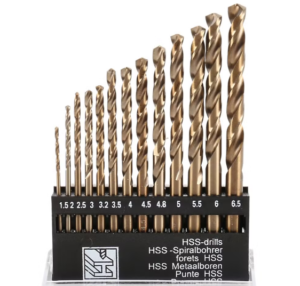
The primary reason a conventional household drill bit fails to penetrate stainless steel lies in the fundamental physics of cutting forces and thermal conductivity. Stainless steel alloys, such as the common 304 or 316 grades, contain high percentages of chromium and nickel. These elements create a tough, ductile molecular structure that does not shear away easily like mild steel or aluminum. Furthermore, stainless steel has incredibly poor thermal conductivity, meaning that the heat generated by the friction of the drilling process does not dissipate through the metal sheet or block. Instead, that intense heat remains localized right at the contact point between the tip of the drill bit and the surface of the metal. If the drill bit is made of standard High-Speed Steel (HSS), this localized heat quickly exceeds the material’s thermal tolerance, causing the sharp cutting lips to soften, melt, or round off within seconds. Once the edge is lost, the bit merely rubs against the surface, accelerating heat buildup and work-hardening the stainless steel into an almost impenetrable, diamond-hard glazed layer. To prevent this catastrophic cycle, you must bypass standard black oxide or basic bright-finish HSS bits and upgrade to specialized bits engineered with heavy-duty alloying elements like cobalt, tungsten, or titanium aluminum nitride coatings. These advanced materials retain their structural hardness at extreme temperatures, allowing the cutting edges to slice through the tough alloy before work-hardening can lock the surface down.
When it comes to drilling stainless steel using a portable handheld drill, Cobalt drill bits are universally recognized by professionals as the absolute gold standard. These bits are not merely coated with cobalt; rather, they are crafted from a solid blend of premium high-speed steel alloyed with a specific percentage of cobalt. The inclusion of cobalt drastically increases the red-hardness of the steel, which is the ability of the cutting tool to maintain its sharp, rigid cutting edge even when glowing hot from intense frictional heat.
There are two primary classifications of cobalt drill bits available on the market, known as M35 and M42 grade steel. M35 cobalt bits contain approximately 5% cobalt blended into the matrix. They offer an exceptional balance of high heat resistance, cutting efficiency, and structural flexibility, making them slightly less brittle and highly forgiving when used in handheld drills where minor shaking or angular misalignment is inevitable.
On the other hand, M42 cobalt bits contain roughly 8% cobalt. This higher concentration yields an even harder tool capable of tackling the toughest marine-grade 316 stainless steel or hardened industrial alloys. However, the increased hardness of M42 makes the bit more brittle, meaning it requires a very steady hand and consistent alignment to prevent the tip from snapping under sudden lateral pressure. For a household hand drill, M35 is often preferred for its durability against manual instability, while M42 is chosen when maximum cutting speed and ultimate heat defense are required for thicker plates.
While cobalt bits reign supreme for general handheld metalworking, other advanced options exist, though they require a deeper understanding of their operational limitations. Titanium-coated drill bits, specifically Titanium Nitride (TiN) or Titanium Aluminum Nitride (TiAlN), are highly popular in hardware stores. However, standard gold-colored TiN bits are generally unsuitable for thick stainless steel because the thin surface coating quickly wears off under heavy abrasion, leaving a vulnerable low-grade HSS core exposed to the heat. Conversely, premium TiAlN or Titanium Carbo-Nitride (TiCN) coatings are much more sophisticated; they actually form a hard aluminum oxide protective layer when exposed to high heat, which helps shed thermal energy away from the bit.
Another high-performance category is Solid Carbide or Carbide-Tipped drill bits. Carbide is an incredibly hard compound made from tungsten and carbon, capable of slicing through stainless steel like butter while showing virtually no wear. The major caveat with solid carbide bits is their extreme brittleness. They are designed almost exclusively for rigid, high-precision industrial drill presses or CNC machines. If you attempt to use a solid carbide bit in a standard handheld household drill, the minor vibrations, hand wobbles, or sudden breakthroughs will almost instantly shatter the expensive bit.
Therefore, carbide-tipped bits, which feature a tough steel body with a brazed carbide cutting tip, or specialized multi-purpose carbide bits, are the only carbide variants that should ever be cautiously introduced to a household hand drill environment.
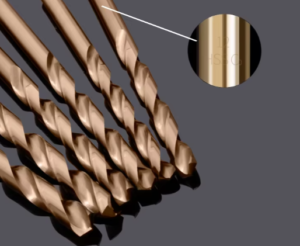
To achieve successful penetration into stubborn stainless steel surfaces, investing in reputable, industrial-grade manufacturing brands is paramount. Cheap, unbranded drill bit sets found in generic bargain bins will inevitably fail, costing you more money in ruined workpieces and snapped tools. The following curated list outlines the absolute best brands and specific, highly engineered drill bit models designed to conquer tough metals with a handheld power tool.
Irwin Tools – Hanson Performance Series M35 Cobalt The Irwin Tools Hanson series represents one of the most reliable and accessible options for homeowners looking to drill through stainless steel. Constructed from premium M35 grade cobalt steel, these bits feature a rugged heavy-duty web construction that provides enhanced rigidity and reduces the likelihood of the bit snapping under manual pressure. The standout feature of this model is its 135-degree split-point tip geometry. This specialized tip design ensures that the drill bit bites into the slippery, polished surface of stainless steel immediately upon contact, completely eliminating the frustrating tendency of the bit to wander or walk across the metal and scratch the surrounding area. It is an ideal choice for residential hand drills due to its high tolerance for manual operation.
Bosch Power Tools – Cobalt CO21 Series Bosch is a global powerhouse in engineering, and their CO21 Cobalt series is meticulously designed for high-heat, heavy-duty metal drilling applications. These bits are engineered from an advanced cobalt alloy formulated to withstand temperatures up to 1100 degrees Fahrenheit without losing structural integrity. The Bosch CO21 bits incorporate a highly optimized, thick web design that maximizes chip evacuation, allowing the metal curls to spiral out of the hole smoothly rather than getting trapped and generating destructive secondary friction. Furthermore, the three-flat shank design on sizes 3/16-inch and larger ensures that the bit locks securely into a standard 3-jaw household drill chuck, eliminating any slipping or spinning inside the chuck when encountering high resistance.
DeWalt – Industrial Cobalt Pilot Point Series DeWalt is legendary among contractors for producing rugged, job-site-ready accessories, and their Industrial Cobalt line is no exception. This series features a unique, proprietary Pilot Point or speed-tip design on larger sizes, which starts as a smaller pilot diameter before stepping up to the full width of the bit. This innovative geometry allows the user to drill clean, burr-free holes in stainless steel much faster than traditional split-point designs, as it effectively drills a pilot hole and enlarges it simultaneously. Formulated with 5% cobalt, these bits are heavily armored against heat buildup and are highly optimized for portable cordless or corded hand drills working on commercial stainless steel ducting, panels, and brackets.
Milwaukee Tool – Red Helix Cobalt Series Milwaukee has revolutionized tool geometry with their Red Helix Cobalt product line. These bits are uniquely engineered with a variable helix flute design, which features an aggressive 35-degree helix angle that flattens out toward the top. This specialized variable geometry acts as an ultra-efficient elevator for metal chips, rapidly pulling them up and out of the cutting zone to drastically reduce heat buildup and prevent the bit from binding. Fabricated from solid cobalt alloy, the Red Helix bits also include a 135-degree split point to prevent walking, making them an incredibly fast-cutting and long-lasting solution for anyone tackling thick stainless steel plates or pipes with a standard hand drill.
Cleveland Drill – Heavy Duty M42 Cobalt Series For those dealing with exceptionally thick, industrial-grade stainless steel plates, such as marine-grade 316 or high-alloy chemical pipes, the Cleveland Drill M42 series offers unparalleled cutting power. Manufactured from ultra-premium 8% cobalt high-speed steel, these bits possess a near-unrivaled level of red-hardness and wear resistance. Because they are harder than M35 bits, they require a highly disciplined operator when used with a household hand drill to maintain a perfectly straight alignment. However, their ability to slice through highly work-hardened zones makes them the ultimate weapon when lower-tier bits fail to make any headway.
Having the perfect cobalt or carbide drill bit is only half the battle; without the correct execution and drilling technique, even the most expensive industrial bit can be destroyed in a matter of seconds. When utilizing a common household hand drill on stainless steel, you must completely abandon the instinct to drill fast. High speed is the absolute enemy of stainless steel. You must adjust your drill to its lowest speed setting, typically the mechanical gear “1” on cordless drills, and feather the variable-speed trigger to keep the rotational speed (RPM) extremely low. For instance, a 1/4-inch hole in stainless steel should ideally be drilled at around 400 to 600 RPM, while larger holes require even slower speeds.
In addition to maintaining ultra-low speeds, you must apply heavy, consistent down pressure. You need to force the cutting lips of the bit to continuously bite deep beneath the surface layer of the metal. If you apply light pressure, the bit will merely glide over the metal, generating instant heat and work-hardening the spot. You should see thick, continuous metal ribbons or spirals curling out of the hole; if you see fine, dusty metallic powder or smoke, your speed is too high, or your pressure is too low.
Furthermore, lubrication is non-negotiable when drilling stainless steel with a handheld tool. Because stainless steel cannot effectively dissipate heat, you must introduce a dedicated cutting fluid, motor oil, or specialized drilling paste to the contact point. This fluid serves two vital purposes: it lubricates the cutting action to minimize frictional heat generation, and it cools the tool and workpiece to prevent the metal from undergoing thermal hardening. For best results, stop drilling every few seconds to apply fresh drops of oil directly onto the tip of the bit and into the shallow crater, keeping the entire cutting zone completely saturated.
Finally, for holes larger than 1/4 inch, always execute a stepped drilling strategy. Start by drilling a small, precise pilot hole using a 1/8-inch cobalt bit. This small bit can easily breach the material because its chisel edge is narrow and requires less force. Once the pilot hole is established, step up incrementally using larger bits until you reach your target diameter. This approach dramatically reduces the surface area contact and friction experienced by your larger, more expensive drill bits, ensuring a clean, successful hole every single time without damaging your household power drill.
To purchase premium, high-performance cobalt and specialized drill bits engineered to effortlessly penetrate tough stainless steel surfaces, visit www.xiangriyang.com to explore a comprehensive inventory of industrial-grade tools.

